
Allergies in cats: symptoms, causes and treatment

Summary
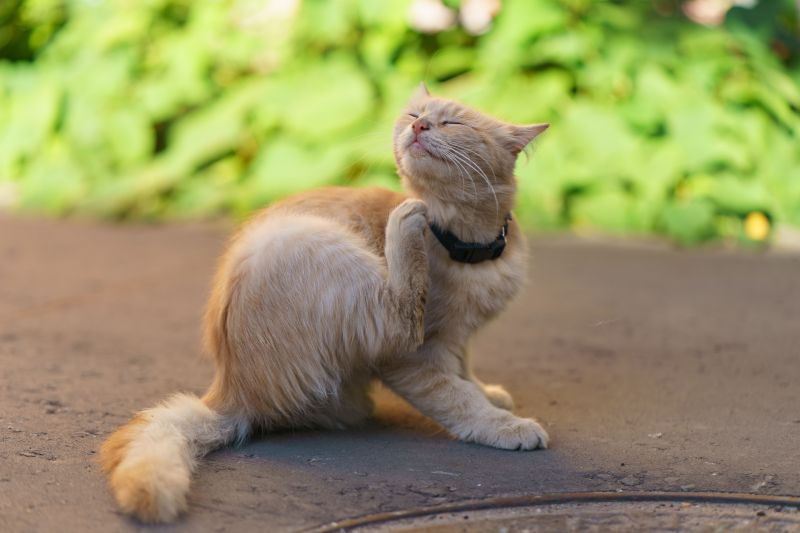
Allergies in cats can cause persistent itching, excessive grooming, hair loss, scabs and inflamed skin. Common triggers include flea saliva, certain food ingredients and environmental allergens such as pollen or dust mites.
These signs can resemble other skin problems, so finding the cause usually involves a veterinary examination and a series of tests or treatment trials. Treatment may combine parasite control, dietary changes, medication and, for some cats, allergen-specific immunotherapy.
Many allergic conditions need ongoing management, but an individual treatment plan can help keep your cat comfortable.
What are allergies in cats?
An allergy occurs when a cat’s immune system reacts excessively to a substance that would normally be harmless.
In cats, allergic disease often affects the skin. A cat may lick or chew its coat rather than scratch visibly, so thinning fur or bald patches can be the first thing an owner notices.
More than one allergy can affect the same cat, and parasites or infections can make the itching worse.

Symptoms of allergies in cats
Possible signs include:
- Frequent scratching, rubbing or chewing
- Excessive licking or grooming
- Thinning fur or bald patches
- Small, crusty bumps or scabs
- Red, irritated or broken skin
- Sores around the head, neck or ears
- Raised, inflamed skin patches or lip lesions
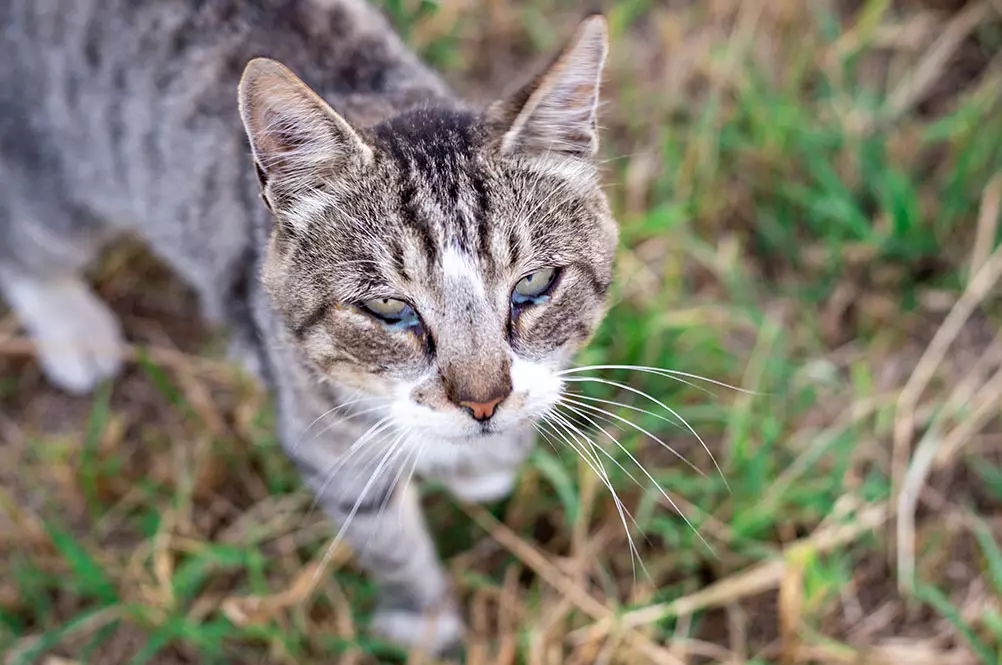
Some cats groom mainly when alone, so owners may see coat changes without witnessing the behaviour. These patterns are not specific to allergy and need veterinary assessment.
Food allergies can also cause vomiting or diarrhoea, although skin signs may occur without digestive problems. The location of itching alone cannot identify the trigger.
Read more about overgrooming in cats.
Can allergies cause sneezing or coughing?
Allergic airway disease, including feline asthma, can cause coughing, wheezing and breathing difficulties. However, sneezing or watery eyes should not automatically be attributed to allergy: respiratory signs have several possible causes.
Read our guides to feline asthma and sneezing in cats.
What causes allergies in cats?
Flea allergy
Flea allergy is a reaction to proteins in flea saliva. Sensitive cats can develop significant itching after very limited exposure.
You may not find fleas because cats can remove them while grooming. Flea control is therefore an important part of investigating an itchy cat, even when no fleas are visible.
Food allergy
A food allergy is an immune reaction to an ingredient in the diet, usually a protein. Reported triggers include beef, fish and chicken, but an individual cat may react to other ingredients.
An allergy can develop even when a cat has eaten the same food for a long time. Changing brands does not necessarily remove the trigger because different foods may contain the same proteins.
Environmental allergy
Some cats react to environmental allergens such as pollen, house dust mites or mould. The resulting allergic skin condition is often called feline atopic skin syndrome.
Signs may be seasonal or occur throughout the year. Diagnosis requires investigation of other possible causes of itching.
Smoke, fragrances and cleaning products can also irritate cats. Irritation does not necessarily mean a true allergy.
When should you see a vet?
Arrange a veterinary appointment if your cat has persistent itching, repeated overgrooming, bald patches, scabs, sores or recurring ear irritation.
Seek prompt advice if the skin becomes painful or starts oozing, or your cat becomes unwell or stops eating.
Seek emergency veterinary care for difficulty breathing, open-mouth breathing, collapse or rapidly developing facial swelling. Severe allergic reactions can be life-threatening, but these signs can also have other serious causes.
Because it is difficult to predict the costs of veterinary care, it can help to have measures in place to help prepare for the unexpected. Pet insurance can help by covering a portion of the eligible vet bill if the unexpected does happen.
Get a quick quote
How are allergies in cats diagnosed?
Your vet will ask about your cat’s diet, parasite prevention, environment, previous treatments and whether symptoms follow a seasonal pattern.
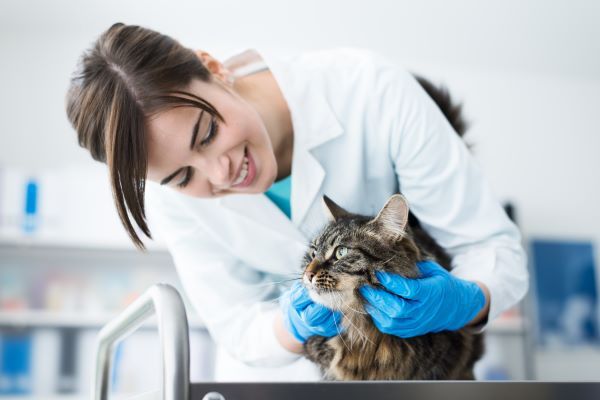
Investigation may include:
- Examining the skin, coat and ears
- Checking for fleas and other parasites
- Examining skin or ear samples for infection
- Testing for ringworm when appropriate
- Assessing the response to parasite treatment
- Conducting a food elimination trial.
Your vet can treat itching and infections while investigating the underlying cause. More than one appointment may be needed.
What is a food elimination trial?
A food trial involves feeding only a carefully selected diet for a period set by your vet. This may be a veterinary hydrolysed diet or a suitable novel-protein diet.
Trials commonly last around eight weeks, although some cats need a longer assessment. Treats, table scraps, other pets’ food and flavoured medicines can interfere with the results, so discuss everything your cat consumes with your vet.
If signs improve, your vet may recommend reintroducing the original food to see whether symptoms return. Improvement alone does not confirm food allergy.
Do not let your cat go hungry to force acceptance of a trial diet. Contact your vet if they refuse the food.

What can allergy tests tell you?
Blood or intradermal skin tests may help select environmental allergens for immunotherapy after your vet has established a compatible diagnosis.
They do not diagnose environmental allergy on their own. Blood, saliva and hair tests are also not reliable substitutes for a properly conducted food trial.
How are allergies in cats treated?
Treatment depends on the cause, severity and your cat’s other health needs.
Parasite control
Your vet may recommend consistent flea treatment for your cat, suitable treatment for other household pets, and environmental control.
Treatment depends on the cause, severity and your cat’s other health needs.
Parasite control
Your vet may recommend consistent flea treatment for your cat, suitable treatment for other household pets, and environmental control.
Use products appropriate for each animal. Never apply a dog-only permethrin flea treatment to a cat.
Read more about controlling fleas in pets and the home.
Dietary management
For confirmed food allergy, treatment involves avoiding the responsible ingredients while maintaining a complete, balanced diet.
Your vet can recommend an appropriate ongoing food. Homemade diets require professional formulation to meet a cat’s nutritional needs.
Medication and infection treatment
Veterinary treatment may include corticosteroids to control inflammation, ciclosporin for selected cats, and treatment for confirmed skin or ear infections.
Antihistamines help some cats, but their effectiveness is variable and they are not dependable treatment for a severe flare. Longer-term medication requires monitoring and regular review.
Allergen-specific immunotherapy
For some cats with environmental allergies, a vet or veterinary dermatologist may recommend customised allergy injections or oral drops.
Immunotherapy aims to reduce sensitivity to particular allergens. It works gradually over months and may reduce other medication needs, but it is not an immediate itch treatment or a guaranteed cure.

How can you help your cat at home?
Follow the treatment plan and keep a simple record of itching, grooming, skin changes and possible triggers. Photos can help your vet compare progress.
Depending on the suspected trigger, practical measures may include:
- Keeping parasite prevention up to date
- Following the prescribed diet consistently
- Washing bedding and vacuuming regularly
- Reducing smoke, aerosols and strong fragrances
- Using low-dust, unscented litter if recommended.
Ask your vet before bathing your cat or applying skin products. Frequent bathing is not suitable for every cat. Avoid starting human medicines or home remedies without veterinary advice.
Can allergies in cats be cured?
Some cats become comfortable when a particular trigger is avoided. Others, especially those with environmental allergies, need long-term management.
Flare-ups do not necessarily mean treatment has failed. Your vet may need to check for renewed parasite exposure, infection or another change and adjust the plan.
Conclusion
Persistent scratching, overgrooming and skin changes deserve attention. Identifying the cause can take time, but a structured veterinary investigation helps avoid repeated, ineffective food changes or treatments.
With appropriate parasite control, dietary management and treatment where needed, many cats can enjoy a more comfortable life.
Bow Wow Meow Pet Insurance can help protect you and your cat should an unexpected trip to the vet occur.
-
Find out more about our cat insurance options
-
Get an online pet insurance quote
Bow Wow Meow is proud to have been awarded winner of Canstar’s ‘Most Satisfied Customers’ Award in the Pet Insurance category for both 2024 and 2025!
Bow Wow Meow is proud to be the only Pet Insurer that has been awarded Product Review’s Top Rated Pet Insurance every year from 2018 to 2026! This is based on 3,193 independent customer reviews (as at 09/04/2026), with an overall rating of 4.5 stars.

We also have the following ratings on other review platforms:
Google Review rating of 4.5 stars (based on 1,358 reviews)
Trust Pilot rating of 4.6 stars (based on 555 reviews)
Bow Wow Meow has been chosen as Winner of 4 categories in the 2026 Finder Pet Insurance Customer Satisfaction Awards!


– Most Trusted Pet Insurance
– Easiest to Claim Pet Insurance
– Most Recommended Pet Insurance
– Legendary Service Pet Insurance
We also received Highly Commended Awards for Loved Brand Pet Insurance and Best Value Pet Insurance.
Bow Wow Meow is an Australian-owned and operated pet insurance provider. Our focus is purely on pets, and we are proud to have helped provide peace of mind to over 200,000 Aussie pet owners since 2008.
Sources:
“2023 AAHA Management of Allergic Skin Diseases in Dogs and Cats Guidelines”, American Animal Hospital Association, 2023. https://www.aaha.org/resources/2023-aaha-management-of-allergic-skin-diseases-in-dogs-and-cats-guidelines/0/. Accessed 20 October 2026.
“Figure 6: Diagnosing Allergic Skin Disease in the Feline Patient”, American Animal Hospital Association, 2023. https://www.aaha.org/resources/2023-aaha-management-of-allergic-skin-diseases-in-dogs-and-cats-guidelines/figure-6-diagnosing-allergic-skin-disease-in-the-feline-patient/. Accessed 20 October 2026.
“Table 7: Acute Flare and Long-term Management Therapies in Cats”, American Animal Hospital Association, 2023. https://www.aaha.org/resources/2023-aaha-management-of-allergic-skin-diseases-in-dogs-and-cats-guidelines/table-7-acute-flare-and-long-term-management-therapies-in-cats/. Accessed 20 October 2026.
“Feline Atopic Skin Syndrome”, Merck Veterinary Manual, updated May 2026. https://www.merckvetmanual.com/integumentary-system/atopic-skin-conditions-in-dogs-and-cats/feline-atopic-skin-syndrome. Accessed 20 October 2026.
“Cutaneous Food Allergy in Animals”, Merck Veterinary Manual, updated August 2025. https://www.merckvetmanual.com/integumentary-system/food-allergy/cutaneous-food-allergy-in-animals. Accessed 20 October 2026.
“Flea Allergy Dermatitis in Dogs and Cats”, Merck Veterinary Manual. https://www.merckvetmanual.com/integumentary-system/fleas-and-flea-allergy-dermatitis/flea-allergy-dermatitis-in-dogs-and-cats. Accessed 20 October 2026.
“Allergies of Cats”, Merck Veterinary Manual, updated September 2024. https://www.merckvetmanual.com/cat-owners/skin-disorders-of-cats/allergies-of-cats. Accessed 20 October 2026.
“Food Allergies”, Cornell University College of Veterinary Medicine, Cornell Feline Health Center. https://www.vet.cornell.edu/departments-centers-and-institutes/cornell-feline-health-center/health-information/feline-health-topics/food-allergies. Accessed 20 October 2026.
“Feline Skin Diseases”, Cornell University College of Veterinary Medicine, Cornell Feline Health Center. https://www.vet.cornell.edu/departments-centers-and-institutes/cornell-feline-health-center/health-information/feline-health-topics/feline-skin-diseases. Accessed 20 October 2026.
“Feline Asthma: What You Need To Know”, Cornell University College of Veterinary Medicine, Cornell Feline Health Center. https://www.vet.cornell.edu/departments-centers-and-institutes/cornell-feline-health-center/health-information/feline-health-topics/feline-asthma-what-you-need-know. Accessed 20 October 2026.
“Immune System Responses in Cats”, Merck Veterinary Manual. https://www.merckvetmanual.com/cat-owners/immune-disorders-of-cats/immune-system-responses-in-cats. Accessed 20 October 2026.
“Initial Triage and Resuscitation of Small Animal Emergency Patients”, Merck Veterinary Manual. https://www.merckvetmanual.com/emergency-medicine-and-critical-care/evaluation-and-initial-treatment-of-small-animal-emergency-patients/initial-triage-and-resuscitation-of-small-animal-emergency-patients. Accessed 20 October 2026.
“6.6. General directions – ectoparasiticides for dogs and cats”, Australian Pesticides and Veterinary Medicines Authority. https://www.apvma.gov.au/node/84196. Accessed 20 October 2026.