

Is the Portuguese Water Dog a good family dog?


Portuguese Water Dog
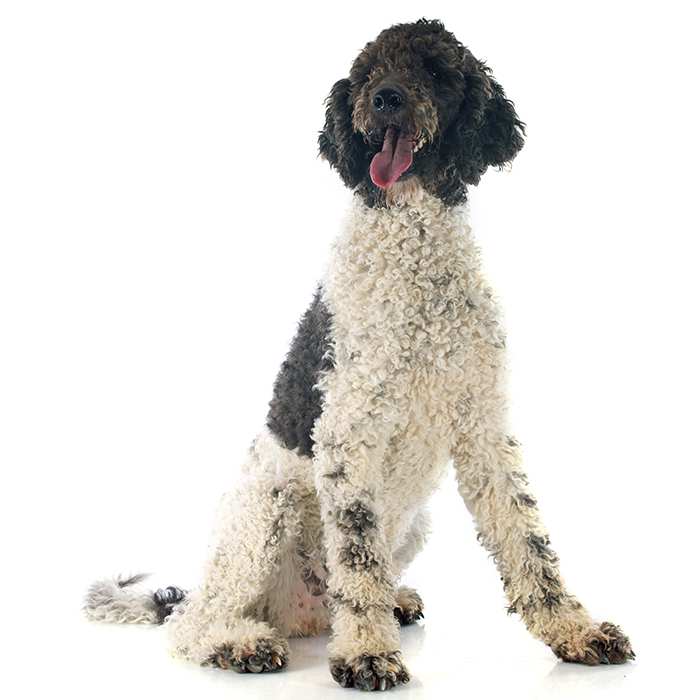
Portuguese Water Dogs are intelligent and athletic medium-sized dogs with a curly or wavy coat, a sturdy build and an energetic, people-focused nature. Originally bred to assist fishermen, they are known for their swimming ability, trainability and strong work ethic. Generally affectionate and eager to be involved in family life, Portuguese Water Dogs can be lively and demanding, so they benefit from regular exercise, mental stimulation and consistent training.
| Recommended for | Active families or owners who enjoy training, outdoor activities and a clever, energetic dog. |
| Breed Classification | Working Group |
| Other names | Portie, Cao de Agua |
| Lifespan | 11 to 13 years |
| Size | Medium |
| Temperament | Energetic, loyal, intelligent and people-focused |
| Intelligence | Generally intelligent; best results come from patient, positive and consistent training |
| Tendency to bark | Moderate; may bark when bored or excited |
| Maintenance Level | Regular brushing and professional clipping needed |
| Health Risk | Portuguese Water Dogs are generally robust when well bred and well cared for, but they can still be affected by recognised breed-related conditions that should be discussed with a vet or breeder. |
Thinking of insuring a Portuguese Water Dog?
Explore the Top 5 health issues claimed for Portuguese Water Dogs, including highest claims paid and how much pet insurance could help you save on eligible vet bills.
See Portuguese Water Dog pet insurance Ready to get cover? Get a quick quote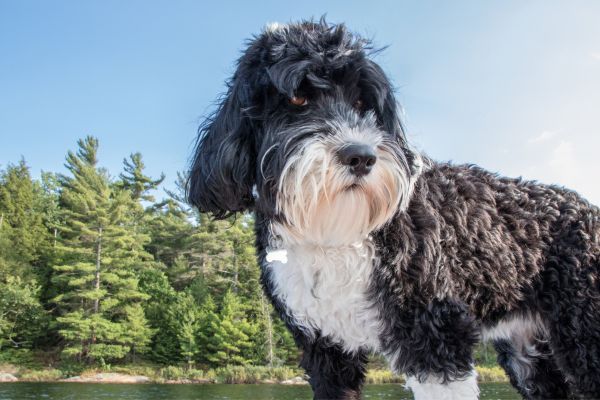
Portuguese Water Dog personality and temperament
The Portuguese Water Dog is an energetic, intelligent and enthusiastic breed with a strong desire to work and be involved with its family. Originally bred to assist fishermen, it is active, capable and often loves swimming, retrieving and learning new tasks.
This breed is typically affectionate and people-focused, forming close bonds with its household. Because of its high intelligence and energy, the Portuguese Water Dog needs regular exercise, training and mental stimulation to prevent boredom and channel its lively nature in positive ways.
Portuguese Water Dogs with kids and other pets
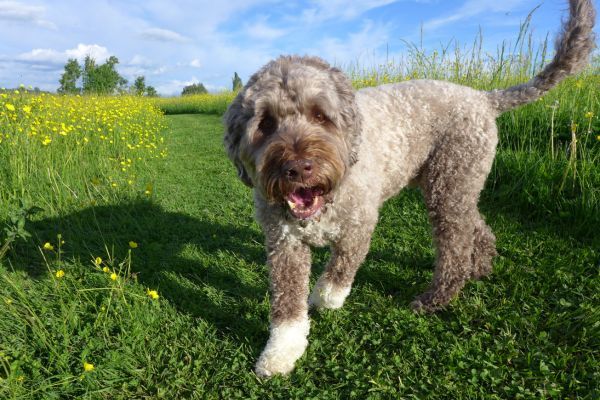
Portuguese Water Dogs are usually energetic, affectionate and playful with children, making them a good fit for active families. They enjoy games, training and outdoor activities, but their enthusiasm can be overwhelming for very young children, so supervision and manners training are important.
With other pets, Portuguese Water Dogs generally do well when properly socialised. They are often friendly with other dogs and can live with cats, particularly when raised together, though their lively nature means introductions should be controlled and positive.
Portuguese Water Dog training and exercise
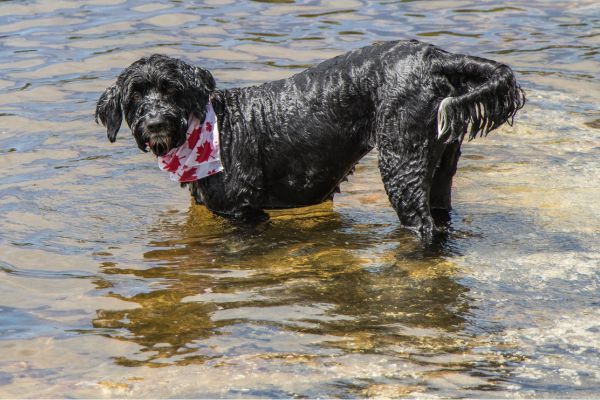
Portuguese Water Dogs are energetic and need substantial daily exercise, including brisk walks, swimming, retrieving games, running in secure areas and active play. They are athletic, intelligent dogs that enjoy having a job to do, so combining physical exercise with mental challenges is ideal.
Training is very important for this clever and enthusiastic breed. Portuguese Water Dogs usually respond well to positive reinforcement, structured routines and varied training activities. They can become boisterous if under-stimulated, so early obedience, impulse-control work and socialisation are recommended.
| Energy level | High |
| Exercise requirements | High - swimming, retrieving, long walks and training games |
Common health issues for Portuguese Water Dogs
What do Portuguese Water Dog owners claim for the most?
- Hip dysplasia: A developmental condition where the hip joint forms abnormally, causing looseness, pain and reduced mobility. Genetics are a major factor, while rapid growth, excess weight and inappropriate exercise can worsen symptoms. Early diagnosis, weight control and veterinary care can help manage the condition.
- Progressive Retinal Atrophy: An inherited eye disease where the retina gradually deteriorates, usually first causing night blindness and then progressive vision loss. It is generally not painful, but it can eventually lead to complete blindness.
- Juvenile Dilated Cardiomyopathy: A serious inherited heart disease where the heart muscle becomes enlarged and weakened in young dogs or puppies. It can cause weakness, poor appetite, breathing difficulty, collapse, sudden deterioration or sudden death, sometimes with few warning signs.
- Addison’s disease: A hormonal disorder where the adrenal glands do not produce enough essential hormones, affecting fluid balance, blood pressure and stress response.Signs can be vague and may include lethargy, vomiting, diarrhoea, weakness, weight loss, shaking or collapse.
- Storage disease: A group of rare inherited metabolic disorders where missing enzymes cause waste products to build up inside cells, damaging tissues and organs. Signs vary but may include poor growth, weakness, incoordination, vision problems, exercise intolerance, fainting or seizures.
Not all conditions are covered by Pet Insurance. For details of Bow Wow Meow Pet Insurance cover, refer to the Product Disclosure Statement.
How to choose the right insurance for your Portuguese Water Dog
When comparing cover for your Portuguese Water Dog, look for:

Cover for common Portuguese Water Dog conditions:
Check that the policy covers conditions Portuguese Water Dogs can be prone to, including common health issues.

Cover for hereditary conditions:
No exclusions for hereditary or congenital conditions⑅.

Flexible cover options:
Options to adjust your annual benefit limit, reimbursement rate and excess.
Bow Wow Meow's Nose-to-Tail Cover offers flexible options for your Portuguese Water Dog, with cover for accidental injuries, illnesses and hereditary conditions⑅. Get a quick quote for cover that suits your Portuguese Water Dog and your budget.
Portuguese Water Dog feeding and nutrition
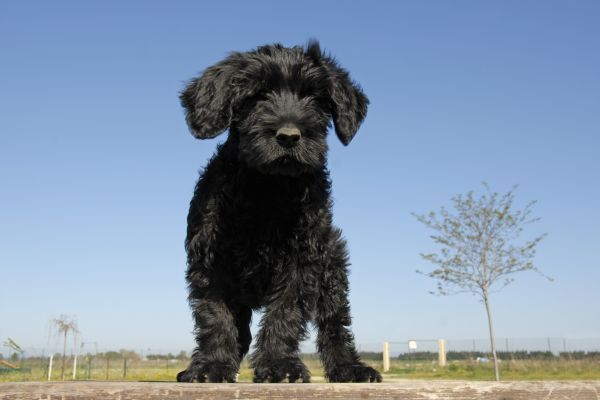
The Portuguese Water Dog needs a nutritious, balanced diet that supports its athletic body, high energy levels and active lifestyle. Quality protein helps maintain muscle, while healthy fats provide energy and support the breed’s curly or wavy coat.
Because this breed is active and food intake can vary depending on exercise, portions should be adjusted to match daily activity. Dogs that swim, train or exercise heavily may need more calories, while less active pets may gain weight easily. Feeding measured meals and avoiding excessive treats helps maintain healthy body condition.
Portuguese Water Dog care and grooming
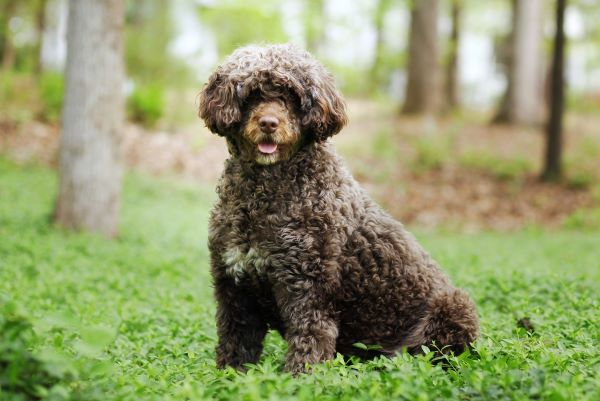
The Portuguese Water Dog has a thick curly or wavy coat that requires regular grooming to prevent matting. Brushing several times a week helps keep the coat manageable, particularly behind the ears, under the legs and around the collar area. Although the breed is often low-shedding, loose hair can become trapped in the coat and form mats if not removed.
Professional grooming every 6 to 8 weeks is commonly needed to maintain the coat in a practical clip. Many are kept in a retriever clip for easier care, while some are styled in the traditional lion clip. Regular ear cleaning is especially important for dogs that swim, along with nail trimming, dental care and occasional bathing.
Size, appearance and coat of Portuguese Water Dogs
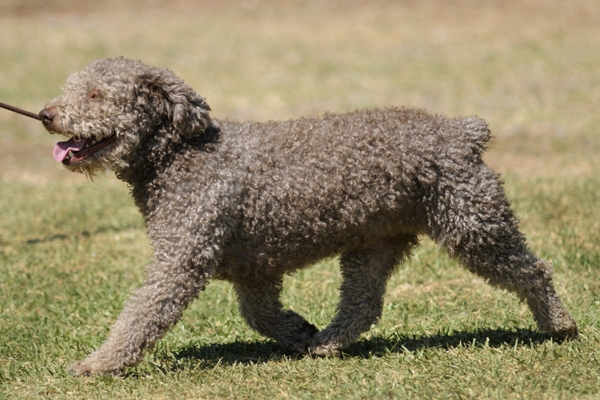
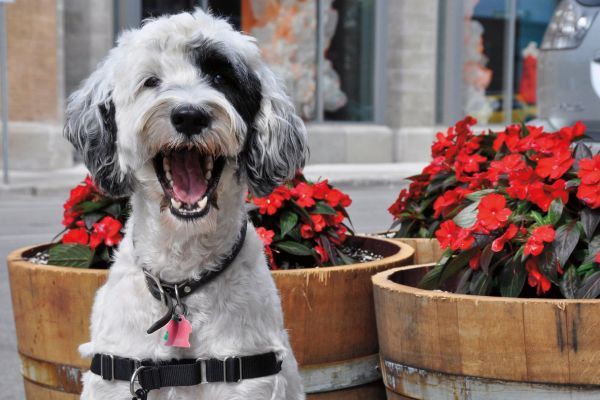
The Portuguese Water Dog is a medium-sized, athletic dog with a sturdy, well-muscled body and a lively, capable appearance. It has a broad head, dark expressive eyes, heart-shaped ears that hang close to the head, and a strong tail often carried with a curve when alert.
Its coat is one of the breed’s defining features and may be curly or wavy, with a dense texture suited to water work. Coat colours include black, white, brown, or combinations of these, and the breed is often seen in a retriever clip or lion clip.
| Weight range | 16 to 27 kg |
| Height range | 43 to 57 cm |
| Colours | Black, white, brown, black-and-white or brown-and-white |
| Coat length | Curly or wavy, dense, low-shedding coat |
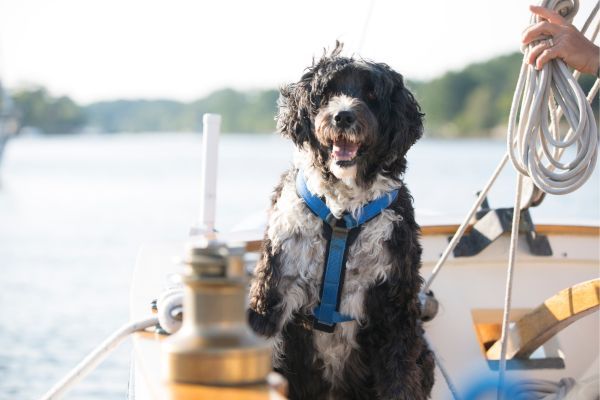
Breed history of Portuguese Water Dogs
The Portuguese Water Dog developed along Portugal’s coast, where it worked as part of fishing crews. These dogs retrieved lost gear, carried messages between boats, helped herd fish into nets and guarded boats and catch when fishermen were ashore.
As fishing technology changed, the breed’s working role declined and by the early twentieth century it came close to disappearing. Portuguese enthusiasts, particularly Vasco Bensaude, helped gather and preserve the remaining dogs, allowing the breed’s distinctive water-working history to survive into the modern era.
Explore related breeds
Portuguese Water Dog facts!
- Portuguese Water Dogs have webbed toes, designed to help them swim.
- Porties have a multi-octave voice, giving them a unique bark. All other noises they make are also very distinctive.President Obama and his family were given a Portuguese Water Dog by Ted Kennedy, an enthusiast of the breed, in 2009, who was named “Bo” after the singer Bo Diddly.
- Bo the “First Dog” was joined by another Portie called “Sunny” in 2013.
- Ted Kennedy wrote a children’s book about life as a senator from the perspective of his Portie, Splash.
Summary
The Portuguese Water Dog is a medium-sized, athletic breed with a curly or wavy coat, strong body and lively, intelligent expression. Energetic, affectionate and highly trainable, it thrives when included in family activities and often enjoys swimming, retrieving and active play.
This breed needs regular exercise, mental stimulation and consistent grooming to prevent matting, making it best suited to engaged owners who want an active companion.
FAQs about the Portuguese Water Dog
It can be, provided the household matches the breed’s exercise, training, grooming and supervision needs.
High – swimming, retrieving, long walks and training games.
Shedding depends on coat type, season and grooming routine. The breed has a curly or wavy, dense, low-shedding coat.
They may be lower shedding than many breeds, but no dog is truly hypoallergenic and reactions vary between people.
Most respond well to positive, consistent training, but owners should work with the breed’s instincts rather than against them.

Get 2 months free for your puppy!
Congrats on your new bundle of joy
To ensure your precious fur baby is covered from the start, we'd like to offer your first 2 months of our Nose-to-Tail Cover for free2!
Get a quick quote