How to prepare for your puppy’s first night at home



Pet owners anticipating the first night with their new puppy usually brings about excitement tinged with a little anxiety. Don’t worry, it’s perfectly normal to be a little nervous about puppy’s first night at home. After all, you and your new pup don’t really know each other yet, and if you haven’t had a puppy before, you may be wondering how to look after a puppy on its first night or how to make a puppy sleep on their first night home with you.
Even if you have brought a puppy home before, you may have memories of sleepless nights and soiled carpets. You’re not wrong to feel a little concerned; the first night with new puppy can be a challenging speed bump for both puppy and owner. New puppies need company, comfort, and lots of supervision. New puppy parents may be unsure if they’re doing it right, particularly when it comes to toileting, sleeping and settling in, and there are likely to be some hiccups in any of these areas.

The most important thing you can do to survive the first night is to be well prepared. In this article we provide all the important information you need to prep for the first night to ensure pup feels calm and secure and settles well for sleep.
Expert advice from Dr Felicia:
Adopting an adult dog? Or looking after someone else’s dog? A lot of this advice will still apply, though it is helpful to find out as much as you can about your dog’s normal routine if you can to help them feel settled with you.
Preparations for the first night
Buy the necessary supplies
Make sure you have all the essential items you need for your puppy’s first night at home. Here’s a basic checklist of must-have supplies for puppy’s first day and night:
- Food and water bowls
- Puppy food (check if your breeder/shelter has some of puppy’s current food to help ease the transition)
- Poo bags
- Dog bed
- Toys (suitable for puppy’s age and size)
- Healthy treats
- Playpen and/ or crate
- Puppy pads or puppy toilet to assist with toilet training
- Adjustable collar, harness and leash to correctly fit your puppy now without being too loose
- Collar tags with contact info
- Seatbelt buckle for the car or a crate
- Long-lasting, low fat chews like bully sticks to entertain and help settling your puppy into their pen or crate
Expert advice from Dr Felicia:
As well as making sure you have all the items you need, think about your house from a curious puppy’s perspective. Are all medications, cleaning chemicals and other products you don’t want puppy accidentally finding put away? Are there any loose cables that may be tempting to puppy teeth?
Set up their sleeping spot
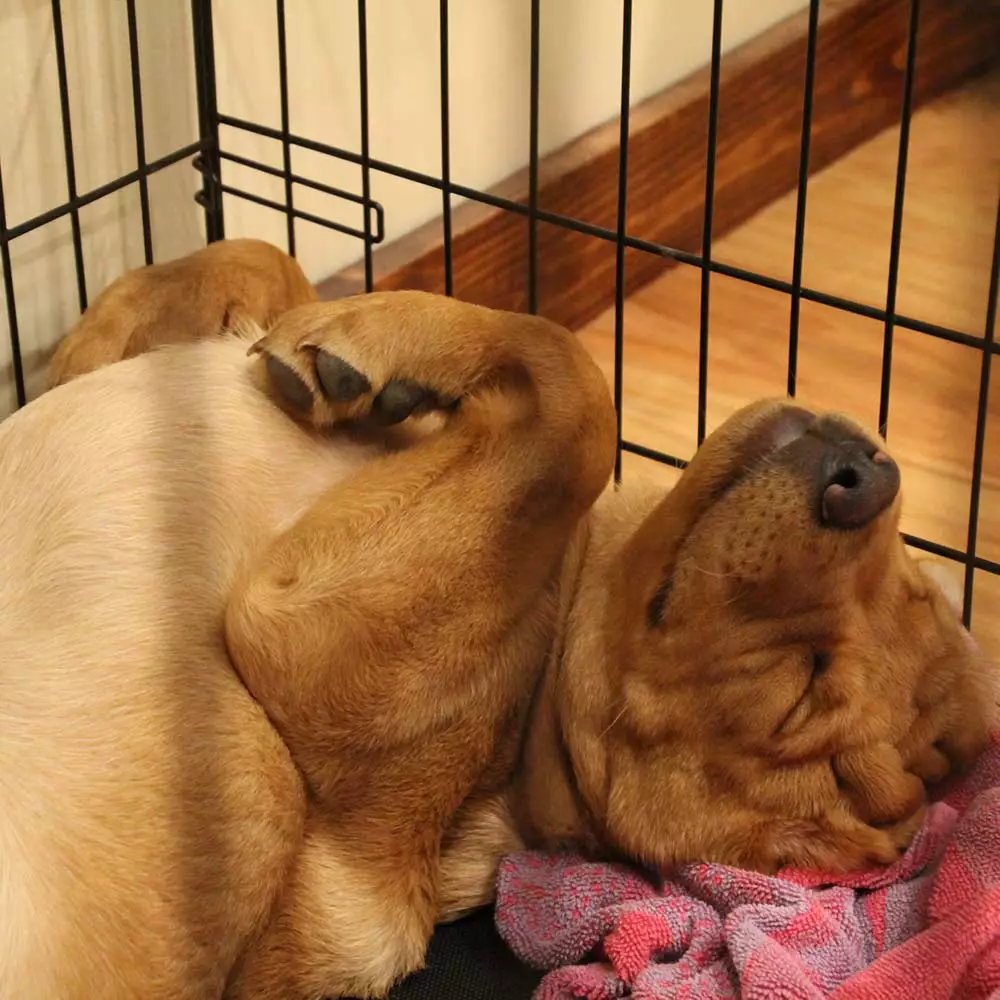
Decide where your puppy’s bed will be and make it warm and inviting with a cosy bed and a snuggly toy. For the first few nights, we usually recommend that you sleep close by your new puppy, either by placing their bed or crate next to your bed or by sleeping on the couch next to their playpen. Puppies tend to settle much better if they aren’t alone for the first few nights.
After this, you can gradually move his bed to where you want him to sleep long-term. This is a personal choice; some people like to have their puppy sleep in their bedroom, while others prefer for him to sleep in a different part of the house. Night-time is a good opportunity for puppies to spend time on their own, as this can assist with building independence.
Create a familiar smell
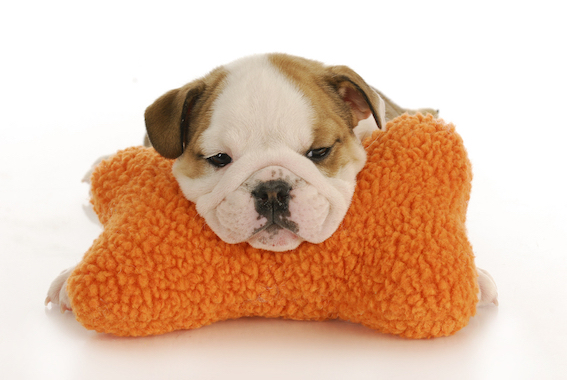
Dogs have an incredibly powerful sense of smell, which you can harness to help your puppy feel more comfortable on their first night home. This is how: when you go to pick up your puppy to bring them home, take an old pillow, t-shirt or towel with you, and with the breeder’s permission, rub it on their mum and siblings. Alternatively, ask the breeder in advance if you can take some of their bedding home with you, so these familiar scents can help to comfort your new pup on their first night.
Prepare yourself mentally
Prepare yourself for the likely possibility of being woken up by your pup during the first few nights or weeks. Keep in mind that this young pup has spent the first few weeks of their life surrounded by the warm bodies of their mother and siblings and has never been alone or away from them. When we move a puppy into our home, we are separating them from their family, so it should be no surprise that there will be some initial sense of anxiety and loss. However, some puppies are so exhausted from the events of the day that they may sleep soundly all night.
Separation stress is a normal part of acclimating to a new home and family, and gentle patience is necessary to help them through the adjustment. You will need to exercise plenty of patience, cope with being sleep-deprived for a short period of time, and at the same time help them settle in and feel at home as best you can.
Expert advice from Dr Felicia:
Puppy’s progress overnight may not be linear: some pups may seem to settle well initially and then struggle with being left alone at night once they have established their bond with you and feel more incorporated into the family.

Keep visitors away
Your puppy’s first night at home should be a quiet one. It’s a time for the puppy to get to know their new home and meet their new family. While it’s tempting to invite friends over to meet puppy right away and show off your new best friend, keep in mind that they are in a brand-new place with people they don’t know. Even meeting boisterous fur-siblings can be delayed depending on the temperament of the puppy, though often pups take well to ‘older’ dogs and find their presence comforting. The main focus should be on making your first night with new puppy safe, quiet, and stress-free; there will be plenty of time for visitors later.
Familiarise puppy with their sleep area
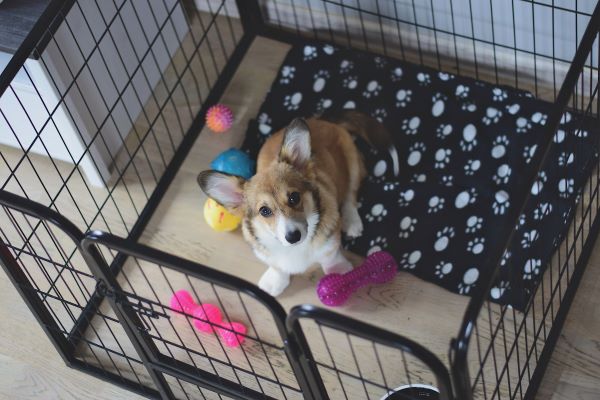
The first night bringing a puppy home is a time to let them settle in and above all, to start becoming familiar with their new sleeping arrangements. To help them feel more secure, show the puppy their bed well before bedtime and place some toys, kibble or treats in, so they enter it of their own accord. The more enticing you can make it, the more likely they will settle in quietly. Take your puppy back to their sleeping area a few more times before bedtime and reward them each time for going in it and staying there. Be positive and encouraging and take things slowly.
Night-time routine and toilet training
Bedtime routine
You want to start your puppy off on the right path by establishing a bedtime routine from the very beginning and sticking to it. While the first night or so may be challenging, a routine should help your puppy understand what’s expected when the household goes to sleep.
We recommend that you start preparing for bedtime well in advance – around three hours before. As a guide we suggest the following timeline:
- 3 – 4 hours before bedtime – dinner time (depending on when the puppy was fed by the breeder. If your puppy is as young as 6 weeks, they may still require a night feed at around 9 pm).
- 2 hours before bedtime – 15 minutes of active playtime or a little walk outside.
- 1 hour before bedtime – gradually begin to wind down.
- Every 30 to 60 minutes after last meal and right before bedtime – take puppy outside to toilet, giving them plenty of opportunities to pee and poo before bed time.
Toilet training
Young puppies pee and poo a lot. Puppies have tiny bladders and do not have the bladder capacity to hold their urine for the entire night; they generally need to be taken to pee at least once per night in the early stages.
Have your pup’s bed close enough to yours so that you will hear them when they wake during the night, as they probably needs to go outside to toilet (fortunately, puppies don’t usually toilet where they sleep). Quickly and quietly and take them to their designated toileting area. Reward them calmly with a treat and praise but try not to get them excited or stimulated. As soon as they finish, put them back in their bed and they should go back to sleep.
Expert advice from Dr Felicia:
For a new dog owner, bedtime routines and toilet training can feel overwhelming, but with time become second nature once your pup is fully integrated into the family routine.
Read our article on toilet training your puppy here.

Things to do on the first night
Start training
You will already begin puppy training on the first night with basics like toileting, learning their name and where their bed is. Be consistent, persistent, and patient whenever you are puppy training. Praise and reward your pup whenever they do the right thing, such as peeing or pooing outside, responding to their name or going to their bed or crate.
Read our article on crate training your puppy here.
What to do if you are woken up during the night
It’s possible that you will be woken up during your puppy’s first night. Some puppies may even wake up a few times, while others are so exhausted from the events of the day you may not hear from them until the following morning.
If your puppy does wake or become unsettled during the night, we recommend that you put your hand on the crate or pen, talk softly to them and wait until they settle. Don’t take them out of the crate or pen while you are settling them back to sleep, unless you suspect they need to toilet.
Be consistent
It’s important to be consistent right from the start. As much as you may be feeling sorry for your puppy, the best thing you can do is to stick to the rules and routine you’ve decided on, no matter how difficult it may seem at the time; changing them up creates a confused puppy. If you’ve decided they are not going to sleep in your bed, don’t take them into your bed because you feel sorry for them when they cry in the middle of the night. There are some suggestions below for how you can ease/comfort your pup if they are finding it difficult.

Things to avoid doing on the first night
Don’t take puppy into your bed
Try to avoid having the puppy sleep in bed with you on the first night. It is generally not recommended to have a young puppy sleep in your bed to help them learn some independence during this developmental stage, and to sleep in a space of their own. While it may seem like the easiest thing to do when they are barking, whimpering or crying in the night, by doing so they will quickly learn that when they are upset, you will come and put them into a warm cosy place. The next night, they will most likely repeat the behaviour and expect the same result, and if you try to resist, they may well intensify the behaviour, leading to a vicious cycle.
There is also a chance that you may wake up to a toilet accident in your bed because of the little bladder control puppies have.
Expert advice from Dr Felicia:
Sleeping in separate beds while your pup is settling in can prevent pup from becoming hyper-attached to you. Some adult dogs also will sleep-startle, which makes them unsuitable candidates for bed-sharing. Bed-sharing later in life can be considered in many cases, provided there are no resource guarding issues.
Don’t punish puppy for an accident
Don’t punish your puppy if they have an accident during the night (or at any other time, day or night). You want to keep pup – and yourself – calm and unstressed, so that both of you can get back to sleep as soon as possible. Keep paper towel, enzymatic cleaning spray and a change of bedding handy for a quick clean up if necessary.
How to calm crying or whining pups
The first night at home puppy is likely to cry, whine or even bark during the night. This is because for the first two months of life, nighttimes were spent snuggling into their mum and siblings and feeling warm, comfortable and safe in their presence. Moving away from them to a new and unfamiliar environment is a huge change, and at night especially, they will feel lonely and will probably demonstrate this with whines and cries.
These are a few things that you can do that can help your puppy settle in and feel at home as soon as possible, which may help to reduce a stress-induced behaviour problem such as crying or whining:
- Ensure your puppy is not hungry, and sufficiently tired before going to bed at night. A satisfied, tired puppy will settle more easily.
- Have puppy sleep in a small crate or cosy bed next to your bed, or somewhere close enough that they can sense you and don’t feel isolated.
- Make sure their sleeping place is warm, comfortable and free of draughts.
- Provide some cosy, soft bedding and a stuffed dog toy to snuggle with. Your puppy is used to being surrounded by the warm bodies of their mum and siblings while sleeping.
- If you brought home a piece of bedding or a mama-scented t-shirt or towel, place it in their bed or crate. If not, use one of your old T-shirts or other soft item that smells of you instead. This will help prevent them from being overwhelmed by too many strange, new smells.
- Place a ticking clock under their bedding. This will sound like their mum’s heartbeat and give some comfort.
- Sometimes music can help. Classical music has been shown to help settle dogs and there are plenty of dog calming playlists on Spotify to choose from.
- If puppy cries or become unsettled during the night, we recommend that you put your hand on the crate or pen, talk softly to them and wait until they settle. Don’t take your puppy out of the crate or pen while you are settling them back to sleep, unless they need to toilet.
If you can implement most of these suggestions, the cries and whines should stop sooner rather than later. The more you can ignore the behaviour knowing you’ve done all you can to help your pup to feel comfortable and more secure, the quicker these behaviours will disappear, and you and your puppy will sleep better and bond better.
Expert advice from Dr Felicia:
Some of the work to help pups adjust to being alone in the night is also done in the daytime. Lots of exploring and stimulation, alongside training and opportunities to learn to enjoy being alone will all help set your pup up for success at nighttime.
Sweet dreams…
Now that you’re completely organised and know exactly what to prepare and what to do – and not do – on your first night bringing a puppy home, you can relax and enjoy your time together. With less stress and lots of praise, cuddles and positive reinforcement, you will be able to begin bonding right away, and hopefully get a good night’s sleep as well!
Bow Wow Meow Pet Insurance can help protect you and your dog should an unexpected trip to the vet occur.
-
Find out more about our dog insurance options
-
Get an online pet insurance quote
Bow Wow Meow is proud to have been awarded winner of Canstar’s ‘Most Satisfied Customers’ Award in the Pet Insurance category for both 2024 and 2025!
Bow Wow Meow is proud to be the only Pet Insurer that has been awarded Product Review’s Top Rated Pet Insurance every year from 2018 to 2026! This is based on 3,193 independent customer reviews (as at 09/04/2026), with an overall rating of 4.5 stars.

We also have the following ratings on other review platforms:
Google Review rating of 4.5 stars (based on 1,358 reviews)
Trust Pilot rating of 4.6 stars (based on 555 reviews)
Bow Wow Meow has been chosen as Winner of 4 categories in the 2026 Finder Pet Insurance Customer Satisfaction Awards!




– Most Trusted Pet Insurance
– Easiest to Claim Pet Insurance
– Most Recommended Pet Insurance
– Legendary Service Pet Insurance
We also received Highly Commended Awards for Loved Brand Pet Insurance and Best Value Pet Insurance.
Bow Wow Meow is an Australian-owned and operated pet insurance provider. Our focus is purely on pets, and we are proud to have helped provide peace of mind to over 200,000 Aussie pet owners since 2008.