
Bite abscess in cats and dogs


Summary
Cat bites introduce bacteria under the skin, forming painful swellings that may burst and drain. Dogs can also develop abscesses after fights. Veterinary treatment involves sedation, lancing, flushing and antibiotics, with pain relief and wound care at home. Prevent recurrences by desexing, reducing roaming and addressing territorial conflicts. Seek prompt care for fever or lethargy.
What is an abscess from a bite?
An abscess is defined as a localised accumulation of pus within the tissues of the body; basically, it is a sac of infection underneath the skin. Pus is a thick, yellow-tinged liquid that collects at the site of an infection, consisting mainly of fluid and dead white blood cells, cell tissue and bacteria.
An abscess from a bite wound is a fairly common occurrence in animals that have been bitten by another animal, particularly in outdoor cats. Most abscesses are the result of wounds where there is a puncture of the skin, and bacteria from the biter’s mouth has been buried below the skin of the bitten animal. In wounds that bleed freely and easily, these bacteria have a better chance of leaving the body. However, where the wound seals up quickly or is only a tiny puncture, the bacteria will remain under the skin, subsequently causing infection. The formation of an abscess is the body’s immune response to the foreign bacteria.

For cats in particular, seemingly insignificant bites from other cats can lead to serious consequences for the victim. Apart from causing an abscess, when bitten by an infected cat, a bite wound can expose the bitten cat to contagious diseases called retroviruses. The most common retroviruses are feline leukaemia virus (FeLV) and feline immunodeficiency virus (FIV). Both viruses cause serious fatal diseases and are easily transmitted through bite wounds.
Expert advice from Dr Felicia:
Cat fight abscesses are usually seen in outdoor cats that are prone to fighting, whether due to roaming or having their territory challenged by a roaming cat. Signs of cat fights occurring are often loud yowling or vocalisation. This tends to happen more in the evenings, so is another good reason to have outdoor cats kept in at night.
Symptoms of an abscess from a bite
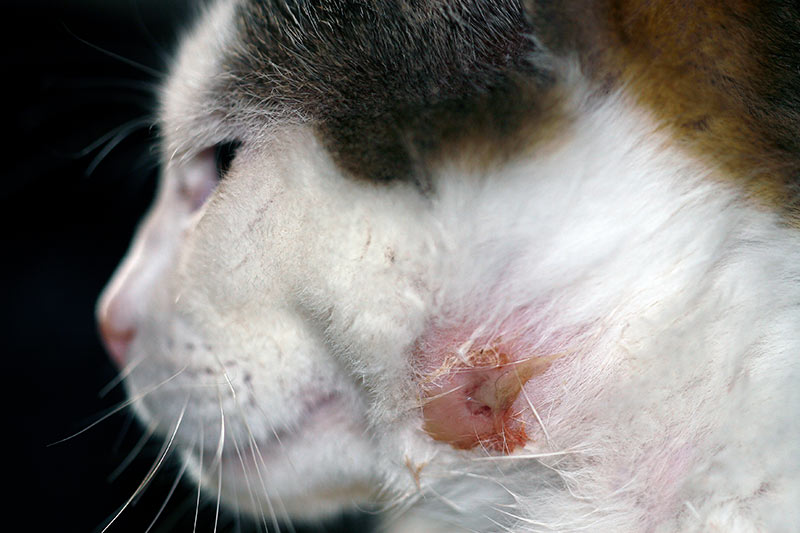
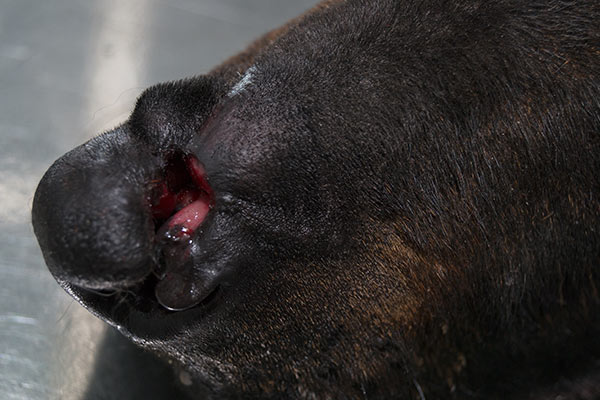
Commonly occurring on the face, legs and base of the tail, a bite-wound abscess usually presents as a painful, fluid-filled lump under the skin. Owners may observe a small scab over a puncture wound near the lump, but sometimes an abscess is not noticed until it breaks through the skin and oozes pus. The animal may develop a fever before the abscess is obvious and appetite and activity level may decrease.
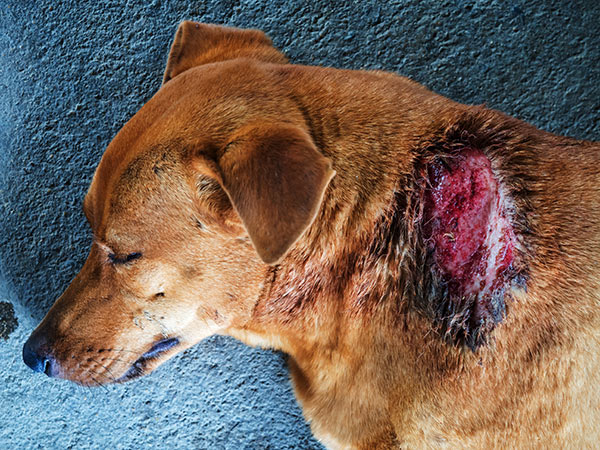
An abscess from a bite may have the following symptoms:
- A red, swollen, fluid-filled lump under the skin that is sensitive to the touch
- Heat from the site
- A bad odour from the site
- Skin rupture
- A discharge of pus oozing from the site
- Bleeding or oozing around the wound
- Hair-loss in the area
- Excessive licking or biting at the site
- Limping (if the abscess is on a limb)
- Loss of appetite
- Lethargy
- Depression
- Fever
- Pain
Expert advice from Dr Felicia:
An abscess usually takes a few days to form and start to cause signs of illness as the infection begins to take hold under the injured skin.
Causes of an abscess from a bite in cats and dogs
Abscesses are usually formed when there is an infected wound under the skin. Bite wounds are especially likely to abscess because of the prevalence of bacteria in the mouth and on the teeth.
Causes of cat bite abcesses
The likelihood of a cat bite abscess occurring depends on exposure to other cats and whether they sustain wounds from teeth or claws underneath the skin. Cat bites are notorious for causing severe cat abscesses for two main reasons:
- Cat canine teeth are long, thin, and dagger-sharp, easily puncturing the skin and tearing into flesh.
- Several particularly pathogenic bacteria live inside a cat’s mouth, including pasteurella multocida and staphylococcus; abscesses form in response to these bacteria and many others.

An abscess from a bite wound usually occurs after a fight or rough play between two cats, or even a cat and another animal. Cat abscesses occur more frequently in cats that have access to the outdoors than in indoor cats, because of the outdoor cat’s greater exposure to other animals. Cats are territorial and are more likely to fight unfamiliar cats they meet outside than familiar cats within the household. In outdoor cats, bite wounds sustained from other cats (and sometimes from wild animals) often develop into serious infections that require immediate veterinary care.
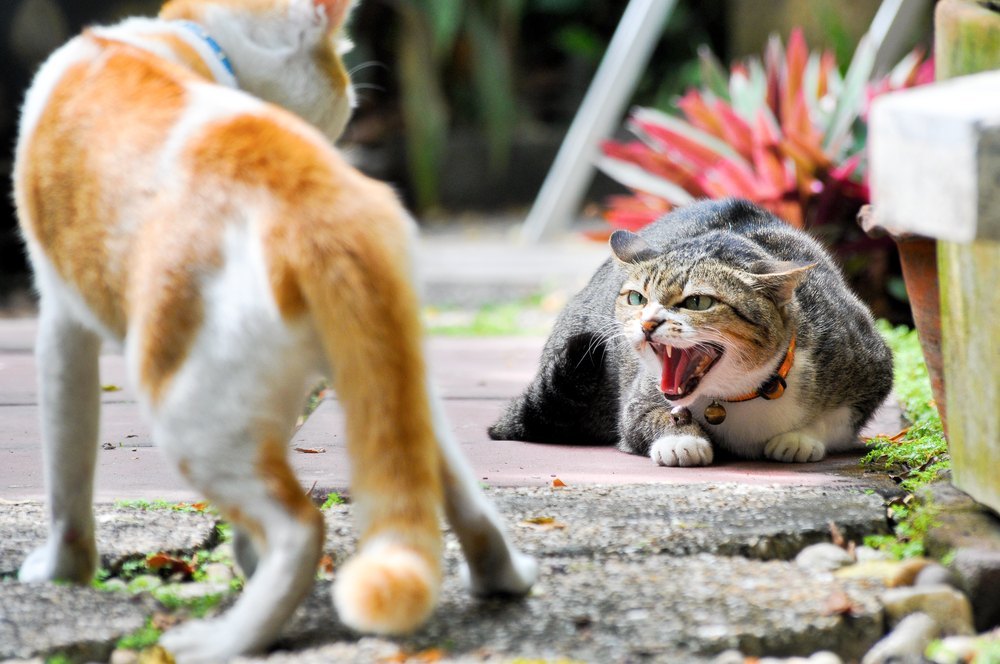
Interestingly, it is thought that cats are excellent predators partly because of their abscess-causing ability. If they fail to kill during the first attack, there is a good chance that their target will succumb to infection and be easy prey a few days later.
Expert advice from Dr Felicia:
Indoor cats that escape outside even briefly, or are unlucky enough to have had unexpected outdoor cats enter the house through windows can get cat fight abscesses. Cat’s mouths are full of bacteria that when deposited under the skin can cause significant illness quickly.
Causes of dog bite abcesses
Although abscesses in dogs are much less common, dog’s mouths and teeth also contain many pathogenic bacteria that can lead to abscess formation in the victim of a dog bite, including:
- Pasteurella
- Streptococcus
- Neisseria
- Corynebacterium
Expert advice from Dr Felicia:
There are other reasons why an abscess can occur in cats and dogs. While animal bites are the most common cause, other causes include foreign bodies such as grass seeds making their way under the skin, and less commonly cancerous masses can form abscesses.
How is a bite abscess diagnosed?
A veterinarian will usually be able to diagnose an abscess from a bite from a physical examination and a description of the symptoms. It may be necessary to shave hair from parts of the body to look for bite wounds. Occasionally, a tiny bite wound in the early stages of infection may evade detection.
Because it is difficult to predict the costs of veterinary care, it can help to have measures in place to help prepare for the unexpected. Pet insurance can help by covering a portion of the eligible vet bill if the unexpected does happen.
Get a quick quote
The vet will often puncture a swelling with a sterile needle to obtain a sample of pus to positively identify the swelling as an abscess.
Diagnostic testing may be undertaken prior to treatment particularly in cats that appear unwell, including:
- Biochemistry tests to evaluate kidney, liver, and pancreatic function
- A complete blood count (CBC) to rule out blood-related conditions
- Electrolyte tests to identify if the animal is dehydrated or suffering from an electrolyte imbalance
Expert advice from Dr Felicia:
The sample of pus usually has a foul smell, and under the microscope looks like masses of inflammatory cells with bacteria, confirming the diagnosis.
Prognosis
Most dog and cat abscesses caused by a bite heal well with proper treatment, however, abscesses can be very serious if left untreated. Once an abscess forms, it is very difficult for the body to fight the infection unassisted, and an untreated abscess can lead more widespread infection. Even when the abscess ruptures and drains on its own, recurrence is extremely common without veterinary care. Animals with bite abscesses can also get sick enough to stop eating and become severely dehydrated. Prompt medical attention is a must for all bite wounds and resultant abscesses.
Expert advice from Dr Felicia:
In young, healthy pets abscesses generally have a good prognosis. In older, immunocompromised pets with other comorbidities they are more likely to become more unwell and can even become septic. These pets may need other additional supportive care apart from a routine treatment for their abscess.
Treatment for a bite abscess
The animal should be treated by a veterinarian as soon as the possibility of an abscess is identified. While outpatient treatment can be tried for open/burst abscesses, closed abscesses usually require a heavy sedation or anaesthesia to provide adequate treatment.
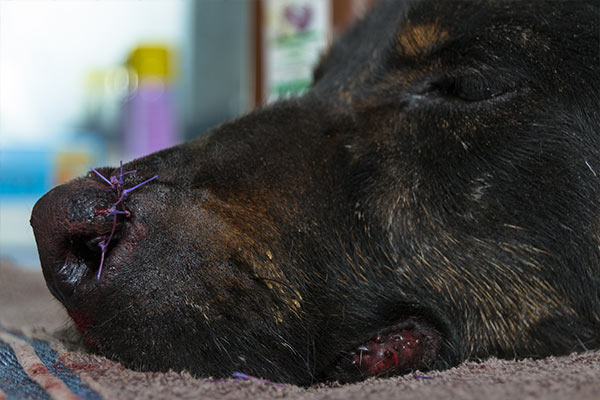
The area surrounding the abscess will generally need to be sterilised and shaved. The abscess is lanced, or punctured, to release the pus and the wound is flushed and cleaned with saline or dilute antiseptic. If there is a puncture hole noted in the wound this area may be trimmed back to suture healthy skin together and optimise healing. A sterile rubber drain is inserted to allow for discharge to drain out for a few days. Without the drain, the skin can seal before the underlying tissue is free of infection, which could lead to another abscess forming. An Elizabethan collar may be required to prevent the animal from licking and chewing at the wound.
Since an abscess is a bacterial infection, an antibiotic injection and / or oral antibiotics are usually necessary. Anti-inflammatories and pain-relief medications may also be prescribed.
Preventative measures:
- Undesexed cats are more likely to roam and challenge the territory of other cats, so desexing helps to reduce movement of outdoor cats outside.
- Especially for cats, keep them indoors or supervised if outdoors, so they are less likely to get into a fight
- Check animals with unsupervised outdoor access regularly for injuries.
- Consult your vet if you notice a wound.
- Ensure that your pet’s vaccinations are kept up-to-date (learn more about cat/kitten vaccinations and dog/puppy vaccinations.

In conclusion
An abscess is a localised pocket of infection. An abscess results when bacteria from the mouth and teeth invade a bite wound and infect the tissues below the skin. Cats that spend time outdoors are at greater risk for developing an abscess because of their exposure to other animals. During fights, cats can inflict deep bite wounds that frequently become infected and form an abscess.
Signs of an abscess in a dog or cat include fever, lethargy, loss of appetite, pain and the appearance of a swollen area under the skin, or the skin may rupture, leaking foul-smelling pus onto the fur. Treatment usually includes lancing, cleaning and draining the abscess, as well as antibiotics to fight the infection.
Bow Wow Meow Pet Insurance can help protect you and your pet should an unexpected trip to your vet occur.
- Find out more about our dog insurance options
- Find out more about our cat insurance options
- Get an instant online pet insurance quote
Bow Wow Meow is proud to have been awarded winner of Canstar’s ‘Most Satisfied Customers’ Award in the Pet Insurance category for both 2024 and 2025!
Bow Wow Meow is proud to be the only Pet Insurer that has been awarded Product Review’s Top Rated Pet Insurance every year from 2018 to 2026! This is based on 3,193 independent customer reviews (as at 09/04/2026), with an overall rating of 4.5 stars.

We also have the following ratings on other review platforms:
Google Review rating of 4.5 stars (based on 1,358 reviews)
Trust Pilot rating of 4.6 stars (based on 555 reviews)
Bow Wow Meow has been chosen as Winner of 4 categories in the 2026 Finder Pet Insurance Customer Satisfaction Awards!




– Most Trusted Pet Insurance
– Easiest to Claim Pet Insurance
– Most Recommended Pet Insurance
– Legendary Service Pet Insurance
We also received Highly Commended Awards for Loved Brand Pet Insurance and Best Value Pet Insurance.
Bow Wow Meow is an Australian-owned and operated pet insurance provider. Our focus is purely on pets, and we are proud to have helped provide peace of mind to over 200,000 Aussie pet owners since 2008.
More information
http://www.pethealthnetwork.com/cat-health/cat-diseases-conditions-a-z/abscesses-cats
https://dogtime.com/dog-health/52857-abscesses-dogs-causes-symptoms-treatments