Congestive heart failure (CHF) in dogs and cats

Summary
CHF results from heart conditions that impair pumping, leading to cough, breathlessness, fatigue and fluid build up. Vets diagnose with chest X rays, ultrasound and blood tests. Treatment includes diuretics, ACE inhibitors, pimobendan and tailored exercise. Monitor breathing rates at home and seek help if signs worsen.
What is congestive heart failure (CHF)?
Heart failure occurs when the heart is unable to pump blood adequately around the body. Rather than a specific disease, heart failure is a syndrome that can be brought about by various diseases or disorders affecting the cardiovascular system; which ultimately result in the failure of the cardiovascular system to maintain adequate blood circulation. Heart failure is not the same as heart disease. Heart disease can be present without ever leading to heart failure; however, heart failure can occur only when severe heart disease is present.
Expert advice from Dr Felicia:
Congestive heart failure is a medical emergency and can quickly result in death if severe, as affected animals cannot breathe due to fluid build up in the lungs.
In heart failure, the reduced pressure of blood flow through the body means organs cannot receive enough oxygenated blood for proper function. When the heart is unable to pump enough blood ‘forward’ into the circulatory system, a backlog of fluid will then can back up or accumulate within the organs. This syndrome is termed congestive heart failure (CHF) because fluid backs up within the organs, most commonly in the lungs, the space around the lungs and the abdomen, causing congestion and malfunction of the affected organs.
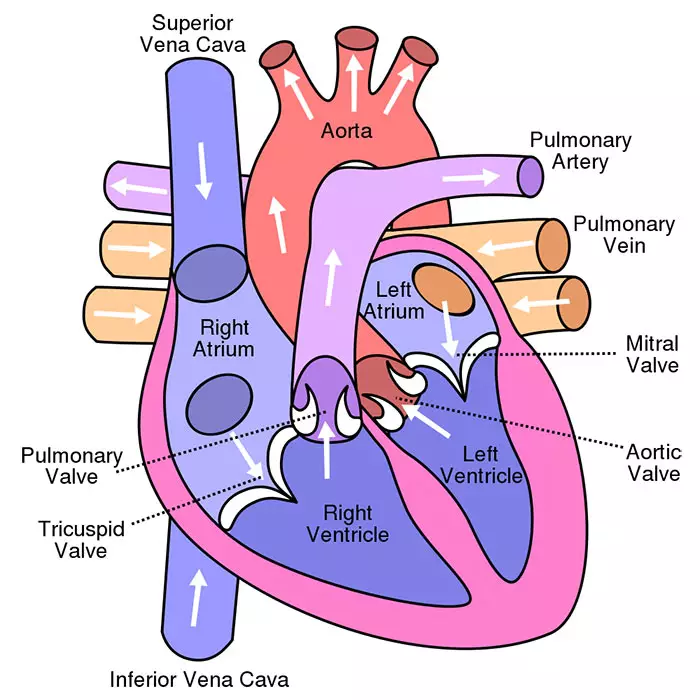
Congestive heart failure in dogs and cats can result from a failure on the left, right or both sides of the heart:
Right-sided congestive heart failure in dogs and cats
Right-sided congestive heart failure (RS-CHF) occurs as the result of heart disease in the right chamber of the heart. When the heart contracts, or pumps, the right ventricle pushes the blood through the lungs for oxygenation. However, in the case of RS-CHF, some of the blood leaks back through the tricuspid valve (the valve between the right atrium and right ventricle) into the right atrium. This creates increased pressure in the vessels delivering blood to the right atrium, as well as the body’s veins and capillaries, causing fluid to back up and consequently become “congested” within the systemic circulation (the main circulation of the body). Fluid may accumulate in the abdomen (a condition called “ascites”), the chest cavity and the liver, compromising the functioning of these organs. Fluid may also leak from veins in the limbs, causing an accumulation of fluid in the tissues, a condition called “peripheral oedema”.

Left-sided congestive heart failure in dogs and cats
Left-sided congestive heart failure (LS-CHF) is the most common form of congestive heart failure in dogs and cats. The classic signs of heart failure, coughing and fluid in the chest, are most commonly caused by LS-CHF.
LS-CHF occurs as the result of heart disease in the left chamber of the heart. When the heart contracts or pumps, the left ventricle pushes the blood into the systemic circulation (the main circulation of the body). However, in LS-CHF, some of the blood leaks through the mitral valve back into the left atrium. This causes a backup of pressure in the vessels delivering blood to the left ventricle which in turn causes back up into the lungs. Fluid then penetrates the lung tissue and accumulates within the air sacs of the lungs, resulting in a condition called “pulmonary oedema” and typically causing breathing difficulties and coughing.
Expert advice from Dr Felicia:
The more subtle, early signs of left-sided congestive heart failure are a faster breathing rate, especially at rest, and progressive exercise intolerance. Being able to identify and treat at the early stages reduces the likelihood of requiring hospitalisation and intensive care.
Biventricular congestive heart failure in dogs and cats
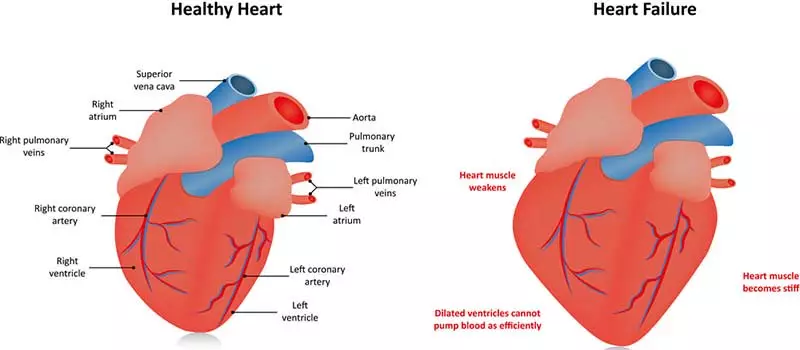
Biventricular failure can arise when both the right and left ventricles are not functioning properly, such as in dogs with dilated cardiomyopathy or poisoning causing heart muscle failure in both chambers.
Symptoms of congestive heart failure (CHF) in dogs and cats
Signs and symptoms associated with heart failure in dogs and cats depend on the causes of the heart failure and which heart chamber is affected. Breathlessness and lethargy are the most commonly observed signs; many animals with CHF will tire easily, have reduced stamina and no longer participate in playing or walking as they previously did. Depending on the degree of severity, signs of heart failure may appear while the animal is at rest, during mild exertion, or during moderate or extreme exercise. In the early stages, no signs may be evident.
As there are specific pathways by which heart disease culminates in heart failure, there are specific signs that can occur. Typically, these may include:
- Difficulty breathing
- Rapid breathing
- Noisy breathing
- Constant panting
- Open-mouthed breathing
- Coughing when at rest or sleeping
- Increased heart rate
- Heart murmur
- Unusual lung sounds
- Lethargy
- Exercise intolerance
- Persistent loss of appetite
- Weight loss
- Muscle wasting
- Blue or grey tongue and gums (an indication of severe breathing difficulty)
- Hind limb paralysis
- Swollen belly
- Enlarged liver
- Collapse
- Sudden death
Expert advice from Dr Felicia:
Unfortunately some of the signs of heart disease are subtle and non-specific, especially when there is no evidence of a heart murmur on physical examination, and diagnosis can only made once the patient is showing signs of heart failure.
With left-sided congestive heart failure in dogs and cats, signs are often associated with pulmonary oedema, i.e. the accumulation of fluid within the lungs. The most common signs are:
- Persistent coughing
- Difficulty breathing
- Rapid breathing during sleep or rest
- Exercise intolerance (fatigue with trouble breathing associated with exercise)
- Fainting, due to lack of blood flow and oxygen to the brain
- A high heart rate
- Low blood pressure
- Collapse
Because it is difficult to predict the costs of veterinary care, it can help to have measures in place to help prepare for the unexpected. Pet insurance can help by covering a portion of the eligible vet bill if the unexpected does happen.
Get a quick quote
Causes of CHF in dogs and cats
Heart failure is a clinical syndrome that occurs secondary to severe and chronic cardiac disease. It occurs because the heart is no longer able to maintain one or more of the following functions at normal levels:
- Cardiac output, or the amount of blood pumped by the heart per minute
- Pressure within the veins and capillaries, or the force that the blood exerts against the vessel walls as the blood moves through them
- Systemic blood pressure, or the pressure exerted on blood vessels carrying blood from the heart to the body’s tissues
Causes of congestive heart failure in cats
CHF in cats can occur at any age, in any breed, and either gender, but it occurs more frequently in middle-aged to older animals. Maine Coons may be genetically predisposed to certain types of CHF.
There are many primary cardiac diseases and disorders that occur in cats and ultimately lead to CHF, including:
- Hypertrophic cardiomyopathy, the most common cause in cats, a condition that causes the walls of the heart to thicken and lose their ability to stretch and pump blood to the body.
- Hyperthyroidism, or thyroid disease
- High blood pressure
- Heart valve disorders
- Heart wall disorders
- Fluid in the heart sac (“pericardial effusion”)
- Blood clots in the heart
- Abnormalities of heart rhythm
- Heartworm disease
- Tumours
- Anaemia
Expert advice from Dr Felicia:
It is often hard to detect heart disease in cats, and pre-disposed breeds may benefit from more rigorous screening (usually bloodwork initially and then imaging if bloodwork is suggestive of cardiac disease)to identify disease early on to either commence treatment or monitor its progression.
Causes of congestive heart failure in dogs
There are several causes of congestive heart failure in dogs. Some of these may be congenital or inherited (where the dog was born with the heart defect), while some of the causes can be prevented. The most common primary cardiac disorders that can ultimately lead to congestive heart failure in dogs include:
- Mitral valve insufficiency (MVI), or a leaky mitral valve (the valve between the left atrium and the left ventricle) – it is estimated that 80% of canine CHF cases are caused by MVI. Initially, MVI results in LS-CHF. If left untreated, the heart failure may progress to involve both sides of the heart.
- Dilated cardiomyopathy (DCM), a disease of the heart muscle – a common cause in larger dogs, particularly Dobermans, Irish wolfhounds, and giant breed dogs.
- Abnormalities of heart rhythm – most commonly seen in Boxers
- Narrowing of some of the major blood vessels
- Heartworm infection – a preventable disease
Expert advice from Dr Felicia:
Mitral valve disease is extremely common in smaller dogs especially Cavalier King Charles Spaniels. Thankfully it is easily identified through the presence of a heart murmur on the physical examination and then intensity of the murmur tends to slowly progress over time. This ideally allows for the ability to commence heart medication once there is evidence of heart muscle remodelling (detected by chest radiograph or cardiac ultrasound), but prior to a congestive heart failure episode.
Congenital (birth) defects that can ultimately result in CHF include:
- Subaortic stenosis (SAS) – a common congenital cardiac defect in dogs, particularly large breeds, but rare in cats, it is a narrowing along the aorta as it leads out of the heart.
- Ventricular septal defects (VSD) – a hole in the heart occurring in the septum, the wall that separates the right and left ventricles
- Persistent ductus arteriosus (PDA) – the most common congenital heart disease in dogs, it is caused by the failure of the ductus arteriosus muscle to constrict, leaving a passageway for blood flow and resulting in eventual left-sided heart disease and/or generalised heart failure. It is hereditary in several breeds.
- Chronic valvular heart disease (CVHD), which results in leaky heart valves – CVHD is more commonly seen in Cavalier King Charles Spaniels, Miniature Poodles, and smaller breeds of dogs.
- Tetralogy of Fallot – a congenital defect of the heart that involves four abnormalities:
- Ventricular septal defect (a hole between the two ventricles)
- Pulmonic stenosis (obstruction of blood flow through the pulmonary valve)
- An overriding aorta (the aorta is positioned directly over a ventricular septal defect (VSD), instead of over the left ventricle)
- Right ventricular hypertrophy (thickening of the heart muscle)
How is CHF in dogs and cats diagnosed?
Congestive heart failure is usually diagnosed based on medical history, symptoms and physical examination findings, such as the presence of fluid in the lungs. To definitively diagnose congestive heart failure in dogs and cats and determine its underlying cause, the vet will usually perform several tests.
Expert advice from Dr Felicia:
Congestive heart failure may be a presumptive diagnosis based on an initial assessment and history if a dog or cat is too unstable to perform further diagnostics, with stabilising the patient the more immediate priority.
Auscultation
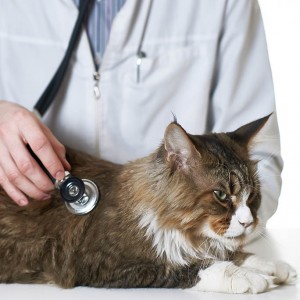
Auscultation, or listening to the heart with a stethoscope, is the first step in diagnosing heart disease.
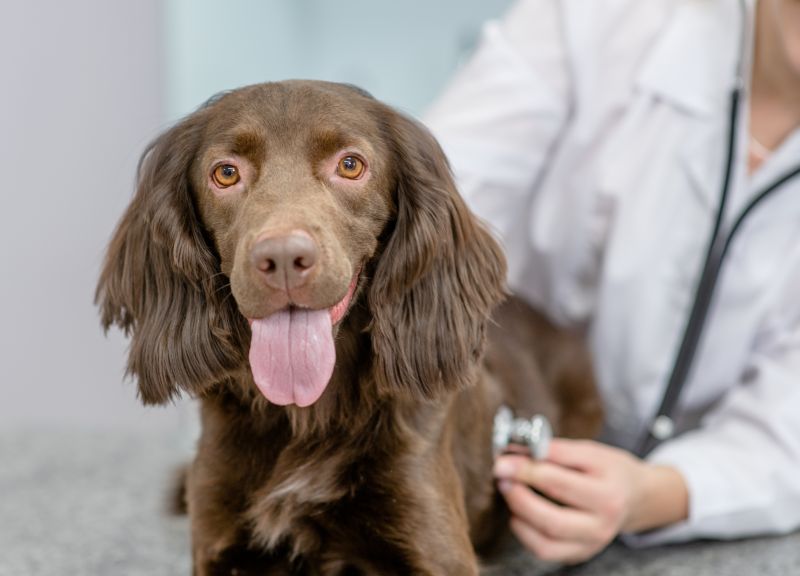
- A heart murmur may be detected; the murmur’s location and intensity may determine its significance
- The heart rhythm is evaluated, and if there are concerns, the vet may palpate or feel the pulse to determine its strength and rhythm
- The lungs are assessed, looking for evidence of changes associated with heart failure – with a stethoscope, sounds of congestion which may indicate the presence of fluid in the lungs can be detected.
Chest radiographs (x-rays)
Chest x-rays are taken to assess the size and shape of the heart and the blood vessels and to look for lung changes such as the presence of fluid.
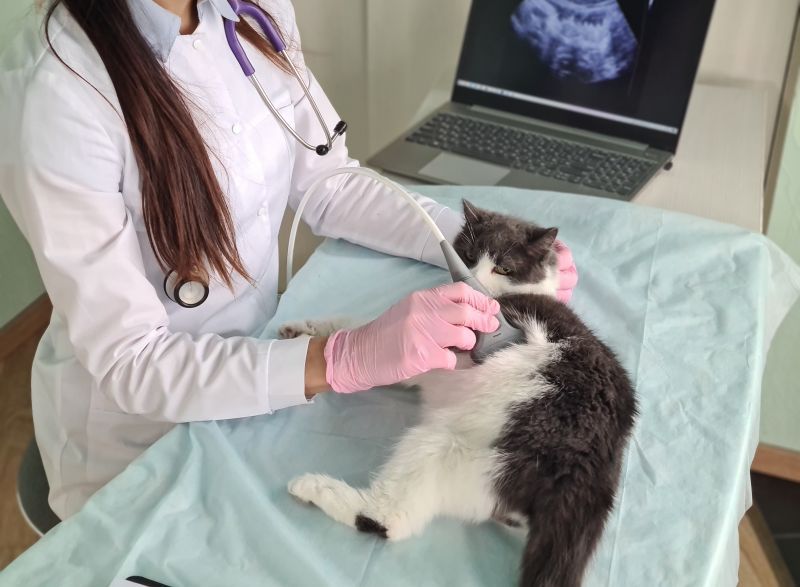
Chest ultrasound
An ultrasound probe may be placed on the chest to identify increased congestion in the lungs, and examine the size of the left atrium.
Blood and urine tests
Tests including complete blood count, biochemical panel, thyroid hormone test, heartworm test, and urinalysis are performed to give an indication of any other disorders in the body. Kidney function may be impaired in animals with heart disease and this may affect long term prognosis.
Electrocardiogram (ECG)
An electrocardiogram measures the electrical activity of the heart and allows accurate determination of both heart rate and rhythm. Abnormal rhythms can be detected and evaluated.

Echocardiogram
Echocardiogram utilises ultrasound waves to evaluate the heart. The size and thickness of each heart chamber can be measured, and the efficiency of the heart’s contractions (pumping) can be observed and measured.
Blood pressure measurements
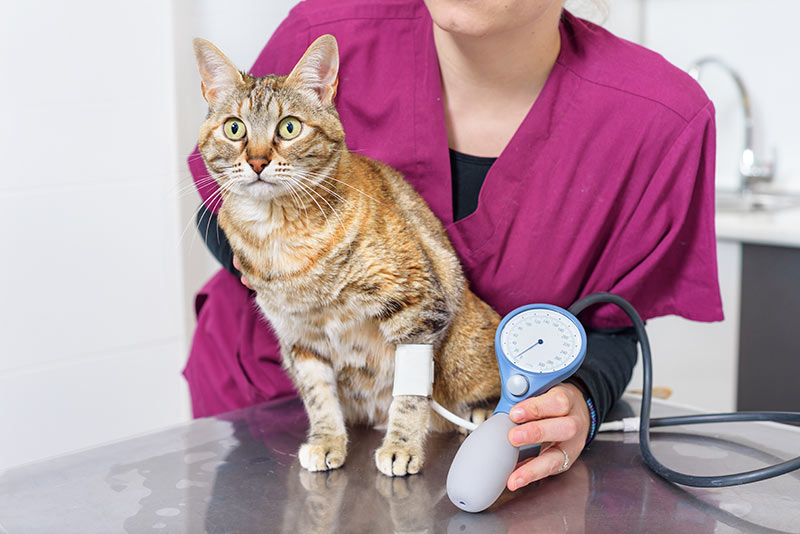
Blood pressure will be measured.
Expert advice from Dr Felicia:
Since the diagnosis of heart disease will have ongoing ramifications for patient and owner, these tests help to provide a more complete picture of the pet’s health, which will likely affect prognosis, and recommended treatments to keep things in balance.
Prognosis
The prognosis for dogs with congestive heart failure is best when diagnostics and a treatment plan are commenced prior to a congestive heart failure episode, underlying the importance of regular checkups to identify heart murmurs which may be the only sign. However, depending on the underlying cause of congestive heart failure and appropriate treatment, some patients can go on to live a normal life for many months or years. Treatment is aimed at improving the length and quality of life, however ultimately heart disease is usually progressive and end-stage congestive heart failure may necessitate euthanasia.
Expert advice from Dr Felicia:
As heart disease is primarily one of medical management, the progression is usually addressed by the addition of more medication to manage symptoms. This can become challenging for pets and their owners, and medications may have side effects that cause deterioration of other organs, such as the kidneys.
Treatment for congestive heart failure (CHF) in dogs and cats
In most cases, congestive heart failure in dogs and cats cannot be cured. However, appropriate treatment can almost always improve the animal’s quality and length of life by achieving one or more of the following:
- Improving heart muscle function
- Normalising arrhythmias
- Controlling blood pressure
- Improving blood flow
- Reducing the amount of blood filling the heart before contraction
- Reducing the amount of fluid in the lungs, abdomen and/or chest cavity
In certain cases, treatment of the underlying condition may resolve CHF, for example in cats with hyperthyroidism. If the cause is an underlying congenital condition (a heart defect that was present from birth), surgical repair of the defect may resolve the CHF.
Unsure how serious it is?
Bow Wow Meow policyholders can get access to trusted vet care anytime, anywhere, at no additional cost. Connect to an experienced Australian registered vet via video call, 24/7. Whether it’s providing vet advice, setting up at-home treatment plans, or confirming if you need to visit a vet in person, you can get help when you need it.
Find out more about our pet insurance cover options.
Medical therapies
There are many types of drugs that are be prescribed for treating CHF, depending on the symptoms, underlying cause and severity of the syndrome. After a thorough diagnosis, the veterinarian will decide on those that are most appropriate. Prescription medications can be used to control symptoms and improve the overall quality of life, and in most cases, will need to be given for the duration of the animal’s life. The prescribed medicines may include:
- Diuretics, for reducing fluid build-up
- A type of drug called positive inotropes, to improve heart muscle contractions; i.e. they help the heart beat more effectively
- Blood pressure medication, including ACE (angiotensin-converting enzyme) inhibitors and vasodilators, to dilate the blood vessels and thus lower blood pressure
- Beta-adrenergic blocking drugs (beta-blockers), to reduce blood pressure and improving blood flow
- Medications to treat heart arrhythmias
- Anti-anxiety medications for animals that are having severe trouble breathing
Expert advice from Dr Felicia:
It is critical that medications are given as instructed for life. These medications cannot be skipped without a serious risk of congestive heart failure occurring. It is important to make sure that adequate supplies of the medication are kept so no doses are missed.
Nutrition
The aims of nutritional therapies for animals with heart failure include supplying adequate calories, reducing inflammation, balancing sodium, and supplementing any missing nutrients.
- A low-sodium diet may be recommended for animals with severe CHF, to help prevent fluid accumulation.
- In animals with mild to moderate CHF, diets high in salt and human foods (“table snacks”) should be avoided.
- Prescription diets tailored for differing levels of sodium restriction are available, as are sodium-free snacks.
- Supplementation with omega-3 fatty acids is thought to help decrease inflammation.
- Some types of heart failure are caused by a deficiency of a nutrient and can be treated by supplementation with the missing nutrient, for example, taurine supplementation in cats with verified deficiencies.
Other treatments
In addition to drugs and nutrition, other types of treatment may be recommended. These include:
Hospitalisation
If symptoms are severe, particularly if the animal is having difficulty breathing or has extremely low blood pressure, hospitalisation may be required. Oxygen therapy, intravenous administration of diuretic medication and removal of fluid from the chest or abdomen (see below) may be performed during hospitalisation.
Oxygen therapy
Animals with severe left-sided CHF and fluid in the lungs (pulmonary oedema) may not get enough oxygen. Oxygen can be given by way of an oxygen cage, tight-fitting mask, oxygen collar, or via an intranasal catheter.
Expert advice from Dr Felicia:
When dogs and cats are hospitalised for congestive heart failure they may receive sedation to help keep them calm as this reduces their oxygen demand, oxygen supplementation and intravenous diuretics to help remove the fluid accumulation and help them to stabilise. End points of therapy are when respiratory rates are normalised, oxygen saturation is appropriate on room air, and the patient is no longer in distress.
Removal of fluid from the chest cavity or abdomen
Thoracentesis and abdominocentesis are surgical procedures in which a needle is inserted into either the chest cavity or abdomen to withdraw excess fluid. It may be used to treat animals with CHF that have an accumulation of fluid in these areas. The procedure can lead to rapid improvement in symptoms and can be performed repeatedly, if necessary. When fluid build-up has been removed, the heart is able to pump blood more efficiently and the animal can breathe more easily.
Surgical treatment
Surgery may be recommended to treat cases of CHF that are caused by a birth defect or a congenital or acquired heart valve disease. This treatment option is often expensive and may require a surgical specialist.
Exercise program
The vet may recommend a moderate exercise plan intended to strengthen the heart while keeping blood pressure under control. If the vet has not specifically recommended exercise, then the animal should be kept calm and activity should be limited.
Rest
The vet may recommend rest; if the animal is overly active, the owner may need to intervene. Periodic cage rest may be necessary, and it may be helpful to set up barriers to limit space available for running and jumping.
Ongoing monitoring
Periodic blood tests, radiographs, and echocardiograms are usually required to monitor the effects of treatment and the disease progression.

Prevention
As soon as possible after a dog or cat is diagnosed with a heart abnormality, the animal should be assessed to help prevent the development CHF. It is possible to live with heart disease for years without it developing into of CHF, if the heart disease is controlled with appropriate treatment.
Expert advice from Dr Felicia:
Heart murmurs are the most obvious indicator of potential heart disease. Chest radiographs and biomarkers on blood tests can also be used as screening tools for identifying heart disease prior to a congestive heart failure episode.
In conclusion
Congestive heart failure (CHF) is a condition that occurs when insufficient blood is circulated throughout the body, causing fluid to back up into, or congest in, the lungs or other organs. CHF can occur in either the right or left side of the heart, or in both sides.
CHF is usually the end result of severe, overwhelming cardiac dysfunction. In cats, it is commonly caused by hypertrophic cardiomyopathy, a thickening of the heart walls. In dogs, MVI (mitral valve insufficiency) is the most frequent cause of CHF. However, there are many other causes, including congenital problems, irregular heart rhythms and narrowing of some of the major blood vessels.
The most common symptoms of CHF are persistent coughing and difficulty breathing, typically caused by the accumulation of fluid in the lungs, as well as breathlessness and lethargy. If an animal is displaying possible symptoms, a prompt veterinary consultation is warranted.
CHF in dogs and cats is a life-threatening condition that requires immediate medical treatment. In most cases, it is not curable, and treatment is aimed at reducing the symptoms and improving the efficiency of the heart. Medical treatment options include diuretics help to reduce fluid build-up, vasodilators or ACE inhibitors to dilate the blood vessels, and positive inotropes to increase the amount of blood that is pumped through the body. Prescription medications will need to be used for the duration of the animal’s life. Other treatment options include nutritional modification, drainage of fluids and, in certain cases, surgery.
Bow Wow Meow Pet Insurance can help protect you and your pet should an unexpected trip to your vet occur.
- Find out more about our dog insurance options
- Find out more about our cat insurance options
- Get an instant online pet insurance quote
Bow Wow Meow is proud to have been awarded winner of Canstar’s ‘Most Satisfied Customers’ Award in the Pet Insurance category for both 2024 and 2025!
Bow Wow Meow is proud to be the only Pet Insurer that has been awarded Product Review’s Top Rated Pet Insurance every year from 2018 to 2026! This is based on 3,193 independent customer reviews (as at 09/04/2026), with an overall rating of 4.5 stars.

We also have the following ratings on other review platforms:
Google Review rating of 4.5 stars (based on 1,358 reviews)
Trust Pilot rating of 4.6 stars (based on 555 reviews)
Bow Wow Meow has been chosen as Winner of 4 categories in the 2026 Finder Pet Insurance Customer Satisfaction Awards!




– Most Trusted Pet Insurance
– Easiest to Claim Pet Insurance
– Most Recommended Pet Insurance
– Legendary Service Pet Insurance
We also received Highly Commended Awards for Loved Brand Pet Insurance and Best Value Pet Insurance.
Bow Wow Meow is an Australian-owned and operated pet insurance provider. Our focus is purely on pets, and we are proud to have helped provide peace of mind to over 200,000 Aussie pet owners since 2008.