Is the British Bulldog a good family dog?


British Bulldog
British Bulldogs, also known as English Bulldogs, are medium-sized, thickset companion dogs known for their distinctive wrinkled faces, broad bodies and gentle, affectionate personalities. Modern Bulldogs are generally people-oriented and enjoy being closely involved in family life, although individual temperament varies.
| Recommended for | Families, singles and seniors |
| Breed Classification | Non Sporting |
| Other names | English Bulldog |
| Lifespan | 8-10 years |
| Size | Medium |
| Temperament | Gentle, affectionate, stubborn |
| Intelligence | Average: capable learners, but independent and sometimes less motivated by repetitive training |
| Tendency to bark | Low: generally quiet dogs that tend to bark mainly when alerting or excited |
| Maintenance Level | Medium: coat care is easy, but skin folds, ears, tail area and breed-related health needs require regular attention |
| Health Risk | British Bulldogs have a high incidence of respiratory, skin, eye, joint and conformation-related health problems. Their brachycephalic build and characteristic skin folds mean they require particular attention to breathing, heat tolerance, weight and skin care. |
Thinking of insuring a British Bulldog?
Explore the Top 5 health issues claimed for British Bulldogs, including highest claims paid and how much pet insurance could help you save on eligible vet bills.
See British Bulldog pet insurance Ready to get cover? Get a quick quote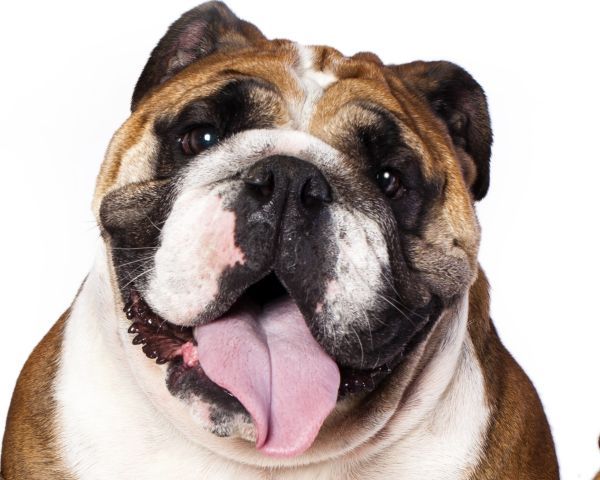
British Bulldog personality and temperament
British Bulldogs are generally affectionate, calm and people-oriented dogs that tend to form strong bonds with their families. Despite their tough appearance and historic association with bull baiting, the modern Bulldog was developed primarily as a companion and should have a stable, even temperament.
They often enjoy spending plenty of time with their owners and can be playful and surprisingly determined when something interests them. Their independent nature can sometimes make them appear stubborn during training, but patient, reward-based methods generally produce better results than force or confrontation.
British Bulldogs with kids and other pets
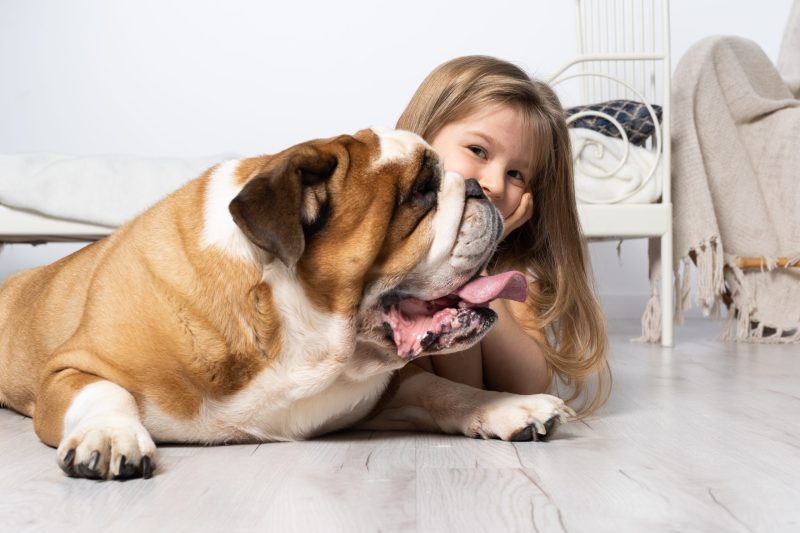
Well-socialised British Bulldogs can make affectionate family companions and often enjoy the company of children. Their relatively calm nature can suit family life, although interactions between dogs and young children should always be supervised and children should be taught to handle dogs gently and respect their space.
Many Bulldogs can also live successfully with other dogs and pets when introduced and socialised appropriately. Individual temperament and compatibility vary, so introductions should be gradual rather than assuming every Bulldog will automatically accept other animals.
British Bulldog training and exercise
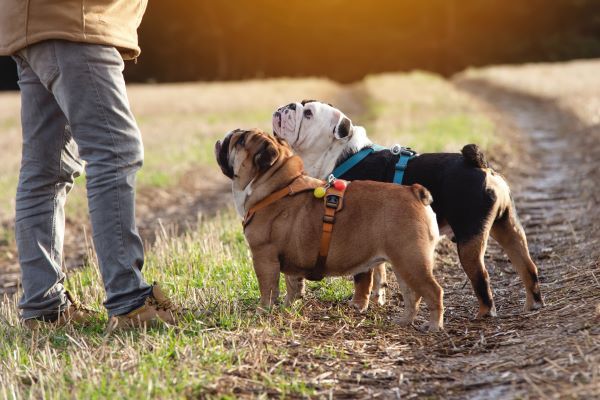
British Bulldogs have relatively modest exercise needs but still benefit from daily activity to maintain muscle, mobility and a healthy body weight. For a healthy adult, several short walks and play sessions totalling around 30–60 minutes per day may be appropriate, although exercise should always be adjusted to the individual dog’s breathing ability, age, weight and health.
Because Bulldogs are brachycephalic, they can overheat quickly and may have reduced exercise tolerance. Walks should take place during cooler parts of the day in hot or humid weather, particularly during an Australian summer. Stop exercise if your Bulldog shows excessive panting, noisy or laboured breathing, weakness or distress.
Bulldogs can learn well but may be independent and easily lose interest in repetitive training. Short, positive reinforcement-based sessions using food, toys or praise generally work best. Early socialisation and training should focus on basic manners, lead walking, recall and calm behaviour around people and other animals.
| Energy level | Low to moderate: generally calm but still playful |
| Exercise requirements | Moderate: around 30–60 minutes of gentle daily activity, adjusted for breathing ability and heat |
Common health issues for British Bulldogs
What do British Bulldog owners claim for the most?
British Bulldogs have a relatively high risk of health problems, many of which are associated with their brachycephalic anatomy, skin folds and compact body shape. Responsible breeders should undertake appropriate respiratory, eye, joint, cardiac and genetic health screening.
- Brachycephalic obstructive airway syndrome (BOAS) occurs when abnormalities associated with the shortened skull restrict airflow through the upper airway. Signs can include noisy breathing, snoring, reduced exercise tolerance, gagging and difficulty coping with heat. More severely affected dogs may require surgery. Bulldogs are considered a high-risk breed for BOAS.
- Skin-fold dermatitis and skin allergies are important concerns. Moisture, friction and debris can collect within facial, body and tail folds, leading to irritation and infection. The Royal Kennel Club specifically monitors Bulldogs for dermatitis and irritation within skin folds.
- Eye conditions include cherry eye, dry eye, entropion and other problems associated with the breed’s facial anatomy. Cherry eye occurs when the gland of the third eyelid prolapses, while entropion causes the eyelid to roll inward and rub against the eye.
- Hip and elbow dysplasia and patellar luxation are developmental joint disorders that can contribute to pain, lameness and arthritis. Dogs Australia’s British Bulldog health scheme recommends hip, elbow and patellar assessment of breeding dogs.
- Hyperuricosuria (HUU) is an inherited condition that increases uric acid in the urine and can predispose affected dogs to urinary stones. DNA testing is available and is recommended within Australian Bulldog breeding programs.
- Heart conditions also occur in the breed, and Dogs Australia’s recommended screening includes veterinary cardiac examination for heart murmurs.
- Very tight or inverted tails can also create skin problems around the tail pocket and may be associated with spinal abnormalities.
Not all conditions are covered by Pet Insurance. For details of Bow Wow Meow Pet Insurance cover, refer to the Product Disclosure Statement.
How to choose the right insurance for your British Bulldog
When comparing cover for your British Bulldog, look for:

Cover for common British Bulldog conditions:
Check that the policy covers conditions British Bulldogs can be prone to, including common health issues.

Cover for hereditary conditions:
No exclusions for hereditary or congenital conditions⑅.

Flexible cover options:
Options to adjust your annual benefit limit, reimbursement rate and excess.
Bow Wow Meow's Nose-to-Tail Cover offers flexible options for your British Bulldog, with cover for accidental injuries, illnesses and hereditary conditions⑅. Get a quick quote for cover that suits your British Bulldog and your budget.
British Bulldog feeding and nutrition
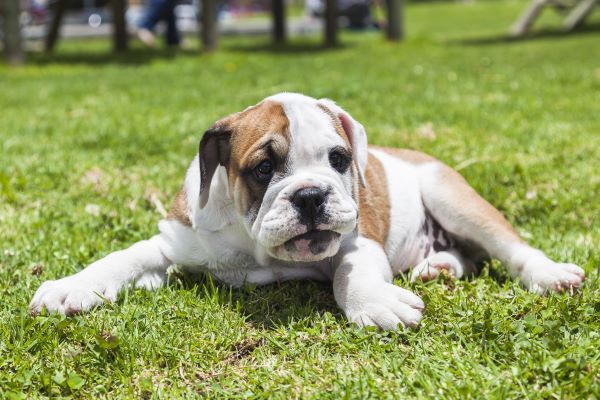
British Bulldogs should be fed a complete and balanced diet appropriate for their age, body condition, health and activity level. Because the breed can be prone to weight gain, meals should be measured and treats included when considering total daily calorie intake.
Maintaining a healthy weight is particularly important for Bulldogs because excess body weight can place additional strain on the joints and worsen breathing and heat intolerance. Speak to your vet if you have concerns about your Bulldog’s weight or individual nutritional requirements.
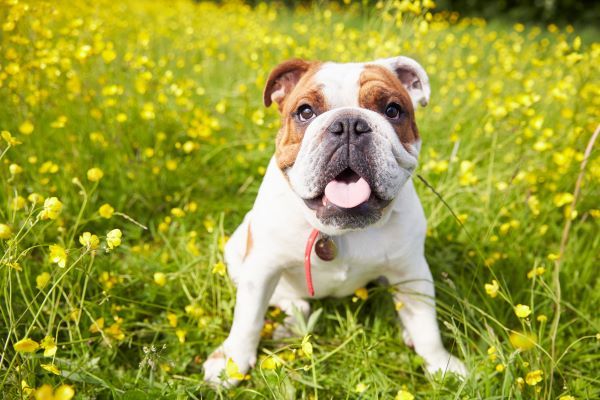
British Bulldog care and grooming
British Bulldogs have a short, smooth coat with relatively simple grooming needs. Weekly brushing generally helps remove loose hair and keep the coat in good condition, with more frequent brushing useful during heavier shedding. Bulldogs do shed, despite their short coat.
Their skin folds require much more attention. Facial wrinkles and folds around the tail should be checked regularly and kept clean and dry to reduce the risk of irritation and infection. The ears, nails and teeth also need routine care. Bulldogs may drool considerably, so the mouth and surrounding skin may need regular wiping.
Size, appearance and coat of British Bulldogs
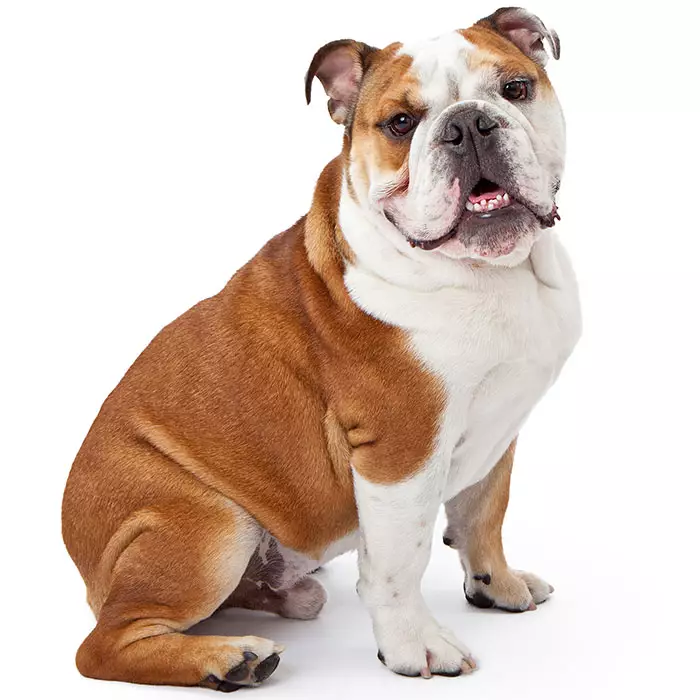
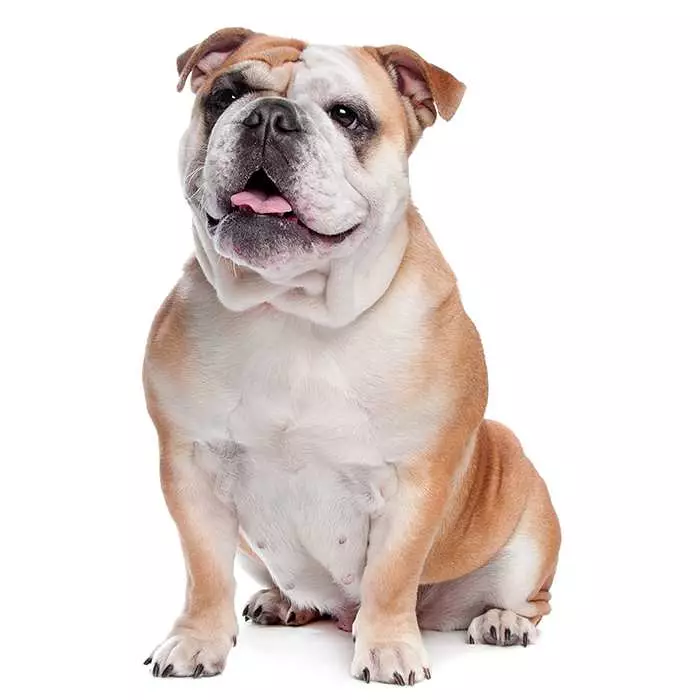
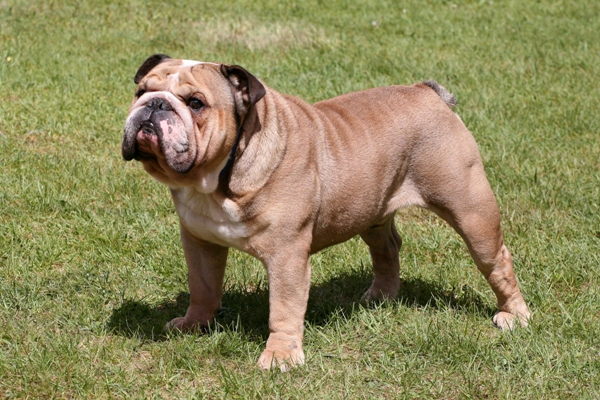
The British Bulldog is a medium-sized, low-set and powerfully built dog with a broad body, muscular limbs and a large, square-looking head. Its muzzle is short, broad and slightly upturned, with wide, open nostrils considered important for healthy breathing. Facial wrinkles should be present only in moderation and should not obscure the eyes or nose.
The coat is fine, short, close and smooth. Recognised colours include red, fawn, fallow and white, along with brindle and pied combinations and permitted black masking or tipping.
| Weight range | Males around 25 kg; females around 23 kg |
| Height range | Approximately 31–40 cm |
| Colours | Fawn, red, white, fallow, brindled and pied combinations |
| Coat length | Short: fine, smooth and close-fitting |
Breed history of British Bulldogs
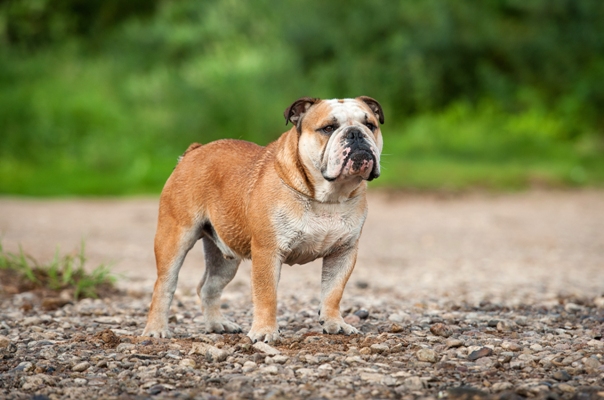
The Bulldog developed in Britain from mastiff-type dogs used in bull baiting and other blood sports for several centuries. Dogs used for this purpose were considerably more athletic and aggressive than the modern British Bulldog and were selected for strength, tenacity and the ability to grip and hold a bull.
Bull baiting was outlawed in Britain in 1835, leaving the breed without its traditional purpose. Rather than allowing the Bulldog to disappear, enthusiasts began breeding surviving dogs increasingly for companionship and exhibition, selecting for a calmer temperament. Formal dog shows from the mid-19th century helped establish a more consistent breed type.
The first Bulldog club was established in 1864, while the Bulldog Club Incorporated was founded in England in 1875 and helped formalise the breed standard. Over time, the Bulldog became one of Britain’s most recognisable companion breeds and a widely used symbol of British determination.
Explore related breeds
British Bulldog facts!
- The Bulldog Club Incorporated, founded in England in 1875, is one of the world’s oldest specialist dog breed clubs.
- The Bulldog’s small folded ears are officially known as “rose ears”.
- Despite their association with Britain, modern breed standards specifically discourage exaggerated wrinkles, pinched nostrils and tails that are excessively tight or inverted.
- British Bulldogs may be red, fawn, white, brindle or pied—not just the classic red-and-white colouring often seen in advertising and mascots.
- The Bulldog became so closely associated with Britain that the breed has long been used as a symbol of British courage and determination.
Summary
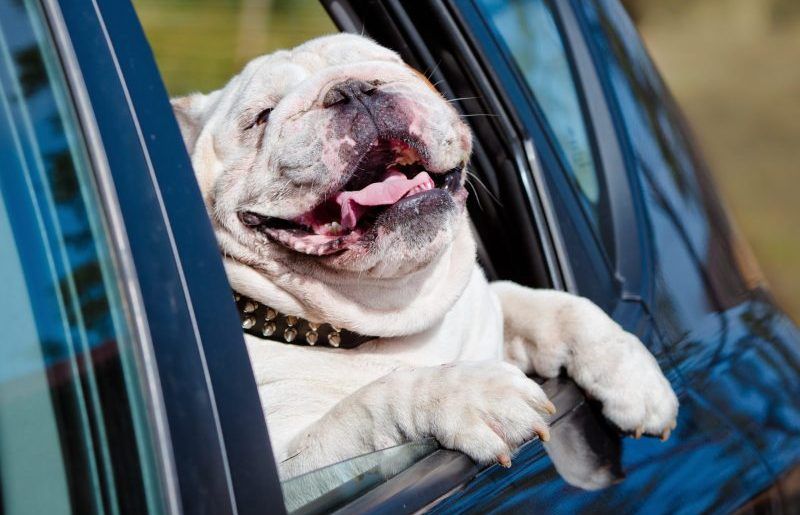
The British Bulldog is a distinctive, solidly built dog whose intimidating appearance contrasts with a typically gentle and sensitive nature. Very people-oriented, Bulldogs crave attention and often form strong bonds with their family.
They can make affectionate family companions and are generally good with children, but they do not enjoy being left alone for long periods. Although usually calm, they can stand their ground and become protective if they believe their family is threatened.
FAQs about the British Bulldog
They are generally affectionate companions and can suit families, couples or singles when their individual exercise, training and grooming needs are met.
Moderate. Daily walks and play are generally appropriate, adjusted for the dog’s age, health and individual energy level.
They are intelligent but can be independent or strong-willed, so patient, consistent reward-based training and early socialisation are important.
They are generally relatively quiet dogs, although any individual may bark when alerting, excited or anxious.
Yes. They generally shed a low to moderate or moderate amount and benefit from routine brushing.
They can adapt to apartment living in the right circumstances, but owners need to meet their daily exercise, enrichment and behavioural needs consistently.
Many can live happily with children and other pets when socialised from a young age, although individual temperament and compatibility always vary.
Potential health concerns include brachycephalic airway disease, skin-fold problems, eye disorders, joint disease and heat intolerance.
British Bulldogs often snore because they are brachycephalic, meaning they have a shortened skull and muzzle that can narrow parts of the upper airway. Mild snoring may occur during sleep, but persistent loud breathing, breathing difficulty, poor exercise tolerance or overheating should not automatically be considered normal and may indicate BOAS.
Not particularly well. Their short muzzle makes cooling through panting less efficient, placing them at increased risk of overheating in hot or humid conditions. Exercise should be kept gentle and scheduled for cooler times of day, with shade, water and a cool indoor environment readily available.
MORE INFORMATION
The British Bulldog Club of NSW Inc: http://www.bbcnsw.com/
The British Bulldog Club of Victoria Inc: https://www.bbcov.com/
The British Bulldog Club of South Australia Inc: https://britishbulldogclubsa.com.au/
The Queensland Bulldog Club: https://qldbulldogclub.com/

Get 2 months free for your puppy!
Congrats on your new bundle of joy
To ensure your precious fur baby is covered from the start, we'd like to offer your first 2 months of our Nose-to-Tail Cover for free2!
Get a quick quote