Is the Miniature Bull Terrier a good family dog?


Miniature Bull Terrier
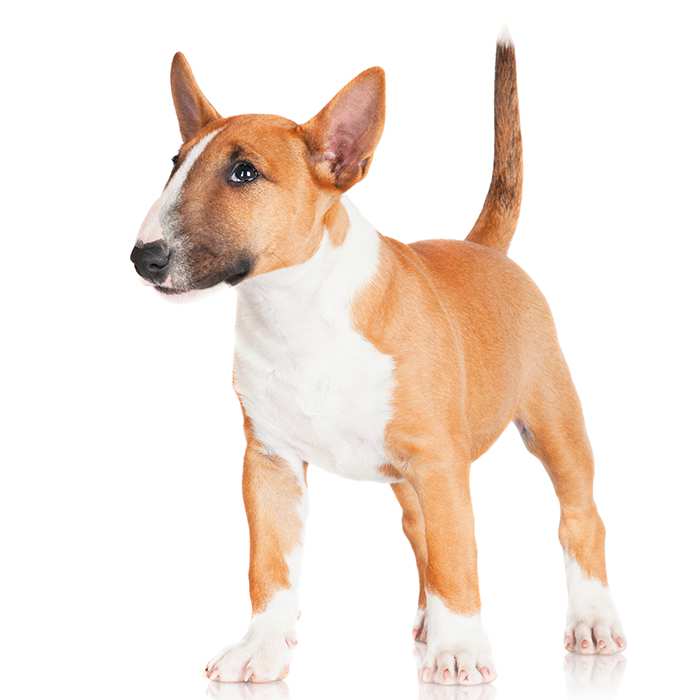
Miniature Bull Terriers are sturdy and spirited small-to-medium dogs with a muscular build, egg-shaped head and mischievous, playful personality. Originally developed as a smaller version of the Bull Terrier, they are known for their courage, loyalty and clownish sense of fun. Generally affectionate and entertaining with their family, Miniature Bull Terriers can be strong-willed and energetic, so they benefit from consistent training, early socialisation and plenty of exercise.
| Recommended for | Confident owners who enjoy a playful, strong-willed dog and can provide structure, training and exercise. |
| Breed Classification | Terrier Group |
| Other names | Mini Bull Terrier |
| Lifespan | 11 to 14 years |
| Size | Small to Medium |
| Temperament | Comic, bold, affectionate and determined |
| Intelligence | Generally intelligent; best results come from patient, positive and consistent training |
| Tendency to bark | Moderate; may be noisy when excited or bored |
| Maintenance Level | Easy coat care; weekly brushing |
| Health Risk | Miniature Bull Terriers can be prone to several inherited or structure-related health concerns, so health testing, weight management and early veterinary advice are particularly important. |
Thinking of insuring a Miniature Bull Terrier?
Explore the Top 5 health issues claimed for Miniature Bull Terriers, including highest claims paid and how much pet insurance could help you save on eligible vet bills.
See Miniature Bull Terrier pet insurance Ready to get cover? Get a quick quote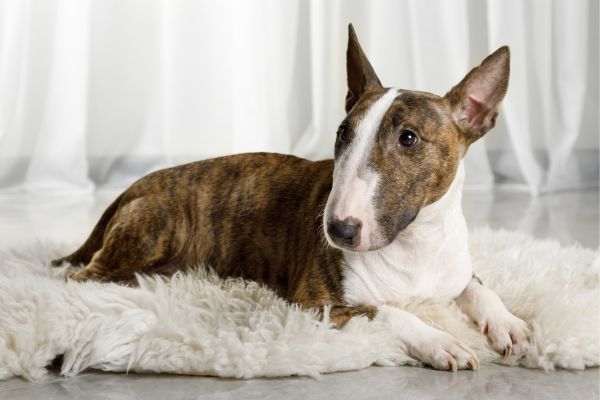
Miniature Bull Terrier personality and temperament
The Miniature Bull Terrier is playful, bold and full of personality, often described as clownish and mischievous. It has a confident temperament and plenty of energy packed into a compact, muscular body.
This breed is usually affectionate and devoted to its family, enjoying games, attention and interaction. However, it can be stubborn and excitable, so it benefits from consistent training, early socialisation and owners who can provide structure without dampening its fun-loving spirit.
Miniature Bull Terriers with kids and other pets
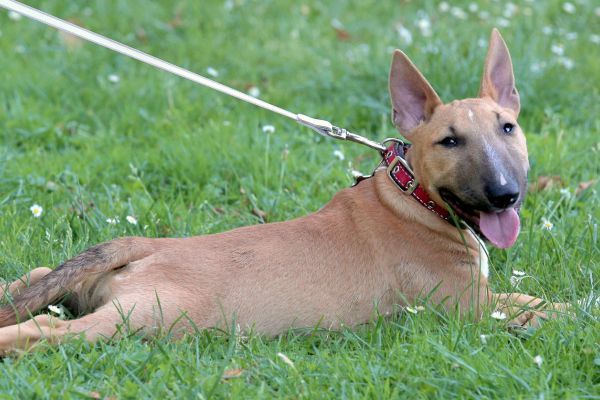
Miniature Bull Terriers are playful, affectionate and often very entertaining with children, particularly in families that enjoy an energetic dog. However, they can be boisterous and strong for their size, so they are usually better suited to children who are steady on their feet and can follow rules around dogs.
With other pets, Miniature Bull Terriers can be variable. Some live well with other dogs and cats when raised together, but they may be pushy, excitable or selective with unfamiliar animals, making early socialisation and supervision important.
Miniature Bull Terrier training and exercise
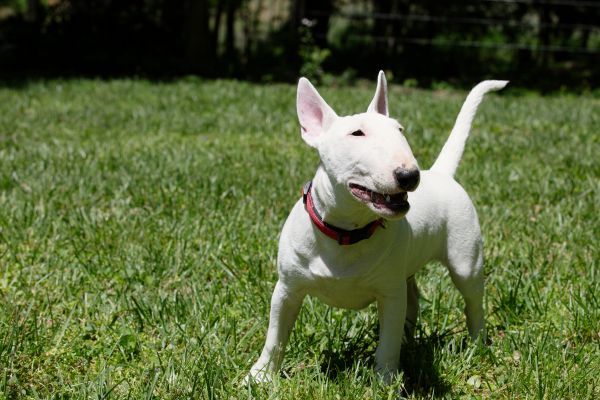
Miniature Bull Terriers need regular exercise to manage their energy and playful nature. Daily walks, active games, tug, fetch and supervised play in a secure area help keep them physically and mentally satisfied. Without enough activity, they may become bored, excitable or destructive.
Training should be consistent, positive and started early. Miniature Bull Terriers can be stubborn and mischievous, so training sessions should be fun, firm and varied. Early socialisation helps them develop good manners around people, other dogs and busy environments.
| Energy level | High |
| Exercise requirements | High - energetic play, walks and structured outlets |
Common health issues for Miniature Bull Terriers
What do Miniature Bull Terrier owners claim for the most?
- Lens luxation: An eye condition where the lens shifts or dislocates from its normal position, which can cause eye pain, redness, cloudiness and vision loss. It may be inherited, especially in some terrier breeds, or occur secondary to trauma, cataracts, glaucoma or inflammation.
- Deafness: A partial or complete loss of hearing that may be congenital, age-related, or caused by chronic ear disease, trauma, loud noise or certain medications. Signs may include not responding to sounds, being hard to wake, excessive barking, confusion or being easily startled.
- Patellar luxation: A developmental orthopaedic condition where the kneecap slips out of its normal groove, causing intermittent skipping, limping, pain or reduced mobility. It is more common in small breeds and severity ranges from mild to persistent lameness.
- Kidney disease: A condition where the kidneys lose their ability to properly filter waste, balance fluids and support normal body function. Signs may include increased thirst and urination, weight loss, reduced appetite, vomiting, lethargy and bad breath.
- Heart disease: A broad term for conditions affecting the heart’s valves, muscle, rhythm or structure, which can reduce how well the heart pumps blood. Signs may include coughing, breathing difficulty, tiredness, exercise intolerance, weakness, fainting or a swollen abdomen.
- Skin allergies: Skin allergies in dogs commonly cause itching, licking, chewing, redness, hair loss, paw irritation and recurring ear or skin infections. Common triggers include fleas, food sensitivities and environmental allergens such as pollen, dust mites or mould.
Not all conditions are covered by Pet Insurance. For details of Bow Wow Meow Pet Insurance cover, refer to the Product Disclosure Statement.
How to choose the right insurance for your Miniature Bull Terrier
When comparing cover for your Miniature Bull Terrier, look for:

Cover for common Miniature Bull Terrier conditions:
Check that the policy covers conditions Miniature Bull Terriers can be prone to, including common health issues.

Cover for hereditary conditions:
No exclusions for hereditary or congenital conditions⑅.

Flexible cover options:
Options to adjust your annual benefit limit, reimbursement rate and excess.
Bow Wow Meow's Nose-to-Tail Cover offers flexible options for your Miniature Bull Terrier, with cover for accidental injuries, illnesses and hereditary conditions⑅. Get a quick quote for cover that suits your Miniature Bull Terrier and your budget.
Miniature Bull Terrier feeding and nutrition
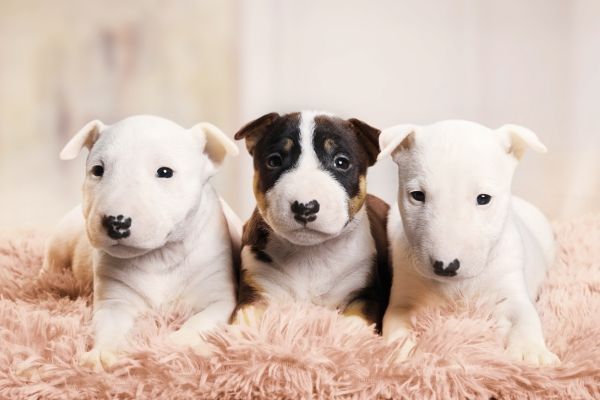
The Miniature Bull Terrier needs a well-balanced diet that supports its compact, muscular body and energetic personality. Quality protein is important for muscle maintenance, while healthy fats help support energy, skin and coat condition.
This breed can gain weight if overfed, so portion control is important. Measured meals, limited treats and regular body condition checks help keep the dog fit and healthy. Some Miniature Bull Terriers may be prone to skin sensitivities, so a diet with quality ingredients and appropriate fatty acids can be beneficial.
Miniature Bull Terrier care and grooming
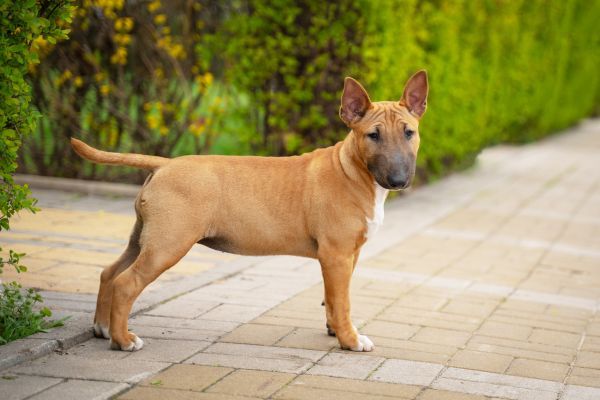
The Miniature Bull Terrier has a short, smooth coat that is simple to maintain. Weekly brushing with a grooming mitt or soft brush helps remove loose hair and keeps the coat looking glossy. The breed sheds moderately, so regular brushing also helps manage hair around the home.
Bathing is only needed when the dog becomes dirty or develops odour. Skin should be checked regularly, as some Miniature Bull Terriers may be prone to irritation or sensitivity. Routine nail trimming, dental care and ear checks are important parts of their care.
Size, appearance and coat of Miniature Bull Terriers
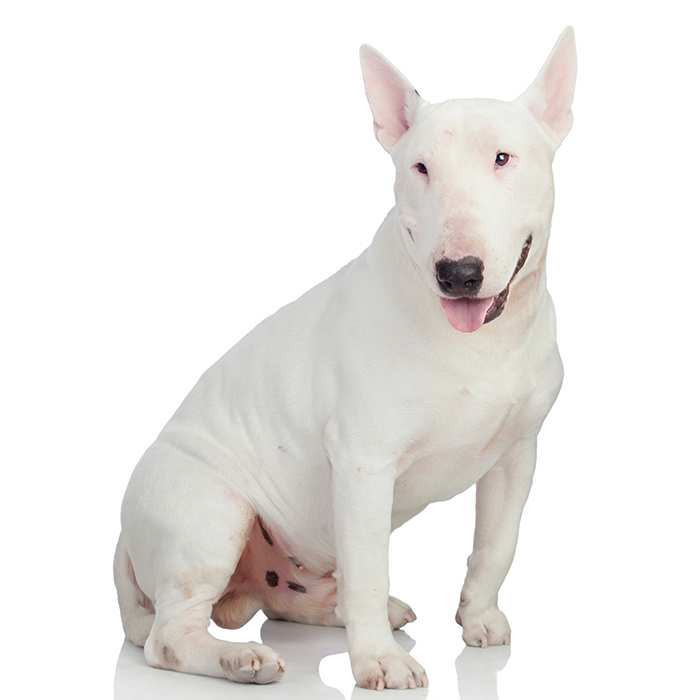
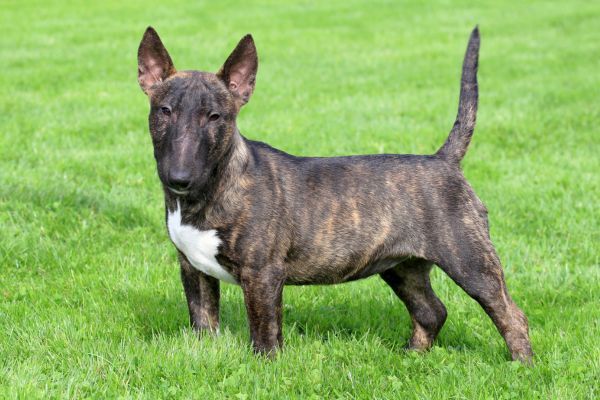
The Miniature Bull Terrier is a small but powerfully built dog with a muscular body, sturdy legs and a bold, mischievous expression. Its most distinctive feature is its egg-shaped head, with a curved profile, small triangular eyes and naturally erect ears.
Its coat is short, flat and glossy, showing off the breed’s compact strength and solid outline. Coat colours include white, brindle, black brindle, red, fawn and tricolour, either solid or with markings.
| Weight range | 9 to 16 kg |
| Height range | 25 to 36 cm |
| Colours | White, black, brindle, red, fawn and tricolour |
| Coat length | Short, flat, close coat |
Breed history of Miniature Bull Terriers
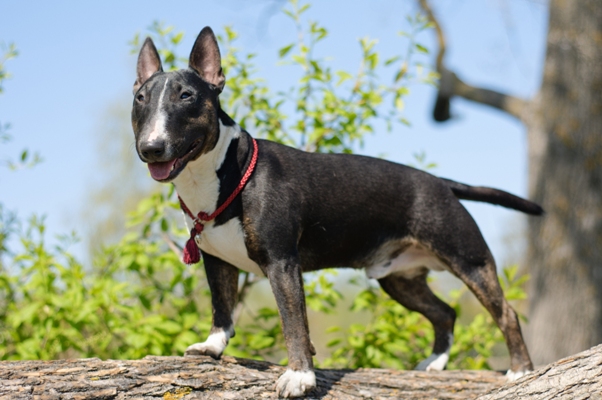
The Miniature Bull Terrier grew out of the same nineteenth-century English bull-and-terrier background as the larger Bull Terrier. Breeders experimented with smaller examples while trying to retain the breed’s muscular body, bold temperament and unmistakable egg-shaped head.
The miniature variety had an uneven early history, with very tiny dogs falling out of favour before breeders stabilised a healthier, sturdier type. The modern Miniature Bull Terrier is therefore not simply a novelty-sized dog, but a distinct breed shaped by efforts to preserve Bull Terrier character in a compact form.
Explore related breeds
Miniature Bull Terrier facts!
- Miniature Bull Terriers are not just “small Bull Terriers” but a distinct breed, developed to have the same bold character and egg-shaped head as the Bull Terrier, but in a smaller package.
- Their head shape is one of the most recognisable in the dog world. Like the standard Bull Terrier, the Miniature Bull Terrier has a unique “down-faced” or egg-shaped head with no obvious stop between the forehead and muzzle.
- They are famous little comedians, often described as clownish, mischievous and highly entertaining, with a talent for making their families laugh.
- Despite their compact size, they are muscular, sturdy and surprisingly powerful dogs.
- They may have sudden bursts of energy and can go from lounging around to racing about with playful “zoomies,” especially when excited.
- White Miniature Bull Terriers can be prone to deafness. Deafness is a known inherited health concern in the breed, particularly in white-coated dogs.
- They have a big-dog attitude in a smaller body.
Summary
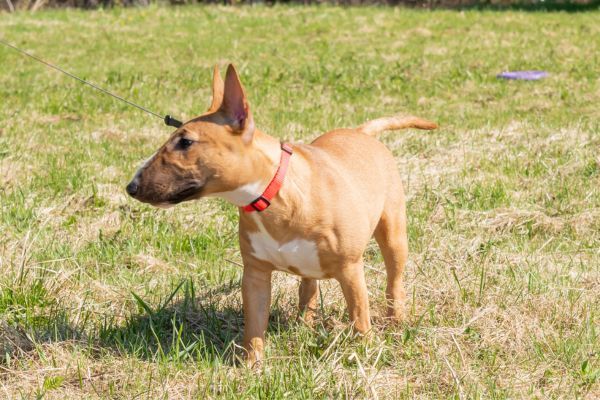
The Miniature Bull Terrier is a compact, muscular dog with a distinctive egg-shaped head, small triangular eyes and mischievous expression. Playful, bold and clownish, this breed is affectionate with family but can be stubborn, excitable and very strong for its size.
It needs consistent training, early socialisation, regular exercise and attentive health monitoring, particularly for skin issues, deafness and joint concerns.
FAQs about the Miniature Bull Terrier
It can be, provided the household matches the breed’s exercise, training, grooming and supervision needs.
High – energetic play, walks and structured outlets.
Shedding depends on coat type, season and grooming routine. The breed has a short, flat, close coat.
No. While some individuals may shed less than others, no dog breed is truly allergy-free.
Most respond well to positive, consistent training, but owners should work with the breed’s instincts rather than against them.
MORE INFORMATION
The Miniature Bull Terrier Club: http://www.miniaturebullterrierclub.org/
Miniature Bull Terrier Club of America: https://www.mbtca.net/
The Bull Terrier and Bull Terrier (Miniature) Association of W.A.(Inc): http://www.bullterrierwa.com/

Get 2 months free for your puppy!
Congrats on your new bundle of joy
To ensure your precious fur baby is covered from the start, we'd like to offer your first 2 months of our Nose-to-Tail Cover for free2!
Get a quick quote