


Is the Chinese Crested Dog a good family dog?


Chinese Crested Dog
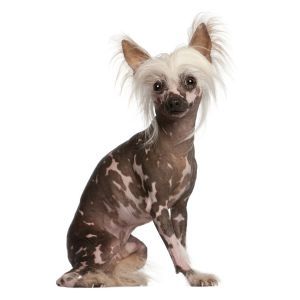
Chinese Crested Dogs are small, graceful companion dogs known for their distinctive appearance and affectionate, lively personalities. The breed comes in two varieties: the Hairless, which has smooth exposed skin with silky hair on the head, feet and tail, and the Powderpuff, which is covered in a soft, flowing coat.
| Recommended for | Families with older children, singles and seniors |
| Breed Classification | Toys |
| Other names | Chinese Hairless, Chinese Edible Dog, Chinese Ship Dog, and Chinese Royal Hairless. |
| Lifespan | 13–18 years |
| Size | Small |
| Temperament | Affectionate, playful, lively, sweet-Ttempered, alert, happy |
| Intelligence | Above average: responsive dogs that generally enjoy interactive training |
| Tendency to bark | Low to moderate: alert and may bark at unfamiliar activity, but not generally excessively vocal |
| Maintenance Level | High: Hairless dogs need ongoing skin and dental care, while Powderpuffs require frequent coat grooming |
| Health Risk | Chinese Crested Dogs are susceptible to inherited eye and joint disorders as well as significant dental and skin-care issues. |
Thinking of insuring a Chinese Crested Dog?
Explore the Top 5 health issues claimed for Chinese Crested Dogs, including highest claims paid and how much pet insurance could help you save on eligible vet bills.
See Chinese Crested Dog pet insurance Ready to get cover? Get a quick quote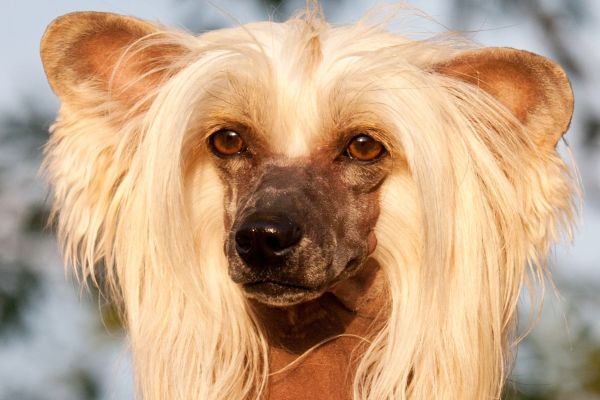
Chinese Crested Dog personality and temperament
Chinese Cresteds are affectionate, alert and playful companion dogs that tend to form close bonds with their families. They enjoy plenty of interaction with their owners and are often equally happy playing, learning tricks or relaxing nearby. Dogs Australia describes the ideal temperament simply as happy and never vicious.
Although generally sociable, individual dogs may initially be cautious in unfamiliar situations, making early positive socialisation worthwhile. Chinese Cresteds are highly adaptable and can thrive in apartments or larger homes, provided they receive regular companionship, exercise and mental stimulation. Some may become anxious or develop unwanted behaviours if routinely left alone for long periods.

Chinese Crested Dogs with kids and other pets
Chinese Cresteds can make affectionate family companions, but their small, fine-boned bodies mean they are generally best suited to children who understand how to handle dogs gently. Interactions with young children should always be supervised to prevent accidental injury.
They can also live successfully with other dogs and cats when appropriately socialised and introduced. Particular care should be taken during play with much larger dogs because of the Chinese Crested’s small and relatively delicate build.
Chinese Crested Dog training and exercise
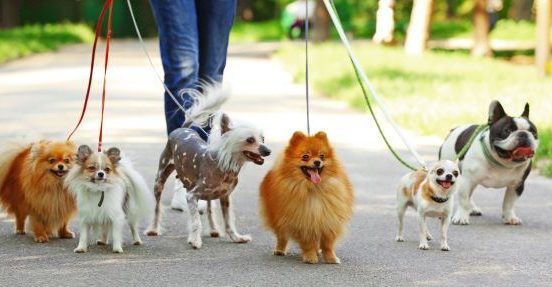
Chinese Cresteds have relatively modest exercise requirements. Most healthy adults benefit from around 20–30 minutes of dedicated daily activity, together with indoor play and mental enrichment. Short walks, fetch, trick training, scent games and agility can all provide enjoyable outlets for their energy and intelligence.
They are intelligent and generally eager to engage with their owners, and respond well to short, positive reinforcement-based training sessions. Early socialisation can help build confidence around unfamiliar people, dogs and environments.
| Energy level | Moderate: playful and lively |
| Exercise requirements | Low to medium: around 20–30 minutes daily plus play and mental enrichment |
Common health issues for Chinese Crested Dogs
What do Chinese Crested Dog owners claim for the most?
Chinese Crested Dogs are generally long-lived, but they can be predisposed to several inherited and breed-related conditions affecting the eyes, joints, teeth and skin. Responsible breeding programs may include eye, patellar and cardiac screening as well as DNA testing for inherited eye diseases.
- Patellar Luxation: The kneecap slips out of its normal position, potentially causing skipping, lameness and pain. Mild cases may require little treatment, while more severe cases can lead to arthritis or require surgery.
- Eye conditions: Chinese Cresteds can develop progressive retinal atrophy (PRA), primary lens luxation (PLL) and dry eye. PRA causes progressive retinal degeneration and eventual vision loss, while PLL occurs when the lens moves out of its normal position and can lead to pain and secondary glaucoma. Genetic testing is available for important inherited eye conditions.
- Legg-Calvé-Perthes disease: This condition causes degeneration of the head of the femur in the hip joint, usually in young dogs, resulting in pain and lameness. Treatment may include pain management, rehabilitation or surgery depending on severity.
- Dental problems: Dental disease is common in small breeds, and Hairless Chinese Cresteds may also have missing or abnormally shaped teeth associated with the hairless trait. Regular tooth brushing and veterinary dental care are particularly important.
- Skin problems: Hairless Chinese Cresteds can develop dry skin, blocked pores, irritation and sun damage because much of their skin is exposed. Appropriate skin care and protection from excessive sun and cold are important.
- Congenital deafness and heart abnormalities can also occur and are included in some breed-health screening programs.
Not all conditions are covered by Pet Insurance. For details of Bow Wow Meow Pet Insurance cover, refer to the Product Disclosure Statement.
How to choose the right insurance for your Chinese Crested Dog
When comparing cover for your Chinese Crested Dog, look for:

Cover for common Chinese Crested Dog conditions:
Check that the policy covers conditions Chinese Crested Dogs can be prone to, including common health issues.

Cover for hereditary conditions:
No exclusions for hereditary or congenital conditions⑅.

Flexible cover options:
Options to adjust your annual benefit limit, reimbursement rate and excess.
Bow Wow Meow's Nose-to-Tail Cover offers flexible options for your Chinese Crested Dog, with cover for accidental injuries, illnesses and hereditary conditions⑅. Get a quick quote for cover that suits your Chinese Crested Dog and your budget.
Chinese Crested Dog feeding and nutrition
Chinese Crested Dogs should be fed a complete and balanced diet appropriate for their age, body condition, activity level and health. Because they are very small dogs, portions and treats should be measured carefully to prevent unwanted weight gain.
A nutritionally complete diet should provide the nutrients needed for healthy skin and coat without additional supplements unless recommended by a veterinarian. Speak to your vet if you have concerns about your Chinese Crested’s diet, weight or individual nutritional needs.
Chinese Crested Dog care and grooming
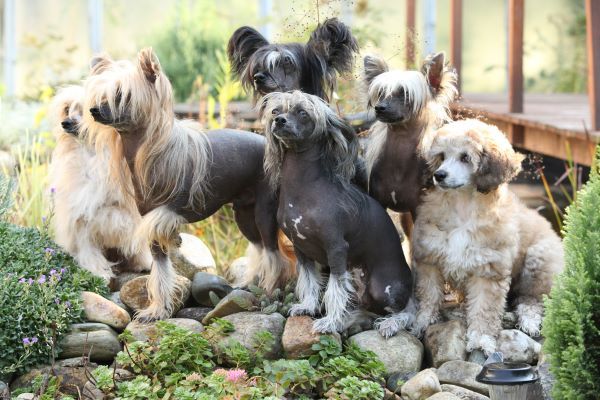
Hairless Chinese Cresteds require regular skin care because their exposed skin can become dry, irritated or develop blocked pores. Their skin should be kept clean and appropriately moisturised, with protection from excessive sun and cold. Dog-safe sun protection or protective clothing may be useful when outdoors.
Powderpuff Chinese Cresteds require regular brushing, generally several times a week, to prevent their long, soft coat from tangling or matting. Both varieties also need routine nail, ear and particularly dental care.
Size, appearance and coat of Chinese Crested Dogs
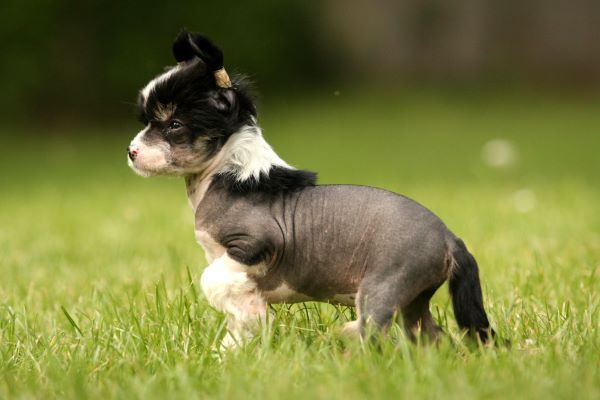
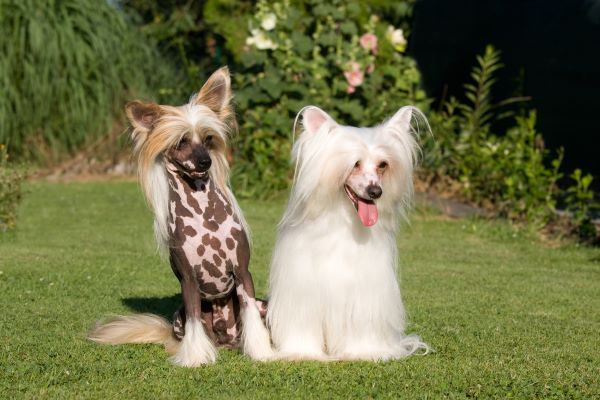
The Chinese Crested is a small, active and graceful dog that occurs in two varieties and two body types: the finer-boned “Deer” type and the heavier-boned “Cobby” type. Both varieties share the same basic structure. Large ears are typically erect, although drop ears are permitted in Powderpuffs.
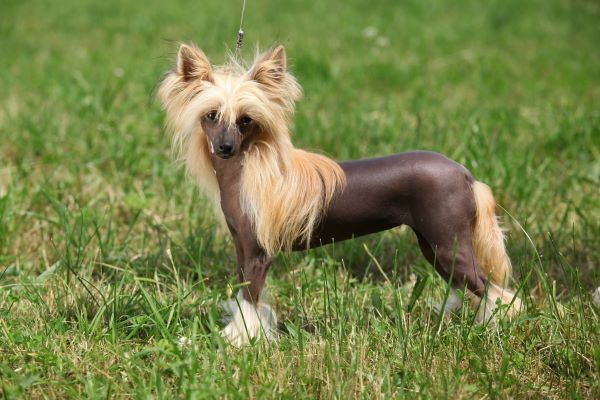
The Hairless variety has smooth skin with a flowing crest on the head and neck, hair on the feet and a plume on the tail. The Powderpuff is covered by an undercoat topped with a soft veil of long hair. Any colour or combination of colours is permitted.
| Weight range | Up to 5.4 kg |
| Height range | Males: 28–33 cm, Females: 23–30 cm |
| Colours | Any colour or combination of colours |
| Coat length | Hairless or long – two distinct coat varieties |
Breed history of Chinese Crested Dogs
Despite its name, the exact origin of the Chinese Crested Dog remains uncertain. Hairless dogs have appeared in several parts of the world, and genetic research suggests that the Chinese Crested shares ancestry with hairless dogs from Central and South America, including the Xoloitzcuintli. How and when dogs of this type became associated with China is not definitively documented.
Chinese Crested-type dogs were nevertheless recorded in ports across several continents, and longstanding accounts describe small hairless dogs travelling aboard trading ships and being used to control vermin. The breed later became established in Europe and North America during the 19th and 20th centuries.
Two American enthusiasts played particularly important roles in preserving the modern breed: breeder Deborah Wood, whose Crest Haven dogs became highly influential, and entertainer Gypsy Rose Lee, who bred and promoted Chinese Cresteds during the mid-20th century. Dogs from these lines contributed substantially to the modern breed.
Chinese Cresteds reached Australia in the 1970s, with descendants of important overseas lines arriving in Western Australia in 1974. Today the breed is recognised by Dogs Australia in Group 1 (Toys).
Explore related breeds
Chinese Crested Dog facts!
- Chinese Cresteds come in two very different-looking varieties—Hairless and Powderpuff—but both belong to the same breed and share the same basic body structure.
- The breed also has two recognised body types: the finer-boned “Deer” type and the heavier “Cobby” type.
- Chinese Cresteds have unusually long, narrow “hare feet”, which can make their toes look almost hand-like.
- Entertainer Gypsy Rose Lee became an enthusiastic breeder of Chinese Cresteds, and her dogs helped establish important modern bloodlines.
- Chinese Cresteds can be surprisingly athletic and participate successfully in activities such as agility, obedience, rally and lure coursing.
- Some Chinese Cresteds like to perch on the backs of couches and other high places, earning them a reputation for rather cat-like behaviour.
Summary
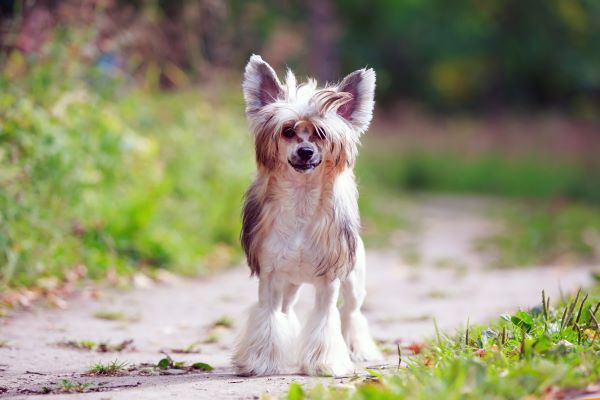
Chinese Crested dogs are a unique and charming breed, ideal for individuals or families seeking a small, affectionate, and lively companion. Their adaptable nature allows them to thrive in various living environments, from apartments to larger homes, as long as they receive the attention and care they need.
With two distinct varieties—Hairless and Powderpuff—there’s a choice to suit different preferences, though both require dedicated grooming. Their playful personality, sensitivity to their owners’ emotions, and hypoallergenic qualities make them a fantastic choice for those who value companionship. The Chinese Crested is a loyal and loving addition to any household.
FAQs about the Chinese Crested Dog
They are generally affectionate companions and can suit families, couples or singles when their individual exercise, training and grooming needs are met.
Moderate. Daily walks and play are generally appropriate, adjusted for the dog’s age, health and individual energy level.
They are intelligent but can be independent or strong-willed, so patient, consistent reward-based training and early socialisation are important.
They are generally low to moderate or moderate barkers, although barking can increase with boredom, excitement, anxiety or unfamiliar activity.
They are relatively low shedding, but their coat or skin still requires regular grooming and maintenance to stay healthy and free of mats.
Yes, they can adapt well to apartment living provided they receive sufficient daily exercise, mental stimulation and companionship.
They can live happily with respectful children and other pets when well socialised, but their small or delicate size means interactions with young children should be closely supervised.
Potential health concerns include dental abnormalities, eye disease, patellar luxation and skin problems.
No dog is completely hypoallergenic, including the Hairless Chinese Crested. Hairless dogs may shed very little hair, but dog allergens are also found in dander, saliva and other secretions. Someone with dog allergies should not assume they will automatically tolerate a Chinese Crested simply because it has little or no coat.

Get 2 months free for your puppy!
Congrats on your new bundle of joy
To ensure your precious fur baby is covered from the start, we'd like to offer your first 2 months of our Nose-to-Tail Cover for free2!
Get a quick quote