Is the Old English Sheepdog a good family dog?


Old English Sheepdog
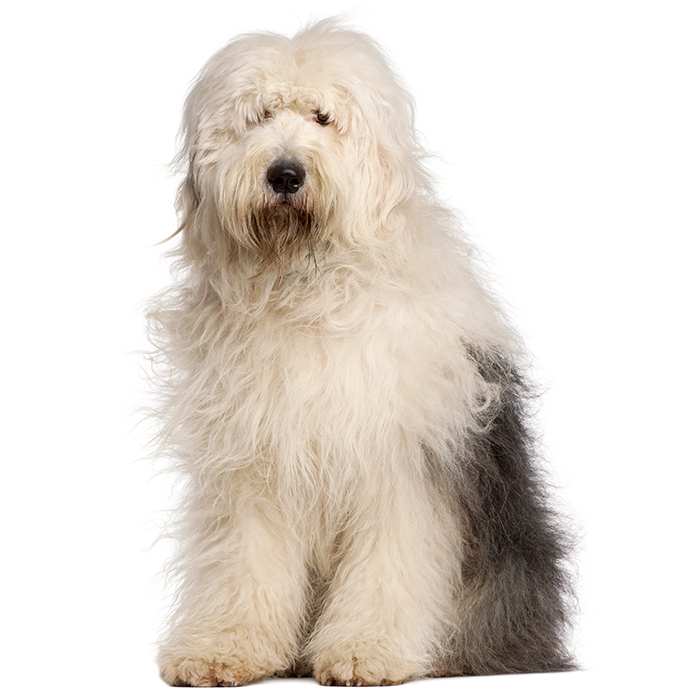
Old English Sheepdogs are large, affectionate dogs with a shaggy coat, sturdy build and famously gentle, good-humoured nature. Originally bred in England as droving dogs, they are known for their intelligence, loyalty and strong bond with their family. Generally friendly and sociable, Old English Sheepdogs can be playful, energetic and sometimes independent, so they benefit from regular grooming, consistent training and plenty of exercise.
| Recommended for | Families or owners with space who can commit to regular grooming, exercise and companionship. |
| Breed Classification | Herding Group |
| Other names | OES, Bobtail |
| Lifespan | 10 to 12 years |
| Size | Large |
| Temperament | Gentle, adaptable, playful and sociable |
| Intelligence | Generally intelligent; best results come from patient, positive and consistent training |
| Tendency to bark | Moderate; deep bark and watchdog style |
| Maintenance Level | High grooming; brush thoroughly or keep clipped |
| Health Risk | Old English Sheepdogs can be prone to several inherited or structure-related health concerns, so health testing, weight management and early veterinary advice are particularly important. |
Thinking of insuring an Old English Sheepdog?
Explore the Top 5 health issues claimed for Old English Sheepdogs, including highest claims paid and how much pet insurance could help you save on eligible vet bills.
See Old English Sheepdog pet insurance Ready to get cover? Get a quick quote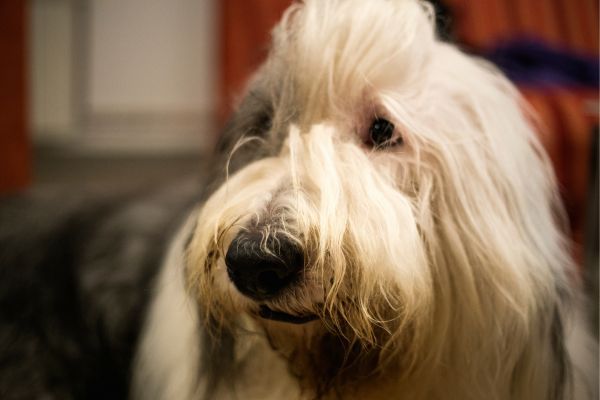
Old English Sheepdog personality and temperament
The Old English Sheepdog is affectionate, good-humoured and sociable, with a gentle but playful temperament. Originally bred as a droving dog, it is intelligent, adaptable and often forms strong bonds with its family.
This breed is usually friendly and patient, though it can be energetic and sometimes independent. Regular exercise, training and companionship help keep the Old English Sheepdog happy, while its coat requires owners who are committed to ongoing grooming.
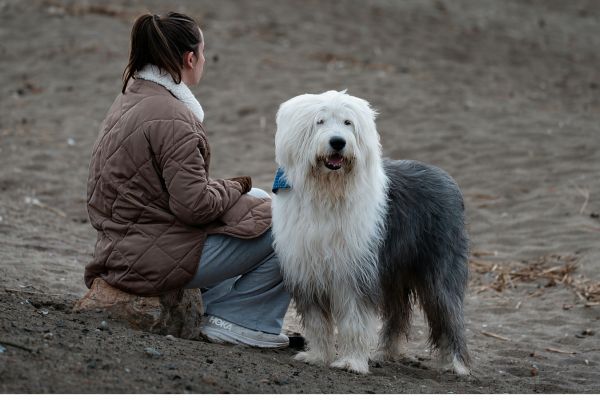
Old English Sheepdogs with kids and other pets
Old English Sheepdogs are generally affectionate, playful and good-natured with children. They can be wonderful family dogs, but their size, strength and bouncy nature mean they may accidentally knock over small children during play.
With other pets, Old English Sheepdogs usually do well when introduced properly. Their herding background may lead them to chase or gently herd other animals, but they are often sociable and adaptable in multi-pet homes.
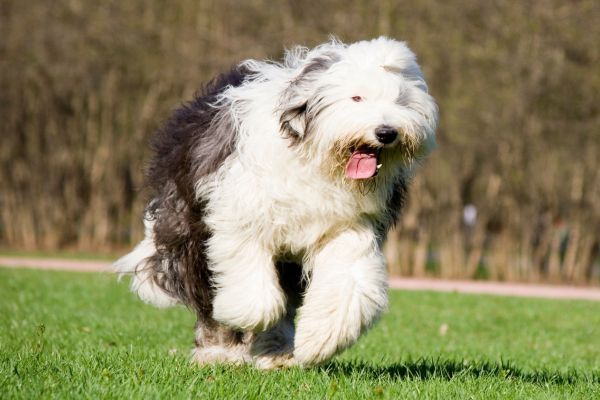
Old English Sheepdog training and exercise
Old English Sheepdogs need regular daily exercise, including walks, play and time outdoors in a secure area. They are large, playful dogs that enjoy activity but generally do not require the same intensity as some high-drive working breeds. Mental stimulation also helps prevent boredom.
Training should begin early, as their size and strength can make poor manners difficult to manage later. Old English Sheepdogs respond well to positive reinforcement, consistency and gentle guidance. Socialisation is important to help them remain confident and well behaved around people, dogs and new situations.
| Energy level | Moderate |
| Exercise requirements | Moderate - daily walks and play, with mental work |
Common health issues for Old English Sheepdogs
What do Old English Sheepdog owners claim for the most?
- Hip dysplasia: A developmental condition where the hip joint forms abnormally, causing looseness, pain and reduced mobility. Genetics are a major factor, while rapid growth, excess weight and inappropriate exercise can worsen symptoms. Early diagnosis, weight control and veterinary care can help manage the condition.
- Deafness: A partial or complete loss of hearing that may be congenital, age-related, or caused by chronic ear disease, trauma, loud noise or certain medications. Signs may include not responding to sounds, being hard to wake, excessive barking, confusion or being easily startled.
- Eye disorders: This includes problems such as cataracts, glaucoma, conjunctivitis, dry eye, corneal ulcers and inherited eye disorders. Signs may include redness, cloudiness, discharge, squinting, pawing at the eye, swelling or changes in vision.
- Autoimmune thyroiditis: An immune-mediated condition where the body attacks the thyroid gland, often leading to reduced thyroid hormone production and hypothyroidism. Signs may include weight gain, lethargy, cold intolerance, hair loss, dull coat and recurring skin or ear infections.
- Gastric Dilatation-Volvulus: A life-threatening emergency, also called bloat, where the stomach fills with gas or fluid and twists on itself. Signs may include a swollen abdomen, restlessness, drooling, unproductive retching, weakness or collapse.
Not all conditions are covered by Pet Insurance. For details of Bow Wow Meow Pet Insurance cover, refer to the Product Disclosure Statement.
How to choose the right insurance for your Old English Sheepdog
When comparing cover for your Old English Sheepdog, look for:

Cover for common Old English Sheepdog conditions:
Check that the policy covers conditions Old English Sheepdogs can be prone to, including common health issues.

Cover for hereditary conditions:
No exclusions for hereditary or congenital conditions⑅.

Flexible cover options:
Options to adjust your annual benefit limit, reimbursement rate and excess.
Bow Wow Meow's Nose-to-Tail Cover offers flexible options for your Old English Sheepdog, with cover for accidental injuries, illnesses and hereditary conditions⑅. Get a quick quote for cover that suits your Old English Sheepdog and your budget.
Old English Sheepdog feeding and nutrition
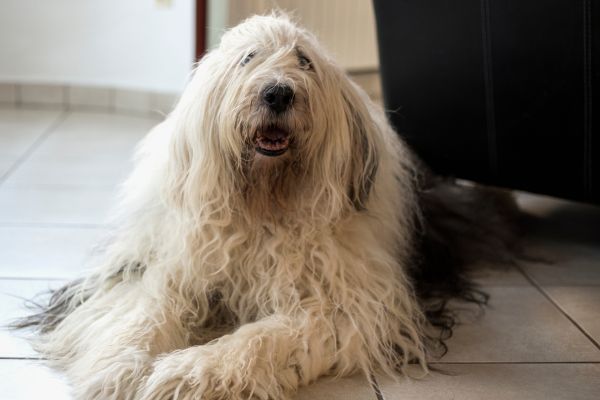
The Old English Sheepdog needs a balanced diet that supports its large frame, moderate activity level and dense coat. Quality protein helps maintain muscle, while omega fatty acids can support skin health and coat condition.
Portion control is important, as the breed’s heavy coat can make weight gain harder to notice. Meals should be measured and adjusted according to age, weight and exercise level. Maintaining a healthy weight helps reduce pressure on the joints and supports long-term mobility.
Old English Sheepdog care and grooming
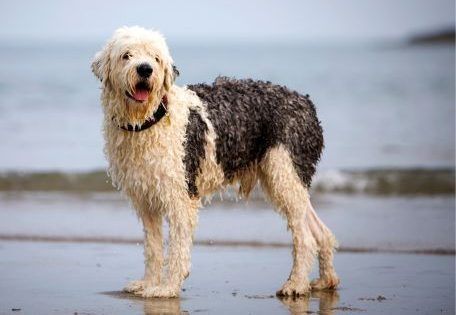
The Old English Sheepdog has a long, dense, shaggy coat that requires significant grooming commitment. Regular brushing several times a week, and often daily for full-coated dogs, is needed to prevent matting and keep the coat comfortable. Mats commonly form behind the ears, under the legs, around the collar and near the tail.
Many pet Old English Sheepdogs are kept in a shorter clip to make maintenance more practical. Professional grooming is often needed every 6 to 8 weeks. Bathing should be followed by thorough drying, and routine care should include nail trimming, ear checks, dental care and regular checks under the coat for skin irritation.
Size, appearance and coat of Old English Sheepdogs
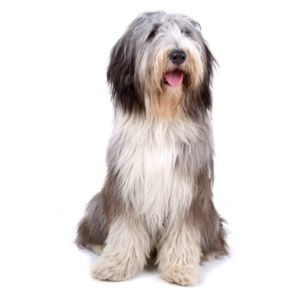
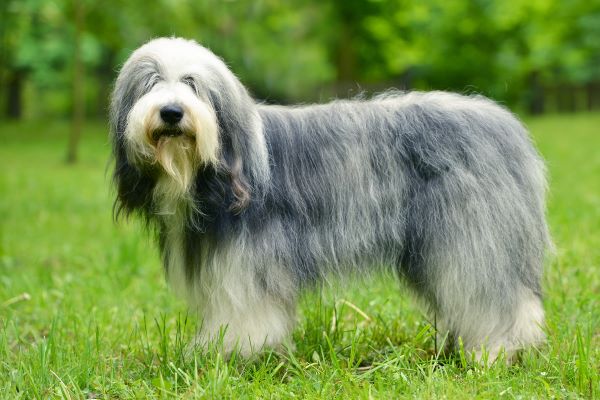
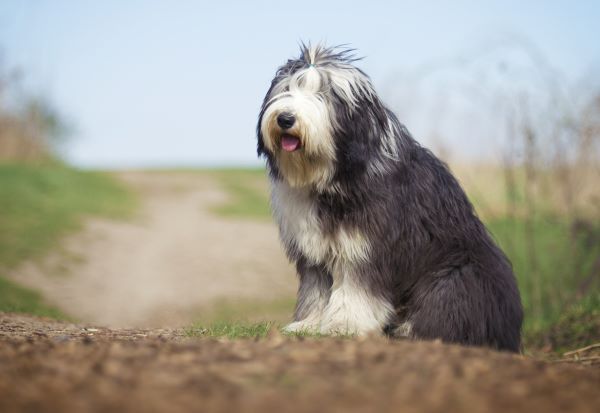
The Old English Sheepdog is a large, strong dog with a square, well-balanced body and a famously shaggy appearance. It has a broad head, dark or blue eyes that may be partly hidden by hair, and a rolling, bear-like gait that gives the breed a distinctive movement.
Its coat is abundant, long and dense, with a textured outer coat and waterproof undercoat. Typical colouring includes grey, grizzle, blue or blue merle with white markings, often giving the breed its classic two-toned look.
| Weight range | 27 to 45 kg |
| Height range | 51 to 61 cm and over |
| Colours | Grey, grizzle, blue or blue merle with white |
| Coat length | Long, profuse, shaggy double coat |
Breed history of Old English Sheepdogs
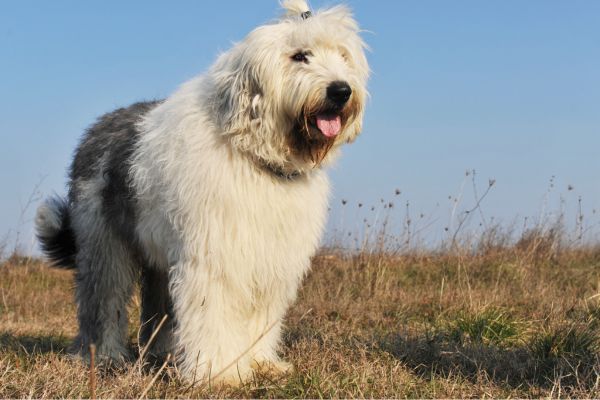
The Old English Sheepdog was developed in western England as a drover’s dog, used to move cattle and sheep to market rather than simply gather sheep in the field. Its strong body, weatherproof coat and rolling gait reflect the demands of travelling long distances with livestock.
The breed’s exact ancestry is debated, but it likely drew from several British and European herding and droving dogs. By the late nineteenth century, it had become a recognisable show breed, and its dramatic shaggy coat helped make it one of the most visually distinctive British pastoral dogs.
Explore related breeds
Old English Sheepdog facts!
- They are famous for their shaggy coat that gives them a bear-like appearance.
- They were originally droving dogs, helping move livestock to market.
- They have a distinctive rolling gait that can look almost bear-like.
- The breed has a loud, resonant bark that can surprise people.
- They are often playful clowns, affectionate, silly and good-humoured.
Summary
The Old English Sheepdog is a large, shaggy pastoral breed with a strong body, abundant coat and rolling, bear-like movement. Affectionate, playful and good-natured, it often makes a loving family companion but can be boisterous and physically strong.
This breed needs regular exercise, early training and significant grooming commitment, as its dense coat can mat easily without frequent brushing or professional maintenance.
FAQs about the Old English Sheepdog
It can be, provided the household matches the breed’s exercise, training, grooming and supervision needs.
Moderate – daily walks and play, with mental work.
Shedding depends on coat type, season and grooming routine. The breed has a long, profuse, shaggy double coat.
No. While some individuals may shed less than others, no dog breed is truly allergy-free.
Most respond well to positive, consistent training, but owners should work with the breed’s instincts rather than against them.
MORE INFORMATION
Old English Sheepdog Club of Victoria: http://oescv.org.au/
Old English Sheepdog Club (NSW): https://www.facebook.com/oesnsw#
Old English Sheepdog Club of America: https://oldenglishsheepdogclubofamerica.org/

Get 2 months free for your puppy!
Congrats on your new bundle of joy
To ensure your precious fur baby is covered from the start, we'd like to offer your first 2 months of our Nose-to-Tail Cover for free2!
Get a quick quote