


Are French Bulldogs good family dogs?


French Bulldog

French Bulldogs, or “Frenchies”, are cute and energetic, small- to medium-sized dogs that are very popular due to their unique appearance and clownish, good-spirited behaviour. They resemble a miniature Bulldog, except for their distinctively large bat ears. Loyal and dependable companions, they bond closely with their owners and require a great deal of human connection.
| Recommended for | Singles, couples, families and apartment dwellers who want an affectionate, people-focused companion with moderate exercise needs and who can manage the breed's specific health needs |
| Breed Classification | Non-sporting group |
| Other names | Frenchie, Bouledogue Français |
| Lifespan | 10-14 years, although health issues can affect lifespan |
| Size | Small to medium |
| Temperament | Affectionate, playful, adaptable and sometimes stubborn |
| Intelligence | Average: can learn quickly, especially when training is positive, consistent and reward-based |
| Tendency to bark | Low: may bark to alert their owners, seek attention or respond to unfamiliar sounds |
| Maintenance Level | Moderate to high: regular care for their facial folds, ears, teeth, nails, weight and breathing, and extra caution in warm weather |
| Health Risk | French Bulldogs are considered a higher-risk breed for several health problems. Their short muzzle and compact build can contribute to breathing difficulties, poor heat tolerance, eye problems, skin fold infections, ear disease, dental crowding and spinal issues. |
Thinking of insuring a French Bulldog?
Explore the Top 5 health issues claimed for French Bulldogs, including highest claims paid and how much pet insurance could help you save on eligible vet bills.
See French Bulldog pet insurance Ready to get cover? Get a quick quote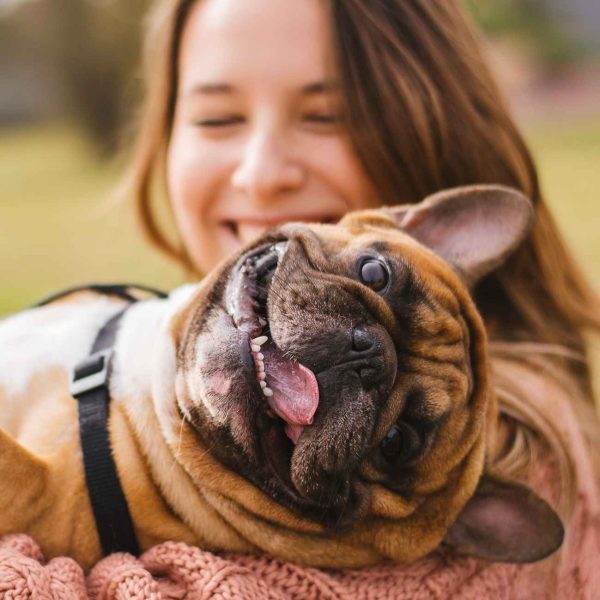
French Bulldog personality and temperament
A very loyal and a dependable companion, French Bulldogs bond closely with their owners and a great deal of human connection is essential to their wellbeing. French Bulldogs are real charmers. They are playful, friendly, reliable, clownish, good-spirited, affectionate and completely irresistible.
Because they adapt well to their owner’s lifestyle they are a very popular breed, suitable for older people, families and adult households alike. Suitable for apartment living, they don’t typically bark without good reason. What they don’t like is being left alone without any company, so if you go on holiday it’s best you take them with you.

French Bulldogs with kids and other pets
French Bulldogs have a very good reputation for playing nicely and gently with kids. This makes them a popular choice for families. Small but sturdy, they make charming, affectionate, playful and amusing companions for children of all ages.
Frenchies tend to get on well with other animals. However, they can become aggressive towards other dogs, especially those of the same sex. To avoid problems down the track, socialise your French Bulldog often, starting from a young age.
French Bulldog training and exercise
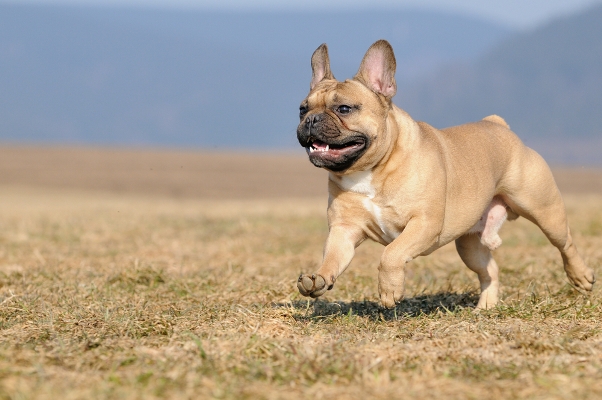
The French Bulldog doesn’t require much dedicated exercise beyond a short daily walk or outdoor play session with their owner each day to keep in shape. They are energetic so can be quite boisterous and love a good rumble, preferably followed by a long nap!
Frenchies do enjoy participating in canine sports such as obedience, agility, and rally. As a flat-faced breed, however, they are prone to breathing difficulties and should never be allowed to exert themselves in hot or humid weather.
With their big personalities and tendency to stubbornness, French Bulldogs can be a challenge to train, requiring patience and a consistency in their management. The proper motivation (such as food) and making a game of the training process will help to ensure their cooperation. Socialising them at an early age is highly recommended.
| Energy level | Medium |
| Exercise requirements | Low |
Common health issues for French Bulldogs
What do French Bulldog owners claim for the most?
- Heat intolerance: Because French Bulldogs have short muzzles and can have compromised airways, they may struggle to cool themselves efficiently through panting. This makes them more vulnerable to heat stress and heatstroke, especially in warm or humid weather. Frenchies should avoid exercise during the hottest parts of the day and should always have access to shade, fresh water and cool indoor areas.
- Brachycephalic obstructive airway syndrome (BOAS): BOAS is a breathing disorder that affects many flat-faced breeds, including French Bulldogs. It can be caused by narrow nostrils, an elongated soft palate and other airway abnormalities, making it harder for the dog to breathe normally. Signs can include noisy breathing, snoring, snorting, gagging, exercise intolerance, overheating, sleep disruption or collapse.
- Skin fold dermatitis: French Bulldogs often have facial and body folds where moisture, warmth and friction can build up. This can lead to redness, irritation, odour, infection and discomfort. Regular cleaning and drying of skin folds may help, but persistent redness, discharge, smell or itchiness should be checked by a vet.
- Ear infections: French Bulldogs can be prone to ear infections, often linked to narrow ear canals, allergies or underlying skin inflammation. Signs may include head shaking, scratching, redness, waxy discharge, smell or sensitivity around the ears. Recurrent ear infections should always be assessed by a vet, as they may indicate an underlying allergy or chronic ear disease.
- Eye ulcers and other eye problems: French Bulldogs’ prominent eyes can be more exposed to injury, dryness and irritation. Corneal ulcers can occur when the surface of the eye is scratched or damaged, and they can be painful and serious if not treated promptly. Signs include squinting, redness, cloudiness, discharge, pawing at the eye or keeping the eye closed.
- Dental crowding: A French Bulldog’s short jaw can mean the teeth are crowded or misaligned. This can increase the risk of plaque build-up, gum disease, retained baby teeth and dental discomfort. Regular dental checks, tooth brushing and professional dental care may be needed to help maintain oral health.
- IVDD and spinal issues: French Bulldogs can be prone to spinal problems, including intervertebral disc disease (IVDD) and vertebral abnormalities. IVDD occurs when a disc between the vertebrae bulges or ruptures, potentially causing pain, nerve compression, weakness or paralysis. Signs such as back pain, reluctance to move, wobbliness, dragging the legs or sudden weakness require urgent veterinary attention.
- Patellar luxation: Patellar luxation occurs when the kneecap slips out of its normal position. It may cause intermittent skipping, limping, stiffness, an abnormal gait or reluctance to exercise. Mild cases may be monitored, while more severe cases can require surgery.
- Allergies: French Bulldogs are prone to skin allergies, which may be triggered by environmental allergens, food sensitivities, fleas or contact irritants. Signs can include itchy skin, licking or chewing the paws, red skin, recurrent ear infections, rashes, hair loss or skin infections. Ongoing itchiness should be investigated by a vet so the underlying cause can be managed.
Not all conditions are covered by Pet Insurance. For details of Bow Wow Meow Pet Insurance cover, refer to the Product Disclosure Statement.
How to choose the right insurance for your French Bulldog
When comparing cover for your French Bulldog, look for:

Cover for common French Bulldog conditions:
Check that the policy covers conditions French Bulldogs can be prone to, including common health issues.

Cover for hereditary conditions:
No exclusions for hereditary or congenital conditions⑅.

Flexible cover options:
Options to adjust your annual benefit limit, reimbursement rate and excess.
Bow Wow Meow's Nose-to-Tail Cover offers flexible options for your French Bulldog, with cover for accidental injuries, illnesses and hereditary conditions⑅. Get a quick quote for cover that suits your French Bulldog and your budget.

French Bulldog feeding and nutrition
French Bulldogs should be fed a complete and balanced diet suited to their age, size, activity level and health needs. Because Frenchies can be prone to weight gain, portion control is especially important. Excess weight can place extra strain on their joints and may worsen breathing difficulties, so treats should be limited and meals should be measured rather than free-fed.
Some French Bulldogs are prone to allergies, itchy skin, ear problems or digestive upsets, which may require veterinary advice on diet. Owners should avoid changing foods frequently without guidance, as this can make it harder to identify triggers. Dental care is also important, as Frenchies can have crowded teeth, so tooth brushing and vet-recommended dental diets or chews may be helpful as part of their routine.

French Bulldog care and grooming
French Bulldogs have a short, smooth coat that is relatively easy to maintain, but their overall care needs can be moderate to high. Weekly brushing helps remove loose hair, while bathing should be done as needed with a dog-safe shampoo. Their facial folds should be gently cleaned and dried to help prevent irritation, odour or infection. Regular ear checks are also important, as Frenchies can be prone to wax build-up and ear problems. Their teeth need ongoing care too, as their short jaws can lead to crowded teeth and a higher risk of dental disease.
Owners should also watch for eye redness, cloudiness, discharge or squinting, as French Bulldogs can be prone to eye irritation and ulcers. Regular vet checks are important to help monitor their breathing, skin, ears, teeth, eyes and weight.
Size, appearance and coat of French Bulldogs
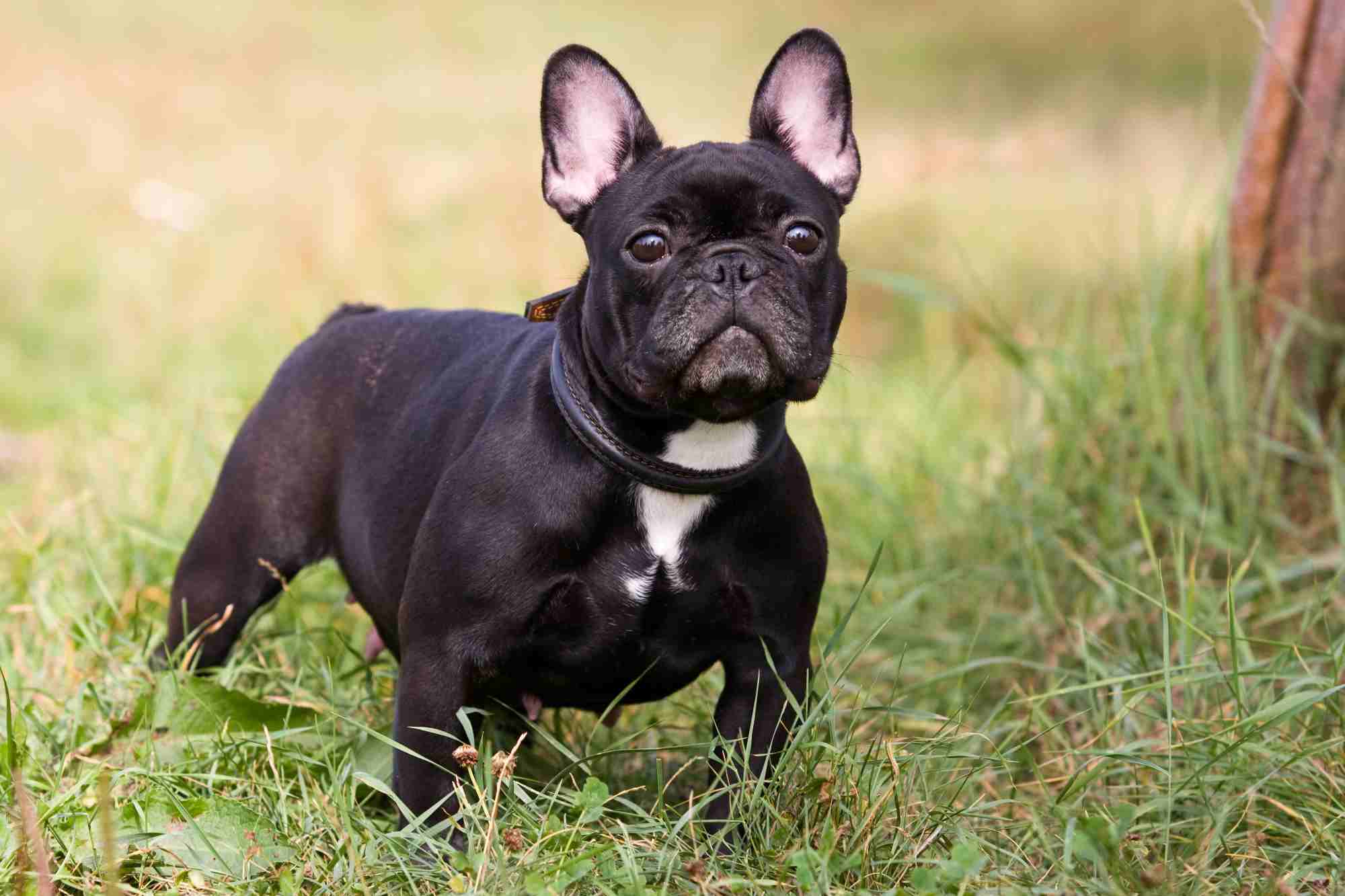
The French Bulldog is of small to medium stature with a compact, muscular body and short legs. Their coat is smooth and glossy. The head is large and square, and the extremely short muzzle is characterised by heavy wrinkles rolled above it, giving their face a cute, squished up appearance. They resemble a miniature Bulldog, except for their distinctive large, bat ears.
Common coat colours are brindle, fawn and pied, while rare-colour Frenchies include blue/grey, liver/chocolate, black and tan and solid black.
| Weight range | 10 to 13 kg |
| Height range | 28 to 33 cm |
| Colours | Brindle, white, cream, fawn solid or in combinations |
| Coat length | Short |

Breed history of French Bulldogs
The origin of the French Bulldog goes back to the ancient world. The dogs of Molossian Greeks were spread throughout the ancient world by traders and, once they arrived in England, they developed into the Mastiff.
The Bullenbeisser, a sub-family breed of the Mastiff, were used in the practice of bull-baiting, a sport where specially trained dogs would attack a restrained bull one at a time. This practice was made illegal in England in the early 1800s and the bulldogs no longer had any working use. After some cross breeding with terriers and pugs in England in the mid-1800s, a much smaller Bulldog was developed.
During the industrial revolution, these small bulldogs found their way to France with lace workers from Nottingham who crossed the channel to settle in Normandy. The small sized bulldogs quickly gained popularity on the continent and dog breeders in England sent more and more of them to France. It’s from here, with the help of French Bulldog breeders, that the breed gained the name Bouledogue Francais, or the French Bulldog as it’s known to us in Australia.
A favourite of urban dwellers since the mid-1800s, the French Bulldog remained in vogue for high society well into the 20th Century with the breed ranking in the top five from 1909 to 1914. In recent times it has gained renewed popularity with Australian families.
Explore related breeds
French Bulldog facts!
- French Bulldogs have found a special place in many hearts over the years and there have been some notable owners. Artists, socialites and even kings have owned a Frenchie or two.
- King Edward VII owned a French Bulldog, as did the author Colette. Tsar Nicholas Romanov owned a number of French Bulldogs and so did Toulouse-Lautrec.
- A French Bulldog travelling on the Titanic in 1912 was apparently insured by its owner for the sum of $750, a huge amount of money at the time.
- Bulldogs have suffered the highest rate of deaths during airline travel. This is due to the respiratory problems that can arise in transit.
- Over 80% of bulldogs are born by caesarean section due to problems that often arise during natural birth. This can be put down to the large heads and muscular shoulders that are a characteristic of the breed.
- French Bulldogs, or any bulldog for that matter, aren’t natural swimmers. Because of their front-heavy structure, Frenchies cannot swim and should never be left unattended near a tub, pool, or body of water.
- French Bulldogs are nearly as popular now as they were in the late 1800s and early 20th Century. Notable celebrity owners include: Hugh Jackman, Leonardo DiCaprio and David Beckham.

Summary
French Bulldogs, or “Frenchies”, are small, sturdy companion dogs known for their large bat-like ears, expressive faces and playful personalities. They are affectionate, people-focused dogs that often suit apartment living, singles, couples and families who want a lively but relatively low-exercise companion. Frenchies usually enjoy short walks, indoor play and plenty of human company, but they can be stubborn, so early socialisation and reward-based training are important.
Because French Bulldogs are a brachycephalic, or flat-faced, breed, potential owners should be aware of their higher risk of breathing difficulties, heat intolerance, eye problems, skin fold infections, spinal issues and other health concerns. They can make wonderful companions, but they need careful weight management, protection from heat, regular vet checks and owners who are prepared for potentially higher ongoing healthcare costs.
FAQs about the French Bulldog
French Bulldogs can make affectionate and entertaining family dogs, especially in households that want a small companion dog with moderate exercise needs. They are usually people-focused and playful, but all interactions between dogs and young children should be supervised. Children should also be taught not to pull at the dog’s ears, tail, face or skin folds.
Yes, French Bulldogs can adapt well to apartment living because they are small, generally not excessive barkers and do not need large amounts of exercise. However, they still need daily walks, play, enrichment and regular toilet breaks. Owners should also be prepared for snoring, snuffling and other breathing noises, which are common in flat-faced breeds but can sometimes indicate breathing difficulty.
French Bulldogs are at increased risk of brachycephalic obstructive airway syndrome, or BOAS, because of their short muzzle and compact airway structure. Signs can include noisy breathing, snoring, exercise intolerance, coughing, gagging, regurgitation, overheating or collapse. Any French Bulldog with breathing difficulty, heat stress or reduced exercise tolerance should be assessed by a vet.
French Bulldogs do not cope well with heat or humidity. Their flat face can make it harder for them to cool themselves efficiently, which increases the risk of heat stress or heatstroke. Exercise should be avoided during the hottest parts of the day, and Frenchies should always have access to shade, cool indoor areas and fresh water.
Most French Bulldogs need moderate, low-impact daily exercise, such as short walks and gentle play. They should not be pushed into intense exercise, especially in warm or humid conditions. The Royal Kennel Club lists exercise needs as up to one hour per day, but this should be adjusted to the individual dog’s breathing, fitness, age and health.
French Bulldogs are intelligent and often food-motivated, but they can also be stubborn. Short, positive training sessions usually work best. Early socialisation, toilet training, lead training and calm handling are important, especially because some Frenchies can become possessive, overexcited or reactive around other dogs.
Yes, French Bulldogs do shed, although their short coat is relatively easy to maintain. Weekly brushing can help remove loose hair and keep the coat healthy. Their facial folds, ears and nails need regular attention, as moisture and debris can contribute to skin or ear problems.
French Bulldogs are generally poor swimmers because of their front-heavy build, short legs and flat face. They should never be left unsupervised near pools, ponds, beaches or other bodies of water. A well-fitted dog life jacket is recommended around water.
French Bulldogs can be prone to BOAS, heat intolerance, skin fold dermatitis, ear infections, eye ulcers, cherry eye, dental crowding, allergies, spinal problems such as IVDD, patellar luxation and birthing difficulties. Not every Frenchie will develop these conditions, but owners should be aware of the breed’s higher health risk and maintain regular veterinary care.
Ask about health testing, breathing assessment, parent health history, eye checks, spinal issues, skin and allergy history, and whether the puppy’s parents have had surgery for BOAS. Avoid choosing a puppy based on “rare” colours, an extremely flat face, very narrow nostrils or exaggerated features. Health, temperament and responsible breeding should be prioritised over appearance.
MORE INFORMATION
The French Bulldog Club of NSW: http://www.frenchbulldogclubnsw.asn.au/
French Bulldog Club of QLD: http://qldfrenchbulldogclub.com/
French Bulldog Rescue and Adoption Association of VIC: http://www.frenchbulldogrescueandadoption.com/
French Bulldog Awareness Group of WA: http://www.frenchbulldogswa.com.au/

Get 2 months free for your puppy!
Congrats on your new bundle of joy
To ensure your precious fur baby is covered from the start, we'd like to offer your first 2 months of our Nose-to-Tail Cover for free2!
Get a quick quote