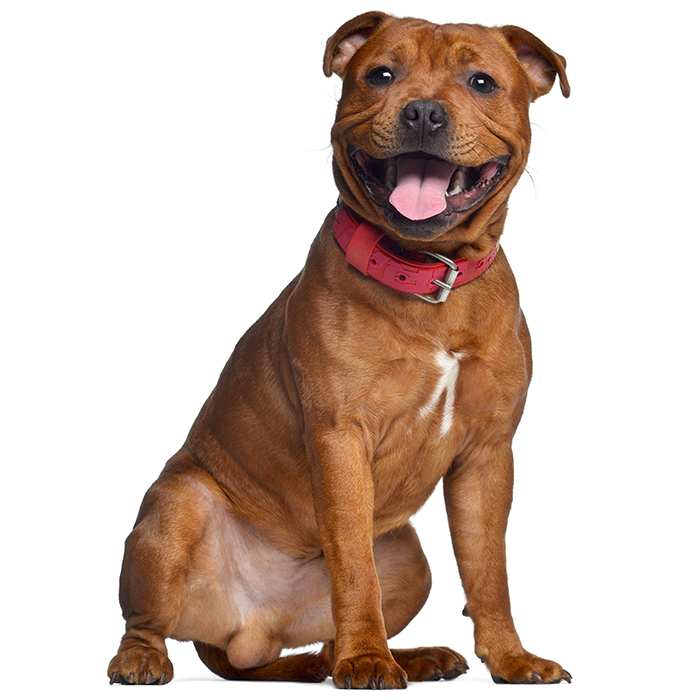
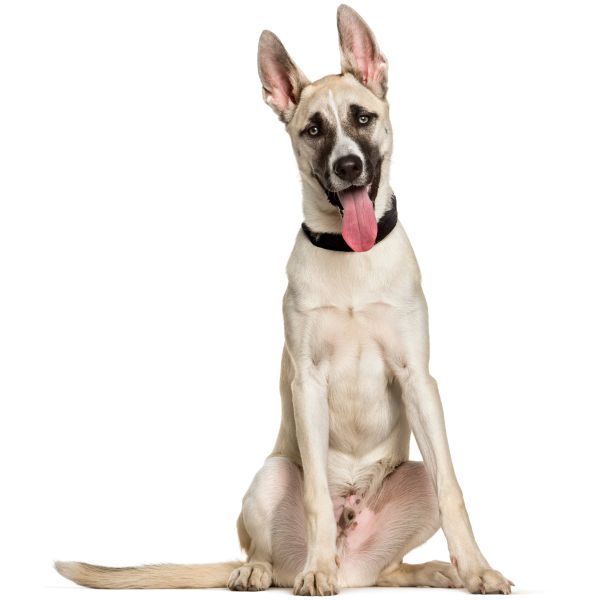
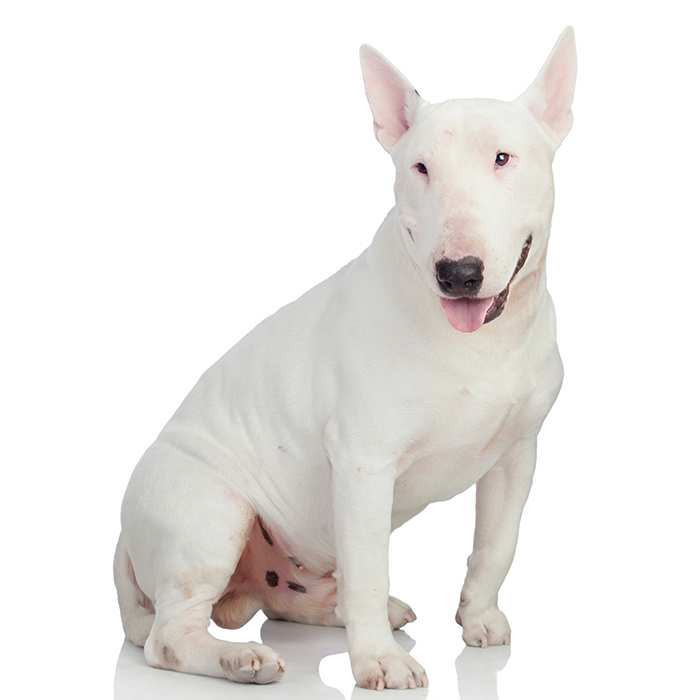
Is the American Staffordshire Terrier a good family dog?


American Staffordshire Terrier
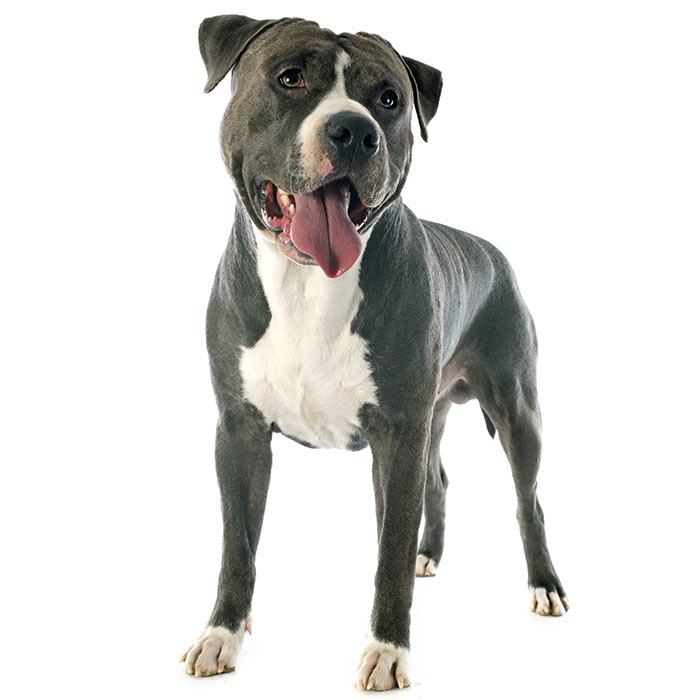
American Staffordshire Terriers, or AmStaffs, are muscular, energetic and people-oriented medium-sized dogs. They are known for their loyalty, confidence and affection towards their families and are best suited to owners who can provide plenty of exercise, training and companionship.
| Recommended for | Active families / experienced owners |
| Breed Classification | Terrier |
| Other names | American Staffy, AmStaff |
| Lifespan | 12-16 years |
| Size | Medium |
| Temperament | Loyal, courageous, friendly |
| Intelligence | High: intelligent, quick learners that respond well to consistent, positive training |
| Tendency to bark | Moderate: they may bark to alert their owners or when excited |
| Maintenance Level | Low to moderate: their short coat is easy to maintain, but they need plenty of daily exercise and mental stimulation |
| Health Risk | American Staffordshire Terriers are generally robust dogs, but like all breeds, they can be predisposed to certain inherited and acquired health conditions. |
Thinking of insuring an American Staffordshire Terrier?
Explore the Top 5 health issues claimed for American Staffordshire Terriers, including highest claims paid and how much pet insurance could help you save on eligible vet bills.
See American Staffordshire Terrier pet insurance Ready to get cover? Get a quick quote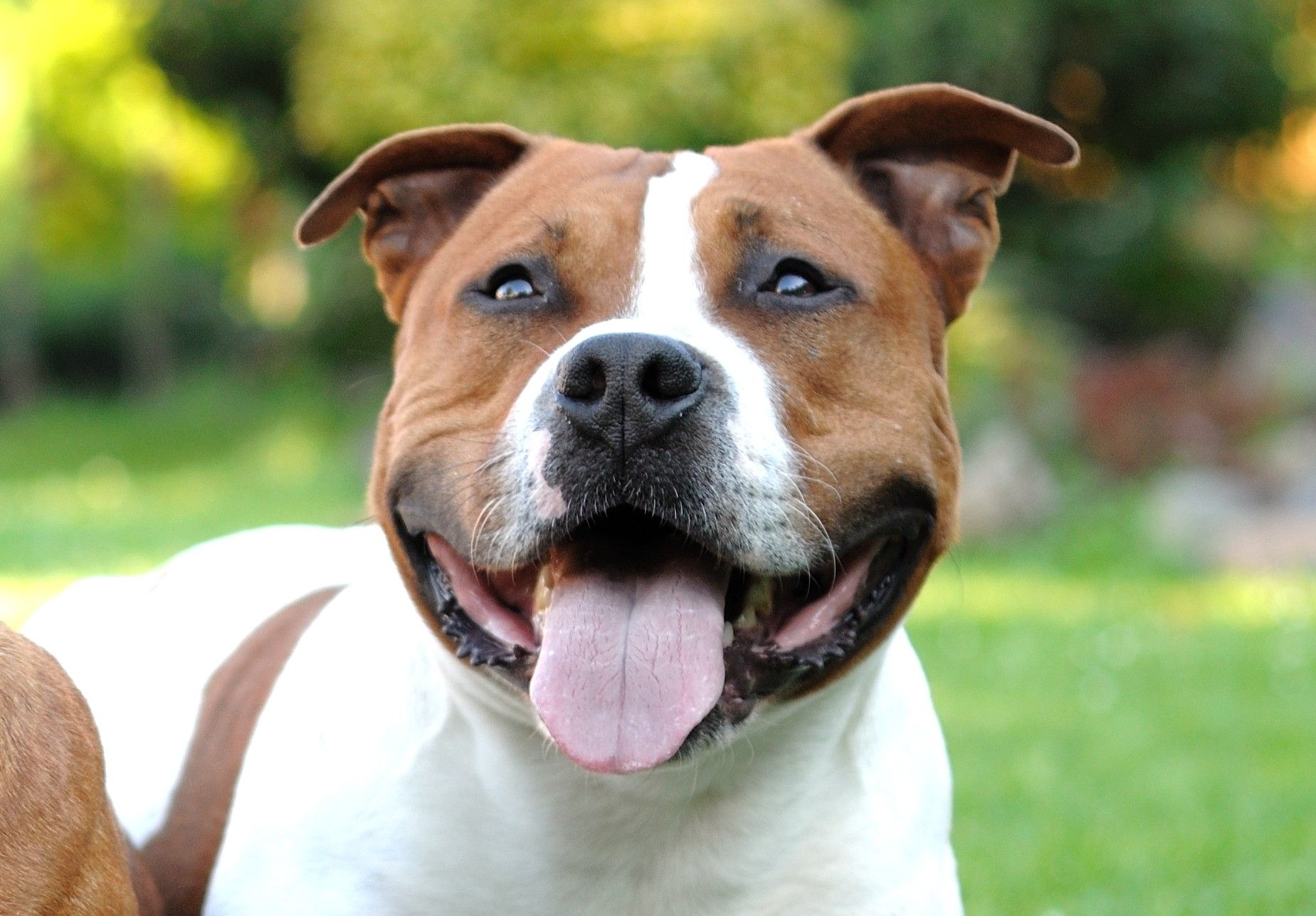
American Staffordshire Terrier personality and temperament
Despite its media reputation for ferociousness, the American Staffy is an affectionate dog with a sweet temper and kind and gentle nature. American breeders have worked tirelessly since the 1900’s to selectively out-breed aggressiveness, and although they are often still viewed with suspicion, they have become popular family pets.
AmStaffs are people-oriented dogs that thrive as part of the family. They are very clingy, affectionate and playful, and will show their owners tremendous loyalty – the most important thing in life to this breed is their owner’s fond attention. Very sociable dogs, they need good doses of human contact, and can suffer separation anxiety and behavioural problems when routinely left alone for extended periods of time.
American Staffies are confident, strong dogs that can be protective of their families. Early socialisation, consistent training and responsible management are important to help them become well-adjusted around unfamiliar people, animals and situations.
American Staffordshire Terriers with kids and other pets
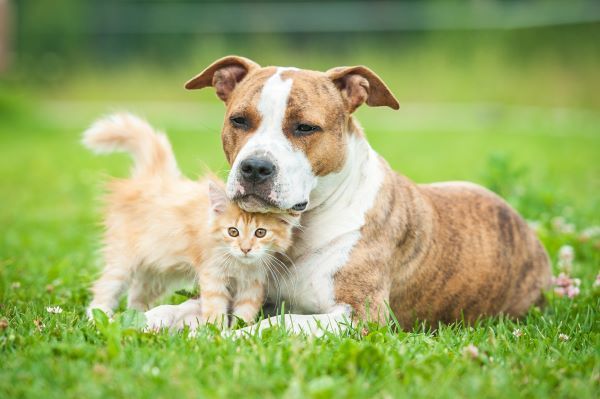
Well-socialised American Staffies can be affectionate and playful family dogs and often form strong bonds with children within the family. Because they are powerful and energetic, interactions with young children should always be supervised. This also applies to older children and adults from outside of the family.
American Staffies can live successfully with other dogs and pets, particularly when socialised with them from a young age. However, some individuals may be dog-selective or have a strong prey drive, so careful introductions and supervision around other animals are important.
American Staffordshire Terrier training and exercise
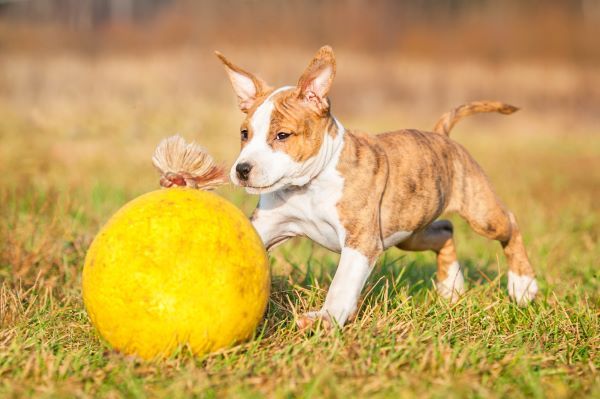
American Staffies are energetic, athletic dogs that need daily physical exercise and mental stimulation. Activities can include brisk walks, play, obedience training and dog sports such as agility or dock diving. The breed generally enjoys any kind of dog sport. They show great talent as assistance dogs or even search-and-rescue dogs, where they can use their brain and muscle power.
American Staffies are intelligent and eager to please but can also be strong-willed. Early socialisation and consistent, positive reinforcement-based training are important, along with clear routines and plenty of mental stimulation. If not well trained, behavioural problems can develop and the AmStaff can become difficult to handle.
| Energy level | High |
| Exercise requirements | High: around 60–90 minutes per day, combining walks, active play and mental stimulation |
Common health issues for American Staffordshire Terriers
What do American Staffordshire Terrier owners claim for the most?
American Staffordshire Terriers are generally robust dogs, but like all breeds, they can be predisposed to certain inherited and acquired health conditions. These may include:
- Hip dysplasia is a developmental condition in which the hip joint does not fit together properly. It can cause pain, stiffness, reduced mobility and arthritis, particularly as the dog ages.
- Elbow dysplasia refers to abnormal development of the elbow joint and can lead to pain, lameness and arthritis. Signs may appear when a dog is young or become more noticeable later in life.
- Skin and food allergies can cause persistent itching, redness, hair loss and recurrent skin or ear problems. Allergies may be triggered by environmental factors or, in some dogs, ingredients in their diet.
- Hypothyroidism occurs when the thyroid gland does not produce enough thyroid hormone. Signs can include weight gain, lethargy, thinning of the coat and skin changes. The condition can usually be managed with ongoing medication.
- Progressive retinal atrophy (PRA) is a group of inherited eye diseases in which the retina gradually deteriorates, resulting in progressive vision loss and potentially blindness. There is currently no cure, although affected dogs can often adapt well to declining vision.
- Neuronal ceroid lipofuscinosis (NCL-4A), also associated with hereditary cerebellar ataxia, is an inherited neurological disorder found in American Staffordshire Terriers. It causes progressive problems with balance and coordination and may eventually lead to more widespread neurological signs. DNA testing is available to identify the genetic mutation associated with the condition.
- Heart disease can also occur in American Staffordshire Terriers, and responsible breeders may screen breeding dogs for cardiac abnormalities. The signs and severity vary depending on the specific heart condition, and some abnormalities may initially be detected as a heart murmur during a veterinary examination.
Not all conditions are covered by Pet Insurance. For details of Bow Wow Meow Pet Insurance cover, refer to the Product Disclosure Statement.
How to choose the right insurance for your American Staffordshire Terrier
When comparing cover for your American Staffordshire Terrier, look for:

Cover for common American Staffordshire Terrier conditions:
Check that the policy covers conditions American Staffordshire Terriers can be prone to, including common health issues.

Cover for hereditary conditions:
No exclusions for hereditary or congenital conditions⑅.

Flexible cover options:
Options to adjust your annual benefit limit, reimbursement rate and excess.
Bow Wow Meow's Nose-to-Tail Cover offers flexible options for your American Staffordshire Terrier, with cover for accidental injuries, illnesses and hereditary conditions⑅. Get a quick quote for cover that suits your American Staffordshire Terrier and your budget.
American Staffordshire Terrier feeding and nutrition
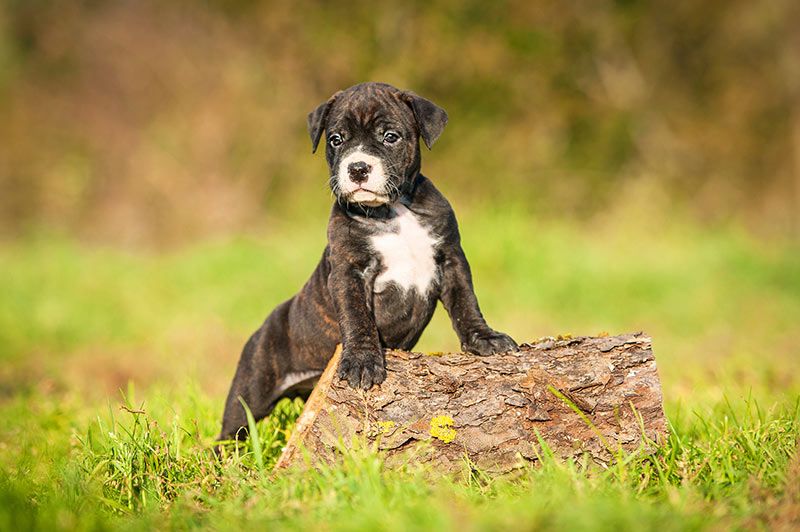
The American Staffy should be fed a premium, high-quality dog food appropriate to the dog’s age (puppy, adult, or senior) and activity level.
American Staffys that aren’t sufficiently exercised may become overweight, so watch your dog’s calorie consumption and weight level and don’t overindulge in the treats department.
Check with your vet if you have any concerns about your American Staffy’s weight or diet.
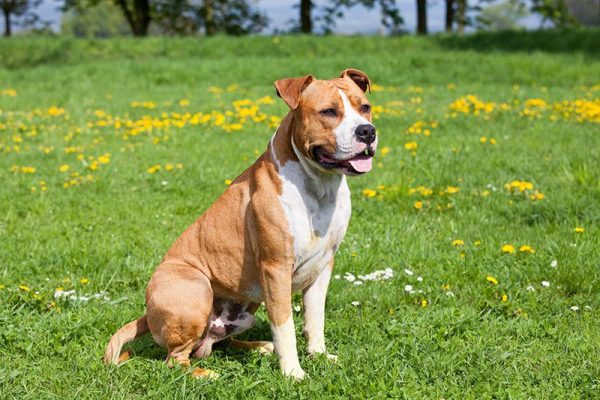
American Staffordshire Terrier care and grooming
The AmStaff’s short, stiff coat is relatively easy to maintain. Regular brushing helps remove loose hair and keep the coat in good condition. They do shed, although their short coat generally makes shedding manageable.
Some American Staffies are prone to sensitive or irritated skin, so use a gentle dog shampoo and avoid excessive bathing. Speak to your vet if your dog develops persistent itching, redness or other skin problems.
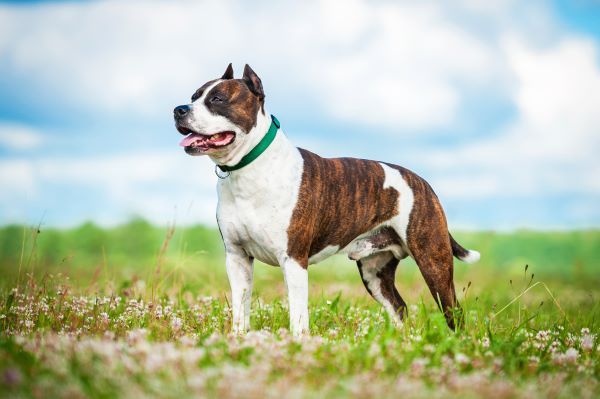
Size, appearance and coat of American Staffordshire Terriers
The American Staffordshire Terrier is a stocky, muscular medium-sized breed with a short body, deep chest and broad head. To some, American Staffys have an intimidating appearance, however its heavy-set and muscular build is the breed’s hallmark, giving the impression not only of great strength for its size but also of grace and agility.
The American Staffy coat is short, close and glossy. It comes in a wide variety of colours and patterns including black, brown, fawn, liver, red, white and the well known blue American Staffy.
| Weight range | 18-32 kg |
| Height range | Males: 46–48 cm; females: 43–46 cm |
| Colours | Black, blue, fawn, red, white, brindle and combinations of these |
| Coat length | Short |
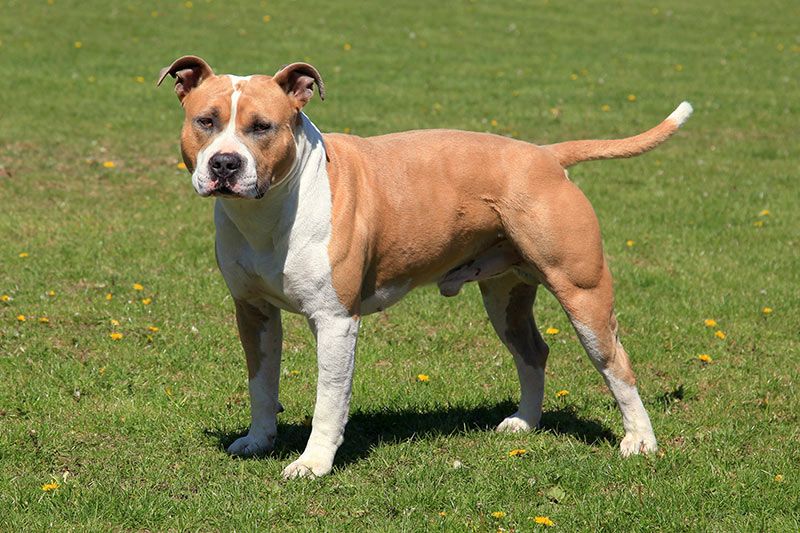
Breed history of American Staffordshire Terriers
The American Staffordshire Terrier was first developed in Birmingham, England from crossing the English Bulldog and a number of older terrier breeds. The purpose was to produce an animal with a great deal of strength, courage and tenacity. Further developed in Staffordshire, the breed finally reached the United States in the 1870s, where it quickly became popular with pioneering families for protection, companionship and catching hogs and cattle.
After its introduction to the USA, it was bred primarily as a companion dog that could be used for hunting, protection and sport. The American version developed into a more heavy-set and muscular animal, eventually dwarfing its English cousin. Blood sport was a common use for the breed and AmStaffs were popularly chosen for use as fighting dogs until the sport was banned at the turn of the century.
In 1936, the American Kennel Club recognised a group of these dogs as Staffordshire Terriers. Over time, AKC-registered dogs developed as a distinct breed from the American Pit Bull Terrier. In 1972, the breed was renamed the American Staffordshire Terrier to distinguish it from the smaller Staffordshire Bull Terrier.
From 1900s, the AmStaff was developed to better suit a family environment and it was highly sought after by those wanting a dog with courage and tenacity to guard loved ones and property. Modern American Staffordshire Terrier breeders increasingly focused on conformation, sound temperament and the breed’s role as a companion and show dog.
The breed came to Australia in 1985, was officially recognised in 1987 and the first Australian litter of American Staffy puppies was born in 1990. The first American Staffys to come to Australia were from the Hawaiian Islands.
Explore related breeds
American Staffordshire Terrier facts!
- The American Staffy and Pit Bull Terrier are inherently linked. They were once the same breed until after dog fighting was made illegal in the United States and breeders of the American Staffy aimed to breed out the Staffy’s aggressive nature.
- American Staffys and Pit Bulls have appeared in a lot of American media, especially early 20th Century advertising – record label RCA, First World War era US Army and a prominent American shoe company to mention a few.
- Breeding the American Staffy for the purposes of dog fighting sadly does continue illegally. While many reputable breeders have worked hard to remove the Staffy’s aggressiveness, some irresponsible breeders persevere.
- An American Staffordshire Terrier named Lucenay’s Peter played Petey in the famous Our Gang/Little Rascals films and was among the early AmStaffs registered with the AKC.
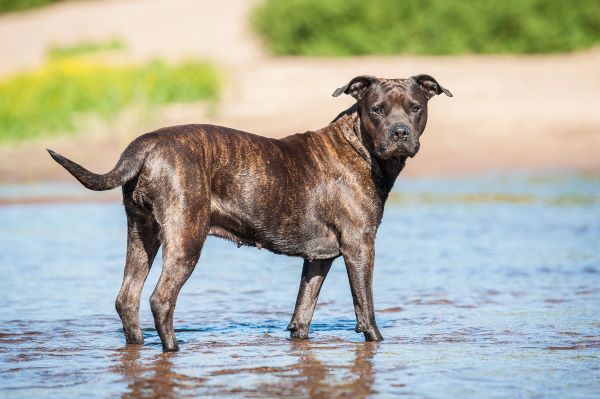
Summary
The American Staffordshire Terrier is a muscular, energetic medium-sized dog that is affectionate, sweet-natured and strongly people-oriented. Despite its powerful appearance, a well-socialised AmStaff can be a kind, gentle and devoted family companion.
AmStaffs are very loyal and enjoy being included in family activities, making them well suited to active households. Their confidence and strength also make early socialisation and consistent training important, while their watchful nature can make them effective watchdogs.
FAQs about the American Staffordshire Terrier
They can be lively, affectionate family companions, particularly for owners who enjoy an energetic, confident terrier personality.
High. They need plenty of daily exercise, including walks, active play and mental stimulation, with opportunities for more vigorous activity where appropriate.
Generally yes. They are intelligent and usually respond well to positive, consistent training, particularly when sessions are engaging and rewarding.
They are generally low to moderate or moderate barkers, although barking can increase with boredom, excitement, anxiety or unfamiliar activity.
Yes. They generally shed a low to moderate or moderate amount and benefit from routine brushing.
They can adapt to apartment living in the right circumstances, but owners need to meet their daily exercise, enrichment and behavioural needs consistently.
They can live well with respectful children and other dogs, but terrier prey drive may make small pets tempting to chase and dog-to-dog compatibility varies.
Potential health concerns include hip dysplasia, skin allergies, cruciate ligament problems and some inherited heart or neurological conditions.
MORE INFORMATION
Saving Staffies NSW: https://savingstaffies.org.au/
QLD Staffy & Amstaff Rescue: http://www.qldstaffyandamstaffrescue.org.au/
Stafford Rescue Victoria: http://staffordrescuevictoria.org.au/
American Staffordshire Terrier Club of QLD: http://www.qldamstaffclub.com/
American Staffordshire Terrier Club of VIC: http://www.astcv.org/
American Staffordshire Terrier Club of NSW: http://amstaffnsw.weebly.com/

Get 2 months free for your puppy!
Congrats on your new bundle of joy
To ensure your precious fur baby is covered from the start, we'd like to offer your first 2 months of our Nose-to-Tail Cover for free2!
Get a quick quote