
Is the Border Terrier a good family dog?


Border Terrier
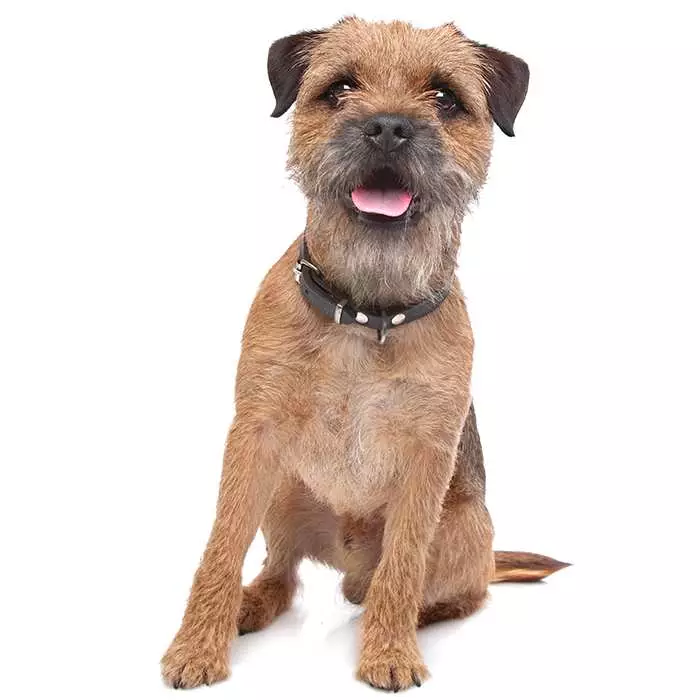
Border Terriers are small, intelligent and energetic working terriers known for their good-natured temperament, wiry coat and distinctive otter-shaped head. Originally bred to work alongside horses and hounds and pursue foxes underground, they retain strong instincts to chase and dig.
| Recommended for | Active owners who can provide regular exercise, training and secure outdoor spaces |
| Breed Classification | Terriers |
| Other names | Borders |
| Lifespan | 12-15 years |
| Size | Small |
| Temperament | Affectionate, alert, determined and good-natured |
| Intelligence | High: clever, responsive dogs that learn quickly but retain an independent terrier streak |
| Tendency to bark | Moderate: alert and vocal when necessary, but not generally considered an excessive barker |
| Maintenance Level | Moderate: regular brushing and periodic hand-stripping |
| Health Risk | Border Terriers can be prone to gallbladder mucoceles, Cushing’s disease, cramping disorders, inherited shaking puppy syndrome and eye conditions such as cataracts. |
Thinking of insuring a Border Terrier?
Explore the Top 5 health issues claimed for Border Terriers, including highest claims paid and how much pet insurance could help you save on eligible vet bills.
See Border Terrier pet insurance Ready to get cover? Get a quick quote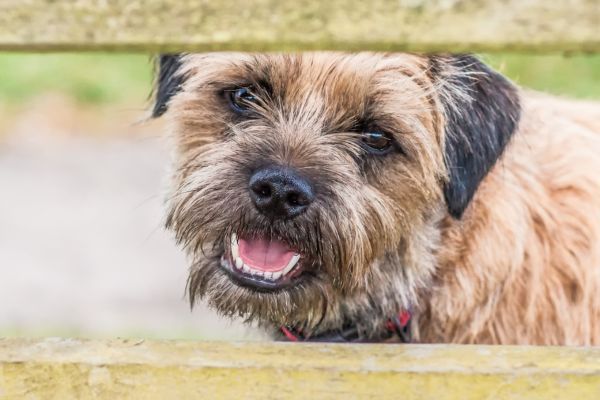
Border Terrier personality and temperament
Border Terriers are typically affectionate, good-tempered and alert dogs that enjoy being closely involved with their families. Although tough and determined when working, they generally have a sociable companion side and are often considered more cooperative with people and other dogs than some terrier breeds.
Their working heritage remains strong, however. Many Border Terriers have a powerful prey drive and natural enthusiasm for digging, exploring and following movement. Regular exercise, mental stimulation and secure fencing are important, as bored or under-stimulated individuals may become noisy, destructive or attempt to escape.
Border Terriers are best suited to households that can provide regular company. Introduce time alone gradually, as long periods without interaction can contribute to boredom or distress. They can adapt well to apartment living provided their exercise and enrichment needs are consistently met.
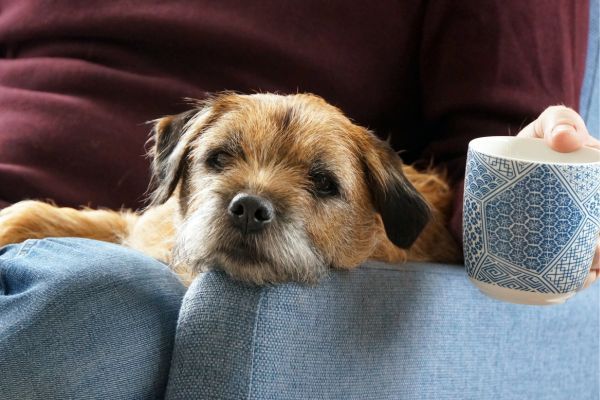
Border Terriers with kids and other pets
Well-socialised Border Terriers can make affectionate and playful family companions and often enjoy the company of children. Their energetic play can suit active families, although interactions between dogs and young children should always be supervised.
Because Border Terriers historically worked alongside packs of hounds, many can live successfully with other dogs when appropriately socialised. Their strong prey drive is more significant around cats and smaller pets; some can live with cats they have been raised with, but unfamiliar cats, rodents and other small animals may trigger chasing behaviour.
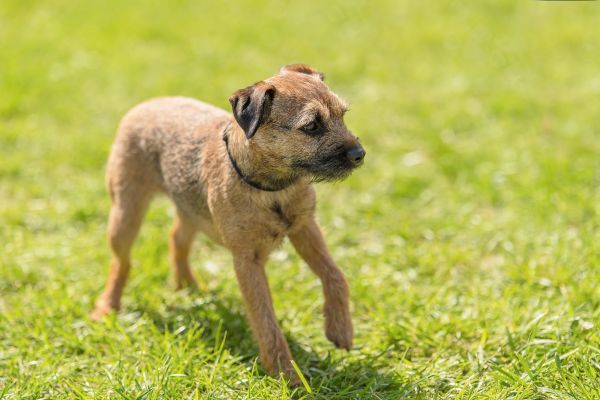
Border Terrier training and exercise
Border Terriers are energetic, athletic dogs that generally benefit from up to one hour of daily physical activity, although individual needs vary with age and health. Walks, active play, hiking and dog sports such as agility, tracking, scent work and Earthdog activities can all provide useful outlets for their energy and working instincts.
They are intelligent and generally respond well to short, varied, positive reinforcement-based training sessions. Their instinct to chase small animals can override recall, however, so off-lead exercise is safest in securely fenced areas. Secure fencing is particularly important because Border Terriers can be determined diggers and escape artists.
| Energy level | High: lively terriers with good stamina |
| Exercise requirements | Moderate to high: around 45–60 minutes of daily walks and play, plus mental enrichment |
Common health issues for Border Terriers
What do Border Terrier owners claim for the most?
Border Terriers are generally considered a healthy, long-lived breed, but several inherited and acquired conditions occur within the population. Responsible breeders should undertake appropriate breed-specific health screening, including DNA testing for SLEM.
- Spongiform leukoencephalomyelopathy (SLEM), or shaking puppy syndrome, is a severe inherited neurological disorder in Border Terriers. Affected puppies develop tremors and coordination problems from a very young age. The condition is inherited in an autosomal-recessive pattern, and DNA testing can identify clear dogs and carriers before breeding.
- Canine epileptoid cramping syndrome (CECS): This movement disorder causes episodes of abnormal muscle contractions or difficulty moving, usually while the dog remains conscious. Some affected Border Terriers have a gluten-sensitive form known as paroxysmal gluten-sensitive dyskinesia (PGSD), which may improve with a carefully managed gluten-free diet. Veterinary assessment is important because similar signs can have other causes.
- Gallbladder mucocele (GBM) occurs when thick mucus accumulates within the gallbladder, potentially obstructing bile flow or, in severe cases, leading to rupture. Border Terriers have emerged as a breed at increased risk, particularly in middle-aged and older dogs.
- Cushing’s disease (hyperadrenocorticism) occurs when the body produces excessive cortisol. Signs can include increased thirst and urination, increased appetite, hair loss, thinning skin, lethargy and a pot-bellied appearance.
- Eye conditions, including cataracts, can affect Border Terriers and may result in reduced vision depending on severity.
- Patellar luxation may also occur, causing the kneecap to move out of its normal position and potentially leading to intermittent lameness, pain or arthritis.
Not all conditions are covered by Pet Insurance. For details of Bow Wow Meow Pet Insurance cover, refer to the Product Disclosure Statement.
How to choose the right insurance for your Border Terrier
When comparing cover for your Border Terrier, look for:

Cover for common Border Terrier conditions:
Check that the policy covers conditions Border Terriers can be prone to, including common health issues.

Cover for hereditary conditions:
No exclusions for hereditary or congenital conditions⑅.

Flexible cover options:
Options to adjust your annual benefit limit, reimbursement rate and excess.
Bow Wow Meow's Nose-to-Tail Cover offers flexible options for your Border Terrier, with cover for accidental injuries, illnesses and hereditary conditions⑅. Get a quick quote for cover that suits your Border Terrier and your budget.
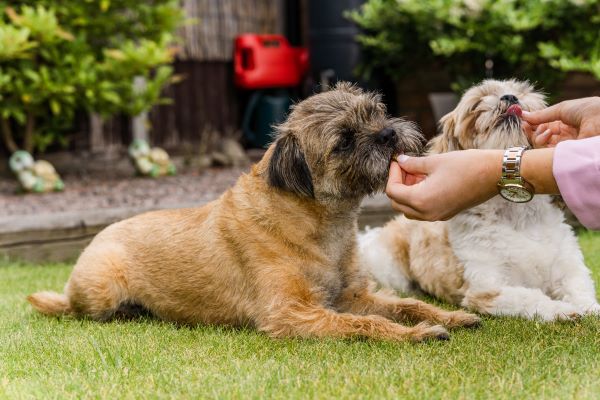
Border Terrier feeding and nutrition
Border Terriers should be fed a complete and balanced diet appropriate for their age, body condition, health and activity level. They can gain excess weight if overfed, so meals should be measured and treats accounted for when calculating their overall daily intake.
Monitor your Border Terrier’s body condition and adjust portions as needed. Border Terriers do not routinely need a gluten-free diet. If your dog has suspected cramping episodes or a diagnosed dietary condition, seek veterinary advice before changing their food.
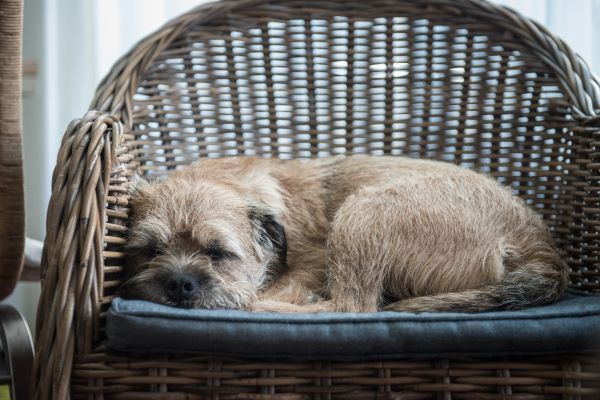
Border Terrier care and grooming
Border Terriers have relatively straightforward everyday grooming needs, but their harsh double coat requires some specialised care. Regular brushing – at least weekly – helps remove loose hair and debris, while the dead outer coat is traditionally hand-stripped approximately twice a year to maintain its characteristic wiry texture. Ask a groomer experienced with terrier coats to assess when hand-stripping is appropriate. Clipping may be a practical option for some older dogs or dogs with health limitations, although it can change the coat’s appearance and texture.
They shed relatively little compared with many breeds, although shedding may become more noticeable seasonally. Bathing is generally only needed when dirty, along with routine nail, dental and ear care. Their folded ears should also be checked regularly for signs of irritation or infection
Size, appearance and coat of Border Terriers
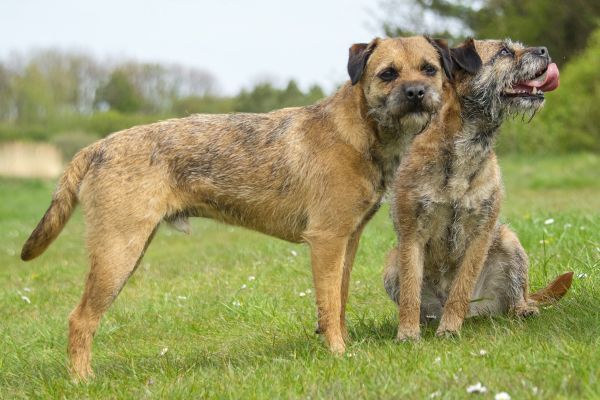
The Border Terrier is a small, narrow and athletic working terrier built to combine stamina with the ability to follow quarry underground. It has a moderately broad, distinctive “otter-shaped” head, a short strong muzzle and small V-shaped ears. Its relatively long legs helped it keep pace with horses and hounds while hunting.
The coat consists of a harsh, dense outer coat over a close undercoat, with thick, loose-fitting skin that historically offered some protection while working underground. Recognised colours are red, wheaten, grizzle and tan, and blue and tan.
| Weight range | Males 6–7 kg; females 5–6.5 kg |
| Height range | Approximately 30–38 cm |
| Colours | Red, wheaten, grizzle and tan, or blue and tan |
| Coat length | Short, harsh outer coat with a close undercoat |
Breed history of Border Terriers
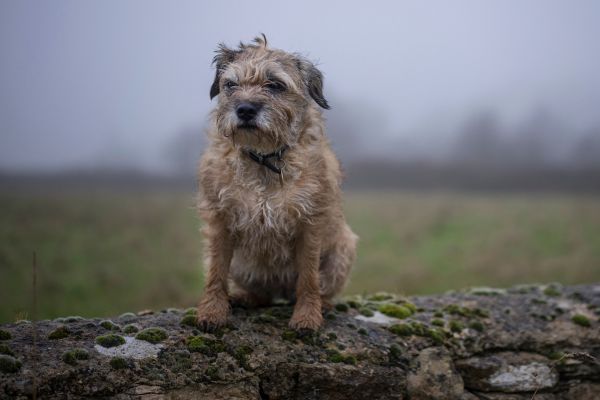
The Border Terrier developed in the rugged border country between northern England and Scotland as a practical working terrier used by farmers, shepherds and hunts. The dogs needed enough stamina and leg length to keep pace with horses and foxhounds, while remaining narrow and agile enough to follow foxes and other quarry underground.
Before the modern breed name became established, dogs of this type were known by regional names including the Reedwater Terrier and Coquetdale Terrier. The name Border Terrier came into use around the late 19th century, reflecting the breed’s strong association with the Border Foxhounds and the surrounding border country. The breed gained Kennel Club recognition in Britain in 1920. Breeders have continued to value its practical working build and temperament alongside its role as a companion dog.
.
Explore related breeds
Border Terrier facts!
- Border Terriers were built for two very different jobs at once: keeping pace with horses above ground and squeezing into narrow tunnels after quarry underground.
- Their distinctive head is officially described as resembling an otter’s.
- Their loose-fitting skin helped provide flexibility and some protection from bites and scratches while working underground.
- Border Terriers are often considered more sociable with other dogs than many terriers because they historically had to work peacefully alongside packs of foxhounds.
- The breed has been known by several regional names, including the Reedwater Terrier and Coquetdale Terrier.
Summary
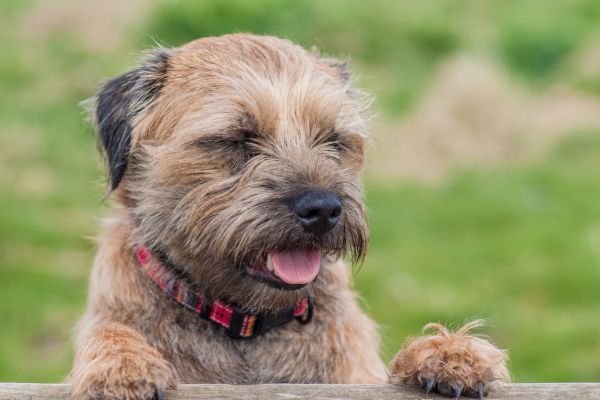
Border Terriers are affectionate, lively small dogs that enjoy exercise, play and involvement in family life. Their intelligence and adaptable nature can make them engaging companions for active owners.
Their working instincts require careful management around wildlife and smaller pets, along with secure exercise areas and consistent training. Regular coat care, appropriate health screening and ongoing veterinary care are also important commitments.
FAQs about the Border Terrier
They can be lively, affectionate family companions, particularly for owners who enjoy an energetic, confident terrier personality.
Most healthy adult Border Terriers benefit from around 45–60 minutes of daily activity, combining walks and play, alongside training and mental enrichment. Adjust the amount and intensity to your dog’s age, health, fitness and individual energy level.
They are intelligent but can be independent or strong-willed, so patient, consistent reward-based training and early socialisation are important.
Border Terriers are generally moderate barkers and may bark to alert their owners or express excitement. Barking can increase with boredom, anxiety or unfamiliar activity, so regular exercise, enrichment and reward-based training are important.
Border Terriers shed, although the amount varies with their individual coat and grooming routine. Regular brushing removes loose hair, while periodic hand-stripping helps remove the dead outer coat and maintain its characteristic wiry texture.
They can adapt to apartment living in the right circumstances, but owners need to meet their daily exercise, enrichment and behavioural needs consistently.
Well-socialised Border Terriers can live happily with children and other dogs, although interactions with young children should always be supervised. Some can also live with cats following careful introductions, but their strong prey drive means rabbits, guinea pigs and other small pets should be securely housed and kept separate.
Border Terriers can be prone to gallbladder mucoceles, Cushing’s disease, cramping disorders such as canine epileptoid cramping syndrome (CECS), inherited shaking puppy syndrome (SLEM), cataracts and patellar luxation. Ask breeders about relevant health screening, including SLEM testing, and speak to your vet about any concerning symptoms.
Hand-stripping removes dead outer hairs from the root and allows the Border Terrier’s characteristic harsh, weather-resistant coat to renew naturally. Regular clipping may soften the coat and alter its texture and colour, so owners who want to maintain the traditional coat usually have it hand-stripped periodically.
Their strong prey drive means even a well-trained Border Terrier may suddenly chase wildlife or another small animal. Off-lead exercise is therefore safest in secure, enclosed areas, and owners should not rely on recall alone where there is a risk of the dog pursuing prey.

Get 2 months free for your puppy!
Congrats on your new bundle of joy
To ensure your precious fur baby is covered from the start, we'd like to offer your first 2 months of our Nose-to-Tail Cover for free2!
Get a quick quote