Constant paw licking? Why cats overgroom and what to do
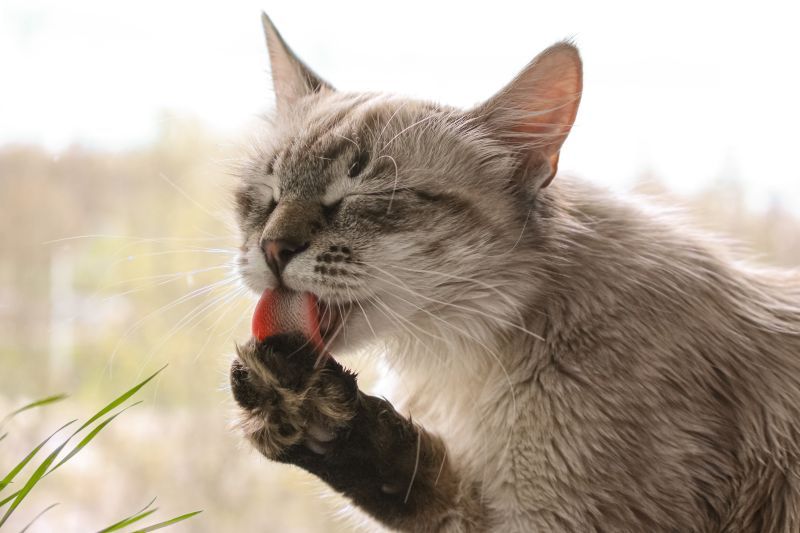
Cats are professional groomers. Naturally clean, they lick their paws, wash their face, and tidy their coats, all normal grooming activities that can occupy around thirty to fifty percent of their day.
But if your cat is licking their paws constantly, focusing on one foot, or grooming so much that fur starts thinning, it may be a sign something is bothering them.
When grooming or licking becomes excessive, it is often referred to as overgrooming. It can be tricky to distinguish from regular grooming, unless you notice your cat has developed some hair loss or skin lesions.
Let’s look into what your cat’s constant paw-licking can mean, what you can look for at home, and when to get help.

Normal grooming vs problem overgrooming
What normal grooming usually looks like:
-
Short-to-moderate bouts spread through the day (often after meals, after using the litter tray, or after waking from a nap)
-
Whole-body and balanced: face/ears (with paws), chest, sides, tail, and sometimes paws as part of the routine
-
Easy to interrupt: if you call them, offer food, or start play, they’ll usually stop and re-engage
-
No coat or skin changes: fur stays even, no bald patches, no redness, no scabs, no broken skin
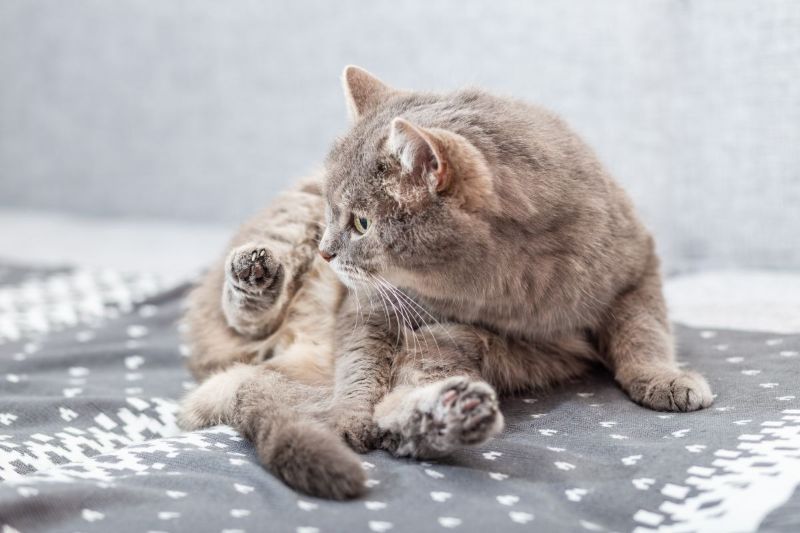
When it looks like over-grooming
It’s worth paying attention if you notice:
-
Long grooming sessions that seem hard to interrupt
-
Repeated paw licking throughout the day
-
Irritated or red skin on the paws
-
Thinning fur, bald patches, or broken hairs
-
Scabs or crusty areas
-
Your cat seems restless or “not themselves”
Because cats groom themselves so much, owners often don’t notice a problem until they observe hair loss or skin lesions.

The most common reasons cats lick paws constantly
If grooming becomes intense, frequent or focused on one spot, it can be a sign of itch, pain, parasites, or stress.
Many owners assume it must be stress or anxiety, but most cats overgroom simply because they itch, not because they’re “mentally unwell.”
1) Fleas (even if you can’t see them)
Fleas are one of the most common triggers for itching in cats. Even indoor cats can occasionally get fleas (they can hitch a ride into the home). Some cats are so sensitive that one flea bite can cause days of licking and scratching.
Cats groom so efficiently that they can groom fleas away, so you may not find fleas at all, just the symptoms.
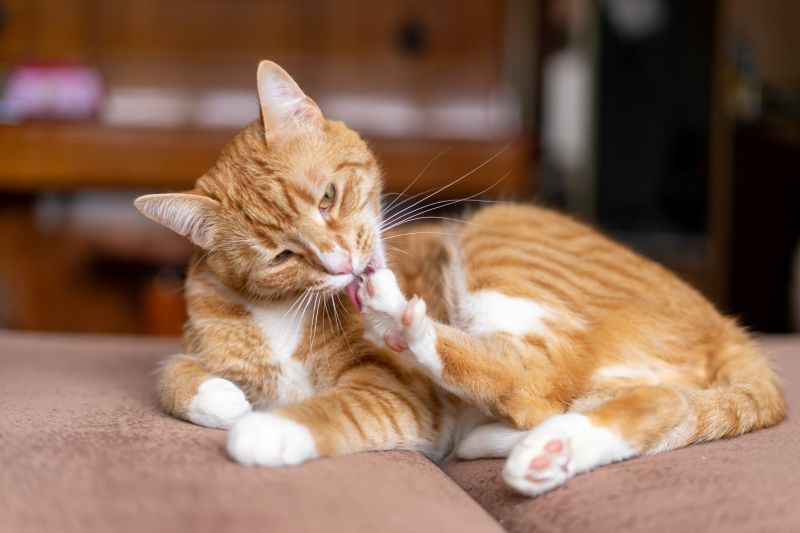
Clues overgroomng may be caused by fleas:
-
Licking paws plus scratching around the neck/back
-
Small scabs (often near the lower back)
-
Sudden increase in grooming
What to do:
- Confirm as best you can that fleas are the culprit: look for flea dirt (tiny black specks) on the coat and skin
- Use a flea comb over a white paper towel; if the black specks turn reddish-brown when wet, that can indicate digested blood (“flea dirt”)
- Use a vet-recommended flea product (and treat all pets in the house with a product suitable for their species, weight and age)
- Clean the environment (this is what stops reinfestation): wash and dry bedding, vacuum carpets, rugs, couches, skirting boards, and cracks/crevices; empty the vacuum promptly.
Because it is difficult to predict the costs of veterinary care, it can help to have measures in place to help prepare for the unexpected. Pet insurance can help by covering a portion of the eligible vet bill if the unexpected does happen.
Get a quick quote
2) Allergies or skin sensitivities
Cats can suffer from allergies that may cause intense itching. Triggers can include environmental allergens like pollen or dust, or food sensitivities.
Some cats show allergy itch by:
-
Licking their paws
-
Grooming the belly or inside legs
-
Scratching the head and neck area
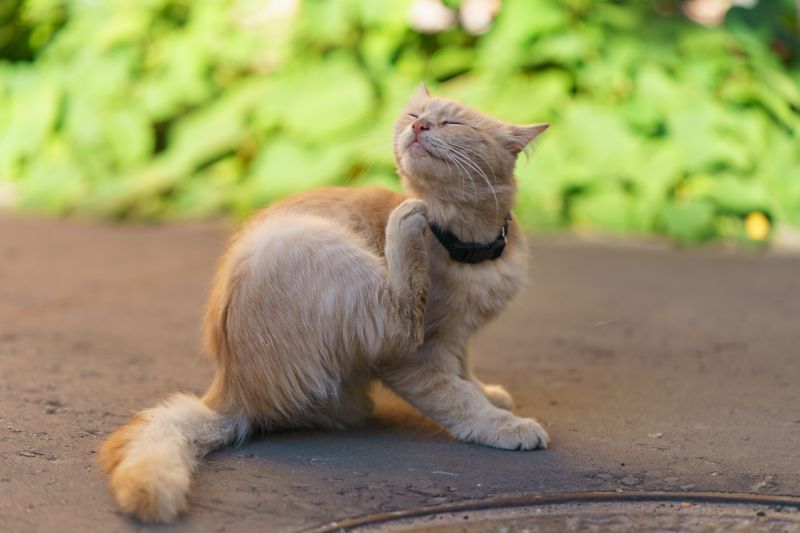
Sometimes a minor skin irritation (e.g. an insect bite or mild allergy rash) turns into a bigger problem because your cat keeps licking it. Once the skin barrier is damaged, it can become sore, inflamed, and more tempting to lick, which can quickly become a vicious cycle: itch → lick → more irritation→ more licking.
Cornell Feline Health Center warns that excessive licking can cause hair loss and skin damage, and if the skin is abraded (worn away by scraping from the cat’s rough tongue), infection can occur.
What to do:
If you suspect your cat’s triggers are environmental (pollen, mould, dust mites, etc.), the aim is to reduce what lands on the skin/coat, and reduce what builds up indoors. Complete avoidance is usually difficult.
Reduce indoor allergens with frequent vacuuming, wash bedding weekly, and keep indoor areas dry and well ventilated. Use unscented cleaners, sprays and laundry detergents, and try a low-dust, unscented cat litter. If your cat has outdoor time, wipe a damp cloth over their paws, legs, belly and chest (where allergens collect) to reduce contact exposure.
A food allergy is one of the common causes vets consider for itchy cats, but the only reliable way to test it is a structured elimination diet trial with guidance from your vet.
3) Pain or discomfort
Cats sometimes lick areas that hurt. Pain-related overgrooming can be caused by things like a sprain, sore nail, sore paw pad, ingrown claw, or an arthritic joint.
Clues it may be pain:
-
Your cat avoids jumping
-
One paw is targeted more than others
-
Mild limping or reluctance to play
-
Flinching when you touch the foot
What to do:
Check for obvious paw/nail issues (only if your cat tolerates it):
-
A cracked/broken claw
-
Swelling between toes
-
A tender spot or small wound
-
Limping or reluctance to bear weight
If your cat won’t let you look or seems too sore, don’t force it. The safest advice is to get the vet to check it out, because cats are experts at hiding pain and the licking is often their most visible clue. A vet exam is the quickest way to pinpoint what’s going on and prevent it becoming chronic.
Unsure how serious it is?
Bow Wow Meow policyholders can get access to trusted vet care anytime, anywhere, at no additional cost. Connect to an experienced Australian registered vet via video call, 24/7. Whether it’s providing vet advice, setting up at-home treatment plans, or confirming if you need to visit a vet in person, you can get help when you need it.
Find out more about our pet insurance cover options.
4) Stress, anxiety or boredom
Cats are sensitive creatures. Overgrooming can become a self-soothing behaviour when a cat is stressed, anxious or bored, especially with:
-
Changes in the home (moving house, new baby, visitors)
-
Tension with another pet
-
Not enough enrichment (especially indoor cats)
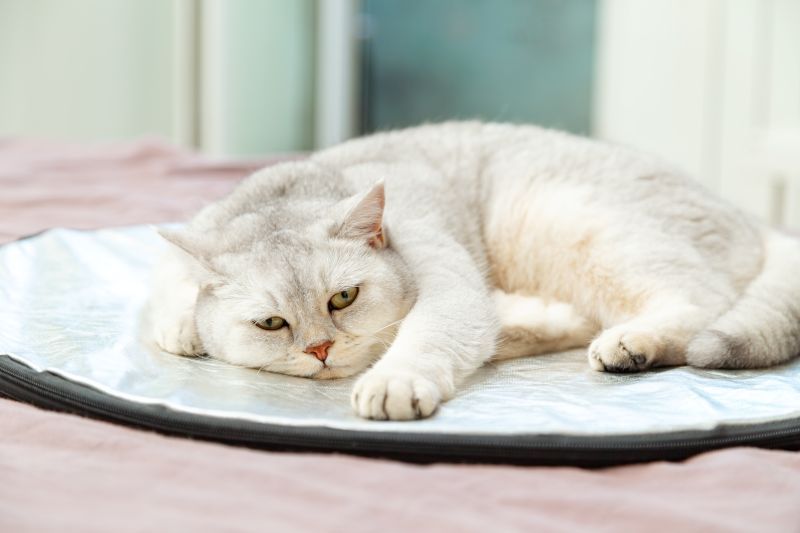
Like people who bite their fingernails, the repetitive act of paw-licking may involve a stress-relieving pleasure component that reinforces the behaviour. It may be your cat’s preferred way of coping with stress or boredom, but it still deserves attention, because excessive grooming can damage their skin.
What to do:
Cats cope better when they feel in control. Give them predictability and safe spaces (covered bed, boxes, cat tree, shelf perch) to help with this. If you have multiple cats: make sure resources aren’t “guarded” by another cat. Keep their routines steady (same feeding/play times), and reduce exposure to triggers (visitors, noise, new baby/pet) where possible.
For bored cats, add enrichment activities into their daily routine. Introduce 2 short play sessions daily (5–10 minutes each) with an interactive toy, rotate toys every few days, fooprovide puzzles, lick mats, treat balls, or “scatter feeding”, or install a window perch for “cat TV”.
What about nail biting?
Cats do bite their nails and it can be surprisingly common. Cats may bite their claws as part of normal grooming, especially if they’re shedding the outer layer of the claw. A bit of claw nibbling after a nap isn’t unusual.
But if your cat is biting nails frequently, focusing on one paw, or chewing enough to cause redness, it may be linked to itching, pain, or stress, similar to paw licking.
A quick paw and nail check
If your cat tolerates it, look for:
Redness between toes
Broken or cracked nails
Swelling
Anything stuck in fur around the paw pads
Don’t punish grooming
Telling a cat off, spraying water, or grabbing them can increase your cat’s anxiety and make overgrooming worse.
What to do instead:
Gently redirect:
-
Toss a treat away from the spot where they are grooming
-
Initiate a short play session
-
Offer a food puzzle
-
Guide them to a favourite hiding spot or perch
Aim for a daily “hunt → eat → groom → sleep” rhythm, which matches natural cat behaviour.
For some cats, pheromone diffusers/sprays and vet-approved calming supplements can help as part of a broader plan—especially during stressful events (guests, moving, fireworks). These are usually “helpers,” not cures.
When to see the vet for overgrooming
Cats can overgroom for underlying medical reasons, so it’s worth checking in if:
- There are bald spots or thinning fur
- The skin looks red, scabby, or sore
- Paw licking is happening daily
- Your cat seems uncomfortable, restless, or cranky
- You suspect pain or you notice limping
Unsure how serious it is?
Bow Wow Meow policyholders can get access to trusted vet care anytime, anywhere, at no additional cost. Connect to an experienced Australian registered vet via video call, 24/7. Whether it’s providing vet advice, setting up at-home treatment plans, or confirming if you need to visit a vet in person, you can get help when you need it.
Find out more about our pet insurance cover options.
How vets investigate and treat overgrooming
Sometimes the underlying cause is simple, for example a flea allergy or a sore claw. Other times it takes a few steps to pinpoint. A vet may:
-
Check for fleas and skin irritation
-
Assess the paws, nails, and joints
-
Ask about diet, stressors, and routines
-
Discuss allergy investigation if symptoms persist
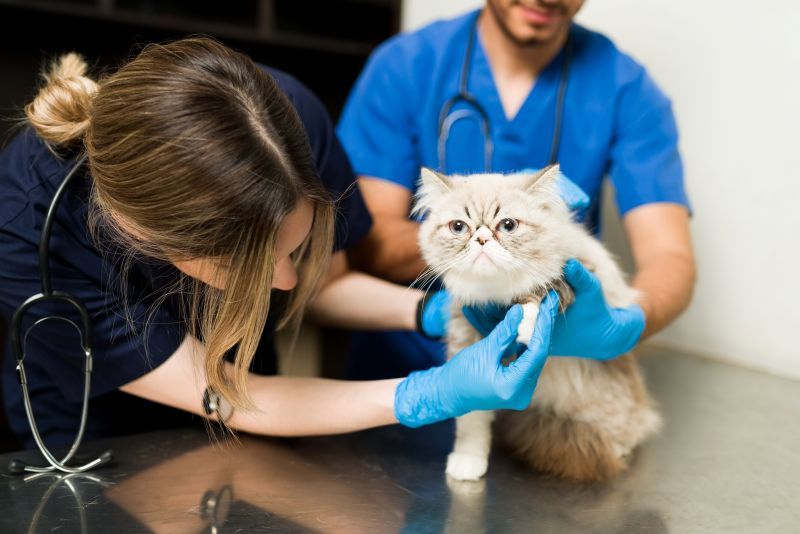
Treatment may entail:
-
Parasite control plan (often step one)
- Management of skin inflammation or infection (e.g. medication, cream, lotion, shampoo)
-
Ruling out allergies (food or environmental)
-
Addressing pain if suspected
-
Stress support if needed (environment modification and behaviour plan)
In conclusion
Overgrooming and constant paw licking can be easy to dismiss as “just normal cat hygiene,” but when it becomes frequent, intense or focused on one area, it’s often a sign something isn’t quite right. Common triggers include fleas, allergies, skin irritation, pain and stress.
The sooner you pinpoint the cause, the easier it is to break the lick cycle and protect the skin. If you’re seeing hair thinning, redness, scabs or daily grooming that seems hard to interrupt, a vet check is the best next step so your cat can get comfortable again.
Bow Wow Meow Pet Insurance can help protect you and your cat should an unexpected trip to the vet occur.
-
Find out more about our cat insurance options
-
Get an online pet insurance quote
Bow Wow Meow is proud to have been awarded winner of Canstar’s ‘Most Satisfied Customers’ Award in the Pet Insurance category for both 2024 and 2025!
Bow Wow Meow is proud to have been chosen as Product Review’s Pet Insurance Award Winner every year from 2018 to 2025! This is based on 2,995 independent customer reviews (as at 21/01/2025), with an overall rating of 4.3*
Google Review rating = 4.5* (based on 968 reviews)
Trust Pilot rating = 4.6* (based on 531 reviews)
Bow Wow Meow is proud to have been chosen as Product Review’s Pet Insurance Award Winner every year from 2018 to 2025! This is based on 2,995 independent customer reviews (as at 21/01/2025), with an overall rating of 4.3*
Google Review rating = 4.5* (based on 968 reviews)
Trust Pilot rating = 4.6* (based on 531 reviews)
Bow Wow Meow has been chosen as a winner in the Finder Pet Insurance Awards 2024. Finder’s panel of experts analysed over 140 quotes to award our Ultimate Care Plan the winner of the “Pet Insurance – Value” category.