Dew claws on dogs: Keep them or clip them?

Dew claws are thumb-like toes that may or may not contact the ground. They can help with grip but can snag and tear if overgrown. Regular trimming prevents injuries. Some dogs with hind dew claws may have them removed as puppies, but routine removal is not necessary for most pets. Discuss risks and benefits with your vet and keep nails short with calm, reward based handling.
You may have found this article because you are considering removing your dog’s dew claws. This article will help you understand what dew claws are, explore their function and which different types of dew claws there are. We discuss the pros and cons of surgical removal as well as the implications and costs of such a procedure.
What are dew claws?
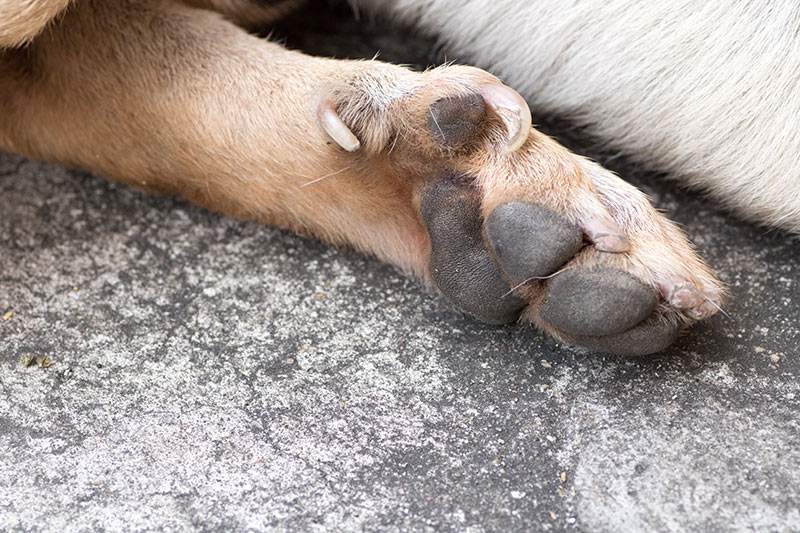
You have probably noticed your dog’s little toe that sits a bit higher up the leg, away from the bed of its paws. In some dogs, they are tightly attached, in other dogs they only seem loosely attached to the leg. These are your dog’s dew claws.
Dew claws are short nails on the site of the foot that don’t touch the ground. They are often referred to as a dog’s thumb, but they have a lot less purpose and value to a dog than a human’s thumb does.
From an evolutionary perspective, it has been discovered that, around 40 million years ago, the cat-like animal miacis – a very early ancestor of modern dogs – needed all five toes for climbing trees. However, since then dogs have evolved and the physiology of their paws changed to allow for more speed when hunting on the ground. Dew claws are basically leftovers of the canine evolutionary process.
The majority of dogs have dew claws only on their front paws, however some dogs exhibit dew claws on their hind feet, e.g. Newfoundlands. And in some cases dogs even have an extra toe which is often referred to as a double dew claw, or polydactyl (meaning “extra toe”) and is commonly found in breeds like the Briard, St Bernard and Great Pyrenees.
Expert Advice from Dr Felicia:
Front dew claws are considered normal in dogs, hind dew claws are relatively rare. Front dew claws are always firmly adhered like a thumb and amputation is not recommended unless a deep infection is present or there is suspicion of other significant disease affecting that toe.
The risk of dew claw injury
The front dew claws are held tightly against the paw, but in dogs with hind dew claws, they can be quite loose and floppy. These looser type of dew claws can cause a bit of worry for dog owners, as there is a risk of serious injury occuring. They can, for example, get torn off when the nail catches on something, as the dog runs through bush or over rough terrain. Some dog sports also pose a level of risk for dew claw injuries, e.g. agility and flyball.
If a dew claw is injured, you will often find that the animal may limp and cry out when you touch its leg. If the claw gets caught and torn off, expect there to be a lot of bleeding. This is because dogs’ nails have quicks (the soft tender flesh below the growing part of the nail), which have their own blood supply.
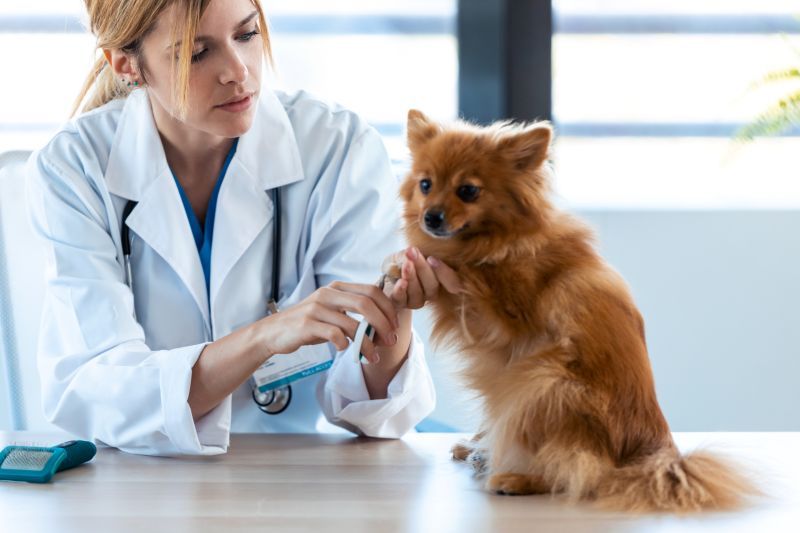
If your dog has an injured dew claw, it is best to take them to the vet. If the dew claw is torn but still connected to the leg, then the vet will probably cut it off completely. If it is broken, the broken part of the nail will be trimmed off. A bandage will be applied for a few days if there is a lot of bleeding or the nail has completely come off.
Apart from the bleeding and being painful for the dog, these injuries aren’t too serious. Your vet will very likely give your dog some pain medications and antibiotics if needed to stop infections.
Unsure how serious it is?
Bow Wow Meow policyholders can get access to trusted vet care anytime, anywhere, at no additional cost. Connect to an experienced Australian registered vet via video call, 24/7. Whether it’s providing vet advice, setting up at-home treatment plans, or confirming if you need to visit a vet in person, you can get help when you need it.
Find out more about our pet insurance cover options.
How to clip your dog’s dew claws
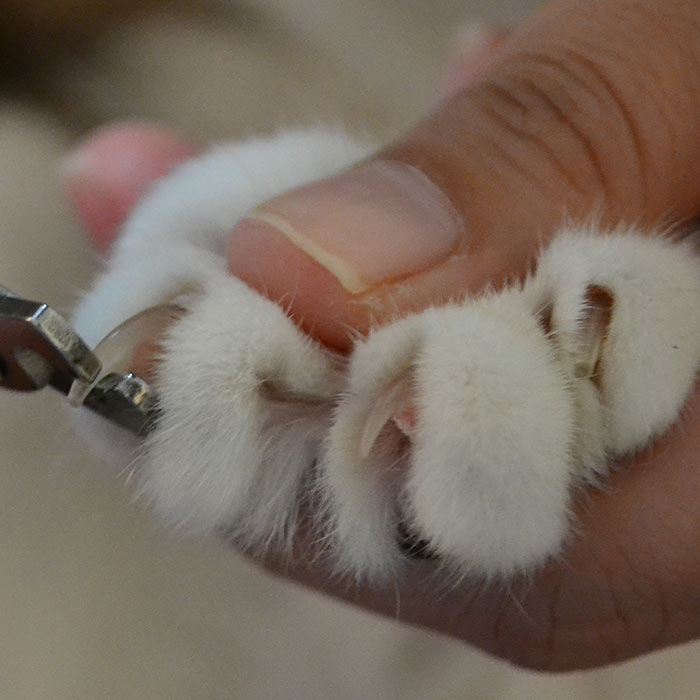
Because they don’t touch the ground, dew claws do not get worn down on walks. Keep an eye on your dog’s dew claws to avoid long toe nails becoming overgrown and growing into the toe pad.
Use scissors or clippers that are especially made to trim your dog’s nails. With dew claws, it is best to separate them a bit from the leg to avoid cutting into the skin. Make sure you don’t cut into the internal nail area, which is called the quick. If the quick is too close to the tip of the nail it is better to wait until the nail is further away from the quick before cutting it.
Expert Advice from Dr Felicia:
Neglected dew claws can grow in a circular shape and can even grow around into the paw pad tissue. This causes pain and may result in a secondary infection.
Our friends from dog training company, Dog Matters, have published an informative (and entertaining) video on how to trim your dog’s toe nails and what you can do to get your dog used to it.
https://www.youtube.com/watch?v=bvNPEkvYrdI
Advantages and disadvantages of dew claw removal
The advantages of removing your dog’s hind dew claws are:
- Reducing the risk of dew claw injuries.
- Reduction of overgrown dew claws and ingrown nails.
- Like other toe nails, dew claws can get infections. This risk will be reduced.
The disadvantages of removing your dog’s dew claws are:
- The standard risks that come with a general anaesthetic.
- Removing your dog’s dew claws is an amputation, and in many cases, a surgery that is not medically necessary.
- For front dew claws, a disadvantage is losing the functionality of the dew claws. Cutting off your dog’s dew claw means that some major muscle bundles will become atrophied because the muscle won’t be used adequately anymore. This can lead to other biological conditions such as arthritis. Especially for some dog sports the biological impacts should be considered. However, as vets usually only recommend removal for medical reasons (eg. infection, cancer) this will usually outweigh the possible benefits.
When is dew claw removal recommended?
In countries like the USA, removing a dog’s dew claws is quite a common procedure and is even done preventatively at puppy age. The dew claws are frequently removed by breeders when the animal is only a few days old.
The Australian Veterinary Association (AVA) however, has a more conservative view on dew claw removal, which it does not promote unless required because of a legitimate medical reason. It is seen as surgical alteration to the natural state of an animal, which is acceptable only if it is necessary for the health and welfare of the animal concerned.
In practice, Australian vets tend to recommend removing a dog’s hind dew claws if they hang loosely off the paw and pose a risk for injury. This is often recommended to be done when your dog undergoes a standard procedure such as de-sexing, where the animal will be put under general anaesthetic.
Expert Advice from Dr Felicia:
The removal of front dew claws in dogs is a rare procedure in Australia and only occurs in dogs with significant dew claw disease that hasn’t responded to medical therapy. This is most commonly due to a deep nail bed infection which has spread to the bone, called osteomyelitis.
The dew claw removal procedure
Step 1: Your dog will be put under general anaesthetic. Ensure that you follow any preparation guidelines your vet gives you, e.g. not to feed your dog anything on the day of the surgery.
Step 2: To prevent infections, the skin around the dew claw will be disinfected.
Step 3: The entire toe will then be removed with surgical scissors cutting quickly through the skin, muscle and bone.
Step 4: After the dew claw has been removed, the wound will be stitched up with dissolving or non-dissolving sutures.
Step 5: To protect the wound, it is often covered by a bandage for a few days.
The surgery itself often takes only 15 to 30 minutes. Your dog may have to stay at the vet hospital for 2 to 3 hours and can return home once the anaesthetic has worn off.
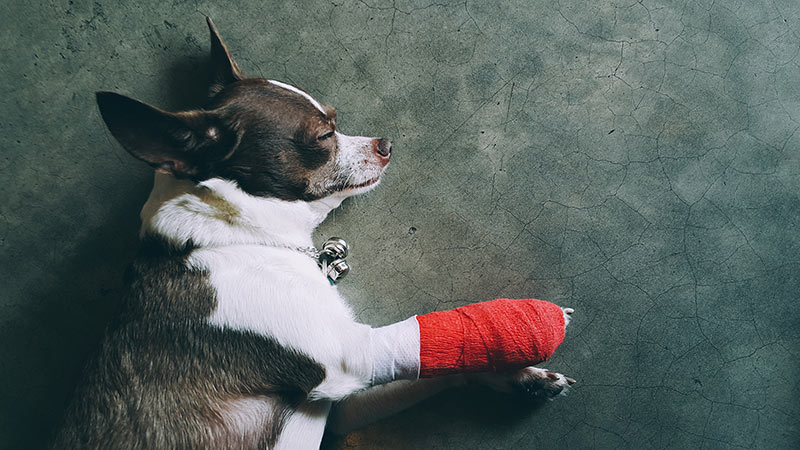
Dew claw removal aftercare
- If your dog bites or licks their paws, your vet will recommend that they wear an Elizabethan collar.
- The wound should be checked daily for redness, puffiness or if it causes obvious distress to your pet.
- If the sutures are non-dissolving, they need to be removed by your vet after 5 to 7 days.
Expert Advice from Dr Felicia:
Dew claw injuries often require removal of the nail as usually the tissue underneath the nail has partially pulled off, causing ongoing discomfort to the dog. After removal, a light bandage is required for a few days. The nails normally grow back within a few weeks to months, and may look slightly deformed (just like when we humans lose a fingernail/toenail!).
Dew claw removal costs in Australia
Prices for dew claw removal vary a lot by whether it’s done as an add-on during another anaesthetic or as a standalone surgery, plus how “attached” the dewclaw is. The most expensive part of the procedure is the general anaesthetic, therefore the procedure is often combined with other surgeries such as de-sexing. The extra amount that you would pay for the actual dew claw removal procedure can range from around $70 to $250, depending on your vet and your location.
Because it is difficult to predict the costs of veterinary care, it can help to have measures in place to help prepare for the unexpected. Pet insurance can help by covering a portion of the eligible vet bill if the unexpected does happen.
Get a quote for 2 months free pet insurance for your puppy or kitten in their first year.
In conclusion
Removing your dog’s dew claws in most cases is not necessary. It is important to keep an eye on them to ensure they do not get too long since they don’t wear down along with the other nails. Surgery for removal may be recommended if your dog has hind dew claws, which is commonly discussed during puppy vaccination consultations prior to desexing, or if you have an adult dog with a poorly resolving nail bed infection or chronic injury. The surgery itself is simple and in most cases requires general anaesthetic. Recovery time until removal of sutures can take up to one week.
Bow Wow Meow Pet Insurance can help protect you and your dog should an unexpected trip to the vet occur.
-
Find out more about our dog insurance options
-
Get an online pet insurance quote
Bow Wow Meow is proud to have been awarded winner of Canstar’s ‘Most Satisfied Customers’ Award in the Pet Insurance category for both 2024 and 2025!
Bow Wow Meow is proud to have been chosen as Product Review’s Pet Insurance Award Winner every year from 2018 to 2025! This is based on 2,995 independent customer reviews (as at 21/01/2025), with an overall rating of 4.3*
Google Review rating = 4.5* (based on 968 reviews)
Trust Pilot rating = 4.6* (based on 531 reviews)
Bow Wow Meow has been chosen as a winner in the Finder Pet Insurance Awards 2024. Finder’s panel of experts analysed over 140 quotes to award our Ultimate Care Plan the winner of the “Pet Insurance – Value” category.
Bow Wow Meow is an Australian-owned and operated pet insurance provider. Our focus is purely on pets, and we are proud to have helped provide peace of mind to over 200,000 Aussie pet owners since 2008.