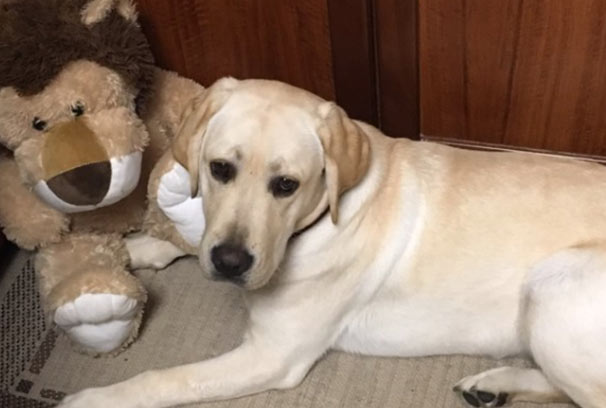
Do dogs dream? Why dogs twitch, run and bark in their sleep

Summary
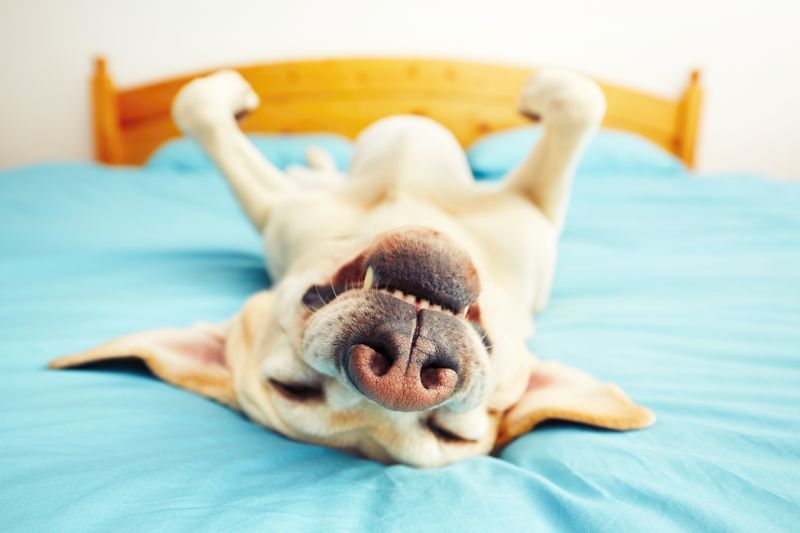
If you’ve ever watched your sleeping dog twitch their paws, paddle their legs, wag their tail or let out a tiny bark, you may have wondered what is happening inside their head.
Dogs experience both REM (rapid eye movement) and non-REM sleep, and their brains show many of the physiological features associated with dreaming in humans. This makes it very likely that dogs experience dream-like activity, although we cannot know exactly what they dream about. For most dogs, occasional twitching and soft vocalisations during sleep are completely normal.
Do dogs dream?
The evidence strongly suggests that they do. Studies using electroencephalography (EEG) have shown that dogs cycle through different stages of sleep, including non-REM and REM sleep. During REM sleep, brain activity becomes more active, rapid eye movements occur beneath the eyelids and muscle tone decreases.
These are many of the same physiological characteristics associated with dreaming in people. Because dogs cannot wake up and tell us what they experienced, however, scientists cannot directly confirm the content or subjective experience of a dog’s dreams.
So while it is reasonable to say that dogs probably dream, we should be more cautious about saying exactly what is happening in those dreams.
Expert advice from Dr Felicia:
With my rescue greyhound, I always found it fascinating to watch her tail and feet twitching while she was dreaming. The amount of movement was sometimes quite impressive, and it would surprise me that she didn’t wake herself up.
Why do dogs twitch in their sleep?
Small movements during sleep are common in dogs, particularly during REM sleep.
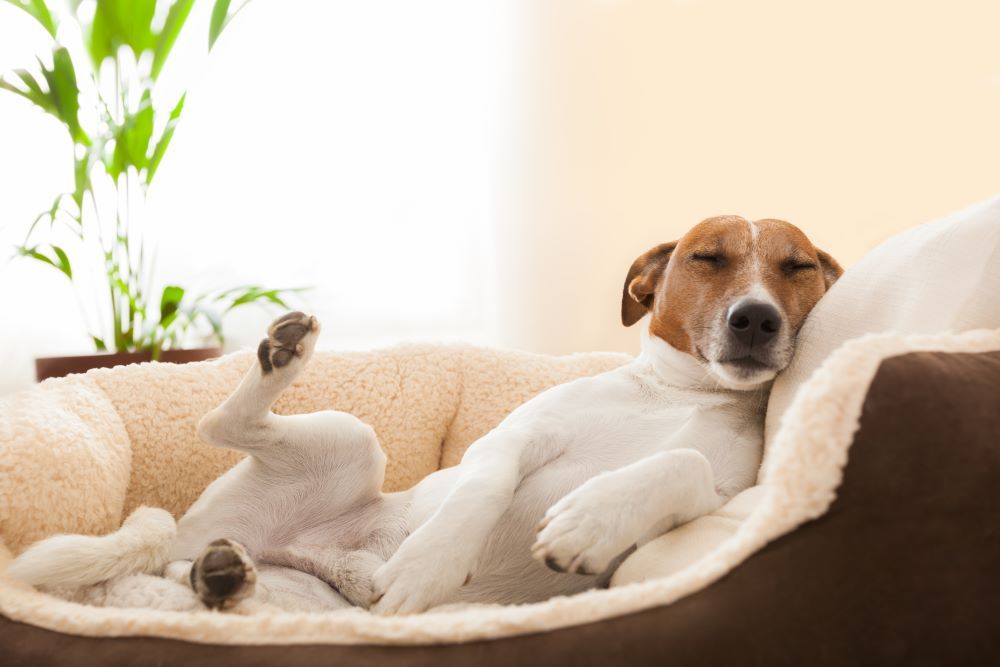
You might notice your dog:
- twitching their paws or legs
- flicking their ears or facial muscles
- wagging their tail
- moving their eyes beneath closed eyelids
- making running or paddling movements
- softly whimpering, yipping or barking
- moving their lips or nose.
A large survey of dog owners found that twitching or vocalising “as though dreaming” was one of the most commonly observed sleep behaviours.
These movements are compatible with normal REM sleep, but they do not necessarily mean your dog is literally acting out a particular dream. Small muscle twitches are part of the normal physiology of REM sleep.

Should you wake a dog that is twitching in their sleep?
Usually, no. If your dog appears comfortable and is only making occasional small movements or quiet noises, there is generally no need to disturb them. Allowing them to wake naturally also avoids startling a sleeping dog that may be temporarily disoriented.
If you do need to wake a deeply sleeping dog, it is safer to call their name or make a gentle sound from a short distance rather than suddenly touching them.
Expert advice from Dr Felicia:
Be careful about interrupting or touching your dog while they dream. If they are unexpectedly woken from a deep sleep, they may instinctively show aggressive behaviour and attempt to bite. You can try waking them by calling them instead.
What do dogs dream about?
This is where science becomes much less certain. It is tempting to imagine that a sleeping dog is chasing a ball, running through the park, playing with another dog or dreaming about their favourite person. These are perfectly plausible possibilities, but we do not currently have a way of knowing the content of a dog’s dreams.
What researchers have shown is that sleep is involved in learning and memory in dogs. In experimental studies, learning new commands influenced dogs’ subsequent sleep EEG patterns, and aspects of sleep were associated with improved performance when those commands were tested again.
That does not prove that dogs replay specific events as dreams, but it does demonstrate that sleep and memory processing are linked in dogs.
Did you know?
Dogs have become useful participants in sleep research because scientists can record their brain activity non-invasively while they sleep naturally alongside their owners or researchers.
Studies of family dogs have identified sleep features similar to those studied in humans, including REM sleep, non-REM sleep and sleep spindles.
Do dogs have nightmares?
We cannot know for certain whether dogs experience nightmares in the same way people do.
A sleeping dog may whimper, growl, twitch or suddenly wake, but these behaviours alone cannot tell us whether they were experiencing something frightening.
If your dog makes a few noises or movements and then settles again, there is usually no need to intervene. However. frequent, violent or unusual sleep behaviours are different and should be discussed with your veterinarian.
If your dog looks like they are having a bad dream, let them wake up naturally. Waking a dog mid-dream can startle them, causing confusion, distress or defensive reactions.
Expert advice from Dr Felicia:
Once they’re awake, give them a cuddle or a yummy treat to help them feel reassured and more settled after their bad dream.
Why do dogs sleep so much?
Dogs sleep considerably more than most adult humans and tend to spread their sleep across the day and night rather than having one long consolidated sleep period.
Individual requirements vary with age, activity level, health and lifestyle. Adult dogs commonly spend around half of a 24-hour period asleep, with some sleeping approximately 10 to 14 hours per day. Puppies generally require considerably more sleep.
Dogs also move through different sleep stages multiple times while resting.
Do dogs have more REM sleep at night?
Dogs can enter REM sleep during both daytime naps and night-time sleep.
Research comparing daytime and night-time sleep has found that dogs may spend more time asleep overall and more time in both non-REM and REM sleep at night, but REM is certainly not restricted to night-time. Activity during the preceding day and the location where the dog sleeps can also influence sleep patterns.
What happens during REM and non-REM sleep in dogs?
Dogs move through several different states while resting.
During non-REM sleep, brain activity generally becomes slower and the body becomes increasingly relaxed. Research in dogs has also identified sleep spindles during non-REM sleep, which have been associated with learning and memory performance.
During REM sleep, brain activity becomes more activated, rapid eye movements occur and most major skeletal muscles have reduced tone. Small twitches, facial movements and occasional vocalisations can still occur.
Research into canine learning suggests that both REM and non-REM sleep may be involved in how dogs process recently learned information.
When is twitching during sleep normal?
Brief, intermittent twitching is usually normal if your dog:
- appears relaxed overall
- has small or occasional movements rather than prolonged violent jerking
- breathes comfortably
- wakes normally
- behaves normally after waking.
Puppies may be particularly active sleepers, with twitching and little vocalisations frequently observed during sleep.
Could twitching during sleep be a seizure?
Most sleep twitching is harmless, but seizures can sometimes occur as a dog is falling asleep, waking or resting, so it is useful to know some of the differences.
A generalised seizure may involve:
- sudden collapse or loss of awareness
- rigid muscles
- strong, repetitive jerking or paddling
- excessive salivation or frothing
- loss of bladder or bowel control
- prolonged abnormal movements
- confusion, restlessness or unusual behaviour after the episode.
Focal seizures can be subtler and may involve repetitive twitching of one part of the face or body, abnormal chewing movements or unusual behaviour.
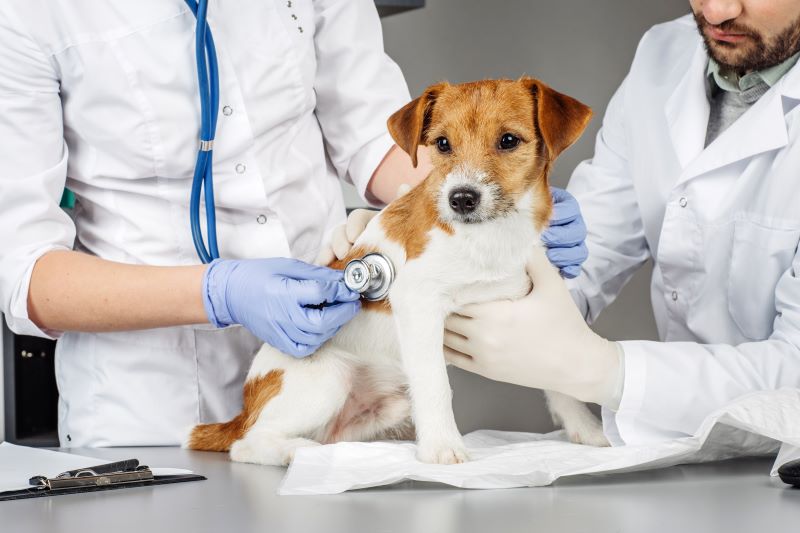
If you are unsure whether an episode is normal sleep activity, record a video if it is safe to do so and show it to your veterinarian. Timing the episode can also be useful.
Do not put your hands near the mouth of a dog having a suspected seizure.
A seizure lasting around five minutes or longer, or repeated seizures without normal recovery in between, requires emergency veterinary care.
Expert advice from Dr Felicia:
Other clues that a seizure has occurred may include clenching of the jaws, urination or defecation during the twitching event. If your dog has a seizure, call your vet for a check ASAP
Can dogs have sleep disorders?
Yes, although significant sleep disorders are much less common than normal twitching and vocalisation.
REM sleep behaviour disorder (RBD) is a recognised condition in dogs in which the normal suppression of large movements during REM sleep is disrupted, resulting in more pronounced movements or apparent “dream enactment”.
RBD-like behaviour has also been documented in some dogs recovering from tetanus. In one study, affected dogs developed new sleep behaviours such as running movements, twitching and vocalisation that could easily be mistaken for seizures.
Episodes that are unusually violent, frequent or worsening warrant veterinary investigation.
When should changes in your dog’s sleep concern you?
Rather than focusing on an exact number of hours, pay attention to what is normal for your individual dog.
Speak to your vet if your dog:
- suddenly begins sleeping much more or less than usual
- seems unusually lethargic while awake
- becomes restless or unable to settle at night
- repeatedly wakes distressed
- develops violent or prolonged movements during sleep
- appears confused or behaves unusually after waking
- suddenly develops loud or abnormal snoring or breathing difficulties during sleep
- has other changes in appetite, mobility, toileting or behaviour.
Changes to the sleep–wake cycle can also occur with canine cognitive dysfunction, particularly in older dogs. Senior dogs may begin pacing, vocalising or waking during the night and sleeping more during the day.

In summary
Dogs experience REM and non-REM sleep, and their sleeping brains show many features similar to those associated with dreaming in humans. This provides good reason to believe dogs probably dream.
Exactly what those dreams contain remains unknown. A twitching paw might accompany an exciting dream about running through the park – but scientifically, all we can say with confidence is that brief twitching, eye movements and occasional vocalisations can be normal parts of canine sleep.
So the next time your dog starts paddling their paws while snoozing, you can enjoy wondering what adventure they might be having – without needing to wake them to find out.
Bow Wow Meow Pet Insurance can help protect you and your dog should an unexpected trip to the vet occur.
-
Find out more about our dog insurance options
-
Get an online pet insurance quote
Bow Wow Meow is proud to have been awarded winner of Canstar’s ‘Most Satisfied Customers’ Award in the Pet Insurance category for both 2024 and 2025!
Bow Wow Meow is proud to be the only Pet Insurer that has been awarded Product Review’s Top Rated Pet Insurance every year from 2018 to 2026! This is based on 3,193 independent customer reviews (as at 09/04/2026), with an overall rating of 4.5 stars.

We also have the following ratings on other review platforms:
Google Review rating of 4.5 stars (based on 1,358 reviews)
Trust Pilot rating of 4.6 stars (based on 555 reviews)
Bow Wow Meow has been chosen as Winner of 4 categories in the 2026 Finder Pet Insurance Customer Satisfaction Awards!




– Most Trusted Pet Insurance
– Easiest to Claim Pet Insurance
– Most Recommended Pet Insurance
– Legendary Service Pet Insurance
We also received Highly Commended Awards for Loved Brand Pet Insurance and Best Value Pet Insurance.
Bow Wow Meow is an Australian-owned and operated pet insurance provider. Our focus is purely on pets, and we are proud to have helped provide peace of mind to over 200,000 Aussie pet owners since 2008.
Sources
Kis A, et al. “The interrelated effect of sleep and learning in dogs (Canis familiaris); an EEG and behavioural study”, Scientific Reports, 2017. https://pmc.ncbi.nlm.nih.gov/articles/PMC5292958/. Accessed 17 September 2026.
Iotchev IB, et al. “EEG Transients in the Sigma Range During non-REM Sleep Predict Learning in Dogs”, Scientific Reports, 2017. https://pubmed.ncbi.nlm.nih.gov/29021536/. Accessed 17 September 2026.
Kovács E, et al. “Rapid eye movement density during REM sleep in dogs (Canis familiaris)”, Learning & Behavior, 2018. https://pubmed.ncbi.nlm.nih.gov/30264371/. Accessed 17 September 2026.
Bunford N, et al. “Differences in pre-sleep activity and sleep location are associated with variability in daytime/nighttime sleep electrophysiology in the domestic dog”, Scientific Reports, 2018. https://pubmed.ncbi.nlm.nih.gov/29740040/. Accessed 17 September 2026.
Lucas EA, Powell EW, Murphree OD. “Baseline sleep-wake patterns in the pointer dog”, Physiology & Behavior, 1977. https://pubmed.ncbi.nlm.nih.gov/203958/. Accessed 17 September 2026.
McGreevy P, et al. “Sleep Characteristics in Dogs; Effect on Caregiver-Reported Problem Behaviours”, Animals, 2022. https://pmc.ncbi.nlm.nih.gov/articles/PMC9312228/. Accessed 17 September 2026.
“What Does It Mean When Dogs Twitch In Their Sleep?”, VCA Animal Hospitals. https://vcahospitals.com/resources/behavior-dog/true-or-false-twitching-feet-while-sleeping-is-a-dream. Accessed 17 September 2026.
“Seizures in Dogs”, VCA Animal Hospitals. https://vcahospitals.com/know-your-pet/seizures-general-for-dogs. Accessed 17 September 2026.
“Managing seizures”, Cornell University College of Veterinary Medicine. https://www.vet.cornell.edu/departments-centers-and-institutes/riney-canine-health-center/canine-health-topics/managing-seizures. Accessed 17 September 2026.
Shea A, et al. “Association between clinically probable REM sleep behavior disorder and tetanus in dogs”, Journal of Veterinary Internal Medicine, 2018. https://pmc.ncbi.nlm.nih.gov/articles/PMC6272037/. Accessed 17 September 2026.