Summer dog grooming guide: coat, paws, ears and skin

Summary
Summer brings extra grooming challenges for dogs. Swimming, humidity, shedding, grass seeds, ticks, hot surfaces and more time outdoors can all affect the coat, skin, ears and paws.
Regular grooming helps remove loose hair and debris, prevent matting and gives you an opportunity to spot skin irritation, parasites, grass seeds, sore paws or other changes early. However, summer grooming doesn’t necessarily mean cutting the coat short – and many double-coated dogs should not be shaved simply to keep them cool.
The right grooming routine depends on your dog’s coat type, lifestyle and health. Brush regularly, check the ears and paws after outdoor adventures, use dog-appropriate grooming products and ask your veterinarian or professional groomer if you are unsure what is best for your dog.
Why is summer grooming important?
Dogs often spend more time swimming, walking, visiting beaches and exploring outdoors during summer. Their coats may also shed more heavily as the seasons change.
Regular grooming helps remove dead and loose hair, prevent knots and matting, distribute natural oils through the coat and remove grass seeds, dirt and other debris. It also gives you a valuable opportunity to check the skin, ears, paws and body for anything unusual.
Grooming should always be comfortable for your dog. Introduce new brushes, clippers or handling gradually and use positive reinforcement rather than restraining or forcing a frightened dog through the process.
1. Brush regularly – especially during shedding
Regular brushing is one of the most useful things you can do for your dog’s coat during summer. Removing loose undercoat and dead hair helps prevent matting and keeps the coat clean and manageable. Mats can trap moisture close to the skin, particularly after swimming or bathing, and may contribute to irritation.
How often your dog needs brushing depends on their coat. Short-coated dogs may need relatively little maintenance, while long-haired and double-coated breeds may need much more frequent grooming during periods of heavy shedding.
Use grooming tools appropriate for your dog’s coat and avoid pulling repeatedly at difficult knots. Severe matting can be painful and may need to be clipped professionally rather than brushed out.
2. Should you clip or shave your dog in summer?
Many dogs have double coats, consisting of a soft insulating undercoat beneath longer protective guard hairs. Examples include Golden Retrievers, Labradors, Border Collies, Australian Shepherds, German Shepherds, Huskies, Samoyeds and Pomeranians.
A healthy double coat helps protect the skin from sunlight and ecnvironmental exposure and plays a role in temperature regulation. Shaving it very short can disrupt coat regrowth and leave the skin more vulnerable to sunburn and irritation.
For these dogs, regular brushing and removal of loose undercoat is generally preferable to shaving.
Some single-coated breeds or dogs whose hair grows continuously may benefit from professional clipping, particularly if the coat is prone to matting. The appropriate length depends on breed, coat type and the individual dog, so speak to your groomer or veterinarian rather than simply shaving the coat down to the skin.
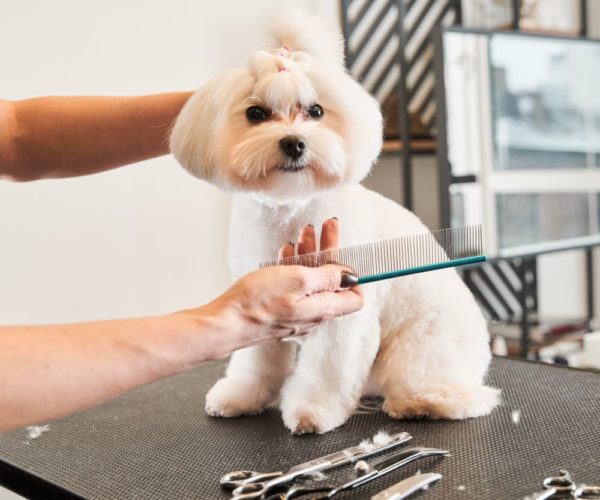
There are exceptions. Severe matting, medical treatment or other welfare concerns may require clipping, even in a double-coated dog.
3. Bathing your dog in summer
Swimming, sand, salt water, mud and extra time outdoors may mean some dogs need bathing more frequently in summer. How often to bathe depends on the individual dog, their coat, skin health and activities. There is no need to wash every dog on a fixed schedule.
Use a shampoo formulated for dogs and rinse it thoroughly from the coat. If your dog swims in the sea or a chlorinated pool, rinsing the coat afterwards with fresh water can help remove salt, sand, chlorine and other residue.
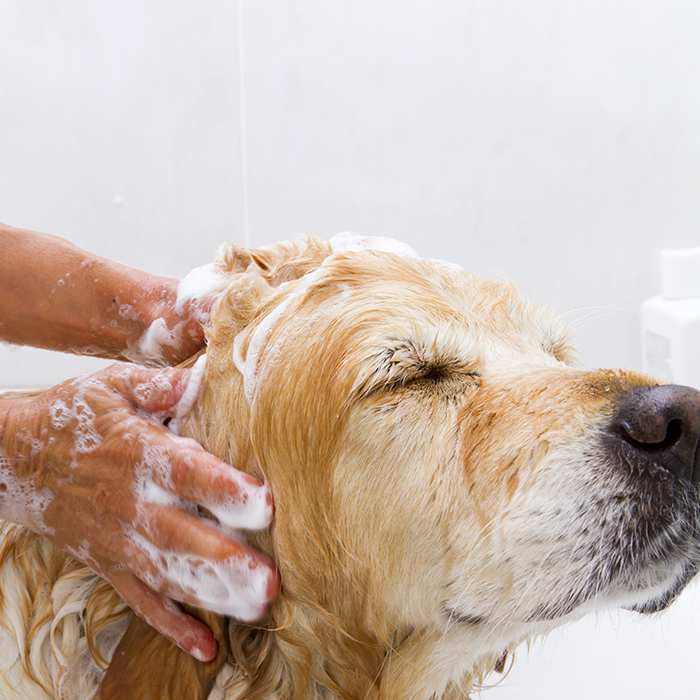
Dry the coat thoroughly, especially in dense-coated dogs and in areas such as the armpits, groin and underneath collars or harnesses, where moisture can remain trapped.
If your dog has allergies, recurrent skin problems or is using a medicated shampoo, follow your veterinarian’s bathing instructions.
Human shampoos are formulated for human skin and may irritate some dogs. Use a shampoo designed for dogs, particularly if your pet has sensitive or allergy-prone skin.
Learn How to wash your dog.
4. Check and dry your dog’s ears after swimming
Dogs that swim frequently can be more prone to ear problems, especially dogs with existing ear disease or ears that remain moist after swimming. Water itself does not automatically cause an infection, but persistently moist ear canals can irritate the ear and create conditions in which yeast or bacteria can multiply.
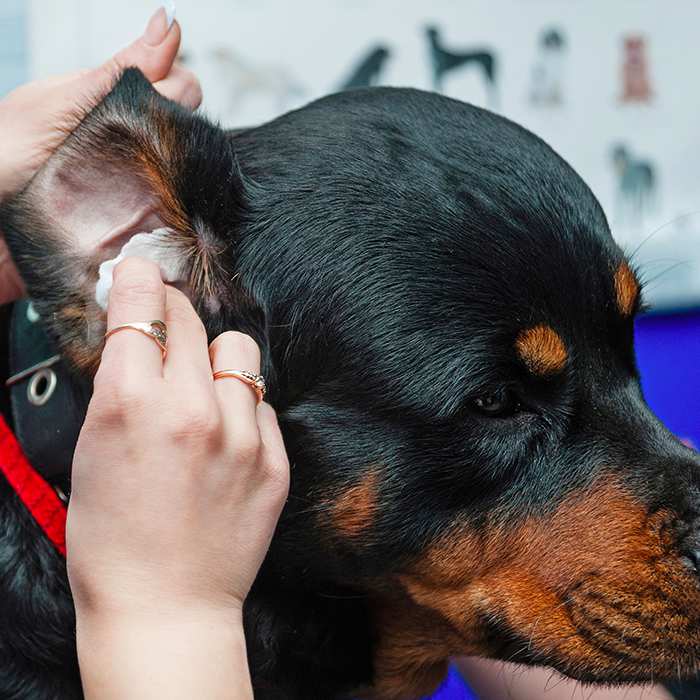
After swimming or bathing, gently dry the ear flap and the area around the entrance to the ear canal. Do not insert cotton buds or other objects deep into the ear canal. If your dog is particularly prone to ear infections, ask your veterinarian whether a veterinary ear cleaner or other preventative routine is appropriate.
Watch for redness, unpleasant odour, increased wax or discharge, head shaking, scratching or pain when the ears are touched. These signs warrant veterinary assessment.
Learn more about ear infections.
5. Look after paws after walks, beaches and outdoor adventures
Summer can be surprisingly hard on dogs’ feet. Check between the toes and around the paw pads after walks for grass seeds, thorns, ticks, cuts or other foreign material. Sand and salt can also become trapped between the toes, so rinse dirty paws with fresh water where necessary.
Hot paths, sand and artificial surfaces can burn paw pads. Walk during cooler parts of the day and avoid surfaces that are uncomfortably hot.
Persistent licking, limping, swelling or tenderness should not simply be assumed to be minor irritation; grass seeds and other foreign bodies can penetrate beneath the skin and may require veterinary removal.
6. Keep nails at a comfortable length
Nails that become too long can affect how a dog stands and walks and may be more likely to snag or split.
If you trim your dog’s nails at home, use good-quality dog nail clippers and remove only a small amount at a time. Avoid cutting into the quick, which contains blood vessels and nerves.
The quick is easier to see in clear or pale nails and can be difficult to identify in dark nails. If you are uncertain, ask your veterinarian, veterinary nurse or groomer to demonstrate the technique or trim them for you.
Dogs that regularly walk on hard surfaces may naturally wear their nails down more than dogs exercising mainly on grass, so grooming frequency varies between individuals.
7. Use grooming time to check your dog’s skin
Summer grooming is a useful opportunity to look for:
- redness or rashes
- excessive scratching
- scabs or sores
- areas of hair loss
- hot spots
- lumps or bumps
- flea dirt or parasites
- grass seeds or other foreign material.
Dogs with dense coats can develop moist, irritated areas beneath the coat, particularly after swimming. Make sure the coat dries properly and seek veterinary advice if an area becomes painful, wet, smelly or rapidly inflamed.
Dogs with allergic skin disease may also experience seasonal flare-ups, so changes in itching, licking or skin condition are worth discussing with your vet.
Learn more about skin and coat conditions in dogs
8. Don’t forget fleas and ticks
Warmer weather often means increased parasite activity, but fleas and ticks should not be treated as a summer-only problem.
In paralysis-tick areas, particularly along Australia’s east coast, veterinary guidance recommends year-round tick prevention together with regular physical checks. Ticks can attach anywhere, so run your fingers over your dog’s entire body, paying particular attention around the head, ears, neck, collar, legs and between the toes.
Flea prevention may also be required year-round. Ask your veterinarian which parasite prevention is appropriate for your dog and the places you live or travel.
Learn more about tick paralysis.
9. Watch out for grass seeds
Dry grass seeds can become caught in the coat, ears and between the toes, particularly after walking through long grass. Their pointed shape means they can work their way through the skin and migrate into deeper tissues.
After walks in grassy areas, check the paws, legs, armpits, ears and coat. Sudden persistent licking, limping, swelling, head shaking or ear scratching after a walk can indicate a grass-seed problem and should be checked by your vet.
For long-haired dogs, keeping fur neatly trimmed around the feet may make checks easier.
Does my dog need sunscreen?
Dogs can get sunburn, particularly those with white or light-coloured coats, pink skin, sparse hair or exposed areas such as the nose and ears.
Shade and avoiding prolonged exposure during strong sunlight are the first line of protection. If your dog needs sunscreen, use a pet-safe product recommended by your veterinarian rather than assuming a human sunscreen is safe if licked.
Conclusion
Summer grooming is about much more than keeping your dog looking neat. Regular brushing, appropriate bathing and quick checks of the ears, paws, skin and coat can help keep your dog comfortable and identify small problems before they become more serious.
Tailor grooming to your dog’s coat and lifestyle rather than assuming a summer haircut is always necessary. In particular, double-coated dogs generally benefit more from regular brushing and removal of loose undercoat than from being shaved.
After swimming or outdoor adventures, dry the ears and coat, check the paws and fur for grass seeds and ticks, and keep an eye out for new itching, redness or discomfort. If anything looks unusual – or grooming itself is becoming difficult or stressful – your veterinarian or a qualified professional groomer can help.
Bow Wow Meow Pet Insurance can help protect you and your dog should an unexpected trip to the vet occur.
-
Find out more about our dog insurance options
-
Get an online pet insurance quote
Bow Wow Meow is proud to have been awarded winner of Canstar’s ‘Most Satisfied Customers’ Award in the Pet Insurance category for both 2024 and 2025!
Bow Wow Meow is proud to be the only Pet Insurer that has been awarded Product Review’s Top Rated Pet Insurance every year from 2018 to 2026! This is based on 3,193 independent customer reviews (as at 09/04/2026), with an overall rating of 4.5 stars.

We also have the following ratings on other review platforms:
Google Review rating of 4.5 stars (based on 1,358 reviews)
Trust Pilot rating of 4.6 stars (based on 555 reviews)
Bow Wow Meow has been chosen as Winner of 4 categories in the 2026 Finder Pet Insurance Customer Satisfaction Awards!




– Most Trusted Pet Insurance
– Easiest to Claim Pet Insurance
– Most Recommended Pet Insurance
– Legendary Service Pet Insurance
We also received Highly Commended Awards for Loved Brand Pet Insurance and Best Value Pet Insurance.
Bow Wow Meow is an Australian-owned and operated pet insurance provider. Our focus is purely on pets, and we are proud to have helped provide peace of mind to over 200,000 Aussie pet owners since 2008.
Sources:
“Why and how should I groom my dog?”, RSPCA Knowledgebase. https://kb.rspca.org.au/categories/companion-animals/dogs/caring-for-my-dog/why-and-how-should-i-groom-my-dog. Accessed 8 October 2026.
“Maintaining your pet’s ear health”, Australian Veterinary Association – Vet Voice. https://www.vetvoice.com.au/ec/pet-ownership/maintaining-your-pets-ear-health/. Accessed 8 October 2026.
“Preventing ticks”, Australian Veterinary Association – Vet Voice. https://www.vetvoice.com.au/articles/preventing-ticks/. Accessed 8 October 2026.
“Pet parasite control”, Australian Veterinary Association – Vet Voice. https://www.vetvoice.com.au/ec/pet-ownership/pet-parasite-control/. Accessed 8 October 2026.
“Caring for animals over summer”, RSPCA Australia. https://www.rspca.org.au/latest-news/blog/caring-for-animals-over-summer/. Accessed 8 October 2026.
“Keeping your pet safe during the heat”, RSPCA Australia. https://www.rspca.org.au/latest-news/blog/keeping-your-pet-safe-during-heat/. Accessed 8 October 2026.
“Grooming and Coat Care for Your Dog”, VCA Animal Hospitals. https://vcahospitals.com/know-your-pet/grooming-and-coat-care-for-your-dog. Accessed 8 October 2026.