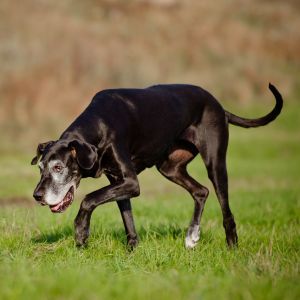
Hip dysplasia in dogs: symptoms, causes, treatment and surgery
Summary
Hip dysplasia is a common condition that affects the hip joint in dogs and can lead to pain, stiffness, reduced mobility and arthritis over time. While it is especially common in large and giant breeds, dogs of many sizes can be affected. This article explains what hip dysplasia is, the symptoms to look for, how it is diagnosed, the treatment options available, and how to support your dog at home for the best possible comfort and quality of life.
What is hip dysplasia?
Hip dysplasia is a developmental condition that affects the hip joint. In a healthy hip, the ball at the top of the thigh bone fits snugly into the socket of the pelvis and moves smoothly as the dog walks, runs and jumps.
In dogs with hip dysplasia, the ball and socket do not fit together properly. The joint is loose or unstable, which causes abnormal movement and extra wear over time. This can lead to inflammation, pain, reduced mobility and eventually osteoarthritis.
Hip dysplasia is most common in large and giant breeds, but smaller dogs can be affected too. Genetics play a major role, although factors such as growth rate, body weight, nutrition and muscle development can also influence how severely the condition affects an individual dog.
One reason hip dysplasia can be confusing for owners is that signs do not always appear early. Some dogs show stiffness or reluctance to exercise while still young, while others seem to cope until arthritis develops and the joint becomes more painful.

Symptoms
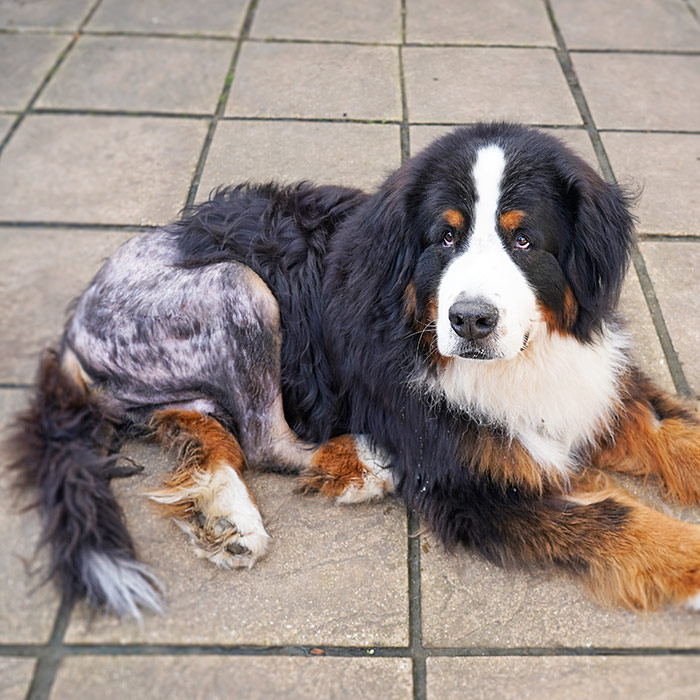
Symptoms of hip dysplasia can vary depending on how severe the condition is and how much arthritis has developed. In some dogs, the signs are subtle at first and may come and go. In others, pain and lameness become more obvious over time.
Common symptoms include:
- less physical activity
- reluctance to get up, run, jump or climb stairs
- lameness in the hind legs, often after exercise
- hopping or a bunny-hopping gait
- narrow stance in the hind legs
- pain in the hips
- grating in the hip joint when moving
- reduced range of motion
- decreased thigh muscle mass
- increased shoulder muscle mass from shifting more weight forward
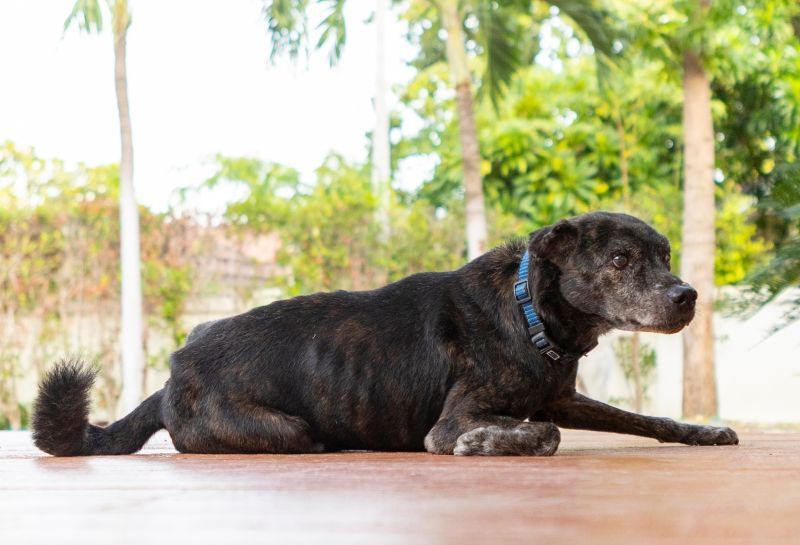
In the early stages, owners may simply notice that their dog is slower to get up, less willing to jump into the car, or less enthusiastic about longer walks. As the condition progresses, signs such as stiffness, lameness and muscle loss may become easier to spot.
Because these changes often develop gradually, it is easy to mistake them for normal ageing or a temporary strain. If the signs keep recurring, it is worth having your dog checked by a vet.
What causes hip dysplasia?
Hip dysplasia is usually influenced strongly by genetics, which is why some breeds are more prone to the condition than others. However, genetics are not the only factor.
Growth rate, body weight, nutrition, muscle development and exercise patterns can all affect how the hip joint develops and how severely the condition progresses. This means that while hip dysplasia cannot always be prevented, healthy growth and good joint care can still make a difference.
Breeds more prone to hip dysplasia
Hip dysplasia is more common in large and giant breeds, although dogs of many sizes can be affected. Breeds often associated with a higher risk include German Shepherds, Labrador Retrievers, Golden Retrievers, Rottweilers, Mastiff-type dogs and other large breeds. However, not every dog in these breeds will develop hip dysplasia, and mixed-breed dogs can be affected too.
Diagnosis
If you suspect hip dysplasia in your dog, it is important to see a vet. Diagnosis usually starts with a physical examination and gait assessment. Your vet may look for pain, looseness in the hips, reduced range of motion, muscle loss in the hindquarters and changes in the way your dog stands or walks.
X-rays are usually needed to confirm hip dysplasia and assess how much change is already present in the joint. These may be taken under sedation so the hips can be positioned properly and the images are accurate enough to assess the severity of the condition.
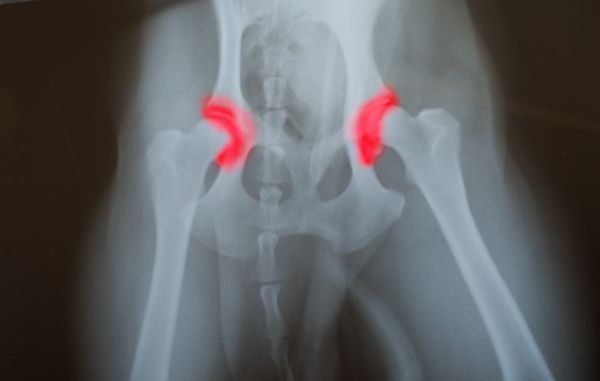
In some cases, especially if surgery is being considered, your dog may be referred to an orthopaedic specialist for further assessment and treatment planning.
Treatment
There is no single cure for hip dysplasia, but many dogs can still be managed successfully and enjoy a good quality of life. Treatment depends on your dog’s age, size, pain level, activity level, the severity of the hip changes and whether arthritis is already present.
The main goals of treatment are to reduce pain, improve comfort and mobility, and slow further joint damage where possible. Some dogs can be managed with medication, rehabilitation, weight control and practical support at home. Others may need surgery if pain, lameness or reduced mobility become harder to control.
Because it is difficult to predict the costs of veterinary care, it can help to have measures in place to help prepare for the unexpected. Pet insurance can help by covering a portion of the eligible vet bill if the unexpected does happen.
Get a quick quote
How to help a dog with hip dysplasia at home
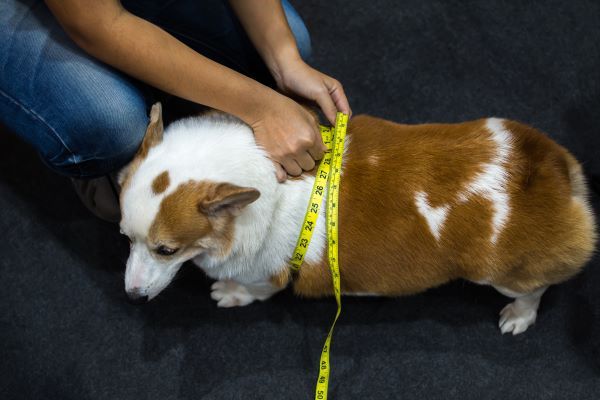
Home management can make a real difference for dogs with hip dysplasia. One of the most important steps is keeping your dog at a healthy weight, because extra weight puts more strain on painful or unstable joints.
Helpful strategies at home may include:
- using rugs or mats on slippery floors
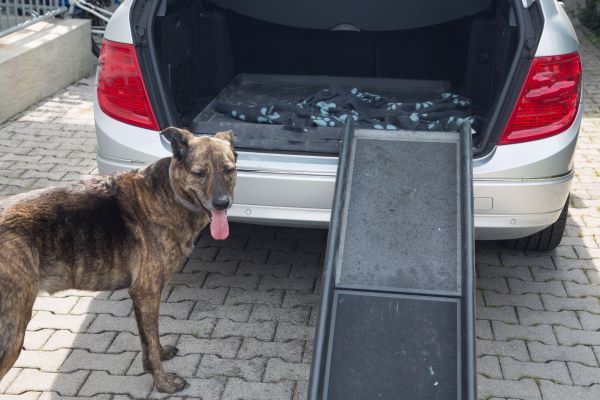
- adding ramps where practical
- avoiding repeated jumping on and off furniture
- choosing shorter, more regular walks instead of intense exercise
- following your vet’s advice on pain relief
- sticking to any prescribed rehabilitation exercises
These simple changes can help improve comfort, reduce strain on the hips and support mobility over time.
When does hip dysplasia need surgery?
Not every dog with hip dysplasia needs surgery. Some dogs can be managed successfully with weight control, exercise changes, pain relief and rehabilitation, especially if their signs are mild or if surgery is not the best option for them.
Surgery is more likely to be considered when a dog has ongoing pain, significant lameness, reduced quality of life, poor response to conservative treatment, or more advanced joint damage. The decision depends on your dog’s age, size, overall health, the severity of the hip changes, and which procedure is most suitable.
There are different surgical options for hip dysplasia, depending on the dog’s age, size and the severity of the joint changes. Some procedures aim to improve how the hip joint functions or reduce pain, while others involve replacing the damaged joint with an artificial hip.
A diagnosis of hip dysplasia does not automatically mean an operation is needed straight away. In some dogs, careful long-term management can keep them comfortable for quite some time. In others, surgery may offer the best chance of improving comfort and mobility.
What recovery may look like after hip surgery
Recovery after hip surgery usually involves a period of rest, restricted activity, pain relief and follow-up checks. Depending on the procedure, your dog may also need rehabilitation or physiotherapy to rebuild strength and improve movement.
Some dogs need temporary help getting in and out of cars, using steps, or moving safely around slippery areas at home. Recovery times vary depending on the type of surgery, your dog’s age and size, and whether there is already arthritis or muscle loss.
For many owners, the recovery period is a major part of treatment, so it helps to know in advance that aftercare matters just as much as the operation itself.
Long-term outlook for dogs with hip dysplasia
Many dogs with hip dysplasia can still enjoy a good quality of life, especially when the condition is recognised early and managed appropriately. The long-term outlook depends on how severe the condition is, how much arthritis has already developed, and how well the dog responds to treatment.
Some dogs do well with conservative management for years. Others may eventually need surgery if pain or mobility problems become harder to control. Even when hip dysplasia is lifelong, regular veterinary care, weight management and practical support at home can make a big difference.

Can hip dysplasia be prevented?
Hip dysplasia cannot always be prevented, because genetics play a major role. However, healthy growth, weight control and appropriate exercise may help reduce its severity and the risk of later joint damage.
When should you see a vet?
It is a good idea to book a vet visit if your dog:
- seems stiff after rest
- is reluctant to jump, run or climb stairs
- has a bunny-hopping gait
- shows hind leg lameness
- has difficulty rising
- seems painful after exercise
- becomes less active than usual
You should seek prompt veterinary advice if your dog suddenly becomes unable to bear weight, seems in significant pain, or worsens quickly.
Bow Wow Meow Pet Insurance can help protect you and your pet should an unexpected trip to your vet occur.
- Find out more about our dog insurance options
- Find out more about our cat insurance options
- Get an instant online pet insurance quote
Bow Wow Meow is proud to have been awarded winner of Canstar’s ‘Most Satisfied Customers’ Award in the Pet Insurance category for both 2024 and 2025!
Bow Wow Meow is proud to be the only Pet Insurer that has been awarded Product Review’s Top Rated Pet Insurance every year from 2018 to 2026! This is based on 3,193 independent customer reviews (as at 09/04/2026), with an overall rating of 4.5 stars.

We also have the following ratings on other review platforms:
Google Review rating of 4.5 stars (based on 1,358 reviews)
Trust Pilot rating of 4.6 stars (based on 555 reviews)
Bow Wow Meow has been chosen as Winner of 4 categories in the 2026 Finder Pet Insurance Customer Satisfaction Awards!




– Most Trusted Pet Insurance
– Easiest to Claim Pet Insurance
– Most Recommended Pet Insurance
– Legendary Service Pet Insurance
We also received Highly Commended Awards for Loved Brand Pet Insurance and Best Value Pet Insurance.
Bow Wow Meow is an Australian-owned and operated pet insurance provider. Our focus is purely on pets, and we are proud to have helped provide peace of mind to over 200,000 Aussie pet owners since 2008.