Pet insurance that covers hip dysplasia in Australia

Does Bow Wow Meow pet insurance cover hip dysplasia treatment in dogs and cats?
Yes, Bow Wow Meow’s Nose-to-Tail Cover covers hip dysplasia treatment if the condition is not pre-existing and the waiting period has passed⑅.
Summary
Hip dysplasia is one of the most well-known orthopaedic conditions in dogs, especially in large and giant breeds. It can cause chronic pain, stiffness, reduced mobility and progressive arthritis, and for some dogs the condition becomes a lifelong management issue rather than a short-term problem. Treatment can range from weight management and pain relief through to costly specialist surgery. This article explains how hip dysplasia affects pets, how much treatment may cost, and what to look for when researching pet insurance that covers hip dysplasia, including Bow Wow Meow’s Nose-to-Tail Cover.
What is hip dysplasia and how does it affect dogs?
Hip dysplasia is an abnormal development of the hip joint. Instead of the ball and socket fitting together snugly, the joint is loose or unstable. That looseness is called joint laxity, and over time it can lead to inflammation, cartilage damage, abnormal wear, bony remodelling and secondary osteoarthritis.
Genetics play a major role, but the way the condition develops can also be influenced by growth rate, nutrition, exercise and body weight. Excessive growth rate, certain types of exercise, rapid weight gain and improper nutrition can worsen deterioration in predisposed dogs. OFA’s breed screening data further shows that hip dysplasia risk varies substantially between breeds, which is why breed history matters when thinking about both health planning and insurance timing.
Hip dysplasia: a worrying diagnosis
A diagnosis of hip dysplasia can be stressful for pet owners, especially when a pet starts showing stiffness after rest, reduced activity tolerance, reluctance to jump, or hesitation with stairs. A large North American canine study reported hip dysplasia prevalence of around 15%, underlining how common the condition can be in dogs.
Many pet owners understandably ask, “does pet insurance cover hip dysplasia?” Fortunately, pet insurance may help cover treatment for hip dysplasia, provided the condition is not pre-existing and the policy terms, such as waiting periods, are met. Understanding how cover works for orthopaedic conditions such as hip dysplasia can help pet owners prepare for potentially significant vet bills and make more informed decisions about their pet’s care.

Does pet insurance cover hip dysplasia?
The short answer is yes, pet insurance covers hip dysplasia or may help with eligible hip dysplasia costs, including surgery in some cases. It’s important to know that whether cover applies depends on the policy wording, waiting periods, benefit limits, and whether the condition is considered pre-existing.
With Bow Wow Meow’s Nose-to-Tail Cover, orthopaedic conditions such as hip dysplasia are among the types of musculoskeletal conditions commonly claimed under illness cover, subject to applicable waiting periods, annual benefit limits and the condition not being considered as pre-existing.
So, for pet owners wanting to know if pet insurance covers hip dysplasia surgery, the practical answer is that it may be covered if the condition first arises after cover starts, after the applicable illness waiting period has passed, and it is not excluded as pre-existing. That is why taking out cover early, before any symptoms appear, is often so important.
Hip dysplasia dog symptoms: early and progressive signs
Early signs of hip dysplasia can be easy to miss. Some dogs show stiffness after rest, reduced activity tolerance, reluctance to jump, or hesitation with stairs before owners notice anything more dramatic. Because the condition often develops gradually, these early signs can be mistaken for simple tiredness or “slowing down.”
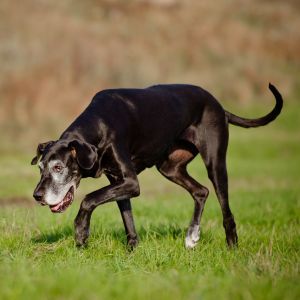
As the condition progresses, signs can become more obvious. Dogs may develop hindlimb lameness, a bunny-hopping gait, difficulty rising, reduced range of motion, pain during or after exercise, and muscle loss over the hindquarters in chronic cases. Early veterinary assessment matters because prompt diagnosis can help guide treatment, slow progression and clarify whether the dog may eventually need specialist care or surgery.
Diagnosis: how vets confirm hip dysplasia
Diagnosis usually starts with a physical examination and gait assessment. Your vet may assess pain, looseness in the hips, range of motion, muscle mass and the way your dog stands, walks and rises. If hip dysplasia is suspected, diagnostic imaging is typically needed to confirm the diagnosis and assess severity.

In practice, hip X-rays are often taken under sedation or anaesthesia so the hips can be positioned properly (with hindlimbs extended for a ‘distracted’ view) and the images are accurate enough for assessment. If surgery is being considered, referral to an orthopaedic specialist and imaging such as CT may be recommended for more detailed planning.
Hip dysplasia treatment options
Treatment depends on your dog’s age, size, symptoms, degree of joint damage, lifestyle and overall suitability for surgery. Not every dog with hip dysplasia needs an operation, especially if the condition is mild or can be managed effectively with conservative care. Treatment choice depends on age, condition, lifestyle, symptom severity and radiographic findings.
Non-surgical management
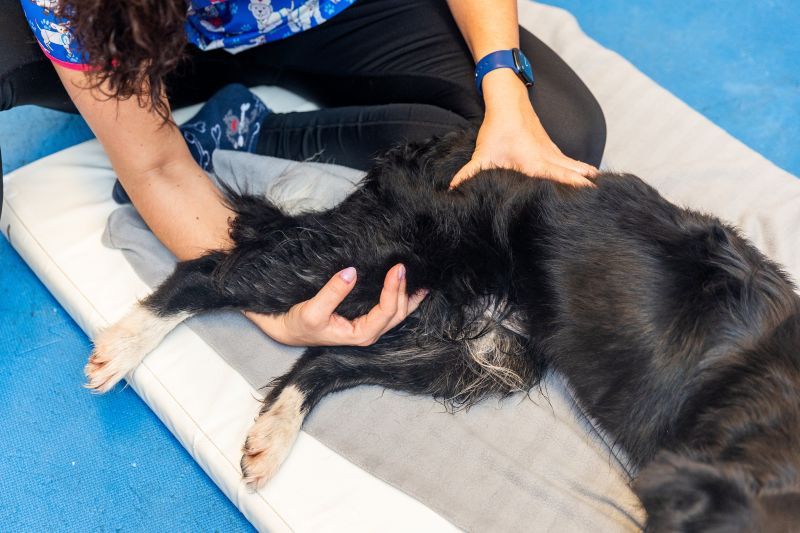
Non-surgical treatment may include weight control, activity modification, pain relief, anti-inflammatory medication, physical rehabilitation and other supportive care. Low-impact activity such as walking or swimming, non-steroidal anti-inflammatory treatment, fish-oil supplementation, osteoarthritis medication and physical rehabilitation are some of the options used to manage the condition.
How much does hip dysplasia surgery cost in Australia?
There are two categories of surgery for hip dysplasia. The femoral head osteotomy (FHO) is considered a salvage procedure where the joint itself is removed thereby resolving the pain of hip dysplasia. A total hip replacement (THR) involves placing an implant to correct the dysplasia. Some dogs will only need surgery on one hip but severely affected dogs may need surgery on both sides. Pet owners should be prepared for costs in the thousands. Some indicative prices are listed in the table below.
| Procedure or cost item | Indicative Australian cost |
|---|---|
| FHO surgery, small dog/cat | $2,500 |
| FHO surgery, medium dog | $3,000 |
| FHO surgery, large dog | $3,500 |
| Total hip replacement (Brisbane Pet Surgery) | $7,000 to $8,000 |
| Total hip replacement (Southpaws fixed package) | $11,000 |
| THR templating radiographs (Southpaws) | $500 |
| PetSure consumer estimate for pet hip replacement | about $12,300 per hip on average |
These examples show why owners can be caught off guard by the total expense. PetSure says the actual cost of a pet hip replacement is close to $12,300 per hip, with some cases reaching $25,000, while Southpaws’ fixed-price total hip replacement package is listed at $11,000 plus $500 for templating radiographs, and Brisbane Pet Surgery lists total hip replacement at $7,000 to $8,000 including preoperative testing and imaging, surgery, anaesthesia and overnight postoperative care.
Be aware that prices vary by clinic, pet size, case complexity, implants, hospital stay, emergency status and what is included in the package. Always ask for an itemised estimate from your vet or specialist hospital before making decisions.
Because it is difficult to predict the costs of veterinary care, it can help to have measures in place to help prepare for the unexpected. Pet insurance can help by covering a portion of the eligible vet bill if the unexpected does happen.
Get a quick quote
Why is hip dysplasia treatment so expensive?
Hip dysplasia becomes expensive not just because of surgery itself, but because of everything around it. Costs can include repeated consultations, sedation or anaesthesia for imaging, specialist orthopaedic assessment, implants, hospitalisation, pain relief, postoperative medications, follow-up radiographs and review appointments. Specialist procedures such as total hip replacement also require advanced equipment and highly experienced surgical teams.
Rehabilitation can add further cost as well. Southpaws includes postoperative rechecks, radiographs, hospitalisation and pain management in its hip replacement package, while Brisbane Pet Surgery highlights follow-up care, rehabilitation guidance and recovery support. This helps explain why a condition that begins with stiffness or lameness can end up involving a substantial total bill.
Breeds with a higher risk of hip dysplasia
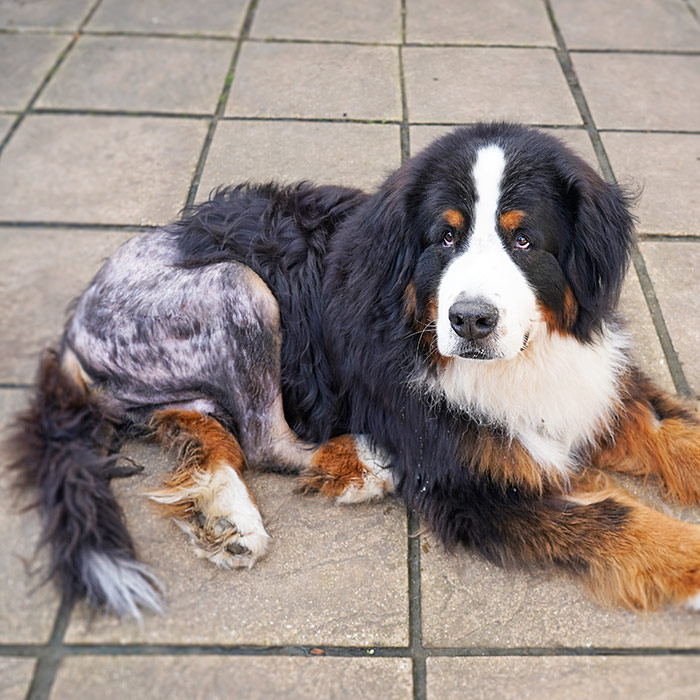
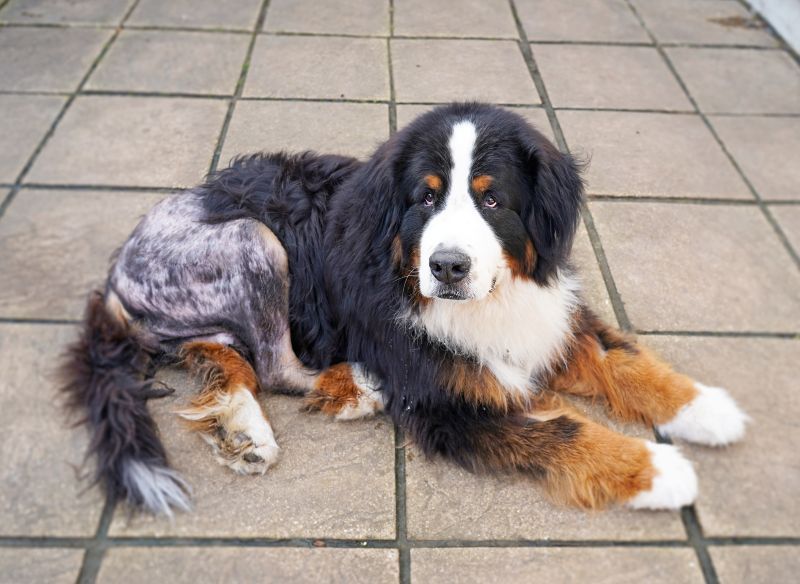
Hip dysplasia is most often seen in large and giant breeds, including German Shepherds, Labrador Retrievers, Golden Retrievers, Rottweilers and Mastiff-type dogs, although dogs of many breeds and sizes can be affected. It is generally less common in lean, lightly built breeds such as Greyhounds and Whippets.
Because breed risk and hereditary factors often come up together, this is also relevant when comparing pet insurance policies. Nose-to-Tail Cover does not consider hereditary and congenital conditions as pre-existing conditions if your pet has not shown noticeable signs, symptoms or an abnormality before the policy starts or during any applicable waiting period. This means that if your dog is one of the breeds with a higher risk of hip dysplasia, they can still be covered for hip dysplasia treatment; what matters is whether the condition had already shown up, or should reasonably have been noticed, before cover commenced.

Pet insurance and hip dysplasia: what you need to know
Hip dysplasia is generally treated as an illness or orthopaedic condition for insurance purposes, but whether it is covered depends heavily on timing and policy wording. The key question is often not whether hip dysplasia exists in the breed, but whether your dog had signs, symptoms, abnormalities or diagnosis before the policy started or during the waiting period.
In other words, most comprehensive pet insurance policies can cover hip dysplasia if the condition is not pre-existing and occurs after your policy starts. Hip dysplasia treatment is not automatically covered in every case. Because hip dysplasia can develop gradually and is often linked to genetics, insuring your pet early is one of the most effective ways to ensure coverage.
When it may not be covered:
1. Pre-existing conditions
If your pet showed signs or was diagnosed before your policy started (or during any waiting periods), treatment is usually excluded. Once symptoms appear, even something minor like occasional stiffness, it may be classified as pre-existing and excluded from cover.
2. Waiting periods
Orthopaedic conditions like hip dysplasia sometimes have longer waiting periods (sometimes several months).
3. Hereditary conditions
Hip dysplasia is considered hereditary in many breeds. Some policies cover hereditary conditions (after waiting periods), while others may exclude them.
Policy limits and sub-limits
- Annual benefit limits apply
- Some policies may have condition-specific caps
- Bow Wow Meow’s Nose-to-Tail Cover has no sub-limits for hip surgery.
Hip dysplasia is treated as an illness under pet insurance
This means it may be covered under policies that include illness cover.
For hip dysplasia to be covered:
- clinical signs or abnormal findings usually need to arise after the policy starts
- the condition usually needs to be outside any applicable illness waiting periods
- it must not be considered pre-existing, including where signs were present earlier even without a formal diagnosis.
If hip dysplasia first develops after cover starts and after the waiting period has passed, eligible vet expenses may include diagnosis, surgery, hospitalisation, medications and recovery care, subject to the policy terms, benefit percentage, annual benefit limit and any applicable excess.
On the other hand, if a pet had limping, skipping gait, hip instability or related symptoms before cover began, treatment may be excluded. That is why taking out cover early, before any hip-related changes are noticed, can be so important.
How Bow Wow Meow Pet Insurance covers hip dysplasia
Bow Wow Meow’s Nose-to-Tail Cover is an Accident & Illness policy that:
-
Offers annual benefit limits of $10,000, $20,000 or $30,000, depending on the level chosen⑅
-
Reimburses up to 90% of eligible vet fees (subject to the chosen benefit percentage and any excess)⑅
-
Has no sub-limits – meaning there are no smaller caps specifically for hip dysplasia or other conditions; the entire annual limit can be used where it’s most needed
Hip dysplasia surgery is not treated as a special separate category: like other musculoskeletal conditions, hip dysplasia surgery is generally covered as long as it is not pre-existing and the policy’s terms are met, including waiting periods and exclusions.
This means you may be able to claim up to $30,000 in hip dysplasia-related vet bills, if you have taken out Nose-to-Tail Cover with a $30,000 annual limit⑅. Bear in mind that Nose-to-Tail Cover is subject to waiting periods, pre-existing condition rules and other terms and exclusions set out in the current PDS.

Evaluating pet insurance that covers hip dysplasia surgery
Once you’ve narrowed down your options, it can be very helpful to look closely at the structure of the cover. Be sure to carefully research the following points.
1. Annual limits and sub-limits
Because benefits are usually capped by a policy’s annual benefit limit and any sub-limits that may apply, look for a policy with:
- a high enough annual limit to accommodate potentially costly orthopaedic surgery
- no restrictive sub-limits for musculoskeletal conditions
- enough flexibility to use the full annual limit where it is needed most.
Bow Wow Meow’s Nose-to-Tail Cover has no sub-limits and up to $30,000 annual limit, giving you flexibility to use the full annual limit on hip dysplasia management and treatment, if required, in a given year⑅.
Get a quick quote
2. Ongoing cover
Many pet insurance policies are designed to help cover ongoing conditions year after year, provided the policy is renewed continuously (i.e. you continue paying your premiums) and the terms are met. This can be important for hip dysplasia, where monitoring, rehabilitation, osteoarthritis management or secondary issues may continue beyond the initial diagnosis or surgery.
3. Excess and waiting periods
Check:
- How often the excess applies – some excesses are applied per condition and others only once per policy period (including our Nose-to-Tail Cover)
- What the illness waiting period is
- Whether any longer waiting periods apply to orthopaedic conditions
- What reimbursement percentage applies after the excess.
These details can make a real difference to how a hip dysplasia claim plays out, especially if your pet is diagnosed soon after you take out the policy.
4. Pre-existing conditions
Because hip dysplasia treatment is unlikely to be covered if there were signs of the condition before the policy started or during the waiting period, one of the most sensible strategies is often to take out pet insurance while your pet is still young and healthy, before any signs of hip instability are noticed.
In conclusion
Hip dysplasia is common, often progressive, and for many dogs it becomes a long-term condition that needs ongoing management. If your dog is showing stiffness, bunny-hopping, hindlimb lameness, reluctance to jump or reduced activity, it is a good idea to speak with your vet promptly. Early assessment can help with treatment planning and may also be important for understanding what insurance support may or may not apply. Treatment may include medication, rehabilitation, diagnostics and, in more severe cases, specialist surgery, which can quickly lead to veterinary bills running into the thousands.
Pet insurance can play an important role in reducing the financial stress of unexpected hip dysplasia treatment. Taking out cover early, before any signs of hip dysplasia appear, and understanding key policy terms such as waiting periods, pre-existing conditions, annual limits, reimbursement percentages and excess, can make a real difference to whether treatment may be covered.
If you have concerns about your pet’s movement or hip health, speak with your vet as early as possible and review your pet insurance options before problems arise so you can make informed decisions with more confidence.
Bow Wow Meow Pet Insurance can help protect you and your pet should an unexpected trip to your vet occur.
- Find out more about our dog insurance options
- Find out more about our cat insurance options
- Get an instant online pet insurance quote
Bow Wow Meow is proud to have been awarded winner of Canstar’s ‘Most Satisfied Customers’ Award in the Pet Insurance category for both 2024 and 2025!
Bow Wow Meow is proud to be the only Pet Insurer that has been awarded Product Review’s Top Rated Pet Insurance every year from 2018 to 2026! This is based on 3,193 independent customer reviews (as at 09/04/2026), with an overall rating of 4.5 stars.

We also have the following ratings on other review platforms:
Google Review rating of 4.5 stars (based on 1,358 reviews)
Trust Pilot rating of 4.6 stars (based on 555 reviews)
Bow Wow Meow has been chosen as Winner of 4 categories in the 2026 Finder Pet Insurance Customer Satisfaction Awards!




– Most Trusted Pet Insurance
– Easiest to Claim Pet Insurance
– Most Recommended Pet Insurance
– Legendary Service Pet Insurance
We also received Highly Commended Awards for Loved Brand Pet Insurance and Best Value Pet Insurance.
Bow Wow Meow is an Australian-owned and operated pet insurance provider. Our focus is purely on pets, and we are proud to have helped provide peace of mind to over 200,000 Aussie pet owners since 2008.
Sources:
“Hip Dysplasia in Dogs”, MSD Veterinary Manual, https://www.msdvetmanual.com/musculoskeletal-system/arthropathies-and-related-disorders-in-small-animals/hip-dysplasia-in-dogs. Accessed 28 May 2026
“The Demographics of Canine Hip Dysplasia in the United States and Canada”, PubMed Central, https://pmc.ncbi.nlm.nih.gov/articles/PMC5366211/. Accessed 28 May 2026
“Pricing Guide for Fixed Cost Cat & Dog Surgeries”, Animal Surgery Centre, https://www.animalsurgerycentre.com.au/pricing-guide. Accessed 28 May 2026
“Hip Dysplasia and Hip Replacement”, Southpaws Specialty & Referral Vet, https://www.southpaws.com.au/hip-dysplasia-jps-fho-tpo-dpo-hip-replacement/. Accessed 28 May 2026
“Pricing Packages”, Southpaws Specialty & Referral Vet, https://www.southpaws.com.au/pricing-packages/. Accessed 28 May 2026
“Wake-Up Call for Pet Owners: 23% think hip replacements cost under $1k”, PetSure, https://petsure.com.au/media-releases/pet-hip-replacement-cost/. Accessed 28 May 2026
“Hip dysplasia in dogs: symptoms, causes, treatment and surgery”, Bow Wow Meow Pet Insurance, https://bowwowinsurance.com.au/pet-care/diseases-conditions/hip-dysplasia/. Accessed 28 May 2026