Skin allergies in dogs and cats

Summary
Skin allergies are a common cause of itching, scratching, licking, chewing and skin irritation in dogs and cats. For some pets, symptoms may be mild or seasonal. For others, allergic skin disease can become a long-term condition that needs ongoing management. Skin allergies can be frustrating for both pets and owners because they are not always caused by one obvious trigger. Fleas, food ingredients, grasses, pollens, dust mites, mould, household irritants and other environmental allergens may all play a role. Pets with allergies may also develop secondary skin or ear infections, which can make itching and discomfort worse. The good news is that many skin allergies in dogs and cats can be managed with veterinary care, parasite prevention, appropriate treatment and changes to the pet’s environment or diet.
Cost of skin allergy treatment for dogs and cats
Skin infections and allergies are among the most common health issues seen in dogs and cats in 2024. According to PetSure claims data from the 2024 calendar year, skin infections/allergies were the most common health condition claimed for in dogs and the third most common health condition claimed for in cats.
Claims data for skin allergies |
Average cost of treatmentØ |
Highest cost of treatmentØ |
| Dogs | $667 | $21,209 |
| Cats | $470 | $ 21,343 |
ØBased on PetSure claims data, 2024 calendar year. Reimbursement for these claims under a pet insurance policy would be subject to limits, such as annual benefit limits or sub-limits, benefit percentage, applicable waiting periods and any applicable excess. Cover is subject to the policy terms and conditions. You should consider the relevant Product Disclosure Statement or policy wording available from the relevant provider. Please note that values calculated are based on all claims for that condition and medically related conditions in each calendar year.
Costs can vary depending on the cause of the allergy, whether there are secondary infections, whether diagnostic testing is needed, the type of medication prescribed and whether ongoing treatment is required.
Because allergic skin disease can be recurrent or chronic, treatment may involve multiple vet visits, parasite control, prescription medication, medicated washes, ear treatment, diet trials, allergy testing or long-term management plans.

What are skin allergies in pets?
A skin allergy occurs when a pet’s immune system overreacts to a substance that would not usually cause a problem. This can lead to inflammation, itching and changes in the skin or coat.
Skin allergies may affect different pets in different ways. Dogs often show signs such as itchy paws, ear infections, face rubbing, belly irritation and recurrent skin infections. Cats may scratch, overgroom, lose hair, develop scabs or have irritated skin around the head, neck, belly or back.
In many cases, the visible rash, redness or hair loss is only part of the problem. The underlying allergy may be complicated by scratching, licking, chewing, bacterial infection, yeast infection, flea exposure or other skin conditions.
Common signs of skin allergies in dogs and cats
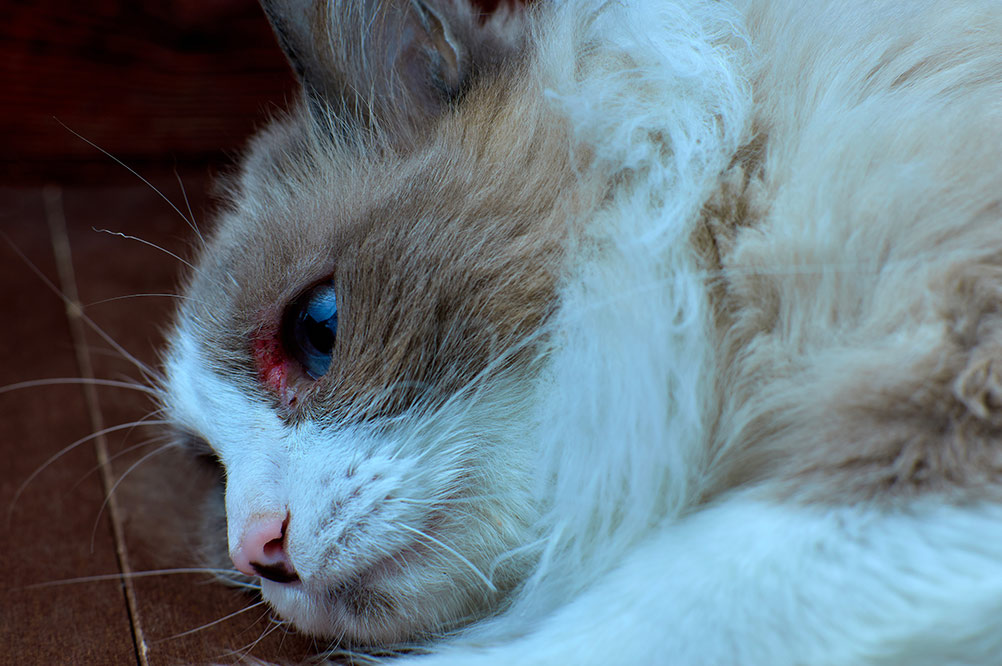
Signs of skin allergies can vary, but commonly include:
- Itching or scratching
- Licking or chewing the paws
- Overgrooming
- Red or inflamed skin
- Hair loss
- Scabs or crusts
- Hot spots
- Skin sores
- Rashes
- Flaky or greasy skin
- Strong skin odour
- Recurrent ear infections
- Head shaking
- Face rubbing
- Watery eyes
- Swollen or irritated paws
- Darkened or thickened skin in chronic cases
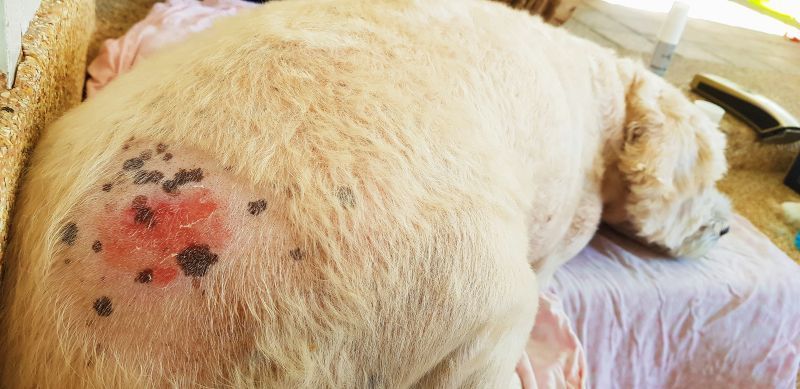
Some pets may also seem restless, uncomfortable or irritable because of persistent itching. Cats may hide signs of discomfort, so overgrooming, patchy hair loss or scabs may be the first obvious clues.
The most common types of skin allergies in cats and dogs
The three main types of skin allergies in pets are flea allergy, food allergy and environmental allergy. Some pets may have more than one allergy at the same time, which can make diagnosis and treatment more complex.
Flea allergy dermatitis
Flea allergy dermatitis is one of the most common allergic skin diseases in dogs and cats. It occurs when a pet reacts to flea saliva after being bitten. In allergic pets, even a small number of flea bites can cause intense itching and irritation.
Signs of flea allergy dermatitis may include:
- Intense itching
- Scratching, biting or chewing
- Hair loss
- Red or inflamed skin
- Scabs
- Skin sores
- Irritation around the tail base, back legs or belly
- Overgrooming, especially in cats
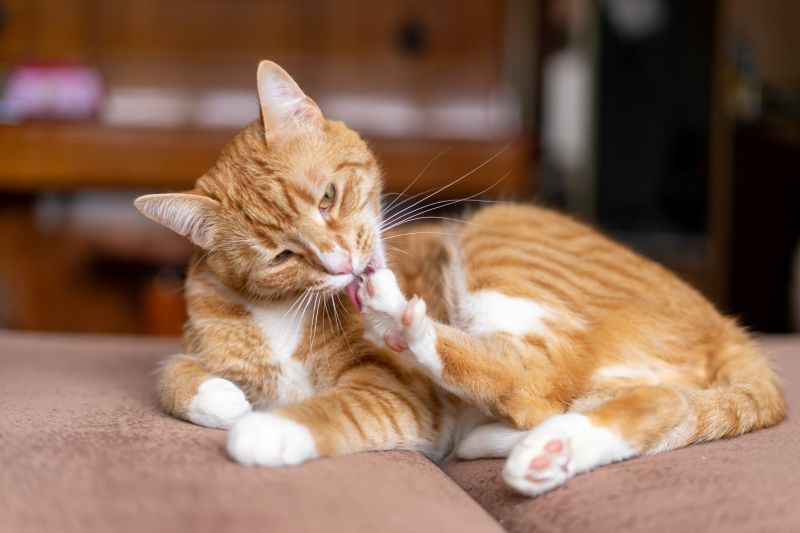
You may not always see fleas on your pet. Dogs and cats can groom them away, and allergic pets may react strongly to only a few bites.
Managing flea allergy dermatitis usually requires treating the affected pet, all other pets in the household and the home environment. Your vet can recommend a flea prevention plan that is safe and suitable for your dog or cat.
Never use a dog flea product on a cat unless your vet has confirmed it is safe. Some ingredients used in dog parasite products can be toxic to cats.
Food allergies
Food allergies can cause skin signs as well as digestive signs in some pets. They occur when the immune system reacts to a particular ingredient in the diet, usually a protein source.
Signs of food allergy may include:
- Itchy skin
- Recurrent ear infections
- Paw licking
- Face rubbing
- Red or inflamed skin
- Vomiting or diarrhoea
- Flatulence
- Frequent bowel changes
- Skin infections
Food allergies are not always easy to identify based on symptoms alone because they can look very similar to environmental allergies, flea allergy or other skin diseases.
If your vet suspects a food allergy, they may recommend a strict elimination diet trial using a novel protein or hydrolysed diet. This usually needs to be followed carefully for several weeks, with no treats, flavoured medications, table scraps or other foods unless approved by your vet.
Blood tests and saliva tests are not considered a reliable way to diagnose food allergy in pets. A properly managed elimination diet trial is usually the most useful approach.
Environmental allergies
Environmental allergies, also known as atopic dermatitis or atopy, occur when a pet reacts to allergens in the environment. These may include pollens, grasses, weeds, dust mites, mould spores or other airborne or contact allergens.
Environmental allergies may be seasonal, such as flaring in spring or summer, or they may occur all year round. Dogs and cats with environmental allergies may become itchy after spending time outside, lying on grass, during high pollen seasons or in dusty indoor environments.
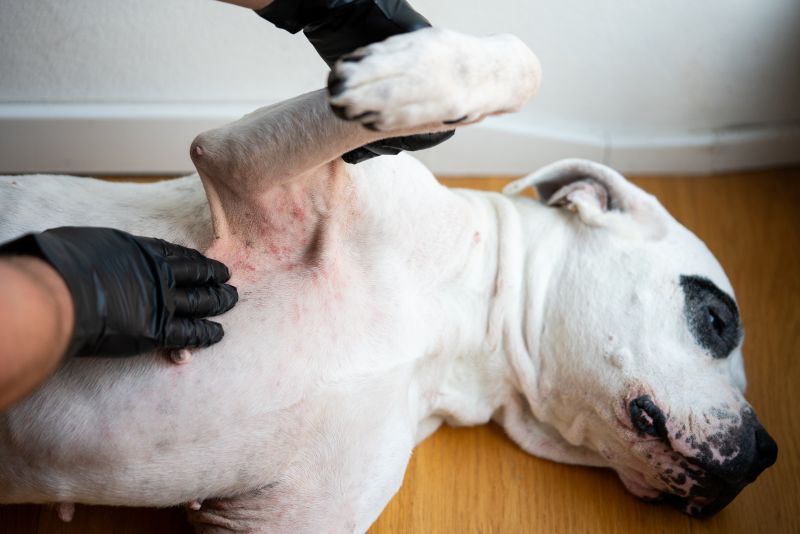
Signs may include:
- Itchy paws
- Face rubbing
- Ear infections
- Red belly or armpits
- Licking or chewing
- Scratching
- Recurrent skin infections
- Watery eyes
- Skin thickening or darkening over time
Environmental allergies can be difficult to cure completely because many triggers cannot be fully removed from the pet’s surroundings. However, they can often be managed with a combination of medication, skin care, allergen reduction, parasite control and treatment of secondary infections.
Contact allergies and household irritants
Some pets may develop irritation or allergic reactions after contact with certain substances. These may include grooming products, shampoos, cleaning products, sprays, plants, bedding materials, lawn treatments or topical products.
Signs may appear on areas that touch the irritant, such as the belly, paws, legs or chin.
If you suspect a household product is irritating your pet’s skin, stop using it and speak to your vet. Avoid applying human creams, essential oils or home remedies to your pet’s skin unless recommended by a vet, as some products can irritate the skin or be toxic if licked.
Are certain breeds more prone to skin allergies?
Any dog or cat can develop skin allergies, but some dog breeds are more prone to allergic skin disease. Breeds commonly associated with atopic dermatitis include:
- West Highland White Terrier
- Golden Retriever
- Labrador Retriever
- Boxer
- Staffordshire Bull Terrier
- French Bulldog
- English Bulldog
- German Shepherd Dog
- Shih Tzu
- Shar Pei
- Cocker Spaniel
Cats can also develop allergic skin disease, although the signs may be less obvious because cats often overgroom rather than scratch in front of their owners.
Breed can increase risk, but allergies can also be influenced by environment, parasite exposure, diet, immune function and other health factors.
Skin allergies in dogs vs cats
Dogs and cats can both develop flea, food and environmental allergies, but they may show different signs.
Dogs commonly develop itching around the paws, ears, face, belly, armpits and groin. Recurrent ear infections are also common in dogs with allergic skin disease.
Cats may show allergies through overgrooming, hair loss, scabs, crusts, head and neck itching, belly irritation or small raised skin lesions. Some cats may develop hair loss from licking rather than from hair falling out on its own.
Because cats can be secretive groomers, owners may not see the licking or chewing happening. Patchy hair loss, scabs or skin sores may be the first signs noticed.

Conditions that can look like skin allergies
Not every itchy or irritated skin problem is caused by an allergy. Other conditions can look similar and may need different treatment.
Possible causes include:
- Fleas or other parasites
- Mites or mange
- Ringworm
- Bacterial skin infection
- Yeast infection
- Ear infection
- Hot spots
- Abscesses
- Hormonal disease
- Autoimmune skin disease
- Pain-related licking
- Behavioural overgrooming
- Contact irritation
- Skin tumours or lumps
This is why veterinary diagnosis is important, especially if symptoms are severe, recurrent or not improving.
Secondary skin and ear infections
Pets with allergies often develop secondary bacterial or yeast infections because scratching, licking and inflammation damage the skin barrier.
Signs of secondary infection may include:
- Strong odour
- Greasy skin
- Sticky discharge
- Thickened skin
- Redness
- Oozing sores
- Scabs or crusts
- Brown discharge in the ears
- Head shaking
- Pain when touched
Secondary infections can make itching much worse. Treating the allergy alone may not be enough if infection is also present. Your vet may recommend medicated washes, ear drops, antibiotics, antifungal medication or other treatment depending on the type and location of infection.
How vets diagnose skin allergies
Diagnosing skin allergies usually involves a step-by-step process. Your vet will consider your pet’s history, symptoms, age, breed, lifestyle, parasite prevention, diet and whether symptoms are seasonal or year-round.
Your vet may recommend:
- A physical examination
- Flea combing
- Skin cytology
- Skin scraping
- Tape testing
- Fungal culture or ringworm testing
- Ear examination
- Food elimination diet trial
- Allergy testing in selected cases
- Blood tests or other tests if underlying disease is suspected
llergy testing is usually used to help guide allergen-specific immunotherapy for environmental allergies. It is not usually the first step for every itchy pet and is not a substitute for ruling out fleas, infections and food allergy.
Unsure how serious it is?
Bow Wow Meow policyholders can get access to trusted vet care anytime, anywhere, at no additional cost. Connect to an experienced Australian registered vet via video call, 24/7. Whether it’s providing vet advice, setting up at-home treatment plans, or confirming if you need to visit a vet in person, you can get help when you need it.
Find out more about our pet insurance cover options.
Treatment for skin allergies in dogs and cats
Treatment depends on the cause, severity and whether infections are present. Many pets need a combination of treatments rather than one simple fix.
Treatment may include:
- Flea and parasite prevention
- Medicated shampoos or rinses
- Topical treatments
- Ear medications
- Antibiotics or antifungal medication for infections
- Anti-itch medication
- Anti-inflammatory medication
- Prescription diets or elimination diet trials
- Fatty acid supplements, if recommended by your vet
- Allergy immunotherapy for environmental allergies
- Environmental management
- Long-term skin care plans
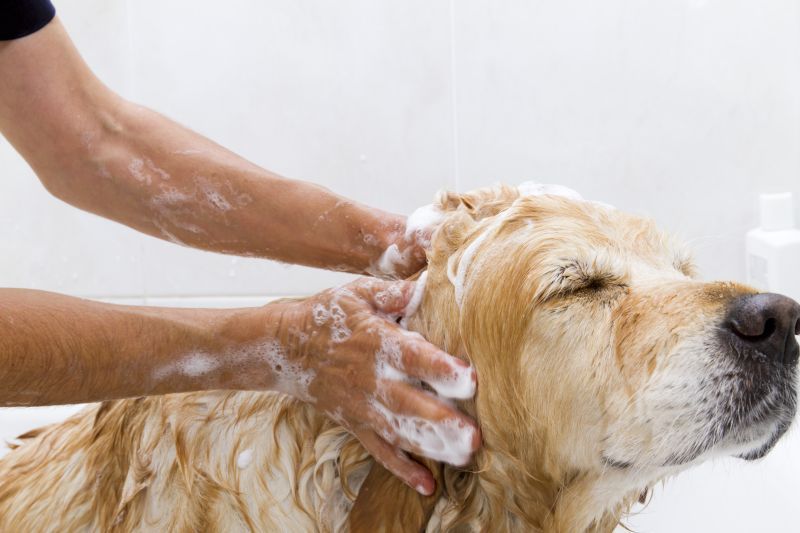
Some pets need short-term treatment for flare-ups, while others require ongoing management to keep symptoms controlled. Your vet can help develop a plan that suits your pet’s condition and lifestyle.
Do not give human antihistamines, steroids, creams or supplements to your pet unless your vet has advised you to do so. Some human medications and topical products can be unsafe for dogs or cats.
Can skin allergies be cured?
Some skin allergies can be controlled very well, but many are long-term conditions rather than one-off problems.
Flea allergy can often be managed successfully with strict year-round flea control. Food allergy can usually be managed by avoiding the problem ingredient once it has been identified. Environmental allergies may be harder to eliminate completely because triggers such as pollen, dust mites and grasses are difficult to avoid.
The goal of treatment is usually to reduce itching, prevent flare-ups, manage infections and keep your pet comfortable.
How to help prevent allergy flare-ups
While not all allergies can be prevented, you can reduce the risk of flare-ups by supporting your pet’s skin health and managing known triggers.
Helpful steps include:
- Keep flea and tick prevention up to date
- Treat all pets in the household for fleas as advised by your vet
- Wash pet bedding regularly
- Vacuum carpets, rugs and soft furnishings
- Brush your pet regularly
- Check the skin and coat for redness, scabs, fleas or hair loss
- Dry paws and coat after wet walks if your dog reacts to grass or moisture
- Avoid known triggers where possible
- Use only pet-safe grooming products
- Avoid changing diets frequently without veterinary advice
- Follow elimination diet instructions carefully if prescribed
- See your vet early if itching returns
For pets with chronic allergies, early treatment of flare-ups can help prevent more severe skin damage and secondary infection.
When should you take your pet to the vet?
You should arrange a vet visit if your dog or cat has:
- Persistent itching
- Hair loss
- Red or inflamed skin
- Scabs, sores or hot spots
- Recurrent ear infections
- Head shaking
- Strong skin or ear odour
- Overgrooming
- Paw licking
- Skin discharge
- Bleeding or open wounds
- Sudden or severe irritation

Preventing skin allergies in dogs and cats
Prevention is always better than cure, so be sure to implement the following tips and tricks to keep your pet safe and healthy:
- Keep your pet’s skin and coat clean and brush the coat regularly.
- Stay up to date with flea treatment.
- Examine the skin frequently to pick up any problems early.
- Feed a high quality diet.
- Avoid any known allergins or environments, such as particular types of grass.
- Check your cat for overgrooming, as this can be confused with skin disease or it may cause skin disease.
- Ask your vet to review your pet regularly and check for underlying diseases that could be affecting the skin and coat.
- Symptoms that keep returning
- Signs of pain or distress
Seek prompt veterinary care if your pet is very uncomfortable, has widespread skin sores, has swelling of the face or body, has difficulty breathing, or seems unwell as well as itchy.
Can pet insurance help with skin allergy treatment?
Skin allergies can require ongoing veterinary care, especially if your pet has recurrent flare-ups, secondary infections or a chronic allergic skin condition. Costs may include vet consultations, diagnostic tests, medication, medicated shampoos, ear treatments, prescription diets or referral to a veterinary dermatologist.
Bow Wow Meow Pet Insurance can help provide financial support for eligible unexpected illnesses and injuries, depending on your level of cover, policy limits, waiting periods and exclusions. As with most pet insurance policies, pre-existing conditions are generally not covered, so it is worth considering cover before signs or symptoms appear.
If your pet already has skin allergy symptoms, review the policy terms carefully and speak to the insurer if you are unsure how pre-existing condition rules may apply.
Conclusion
Skin allergies in dogs and cats can cause ongoing itching, discomfort, hair loss, ear infections and skin infections, but many pets can improve with the right diagnosis and treatment plan. Fleas, food ingredients and environmental allergens are common triggers, and some pets may react to more than one at the same time. If your dog or cat is scratching, licking, chewing, overgrooming or developing recurrent skin or ear problems, early veterinary advice can help identify the cause, relieve discomfort and reduce future flare-ups.
Bow Wow Meow Pet Insurance can help protect you and your dog should an unexpected trip to the vet occur.
-
Find out more about our dog insurance options
-
Get an online pet insurance quote
Bow Wow Meow is proud to have been awarded winner of Canstar’s ‘Most Satisfied Customers’ Award in the Pet Insurance category for both 2024 and 2025!
Bow Wow Meow is proud to be the only Pet Insurer that has been awarded Product Review’s Top Rated Pet Insurance every year from 2018 to 2026! This is based on 3,193 independent customer reviews (as at 09/04/2026), with an overall rating of 4.5 stars.

We also have the following ratings on other review platforms:
Google Review rating of 4.5 stars (based on 1,358 reviews)
Trust Pilot rating of 4.6 stars (based on 555 reviews)
Bow Wow Meow has been chosen as Winner of 4 categories in the 2026 Finder Pet Insurance Customer Satisfaction Awards!




– Most Trusted Pet Insurance
– Easiest to Claim Pet Insurance
– Most Recommended Pet Insurance
– Legendary Service Pet Insurance
We also received Highly Commended Awards for Loved Brand Pet Insurance and Best Value Pet Insurance.
Bow Wow Meow is an Australian-owned and operated pet insurance provider. Our focus is purely on pets, and we are proud to have helped provide peace of mind to over 200,000 Aussie pet owners since 2008.