Pet insurance that covers diabetes in Australia


Does Bow Wow Meow pet insurance cover diabetes in dogs and cats?
Yes, Bow Wow Meow’s Nose-to-Tail Cover provides cover for diabetes if the condition is not pre-existing and the waiting period has passed⑅.
Summary
Diabetes is a chronic metabolic disease that often requires lifelong treatment, regular monitoring and ongoing veterinary care. The ongoing costs of insulin, check-ups, testing and complications over time can really add up, which is why many Australian pet owners start researching pet insurance before a diagnosis is even made. This article explains how diabetes affects pets, how much treatment may cost, and what to look for when researching pet insurance that covers diabetes, including Bow Wow Meow’s Nose-to-Tail Cover.
What is diabetes and how does it affect pets?
Diabetes mellitus occurs when the body cannot produce enough insulin, cannot use insulin properly, or both. Insulin is the hormone that helps move glucose from the bloodstream into cells for energy. When that process breaks down, glucose builds up in the bloodstream and the body starts to lose control of normal metabolism.
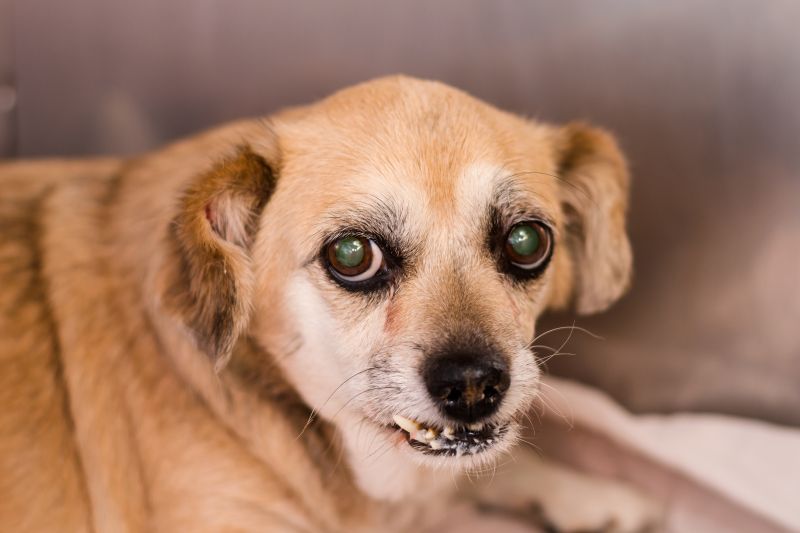
When diabetes is not well controlled, it can affect the whole body. Over time it can disrupt energy use, fluid balance, body weight, muscle condition and organ function. Serious complications can include cataracts in dogs and diabetic ketoacidosis, a life-threatening decompensated form of diabetes.
Is diabetes the same in dogs and cats?
There are some important species differences. In dogs, diabetes is an insulin-deficiency disease, which is why insulin injections are usually central to treatment. In cats, insulin resistance plays a larger role, and feline diabetes is often compared to type 2 diabetes in people, although many cats still need insulin as part of management.
Diabetes: a worrying diagnosis
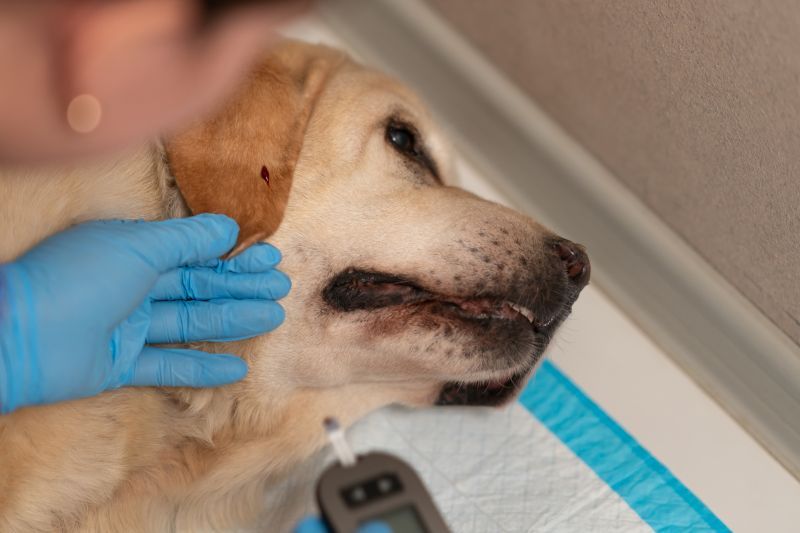
A diagnosis of diabetes can be stressful for pet owners, especially when a pet starts showing hyperglycaemia (high blood sugar), glucosuria (glucose in the urine), increased thirst and urination, and weight loss. Prevalence estimates from large primary-care datasets put diabetes at about 0.26% in dogs aged 3 years and older and about 0.58% in cats, with feline risk increasing with age.
Early detection matters because diabetes can become more complicated and more expensive once a pet is unstable. Prompt diagnosis may help reduce the risk of major complications and can make the early stabilisation phase more manageable. Diabetic ketoacidosis, for example, is an emergency state that can require intensive care and hospital treatment.

Diabetes symptoms in dogs and cats: early signs
Early signs of diabetes in pets are often easy to miss at first, especially because they can develop gradually. Common warning signs include:
- increased thirst
- increased urination
- weight loss despite a normal or increased appetite
- lethargy or reduced activity
- weakness
- vomiting or dehydration in more advanced cases

Diagnosis: how vets confirm diabetes
Diagnosis usually starts with a clinical examination and a review of symptoms. Vets typically confirm diabetes using blood glucose testing and urinalysis, looking for persistent hyperglycaemia and glucosuria.
Additional blood tests are often used to assess overall health, hydration, secondary problems and whether complications are already present. This matters because diabetes management is not just about making the diagnosis once; it usually involves repeated monitoring to assess how well the pet is responding to insulin and diet, and whether adjustments are needed over time. Additionally, repeat testing may help distinguish persistent diabetes from transient hyperglycaemia, especially in cats.
Diabetes treatment and long-term management
For most pets, diabetes is a long-term management condition rather than a one-off illness. In both dogs and cats, insulin is a core part of treatment, although the exact approach can vary between species and between individual patients. MSD states that treatment in both dogs and cats involves insulin along with dietary management, and notes that most dogs require insulin twice daily.
Dietary management, body weight control, regular check-ups and glucose monitoring are also central to good diabetic care. Cats can have a reversible form of diabetes which with insulin therapy, low-carbohydrate diet, weight management and careful monitoring they can achieve temporary remission. Throughout the process there is a need for ongoing owner communication and regular reassessment.
In practical terms, long-term management may include:
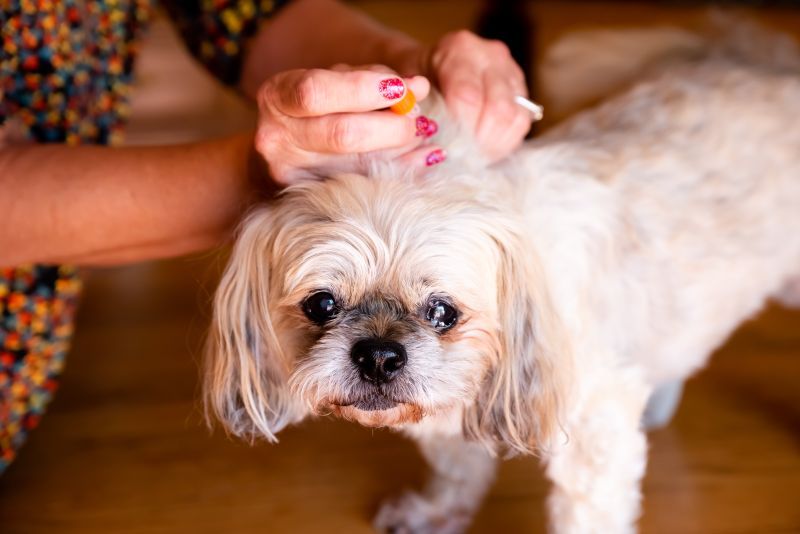
- insulin injections or other diabetes medication where appropriate
- prescription or carefully structured diets
- home observation of appetite, thirst, urination and body weight
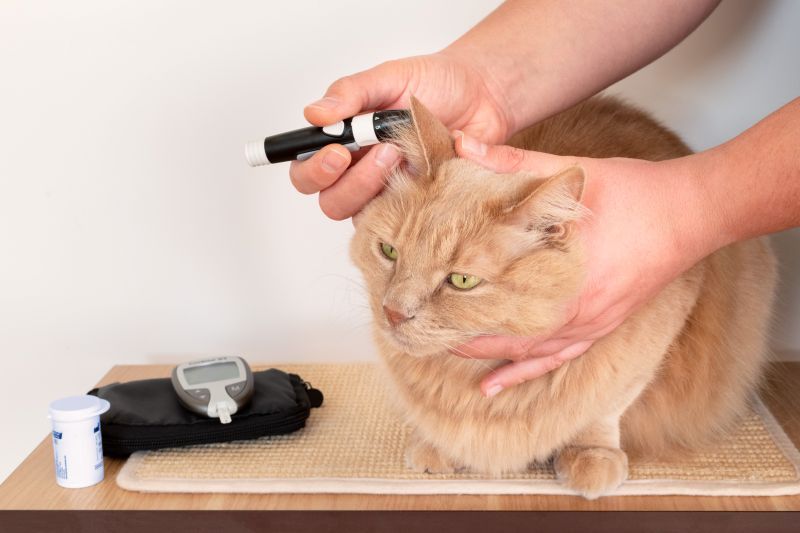
- periodic blood glucose monitoring which can be performed in the clinic or via a continuous glucose monitor device at home
- monitoring of fructosamine levels which provide an average blood sugar level of the previous few weeks
- repeat urine testing
- regular veterinary check-ups
- management of complications or secondary conditions
Most diabetic dogs require lifelong treatment. Some cats can achieve remission, but many still need long-term monitoring and ongoing care.
Expert advice from Dr Felicia:
Pets with diabetes can respond well to treatment, though there is a high level of commitment needed from owners for often twice daily injections and vet visits for monitoring. Some pets may have comorbidities causing insulin resistance and may need more frequent vet visits.
How much does diabetes treatment cost in Australia?
Diabetes can be expensive because the cost is cumulative. There is the initial work-up and stabilisation phase, but then there are the repeated costs of insulin, monitoring, supplies, rechecks and sometimes emergency care.
| Type of treatment | Indicative Australian cost |
|---|---|
| Initial diagnostics and early work-up | An average claim cost around $1,504 |
| Ongoing insulin therapy | About $122 per month on average |
| Ongoing insulin therapy per year | About $648–$1,260 depending on frequency |
| Regular blood and urine monitoring | Ongoing and variable; adds to the long-term cost burden |
| Emergency treatment for complications such as diabetic ketoacidosis | Can be substantially higher due to hospitalisation, intensive monitoring and critical care |
These figures are indicative only and not quotes. Actual costs vary depending on species, size of pet, insulin type, response to treatment, local veterinary fees, the need for hospitalisation, and whether complications develop.
Because it is difficult to predict the costs of veterinary care, it can help to have measures in place to help prepare for the unexpected. Pet insurance can help by covering a portion of the eligible vet bill if the unexpected does happen.
Get a quick quote
Why diabetes treatment becomes expensive over time
Diabetes becomes expensive over time because it is rarely a one-visit condition. Costs often continue month after month and may include insulin, syringes or needles, glucose monitoring supplies, prescription food, repeat bloodwork, urinalysis, rechecks and medication adjustments. The long-term nature of the condition is a major part of why owners research insurance.
Complications can add much more. Poorly controlled diabetes can lead to diabetic ketoacidosis, which is an emergency, and cataract development in dogs is common.
Breeds with a higher risk of diabetes
Some breeds appear to have a higher risk of diabetes. In dogs, reported higher-risk breeds include Yorkshire Terriers, Border Terriers, Cavalier King Charles Spaniels, Bichon Frises and West Highland White Terriers. In cats, higher-risk breeds reported in the literature include Burmese, Tonkinese, Norwegian Forest Cats, Russian Blues and Abyssinians.
Breed is only part of the picture. Age, body weight, sex, and other health conditions can also influence diabetes risk, so breed alone does not determine whether a pet will develop the disease.
Because breed risk and hereditary factors often overlap, this can be relevant when comparing pet insurance policies. With Nose-to-Tail Cover , hereditary and congenital conditions are not treated as pre-existing if your pet showed no noticeable signs, symptoms or abnormalities before the policy started or during any applicable waiting period. So breed risk alone does not rule out cover for diabetes; what matters is whether the condition was already present or should reasonably have been noticed before cover began.

Pet insurance and diabetes – what you need to know
When looking at pet insurance for diabetes, it is important to understand the main limits that can affect a claim. These commonly include pre-existing condition rules, waiting periods, annual benefit limits, any applicable sub-limits, the excess, and the reimbursement percentage.
This matters because diabetes often begins with gradual signs such as increased thirst, increased urination and weight loss. If those signs were already present before the policy started, or during the waiting period, the condition may be treated as pre-existing. For a chronic illness like diabetes, even small differences in policy wording can make a meaningful difference over time.
How Bow Wow Meow Pet Insurance covers diabetes
With Bow Wow Meow’s Nose-to-Tail Cover, diabetes may be eligible for cover if your pet is insured before the condition becomes apparent and all policy terms are met. As with other illnesses, cover depends on factors such as waiting periods, annual benefit limits, excess, reimbursement percentage, and whether the condition is considered pre-existing under the policy wording.
Because diabetes can involve ongoing consultations, testing, insulin therapy and monitoring, the level of annual cover you choose can be especially important. This is why it helps to look not only at whether diabetes may be covered, but also at how the policy is structured for long-term conditions. Bow Wow Meow’s Nose-to-Tail Cover:
-
Offers annual benefit limits of $10,000, $20,000 or $30,000, depending on the level chosen⑅
-
Reimburses up to 90% of eligible vet fees (subject to the chosen benefit percentage and any excess)⑅
-
Has no sub-limits – meaning there are no smaller caps specifically for diabetes or other particular conditions; the entire annual limit can be used where it’s most needed.
This means you may be able to claim up to $30,000 in diabetes-related vet bills per year, if you have taken out Nose-to-Tail Cover with a $30,000 annual limit⑅ and continue to pay your premiums. Bear in mind that cover is subject to waiting periods, pre-existing condition rules and other terms and exclusions set out in the current PDS.
How to compare pet insurance policies for diabetes
When comparing pet insurance policies for diabetes, it helps to think beyond the initial diagnosis. Diabetes is often a long-term condition, so the policy needs to work for repeat consultations, monitoring, medication and ongoing management, not just a one-off claim.
Key things to compare include the annual benefit limit, the reimbursement percentage, the excess, and whether eligible cover can extend to repeated diagnostics, insulin therapy and follow-up care. It is also important to check how the insurer defines pre-existing conditions and whether your pet would still be eligible for cover if signs appeared soon after the policy began.
Bow Wow Meow’s Nose-to-Tail Cover has no sub-limits and up to $30,000 annual limit, giving you flexibility to use the full annual limit on diabetes management and treatment, if required, in a given year⑅.
Get a quick quote
In conclusion
Diabetes is a chronic but often manageable disease in dogs and cats. The challenge for many owners is not just the diagnosis itself, but the ongoing cost of insulin, monitoring, repeat testing and the risk of emergency complications. Prevalence data shows that diabetes is an established chronic condition in companion animals, particularly as pets age.
Pet insurance may help reduce the financial strain, but timing matters. Because diabetes often requires lifelong treatment, owners should look closely at waiting periods, pre-existing condition rules, annual benefit limits and reimbursement terms, and seek veterinary advice promptly if they notice early warning signs.
If you have concerns about your pet’s health, speak with your vet as early as possible and review your pet insurance options before problems arise so you can make informed decisions with more confidence.
Bow Wow Meow Pet Insurance can help protect you and your pet should an unexpected trip to your vet occur.
- Find out more about our dog insurance options
- Find out more about our cat insurance options
- Get an instant online pet insurance quote
Bow Wow Meow is proud to have been awarded winner of Canstar’s ‘Most Satisfied Customers’ Award in the Pet Insurance category for both 2024 and 2025!
Bow Wow Meow is proud to be the only Pet Insurer that has been awarded Product Review’s Top Rated Pet Insurance every year from 2018 to 2026! This is based on 3,193 independent customer reviews (as at 09/04/2026), with an overall rating of 4.5 stars.

We also have the following ratings on other review platforms:
Google Review rating of 4.5 stars (based on 1,358 reviews)
Trust Pilot rating of 4.6 stars (based on 555 reviews)
Bow Wow Meow has been chosen as Winner of 4 categories in the 2026 Finder Pet Insurance Customer Satisfaction Awards!




– Most Trusted Pet Insurance
– Easiest to Claim Pet Insurance
– Most Recommended Pet Insurance
– Legendary Service Pet Insurance
We also received Highly Commended Awards for Loved Brand Pet Insurance and Best Value Pet Insurance.
Bow Wow Meow is an Australian-owned and operated pet insurance provider. Our focus is purely on pets, and we are proud to have helped provide peace of mind to over 200,000 Aussie pet owners since 2008.
Sources:
“Diabetes mellitus in dogs attending UK primary-care practices”, PubMed Central, https://pmc.ncbi.nlm.nih.gov/articles/PMC7288514/. Accessed 2 Jun 2026
“Epidemiology of Diabetes Mellitus among 193435 Cats Attending Primary-Care Veterinary Practices in England”, PubMed Central, https://pmc.ncbi.nlm.nih.gov/articles/PMC5094533/. Accessed 2 Jun 2026
“Diabetes Mellitus in Dogs and Cats”, MSD Veterinary Manual, https://www.msdvetmanual.com/endocrine-system/the-pancreas/diabetes-mellitus-in-dogs-and-cats. Accessed 2 Jun 2026
“Diabetes in Pets”, Oregon Veterinary Medical Association, https://www.oregonvma.org/care-health/companion-animals/health-safety/diabetes-in-pets. Accessed 2 Jun 2026
“Current Advances in the Management of Diabetes Mellitus”, PubMed Central, https://pmc.ncbi.nlm.nih.gov/articles/PMC9599361/. Accessed 2 Jun 2026
“Diabetes in dogs – causes, symptoms, treatment & diet management”, Bow Wow Meow Pet Insurance, https://bowwowinsurance.com.au/pet-care/diseases-conditions/diabetes-in-dogs/. Accessed 2 Jun 2026
“Behind the price tag: Why pet med costs are rising and how to manage them”, PetSure, https://petsure.com.au/knowledge-hub/behind-the-price-tag/. Accessed 2 Jun 2026