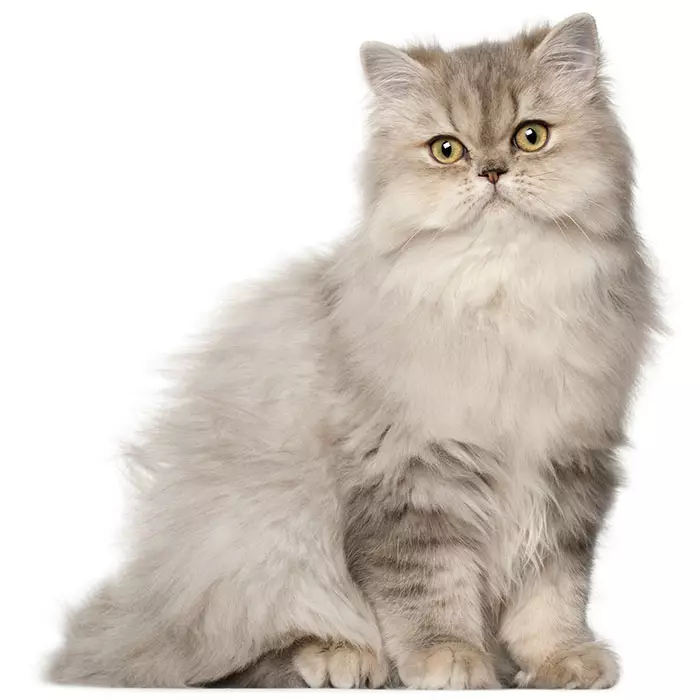
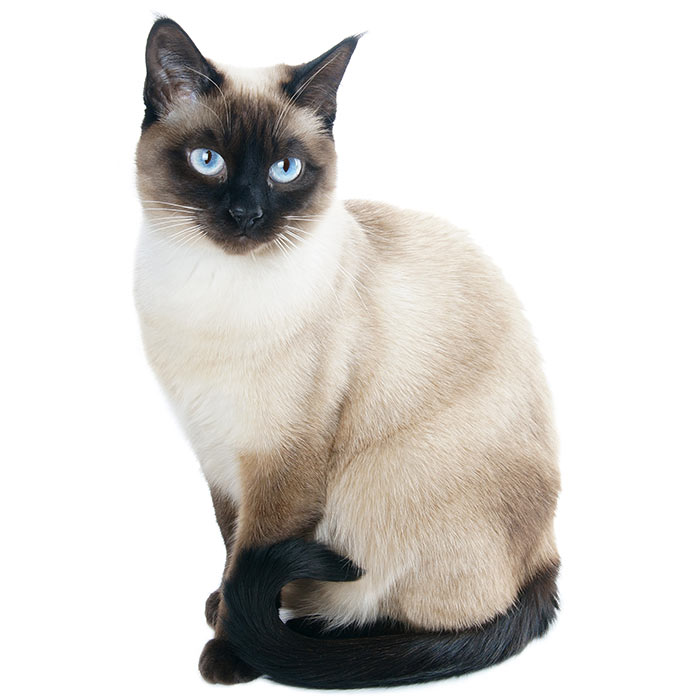
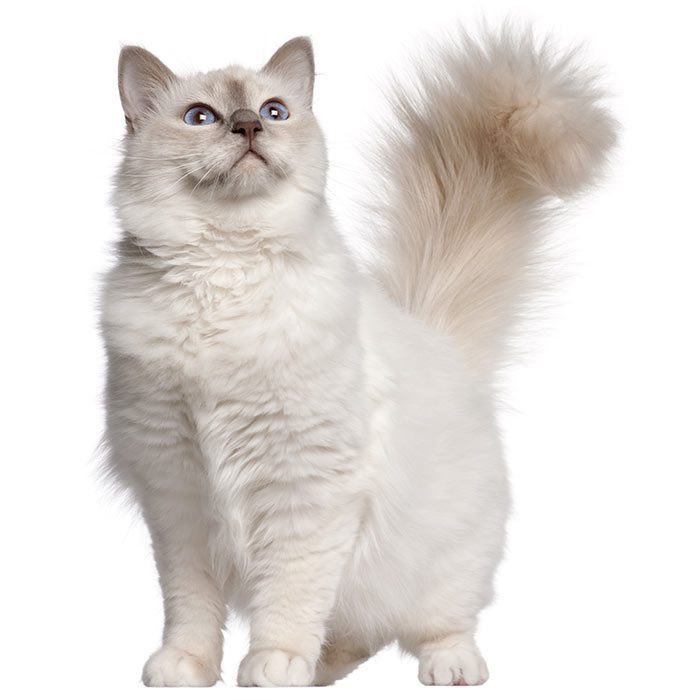
What is a Himalayan cat?


Himalayan
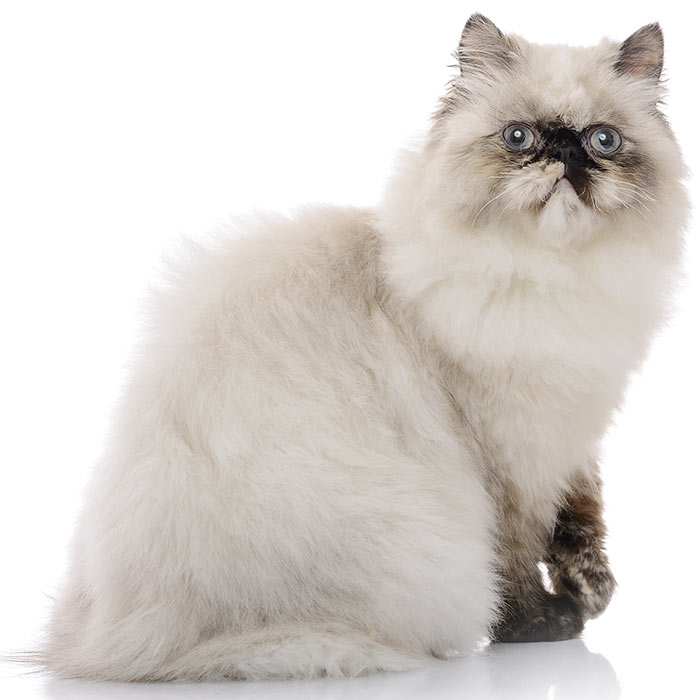
Himalayans are gentle, affectionate, medium to large sized cats with striking blue eyes and long, luxurious coats that require daily grooming. Similar to Persians, they have a calm temperament and do best in relaxed households with consistent routines. They suit indoor, low-activity lifestyles and are often happiest lounging near their owners or curled up in a favourite spot.
| Recommended for | Individuals or families wanting a quiet, affectionate companion |
| Breed Classification | Longhair / Persian-type |
| Other names | Himalayan Persian, Himmie |
| Lifespan | 12 to 15 years |
| Size | Medium to large |
| Temperament | Affectionate, quiet, gentle |
| Intelligence | Moderately intelligent; quickly learn household routines |
| Tendency to vocalise | Talkative but not loud; their voices are soft, sweet, and melodic |
| Maintenance Level | High grooming needs; their long coat requires daily brushing |
| Health Risk | Prone to certain hereditary and breed-related health issues, mostly due to its flat facial structure and long coat, including polycystic kidney disease, brachycephalic airway issues, and eye discharge. |
Thinking of insuring a Himalayan?
Explore the Top 5 health issues claimed for Himalayans, including highest claims paid and how much pet insurance could help you save on eligible vet bills.
See Himalayan pet insurance Ready to get cover? Get a quick quote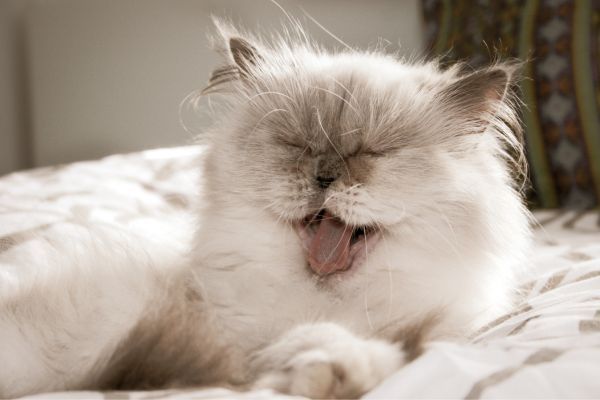
Himalayan personality and temperament
Himalayans are affectionate, quiet, and gentle cats that form strong bonds with their family, enjoying calm companionship and regular attention. While they appreciate attention, they are equally content spending time alone in a cosy spot. Their peaceful nature makes them ideal for relaxed and smaller households.
Himmies, as they are affectionately known, combine the best characteristics of the Siamese and the Persian. Though laid-back, their activity level lies between that of the Siamese and Persian, so they’re equally happy to play as they are to relax. They’ll happily bat at feather toys or chase soft balls but are just as content lounging in sunbeams.
Himalayans thrive on stability and a predictable routine; sudden changes or loud environments can stress them out. They prefer gentle activities and quiet surroundings, and are therefore well-suited to indoor life and apartment living.
Himalayans with kids and other pets
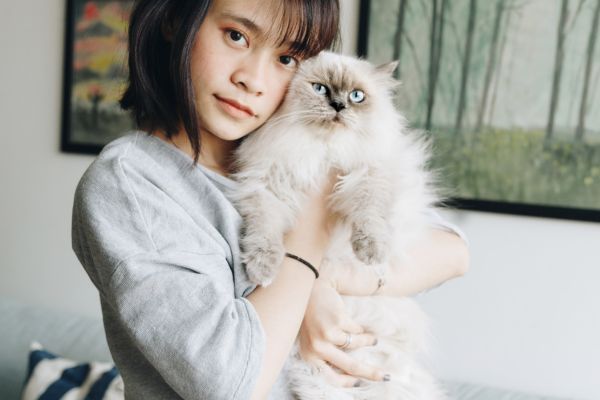
Himalayans are generally good with children, especially in calm, respectful environments. Not rough-and-tumble cats, they prefer gentle play and soft handling, so they’re best suited to older, well-mannered children who know how to respect a cat’s boundaries. They can become stressed in loud, chaotic environments, so families with very young or boisterous children might find a more easygoing breed (like a Ragdoll) a better match.
Their sweet temperament and tolerance make them a steady presence in multi-pet homes. A good match for other calm pets, they rarely start fights and usually prefer to avoid conflict altogether. They usually coexist peacefully with other cats, especially if introduced properly and given their own space, and can get along well with cat-friendly dogs, although oisterous or high-energy dogs may overwhelm them. Their low prey drive means they’re less likely to chase small animals like rabbits or guinea pigs than some other breeds, but supervision is still essential.
Himalayan training and exercise
Himalayans have low to moderate energy levels and are not as playful or energetic as some breeds. While they are not overly active, they do require gentle daily play to stay mentally and physically stimulated. They enjoy brief play sessions followed by long naps.
Soft toys, feather wands, and quiet interactive games suit their calm nature. Providing padded perches, scratching posts, and a quiet environment helps them stay engaged without overwhelming their preference for a peaceful routine.
| Energy level | Low to moderate |
| Exercise requirements | Moderate |
Common health issues for Himalayans
What do Himalayan owners claim for the most?
- Polycystic kidney disease (PKD) is a hereditary condition that can lead to kidney failure if left unmanaged. Regular blood tests and ultrasounds help with early detection and monitoring.
- Brachycephalic airway syndrome may occur due to their flat facial structure, which can cause breathing difficulties, particularly in hot or stressful environments. Keeping them cool and avoiding overexertion is important.
- Eye discharge and tear staining are common in Himalayans as a consequence of their short muzzle and shallow tear ducts. Daily eye cleaning can help keep the area clean and reduce staining.
- Dental disease is also a concern, especially without regular oral care. Brushing and professional check-ups support good dental health and overall wellbeing.
Not all conditions are covered by Pet Insurance. For details of Bow Wow Meow Pet Insurance cover, refer to the Product Disclosure Statement.
How to choose the right insurance for your Himalayan
When comparing cover for your Himalayan, look for:

Cover for common Himalayan conditions:
Check that the policy covers conditions Himalayans can be prone to, including common health issues.

Cover for hereditary conditions:
No exclusions for hereditary or congenital conditions⑅.

Flexible cover options:
Options to adjust your annual benefit limit, reimbursement rate and excess.
Bow Wow Meow's Nose-to-Tail Cover offers flexible options for your Himalayan, with cover for accidental injuries, illnesses and hereditary conditions⑅. Get a quick quote for cover that suits your Himalayan and your budget.
Himalayan feeding and nutrition
The Himalayan thrives on a balanced diet that supports its long coat, steady energy levels, and overall health. High-quality food rich in protein and essential fatty acids helps maintain coat condition and healthy body weight. A mix of wet and dry food is recommended to support hydration, digestion, and dental care.
Portion control is important, as Himalayans may gain weight if overfed or underactive. Divide meals into two or three servings per day to support healthy digestion and maintain a stable weight. Always provide access to fresh water and consult your vet for dietary advice based on age, activity, and health needs.
Himalayan care and grooming
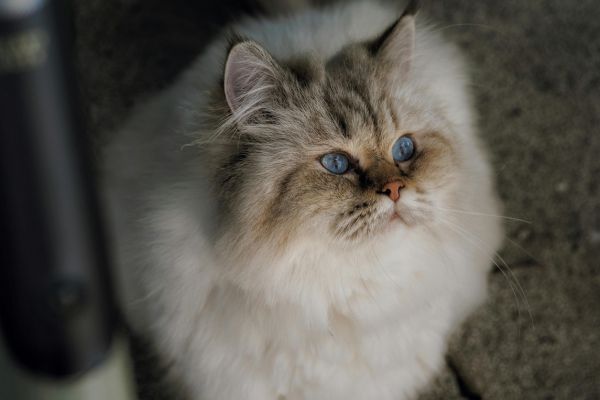
The Himalayan has a long, thick coat that requires daily grooming to prevent tangles and matting. A wide-tooth comb and soft-bristle brush help remove loose hairs and keep the coat smooth and healthy. Many owners describe brushing time as a “bonding ritual”!
Their flat face is susceptible to tear staining, so daily facial cleaning is recommended. Routine care should include ear cleaning, nail trimming, and regular dental hygiene to support long-term health.
They are best suited to temperate climates and should be kept indoors during extreme weather. Their long coat provides some insulation, but they may need extra cooling in hot conditions and added warmth during colder months.
Size, appearance and coat of Himalayans
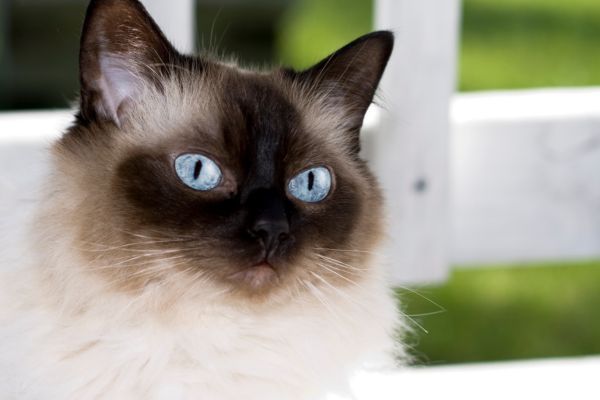
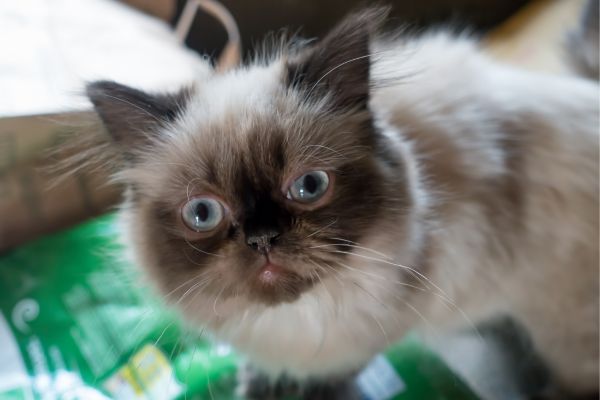
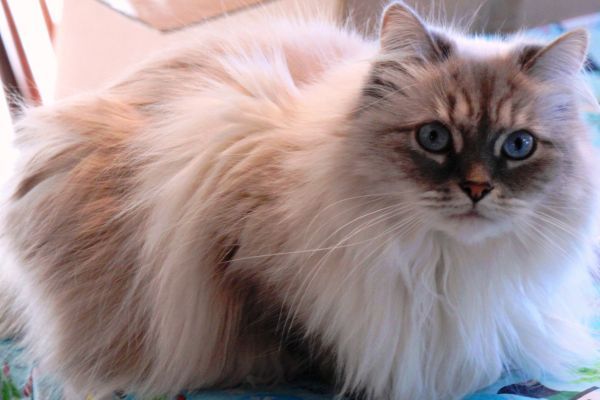
The Himalayan is a medium to large-sized cat with a sturdy, cobby build and short legs, and is very similar in appearance to the Persian cat. They have a large, round head, short nose, and full cheeks, with small ears set low on the head. Their most striking feature is their large, round blue eyes, which stand out against their pale body and darker points. The tail is plume-like and carried gracefully.
One of the Himalayan’s defining traits is its long, dense, flowing coat with a silky texture. The colourpoint pattern includes darker shades on the face, ears, legs, and tail, while the body remains lighter. Coat colours vary and include seal, blue, chocolate, and lilac.
Himalayans can have two distinct face shapes, both inherited from their Persian ancestry: traditional/doll-faced, or peke-faced (named after the Pekingese dog with squashed-looking features); the main difference is the degree of flatness in the face.
| Weight range | Males: 4.5 to 6.5 kg; females: 3.5 to 5.5 kg |
| Height range | 25 to 30 cm (10 to12 inches) at the shoulder |
| Colours | A white/cream coat with black, blue, lilac, chocolate, red, cream, tabby or tortoiseshell colourpoints |
| Coat length | Long, typically 5 to 10 cm (2–4 inches), sometimes longer around the ruff and tail |
Breed history of Himalayans
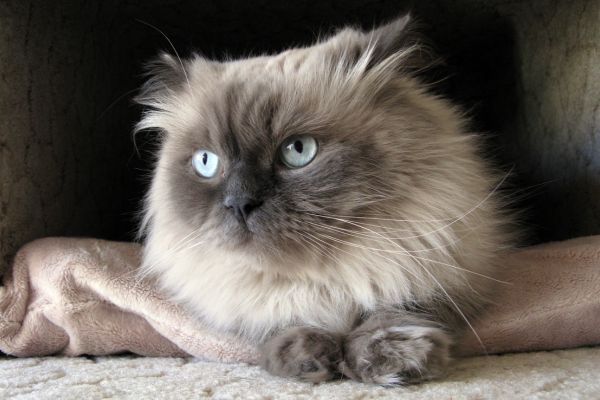
The Himalayan was created in the 1930’s, when breeders in the U.S. and U.K. set out to create a cat with the long, luxurious coat of the Persian with the blue eyes and colourpoint pattern of the Siamese. The first Himalayan cat was a result of the fourth generation of these crossbreedings.
Early breeding experiments were carried out by Dr. Clyde Keeler and Virginia Cobb in the U.S., who produced the first pointed longhair cat named “Newton’s Debutante.” Keeler and Cobb named the new breed the Himalayan after its coat which resembled that of rabbits and goats living in the Himalayas.
In the 1980’s, efforts were made to strengthen the Persian side of the Himalayan, leading the breed to frequently be listed as a Persian sub-breed. The Himalayan was officially recognised as a distinct breed in various cat associations, while others continue to classify it as a Persian variant.
Himalayan facts!
- Despite their exotic name, Himalayans don’t originate from the Himalayan mountains! The name refers to their colour pattern, which resembles that of Himalayan rabbits.
- All Himalayans have deep blue eyes, inherited from their Siamese ancestors. The shade can range from sapphire to icy blue, but never green, gold, or copper.
- Like Persians, Himalayans can have either a traditional “doll face” (more natural, rounded features) or a “peke face” (a flatter face, named after the Pekingese dog). The flatter-faced ones are often seen in cat shows.
- Depending on the registry, you might see them listed as “Colourpoint Persians” (CFA, GCCF) rather than “Himalayans.” They’re essentially the same cat.
- Martha Stewart has owned a number of Himalayan cats, all named after composers, including Bartok and Vivaldi. Her cats have been featured in commercials for Kmart, her television show Martha Stewart Living, and in her magazine.
Summary
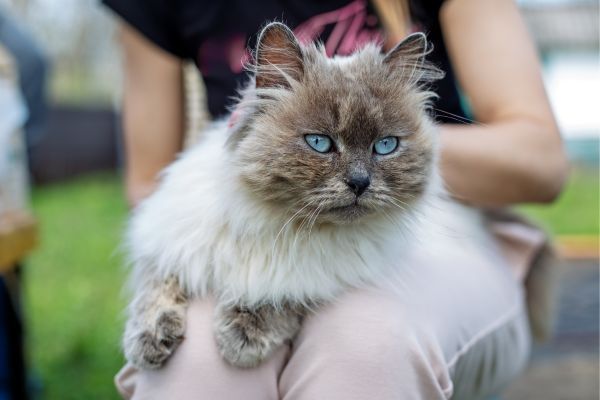
The Himalayan is a gentle, affectionate medium-to-large cat with striking blue eyes and a long, luxurious coat. Similar in temperament to the Persian, Himalayans are calm cats that tend to do best in relaxed households with consistent routines.
They suit indoor, low-activity lifestyles and are often happiest lounging near their owners or curled up in a favourite spot. Their long coat requires daily grooming, so they are best matched with owners prepared for regular coat care.
FAQs about the Himalayan
The Himalayan combines the Persian body and long coat with the pointed colouring and blue eyes associated with Siamese cats. Some registries treat it as part of the Persian breed group.
Yes. Himalayans are generally gentle, affectionate and calm cats that enjoy quiet companionship and regular attention from familiar people.
They often suit calm households with respectful children and gentle pets, but may find very noisy or rough environments stressful.
They have low to moderate activity levels and typically enjoy short bursts of play rather than prolonged high-energy activity.
Yes. Their long, dense coat needs frequent—often daily—brushing to help prevent knots, tangles and matting.
They are generally quieter than Siamese cats and tend to communicate with softer, less frequent vocalisations.
Many require regular cleaning around the eyes and facial folds because their shortened facial structure can contribute to tear staining and eye discharge.
As Persian-related cats, Himalayans can be affected by polycystic kidney disease and inherited progressive retinal atrophy, along with brachycephalic eye, dental and breathing issues.
SEE MORE
The Atlantic Himalayan Club: http://www.himalayan.org/

Get 2 months free for your kitten!
Cover your kitten from Nose-to-Tail
To ensure your precious fur baby is covered from the start, we'd like to offer your first 2 months of our Nose-to-Tail Cover for free2!
Get a quick quote