How long do Ragdoll cats live?


Ragdoll
The Ragdoll is a large, blue-eyed, semi-longhaired cat known for its gentle nature and affectionate attachment to people. They are often excellent indoor companions for families, singles and older owners, provided their size, coat care and potential inherited health risks are understood.
| Recommended for | Families, singles and homes wanting a gentle indoor companion |
| Breed Classification | Semi-longhair |
| Other names | None widely used, though the breed name refers to the relaxed way some go limp when held |
| Lifespan | 12–17 years |
| Size | Large |
| Temperament | Gentle, affectionate, relaxed and sociable |
| Intelligence | Moderate to high; can learn routines, fetch and simple cues |
| Tendency to vocalise | Low to moderate; usually soft-voiced |
| Maintenance Level | Moderate grooming; regular brushing and weight control are important |
| Health Risk | Generally hearty from responsible breeders, but hypertrophic cardiomyopathy, urinary issues, dental disease and obesity should be watched. |
Thinking of insuring a Ragdoll?
Explore the Top 5 health issues claimed for Ragdolls, including highest claims paid and how much pet insurance could help you save on eligible vet bills.
See Ragdoll pet insurance Ready to get cover? Get a quick quote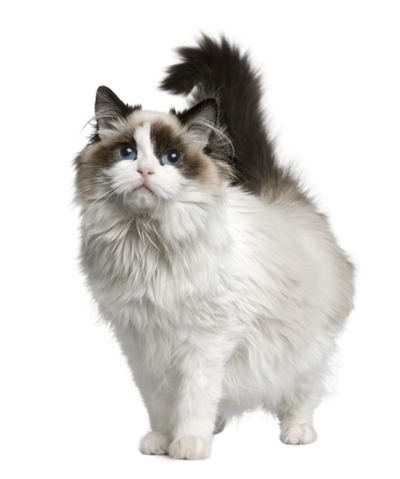
Ragdoll personality and temperament
Ragdolls are typically affectionate, calm and sociable. Many like to stay near their people, greet family members at the door and relax in the same room. They are often less demanding than highly vocal breeds but still need companionship and should not be treated as ornamental cats.
They are usually very well suited to indoor environments and apartments, provided they have enough space to stretch, rest and play. Their trusting, laid-back nature is one reason many owners prefer to keep them indoors or in secure outdoor enclosures. They suit calm households that want a gentle, people-oriented companion.
Ragdolls with kids and other pets
Ragdolls are often a good match for families because they are gentle and tolerant. Their size and calm nature can make them appealing to children, but children still need to be taught not to carry them awkwardly, pull the coat or assume every Ragdoll wants to be held.
They generally adapt well to other cats and cat-friendly dogs, especially if introduced gradually. Because they are relaxed, they can be overwhelmed by very boisterous animals, so supervision and separate resting spaces are important in multi-pet homes.
Ragdoll training and exercise
Ragdolls have moderate exercise needs. They are not usually extreme athletes, but they benefit from daily play to maintain muscle and prevent weight gain. Wand toys, gentle chase games, tunnels and low-to-medium climbing furniture are usually suitable.
Training can be surprisingly successful because many Ragdolls are people-focused and responsive. They may learn recall, carrier training, grooming routines and even simple fetch games. Use rewards, calm repetition and short sessions.
| Energy level | Low to moderate |
| Exercise requirements | Moderate; daily gentle play, enrichment and weight-conscious activity |
Common health issues for Ragdolls
What do Ragdoll owners claim for the most?
- Ragdoll Cats are generally healthy, but they do have a few breed-specific concerns. One of the most common is Hypertrophic Cardiomyopathy (HCM), a hereditary heart disease that can thicken the heart muscle and affect function over time. Responsible breeders test for this condition, but regular vet checks remain essential. Some Ragdolls may also be prone to urinary tract issues and bladder stones, so keeping them hydrated and monitoring their litter habits can help catch problems early.
- Obesity is a concern, especially since Ragdolls have a calm nature and may not burn energy quickly. Excess weight can strain their joints and increase the risk of diabetes and heart problems. Keep them active and monitor food portions closely. Use puzzle feeders or scheduled meals rather than free feeding to help manage their weight effectively.
- Dental issues, including gingivitis and tartar build-up, are also seen in Ragdolls. Poor oral health can affect their overall wellbeing, so brushing their teeth and offering dental treats can help. Schedule annual vet dental checks to stay on top of any issues. Regular health screenings for heart health, kidney function, and joint mobility are recommended, especially as they age.
- Ragdolls benefit from a consistent health care routine. Keep vaccinations current, provide parasite prevention, and schedule annual wellness visits. Feed a balanced diet and encourage gentle daily play. These steps can help support their health across all life stages.
Not all conditions are covered by Pet Insurance. For details of Bow Wow Meow Pet Insurance cover, refer to the Product Disclosure Statement.
How to choose the right insurance for your Ragdoll
When comparing cover for your Ragdoll, look for:

Cover for common Ragdoll conditions:
Check that the policy covers conditions Ragdolls can be prone to, including common health issues.

Cover for hereditary conditions:
No exclusions for hereditary or congenital conditions⑅.

Flexible cover options:
Options to adjust your annual benefit limit, reimbursement rate and excess.
Bow Wow Meow's Nose-to-Tail Cover offers flexible options for your Ragdoll, with cover for accidental injuries, illnesses and hereditary conditions⑅. Get a quick quote for cover that suits your Ragdoll and your budget.
Ragdoll feeding and nutrition
Ragdolls need a balanced diet appropriate for a large, slow-maturing breed. Kittens should receive food formulated for growth, while adults need measured portions to maintain lean body condition. Because Ragdolls tend to be placid indoor cats, weight gain can creep up unless meals are controlled and activity is encouraged.
A mix of wet and dry food may help hydration, satiety and dental care, depending on the individual cat. Ask your vet to monitor body condition, especially after desexing or as activity levels change.
Ragdoll care and grooming
The Ragdoll coat is semi-long and silky, but it still needs regular care. Brush or comb at least once or twice a week, and more often during seasonal shedding. Pay attention to the armpits, chest, belly, hind legs and tail where tangles can start.
Routine care should include nail trimming, dental care and ear checks. Because Ragdolls are large, grooming is easier when they are trained from a young age to accept handling on a table or mat. Scratching posts will help keep their claws in good condition.
Size, appearance and coat of Ragdolls
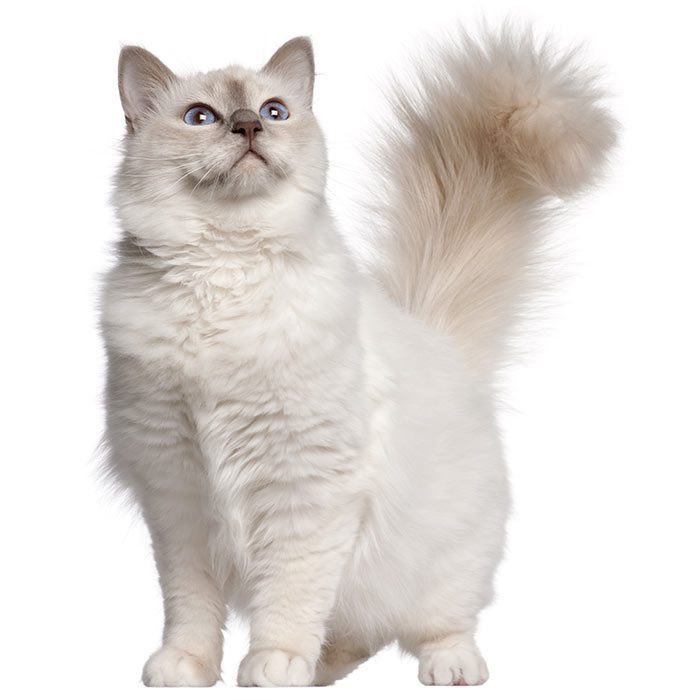
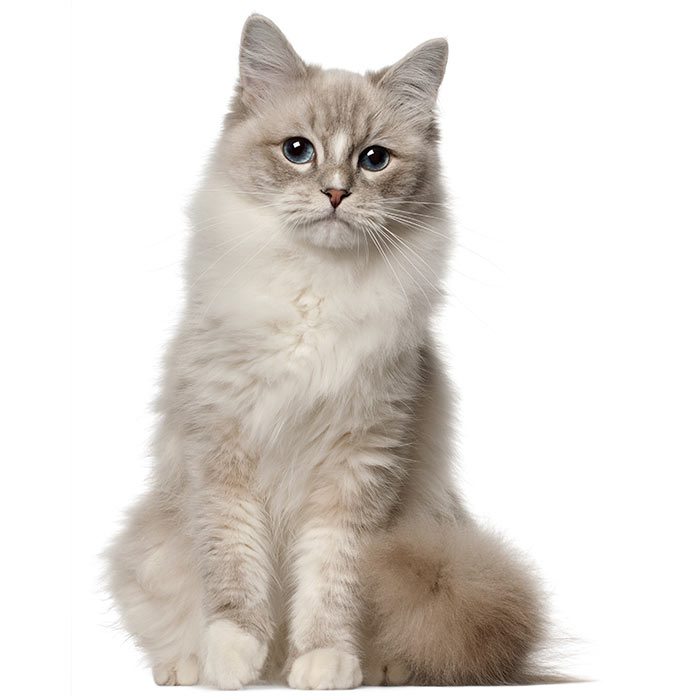
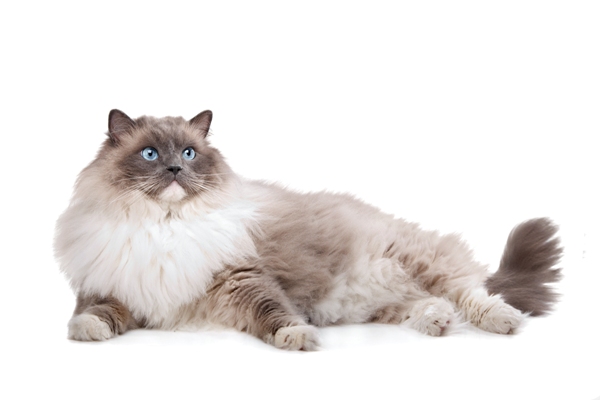
Ragdolls are large, muscular cats with substantial bodies, broad chests, strong hindquarters and long tails. They mature slowly and may take several years to reach their full size and coat development. Their large oval blue eyes are one of the breed’s most recognisable features, giving them a soft and expressive look.
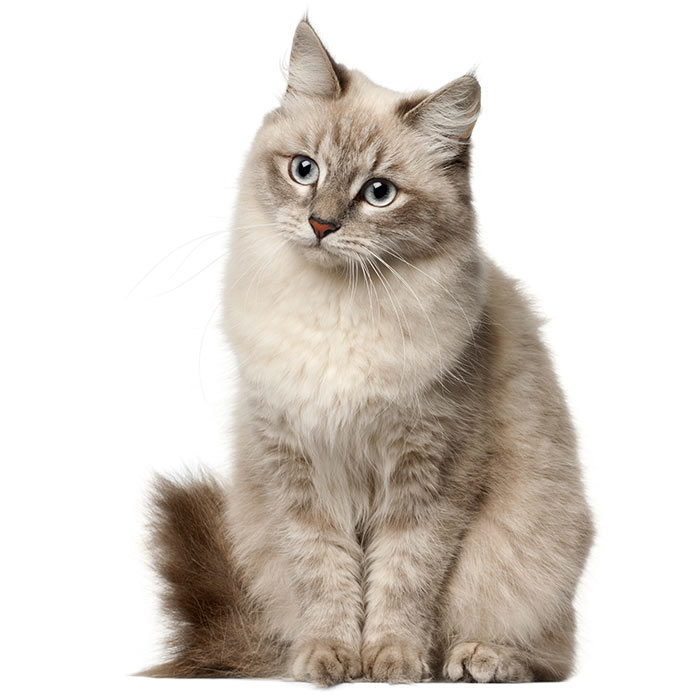
The coat is semi-long, silky and usually less woolly than some heavy longhaired breeds. Ragdolls have colourpoint genetics, meaning the body is lighter and the cooler areas such as ears, face, legs and tail are darker. Common patterns include colourpoint, mitted and bi-colour.
| Weight range | Females about 4.5–6.5 kg; males about 6–9 kg or more |
| Height range | About 25–30 cm at the shoulder |
| Colours | Seal, blue, chocolate, lilac, red, cream and variations in colourpoint, mitted and bi-colour patterns |
| Coat length | Semi-long, soft and silky |
Breed history of Ragdolls
The Ragdoll breed was developed in California in the 1960s by breeder Ann Baker. The foundation cats included Josephine, a white longhaired domestic cat, and selected offspring that were bred for size, blue eyes, semi-long coats and an unusually relaxed, people-oriented temperament. The breed name came from the tendency of some cats to relax when picked up.
As the breed developed, breeders worked to stabilise its colourpoint appearance, large frame and gentle personality. Ragdolls spread internationally and became one of the most popular pedigree cats in many countries. Their appeal lies in the combination of striking looks and a calm companionable nature, although responsible breeding remains important because inherited health problems can occur.
Explore related breeds
Ragdoll facts!
- Ragdolls are named for the relaxed way some go limp when picked up, although not every Ragdoll does this.
- All traditional Ragdolls have blue eyes.
- They are slow to mature and may take up to four years to fully develop.
- Their darker points develop with temperature-sensitive coat colour genetics.
- Many Ragdolls follow their people around the home like gentle shadows..
Summary
The Ragdoll Cat is a relaxed and friendly breed that forms strong bonds with people. Known for their blue eyes and soft, semi-long coats, they do best in homes with calm routines and gentle handling.
These medium to large cats often live between 12 and 16 years. They thrive on companionship and enjoy being involved in daily life. Grooming needs are moderate, and their temperament is easy to manage. Though generally healthy, some are at risk of heart conditions, so consistent vet care is important.
FAQs about the Ragdoll
Ragdolls usually live between 12 and 15 years. Some reach 17 or more with good care, a balanced diet, and regular vet check-ups.
They’re not hypoallergenic. They shed and produce the same allergens as most breeds. People with cat allergies may still react to them.
They shed moderately year-round and more during seasonal changes. Regular brushing helps reduce loose hair and keeps their coat in good shape.
Ragdolls are one of the largest cat breeds. Males often weigh 6 to 9 kg, while females average 4.5 to 7 kg. They reach full size at around four years old.
They’re fairly easy to care for if you’re consistent. Their coat needs brushing two to three times a week, and they need daily play, quality food, and health checks.
Ragdolls usually get along with other cats when introduced properly. Their calm, non-aggressive nature helps them settle into multi-cat homes.
Look for a large, muscular cat with a soft semi-long coat, blue eyes, and colour-point markings. They often go limp when held and have a laid-back attitude.
They’re known for their relaxed nature, affectionate behaviour, and tendency to go floppy when picked up. They’re also social and thrive on human interaction.
Males tend to be more openly affectionate and playful, while females can be a bit more reserved. That said, every cat has its own personality.
They’re better off indoors. Their trusting nature and lack of street smarts put them at risk outside. Safe, enclosed outdoor spaces are a good compromise.
MORE INFORMATION
Ragdoll Rescue Australia: http://ragdoll.rescueme.org/au
NSW Cat Fanciers Association: https://nswcfa.asn.au/
Cats NSW breeder directory: https://catsnsw.com.au/breeders/
Australian Cat Federation breed standards: https://www.acf.asn.au/index.php?page=standards

Get 2 months free for your kitten!
Cover your kitten from Nose-to-Tail
To ensure your precious fur baby is covered from the start, we'd like to offer your first 2 months of our Nose-to-Tail Cover for free2!
Get a quick quote