Are Devon Rex cats good family pets?


Devon Rex
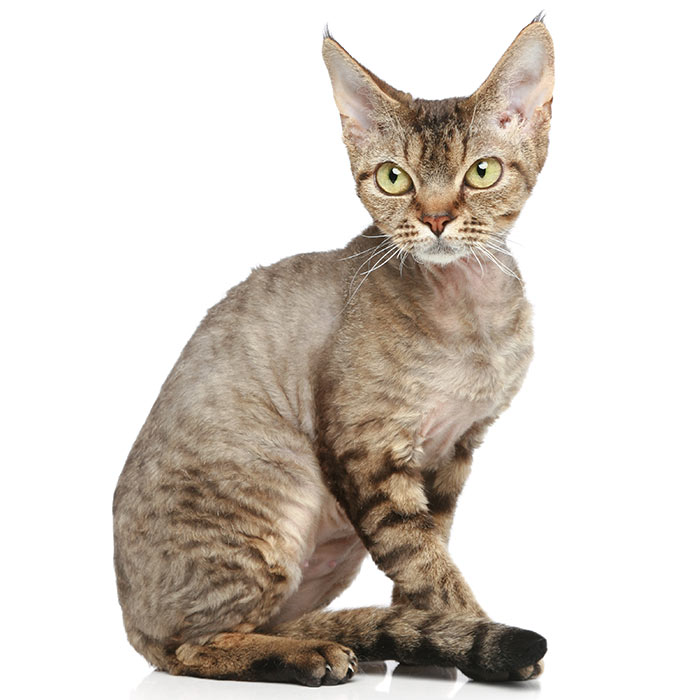
Devon Rexes are affectionate, playful, small- to medium-sized cats with wide-set eyes, large, bat-like ears and a fine, curly coat. Highly social and intelligent, they thrive on interaction with their family, often following them around the house. They require frequent interaction and enrichment and can be trained to walk on a leash, play fetch and learn commands.
| Recommended for | Families, singles |
| Breed Classification | Shorthair / Rex-type |
| Other names | Devon, Pixie cat |
| Lifespan | 12–16 years |
| Size | Small to medium |
| Temperament | Playful, affectionate and curious |
| Intelligence | Highly intelligent and inquisitive; they enjoy learning tricks, playing games, and being part of household activity |
| Tendency to vocalise | Talkative but not noisy; soft chirps, trills, and peeps along with contented purrs |
| Maintenance Level | Minimal grooming; regular interaction and mental stimulation |
| Health Risk | Though generally healthy, they may be prone to hereditary conditions such as patellar luxation and hypertrophic cardiomyopathy. |
Thinking of insuring a Devon Rex?
Explore the Top 5 health issues claimed for Devon Rexes, including highest claims paid and how much pet insurance could help you save on eligible vet bills.
See Devon Rex pet insurance Ready to get cover? Get a quick quote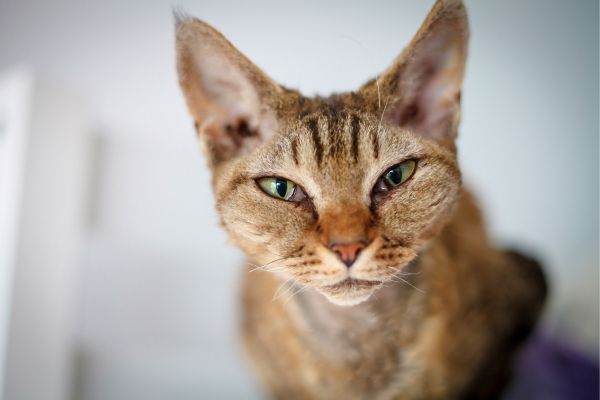
Devon Rex personality and temperament
Devon Rex cats are playful, affectionate, and highly social. They form strong bonds with their families and often seek out constant interaction, following their humans from room to room. Despite their energetic nature, they are also happy to curl up and relax after playtime.
Their curious and outgoing personality makes them excellent companions for families, singles, or households looking for an affectionate, playful, and interactive companion. They thrive in homes where they receive plenty of attention and mental stimulation.
The Devon Rex is an incredibly intelligent breed of cat. Unlike many other cat breeds, the Devon Rex is highly trainable and can be taught how to walk on a leash, play fetch, and learn tricks such as sit and jump – much like a dog.
A highly adaptable breed that thrives in indoor environments, Devons are very well-suited for apartment living. They don’t need large spaces but do benefit from vertical areas to climb and perch and their need for stimulation makes interactive toys and regular play sessions essential for apartment dwellers.
Devon Rexes with kids and other pets
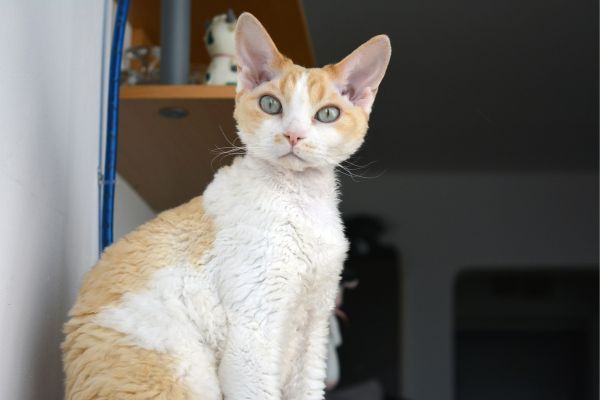
The Devon Rex is one of the most people-oriented and sociable cat breeds, making them generally excellent with kids. Their clownish, energetic and affectionate nature makes them a hit with children who want an active, engaging cat with whom they can enjoy games of fetch and interactive play. They are tolerant of gentle handling, though, like any cat, they need to be treated with respect.
Devon Rexes typically get along well with other pets, even cat-friendly dogs, and their tolerant, friendly nature helps them adapt to multi-pet environments. Adaptable and sociable, they enjoy companionship and don’t like being left alone for long.
Devon Rex training and exercise
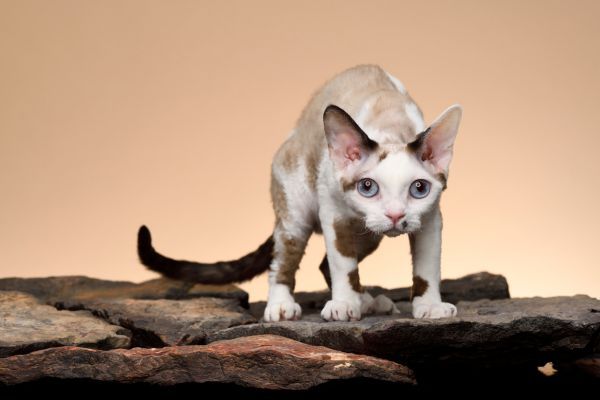
Devon Rex cats have high energy levels and are playful and active – they are sometimes referred to as “a monkey in a cat suit”! They love to jump, so it is a good idea to place any breakables somewhere they can’t get to.
Devon Rexes will benefit from daily physical and mental stimulation. They enjoy climbing, chasing toys, and interactive play with their family. Providing cat trees, shelves, and puzzle toys helps keep them engaged and supports their natural curiosity. Regular playtime is essential to prevent boredom and keep them healthy and happy.
| Energy level | Very high |
| Exercise requirements | High; daily physical and mental stimulation |
Common health issues for Devon Rexes
What do Devon Rex owners claim for the most?
-
Hypertrophic cardiomyopathy (HCM) is a heart condition that causes thickening of the heart muscle, which can affect circulation. Routine vet check-ups and early screening are important for managing this condition.
-
Patellar luxation is a condition where the kneecap slips out of place, causing discomfort or lameness. In mild cases, it may not require treatment, but regular monitoring is essential.
-
Skin conditions, including yeast infections or sensitivity, can occur due to the breed’s fine, thin coat. Gentle grooming, a balanced diet, and proper hygiene help support skin health.
-
Dental disease can also affect Devon Rex cats, particularly as they age. Regular tooth brushing and dental checks help prevent issues and support overall wellbeing.
- Congenital hypotrichosis is a rare condition causes the cat to be born hairless and with an immune deficiency that leads to increased susceptibility to infection and can lead to death.
- Hip dysplasia is a heritable condition in which the thighbone does not fit correctly with the hip joint. It can cause pain, lameness and eventually arthritis; however some cats do not show any symptoms. Treatment is available in the form of weight loss, medication, diet, and surgery in serious cases.
Not all conditions are covered by Pet Insurance. For details of Bow Wow Meow Pet Insurance cover, refer to the Product Disclosure Statement.
How to choose the right insurance for your Devon Rex
When comparing cover for your Devon Rex, look for:

Cover for common Devon Rex conditions:
Check that the policy covers conditions Devon Rexes can be prone to, including common health issues.

Cover for hereditary conditions:
No exclusions for hereditary or congenital conditions⑅.

Flexible cover options:
Options to adjust your annual benefit limit, reimbursement rate and excess.
Bow Wow Meow's Nose-to-Tail Cover offers flexible options for your Devon Rex, with cover for accidental injuries, illnesses and hereditary conditions⑅. Get a quick quote for cover that suits your Devon Rex and your budget.
Devon Rex feeding and nutrition
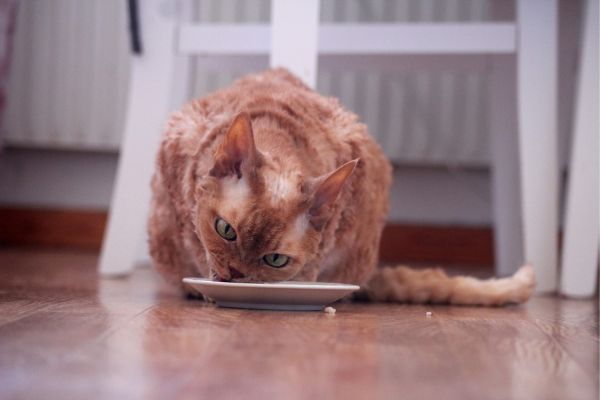
The Devon Rex thrives on a balanced diet that supports its lean, muscular build and high energy levels. A high-quality diet rich in protein is essential to maintain their metabolism and muscle tone. A combination of wet and dry food helps promote hydration, digestive health, and dental care. Look for food with essential fatty acids, vitamins, and minerals to support skin, coat, and overall wellbeing.
Portion control is important, as Devon Rex cats have a healthy appetite and can be prone to overeating. Meals should be divided into two or three servings per day to help manage their weight and energy levels. Fresh water should be available at all times, and it’s best to consult your vet for specific dietary advice based on your Devon Rex’s age, activity level, and overall health.
Devon Rex care and grooming
The Devon Rex has a short, soft coat that requires minimal grooming. Brushing is not recommended too frequently, as their delicate fur can become damaged or patchy. Instead, occasional gentle wiping with a soft cloth or grooming mitt is usually enough to remove loose hairs.
While all cats shed, Devons certainly shed less than most; they are easy-care, wash-and-wear cats that may be well tolerated by those sensitive to cats. Contrary to popular belief, though, they are not hypoallergenic.
Routine care should also include regular ear cleaning, as their large ears can accumulate wax, along with nail trimming and dental hygiene to support long-term health.
Devons are sensitive to cold due to their short, fine coat and may need extra warmth during cooler months. They adapt well to moderate climates but should be kept indoors during very cold or hot weather to protect their health and comfort.
Size, appearance and coat of Devon Rexes
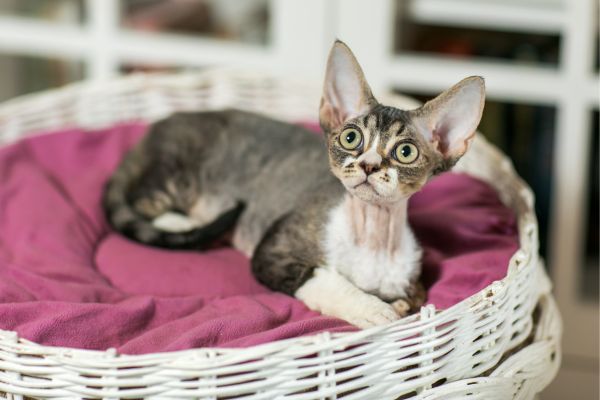
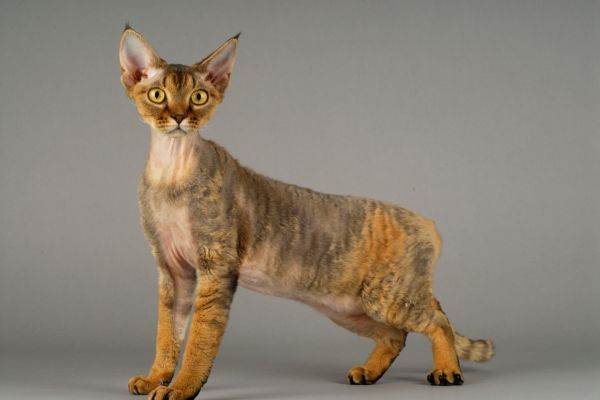
The Devon Rex is a unique-looking cat breed with an elfin appearance and a pixie-like expression. Small to medium-sized, they look quite delicate because of their fine bones and long legs, but their bodies are surprisingly strong and athletic. Their distinctive appearance is characterised by large wide-set eyes, prominent cheekbones, short muzzles, very large, bat-like, low-set ears ears and long, tapered tails.
Most Devon Rex cats have gold, green, or hazel eyes, while those with pointed coats (like a Siamese-pattern Devon Rex) usually have blue eyes. White Devon Rexes may have blue, gold, or odd eyes (two different colours).
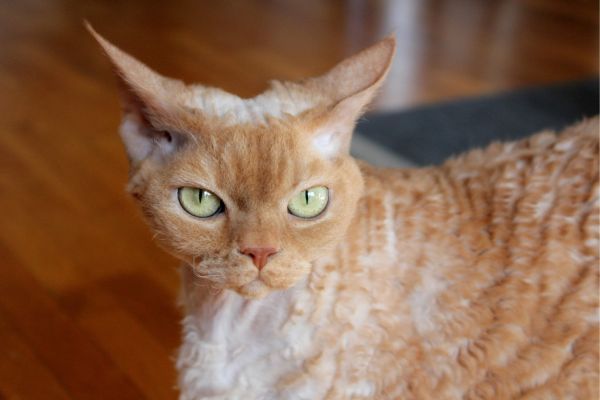
One of the most unique features of the Devon Rex is its soft, curly coat, which is quite different from the smooth fur of most shorthair cats. The fur is short, fine, and wavy or loosely curled due to a genetic mutation affecting the hair shaft. Some may have thinner fur on the underparts, chest, or even bald patches. The feel of the coat is often compared to suede, velvet, or lamb’s wool. The coat comes in a large variety of colours and patterns and requires minimal grooming.
| Weight range | Males: 3.5 to 4.5 kg; females: 2.5 to 4 kg |
| Height range | 25–30 cm (10–12 in) at the shoulder |
| Colours | Every colour and pattern, including solid, bi-colour, tabby, tortoiseshell , colourpoint, smoke and shaded |
| Coat length | Short, soft, fine and wavy or loosely curled |
Breed history of Devon Rexes
The breed originated in Devon, England, in the late 1950s when a curly-coated male kitten was born to a stray. The kitten’s unusual appearance, amusing antics and loving nature earned him a home with Beryl Cox, who named him Kirlee.
Kirlee was initially believed to be a mutation of the Cornish Rex, but genetic testing confirmed that the Devon Rex was a distinct mutation. Breeders began selectively developing the Devon Rex for its unique coat and lively personality, crossing Kirlee’s offspring with several other breeds over the years, resulting in one of the broadest variety of colours and patterns of any breed.
The breed gained official recognition in the 1960s. Kirlee is credited with the establishment of the breed, and all modern Devon Rex cats should be traceable back to him.
Devon Rex facts!
- Devon Rex have recently been named the most popular of all shorthaired breeds (based on CFA registration statistics).
- The Devon Rex is not only capable of recognising its own name but that of its owner, too.
- They have been variously been referred to as the Pixie cat, a cross between a cat, a dog, a monkey, and Dennis the Menace.
- Don’t be surprised if your Devon tries to join you in the shower or falls into the bathtub with you.
- Devons have a robust appetite and some may have exotic tastes; fruit and vegetables may be as appealing as chicken or fish!
Summary
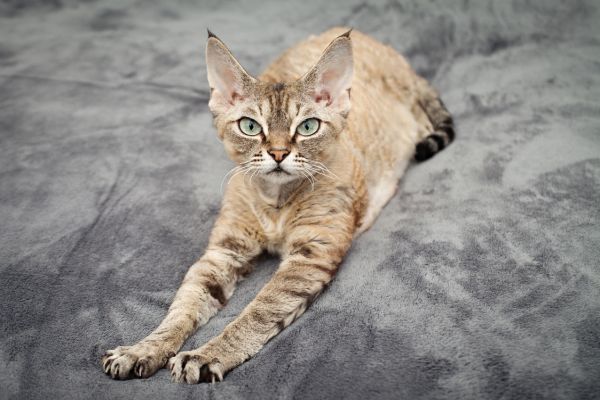
The Devon Rex is an affectionate and playful small-to-medium cat with wide-set eyes, large bat-like ears and a fine, curly coat. Highly social and intelligent, it thrives on interaction and often follows its family around the home.
Devon Rexes need frequent engagement and enrichment and can enjoy learning behaviours such as walking on a lead, playing fetch and responding to commands. They suit owners who want an active, interactive cat and have plenty of time to include it in daily life.
FAQs about the Devon Rex
Yes. Devon Rex cats are typically affectionate, playful and highly people-oriented, making them engaging companions for families that enjoy an interactive cat.
They often do well with respectful children, other cats and cat-friendly dogs, particularly because many enjoy company and active play.
They are energetic and agile cats that enjoy climbing, jumping, games and exploring high places around the home.
Yes. They are clever, curious and often mischievous, and many enjoy learning tricks or solving food puzzles.
They are usually moderately vocal and expressive, often communicating with soft meows, chirps and purrs.
They do shed, but their short, fine, wavy coat may release less visible hair than many breeds. The delicate coat should be handled gently rather than over-brushed.
Some do. Their fine coat and large ears can allow oil and wax to build up, so gentle skin and ear care may be needed depending on the individual cat.
Inherited concerns include congenital myasthenic syndrome, and genetic testing is available for this condition. Other inherited disorders have also been reported in some lines.
MORE INFORMATION
The Devon Rex Breed Club: https://devonrexbreedclub.com/
Rex Cat Club: https://rexcatclub.co.uk/pages/devon-rex

Get 2 months free for your kitten!
Cover your kitten from Nose-to-Tail
To ensure your precious fur baby is covered from the start, we'd like to offer your first 2 months of our Nose-to-Tail Cover for free2!
Get a quick quote