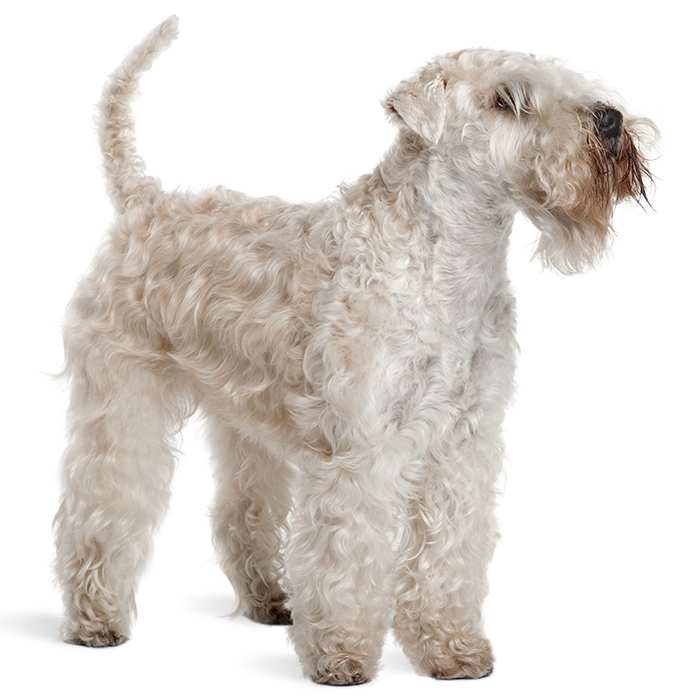
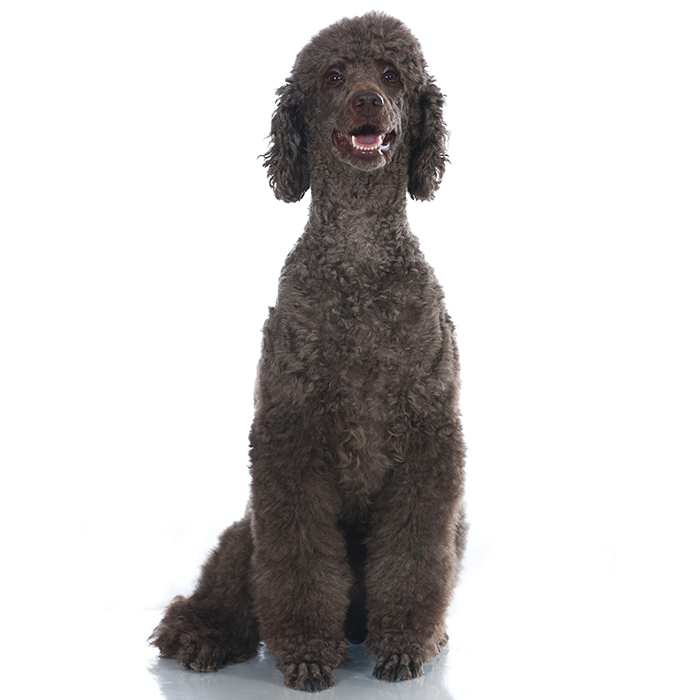
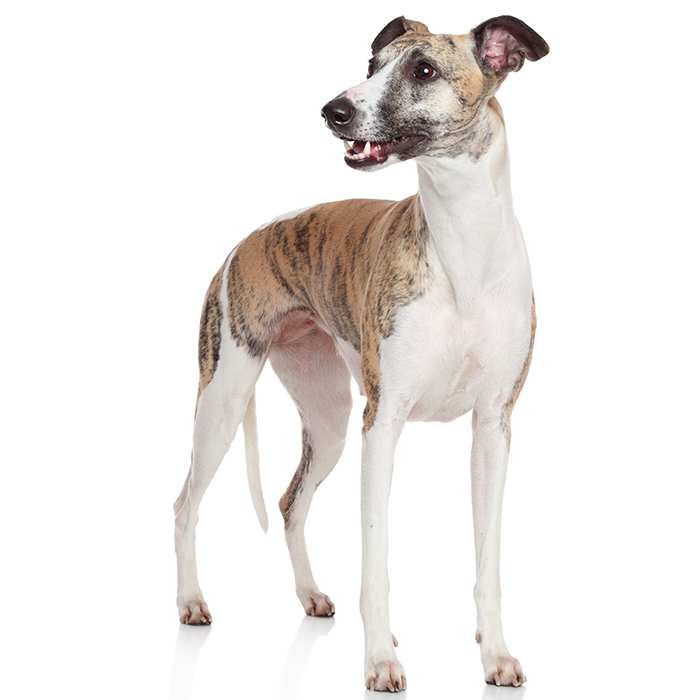
Is the Bedlington Terrier a good family dog?


Bedlington Terrier
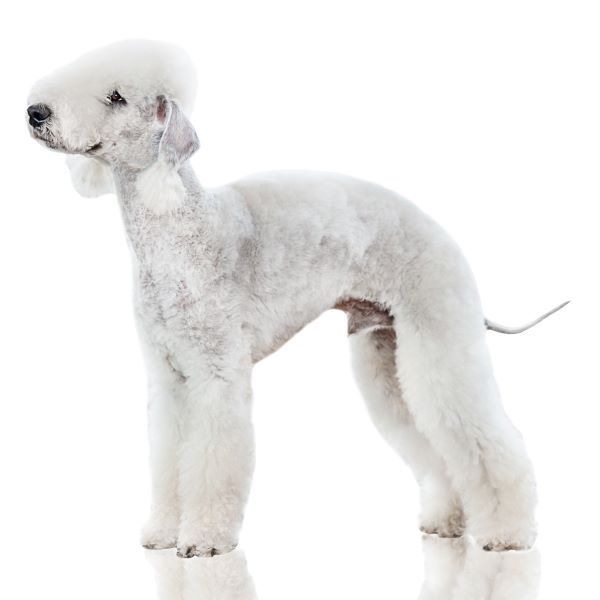
Bedlington Terriers are distinctive small- to medium-sized dogs known for their lamb-like appearance, athletic build and affectionate, spirited personality. Originally bred to catch small game, they combine strong sporting instincts with a gentle companion side.
| Recommended for | Active families and individuals |
| Breed Classification | Terriers |
| Other names | Rothbury Terrier , Rodbery Terrier, Rothbury's Lamb |
| Lifespan | 12-16 years |
| Size | Medium |
| Temperament | Affectionate, good-tempered, spirited |
| Intelligence | High: curious, fast learners, but retain an independent terrier streak |
| Tendency to bark | Moderate: alert and responsive, and may bark at unfamiliar activity or when bored |
| Maintenance Level | High: very low shedding, but the distinctive coat needs frequent brushing and clipping roughly every 6–8 weeks |
| Health Risk | Bedlington Terriers are generally robust, but with an important inherited risk of copper storage disease, patellar luxation and several eye conditions, with CDDY/IVDD currently being investigated as an emerging breed concern. |
Thinking of insuring a Bedlington Terrier?
Explore the Top 5 health issues claimed for Bedlington Terriers, including highest claims paid and how much pet insurance could help you save on eligible vet bills.
See Bedlington Terrier pet insurance Ready to get cover? Get a quick quote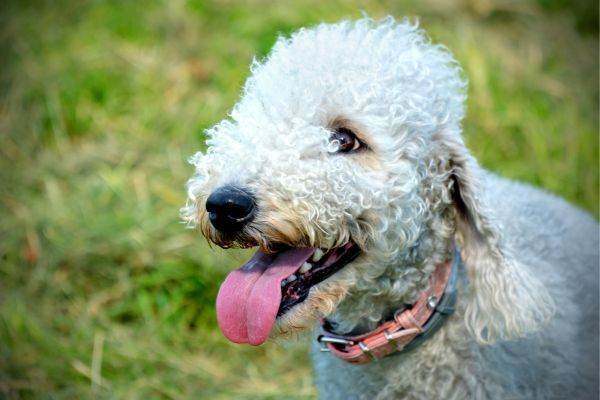
Bedlington Terrier personality and temperament
Bedlington Terriers are generally affectionate, good-tempered and lively dogs that form strong bonds with their families. They are playful and intelligent, with a gentler demeanour at home than their working-terrier history might suggest, but still retain plenty of confidence, curiosity and sporting instinct.
Although often relaxed indoors, Bedlingtons are still terriers and can have a strong prey drive, particularly towards small animals. Some may also be initially reserved around unfamiliar people, so early socialisation and positive experiences with different people, dogs and environments are important.
Bedlington Terriers with kids and other pets
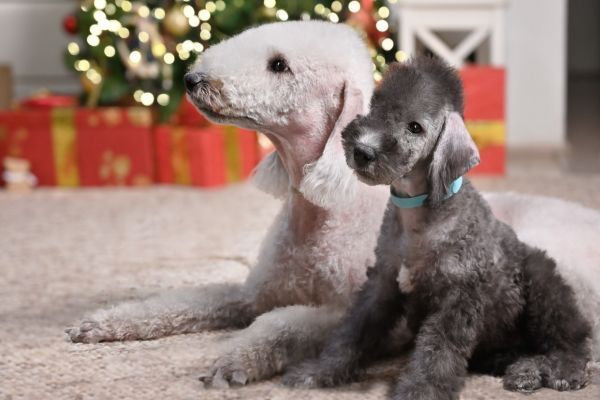
Well-socialised Bedlington Terriers can make affectionate family companions and often enjoy playing with children. Because individual temperament varies, interactions with young children should always be supervised and children should be taught to handle dogs gently and respect their space.
Bedlingtons can live successfully with other dogs and cats when introduced and socialised appropriately. However, their strong hunting instincts mean smaller animals may trigger chasing behaviour, so supervision and careful management are important around small pets.
Bedlington Terrier training and exercise
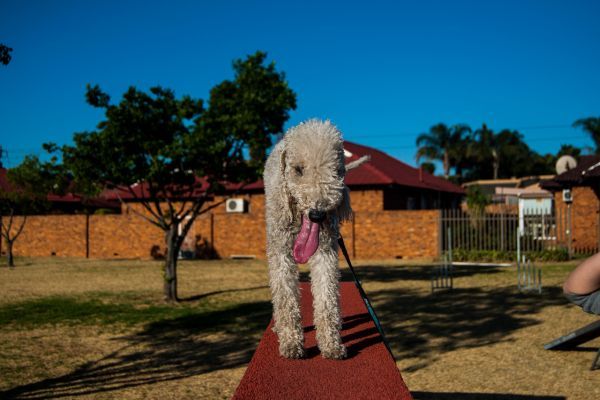
Bedlington Terriers are moderately active dogs that generally benefit from up to around an hour of physical exercise each day. Daily walks, play and opportunities to run safely can be combined with activities such as agility, scent work, rally, fetch or swimming to help satisfy their sporting instincts.
They are intelligent and generally respond well to positive reinforcement, but their independent terrier nature can sometimes make them strong-willed or easily distracted. Short, varied training sessions, patience and consistency tend to work best. Mental enrichment such as puzzle toys and nose work can also help prevent boredom.
| Energy level | Medium to high |
| Exercise requirements | Moderate: around 45–60 minutes per day for most healthy adults, plus regular play and mental enrichment |
Common health issues for Bedlington Terriers
What do Bedlington Terrier owners claim for the most?
Bedlington Terriers are generally robust and long-lived dogs, but they can be predisposed to several inherited conditions. Responsible breeders should undertake breed-appropriate health screening, particularly for copper storage disease, eye conditions and patellar luxation.
- Copper storage disease (copper toxicosis) is the most important inherited health concern associated with the breed. Excess copper accumulates in the liver and can eventually cause inflammation, chronic liver disease or liver failure. A major inherited form is associated with a mutation in the COMMD1 gene, for which DNA testing is available. Responsible breeding has substantially reduced the prevalence of this form of the disease, although other genetic influences on copper accumulation are also being investigated.
- Patellar luxation occurs when the kneecap slips out of its normal position. Mild cases may cause intermittent skipping or lameness, while more severe cases can result in pain and arthritis and may require surgery. Patellar screening is recommended for breeding Bedlington Terriers.
- Eye conditions reported in Bedlington Terriers include cataracts, persistent pupillary membranes and abnormal eyelashes that can irritate the eye. Specialist eye screening is recommended in responsible breeding programs.
- Intervertebral disc disease (IVDD) risk is currently being investigated. In 2026, the Bedlington Terrier Club of America reported that the FGF4 retrogene associated with chondrodystrophy and increased IVDD risk had been identified in Bedlingtons in Europe and North America. However, the prevalence and overall significance for the breed are not yet known, so this is more of an emerging health issue than a common established condition.
Not all conditions are covered by Pet Insurance. For details of Bow Wow Meow Pet Insurance cover, refer to the Product Disclosure Statement.
How to choose the right insurance for your Bedlington Terrier
When comparing cover for your Bedlington Terrier, look for:

Cover for common Bedlington Terrier conditions:
Check that the policy covers conditions Bedlington Terriers can be prone to, including common health issues.

Cover for hereditary conditions:
No exclusions for hereditary or congenital conditions⑅.

Flexible cover options:
Options to adjust your annual benefit limit, reimbursement rate and excess.
Bow Wow Meow's Nose-to-Tail Cover offers flexible options for your Bedlington Terrier, with cover for accidental injuries, illnesses and hereditary conditions⑅. Get a quick quote for cover that suits your Bedlington Terrier and your budget.
Bedlington Terrier feeding and nutrition
Bedlington Terriers should be fed a complete and balanced diet appropriate for their age, body condition, health and activity level. Portion sizes should be adjusted to maintain a healthy weight, and additional supplements are generally unnecessary unless recommended by a veterinarian.
Dogs affected by or considered at increased risk of copper storage disease may require a veterinarian-directed diet with controlled copper levels. A low-copper diet should not automatically be given to every Bedlington Terrier; dietary management should be based on the individual dog’s health and veterinary advice.
Bedlington Terrier care and grooming
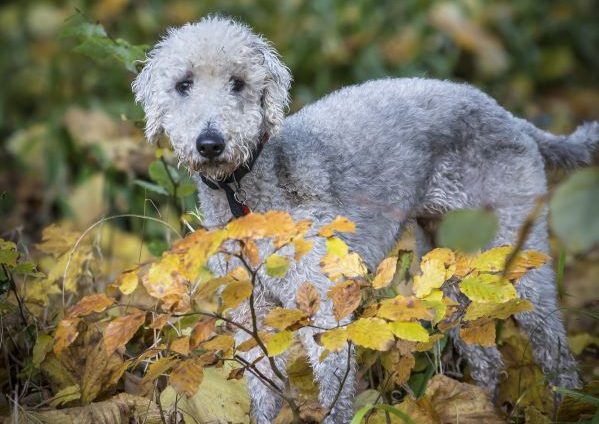
Bedlington Terriers have a distinctive low-shedding coat that requires considerable upkeep. The thick, linty hair tends to twist and can mat if neglected, so most dogs benefit from thorough brushing several times a week.
Regular clipping and scissoring are needed to keep the coat manageable and maintain the characteristic Bedlington shape, with many dogs professionally groomed approximately every 6–8 weeks. Particular attention should be paid to the face, ears, feet and areas prone to tangling. Routine nail, ear and dental care should also form part of their grooming routine.
Size, appearance and coat of Bedlington Terriers
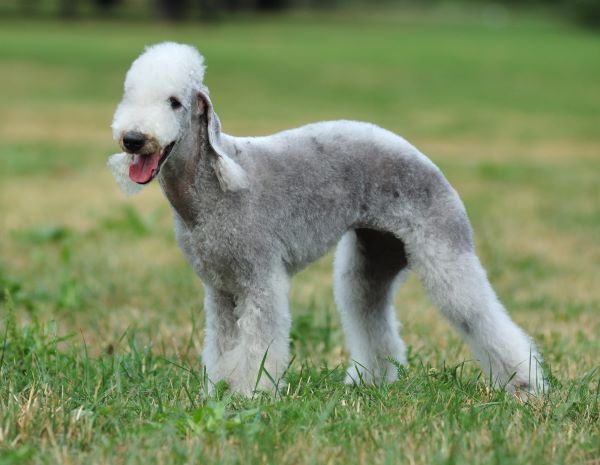
The Bedlington Terrier is a graceful, lithe and muscular dog with a distinctive lamb-like silhouette. Its narrow, pear- or wedge-shaped head is topped by a profuse silky topknot, while the arched loin, deep chest and long, tapering limbs give the breed an elegant but athletic appearance. The ears are low-set, thin and filbert-shaped with a characteristic silky fringe at the tips.
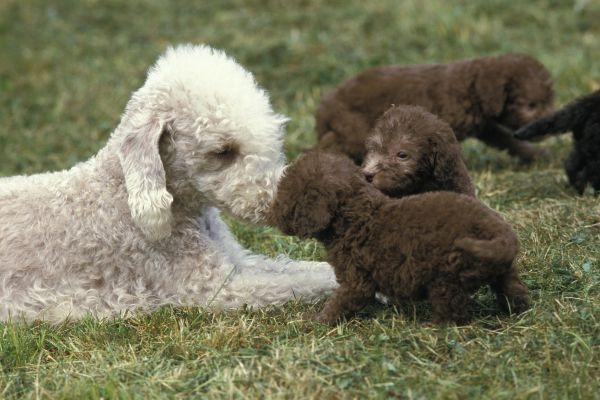
The coat is thick and “linty”, standing away from the skin with a tendency to twist, particularly around the head and face, but it should not be wiry. Recognised colours are blue, liver or sandy, with or without tan. Puppies are often born considerably darker and their coats typically lighten as they mature.
| Weight range | 8–10 kg |
| Height range | About 41 cm, slightly smaller in females and slightly taller in males |
| Colours | Blue, blue & tan, liver, liver & tan, sandy, sandy & tan |
| Coat length | Medium; a thick, linty, low-shedding coat with a characteristic tendency to twist |
Breed history of Bedlington Terriers
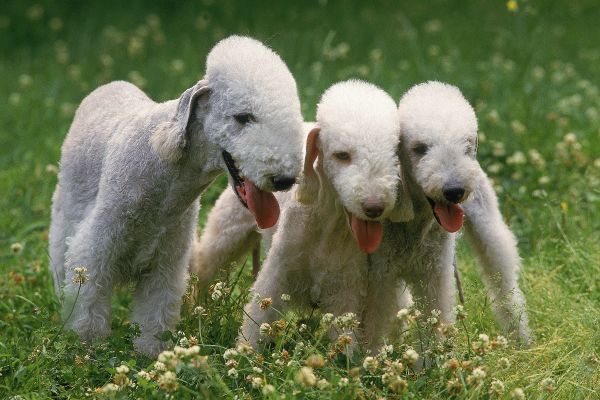
The Bedlington Terrier developed in Northumberland in north-east England and was initially known as the Rothbury Terrier. Dogs of this type were valued by miners, hunters and local landowners for controlling rats and other vermin and for hunting game both above and below ground. The name Bedlington Terrier began to be used during the early 19th century, with dogs from the area becoming increasingly identifiable as a distinct type.
The breed’s precise ancestry is still debated. Dandie Dinmont-type terriers and Otterhound influence have long been suggested, while Whippet ancestry is frequently proposed because of the Bedlington’s speed and sighthound-like outline, although this is not conclusively documented.
Bedlingtons later became popular in the show ring while retaining the speed, stamina and courage of their working ancestors. The breed was first exhibited at dog shows during the 1870s, and the distinctive clipped, lamb-like appearance became increasingly established during the Victorian era.
Explore related breeds
Bedlington Terrier facts!
- Bedlington puppies are born much darker than adults and usually lighten considerably as they grow.
- The breed can gallop surprisingly fast; its official standard specifically says a Bedlington should look capable of galloping at high speed.
- Bedlington pedigrees can be traced unusually far back, with early lines linked to dogs recorded in the late 18th century.
- The breed was known as the Rothbury Terrier before the name Bedlington Terrier came into use.
- Their famous lamb-like show trim has been used since at least the late 1800s, although its exact origin is uncertain.
- They are adaptable to urban or rural living with enough exercise.
Summary
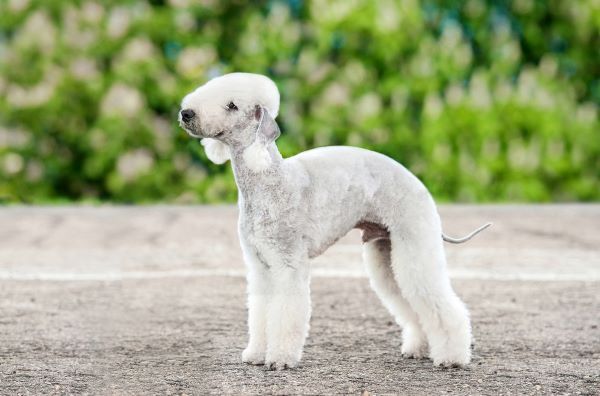
The Bedlington Terrier is a distinctive and charming breed, easily recognised by its lamb-like appearance and lively nature. Small to medium in size, this energetic, affectionate, and intelligent dog makes a great companion for active individuals or families. Bedlingtons are versatile and can thrive in both urban and rural settings, but they do need regular exercise and mental challenges to stay happy and content.
With their low-shedding, hypoallergenic coat and gentle, playful personality.
Bedlington Terriers are a great fit for families with children and those with allergies. While affectionate and loving, they also have a protective side, which makes them excellent watchdogs. All in all, the Bedlington Terrier is an ideal choice for anyone looking for a lively, loyal, and affectionate companion.
FAQs about the Bedlington Terrier
They can be lively, affectionate family companions, particularly for owners who enjoy an energetic, confident terrier personality.
Moderate to high. Daily walks, play and mental enrichment are important, with regular opportunities for more active exercise.
They are intelligent but can be independent or strong-willed, so patient, consistent reward-based training and early socialisation are important.
They are generally low to moderate or moderate barkers, although barking can increase with boredom, excitement, anxiety or unfamiliar activity.
They are relatively low shedding, but their coat or skin still requires regular grooming and maintenance to stay healthy and free of mats.
They can adapt to apartment living in the right circumstances, but owners need to meet their daily exercise, enrichment and behavioural needs consistently.
They can live well with respectful children and other dogs, but terrier prey drive may make small pets tempting to chase and dog-to-dog compatibility varies.
Potential health concerns include copper toxicosis, eye disease, kidney problems and patellar luxation.
Bedlington Terrier puppies are usually born much darker than they appear as adults. A greying gene causes the coat to lighten as the dog matures, producing the characteristic blue, liver or sandy adult colouring. The coat may also temporarily grow back darker after an injury.
MORE INFORMATION
The National Bedlington Terrier Club: https://nationalbedlingtonterrierclub.co.uk/
Bedlington Terrier Club of America: https://www.bedlingtonamerica.com/

Get 2 months free for your puppy!
Congrats on your new bundle of joy
To ensure your precious fur baby is covered from the start, we'd like to offer your first 2 months of our Nose-to-Tail Cover for free2!
Get a quick quote