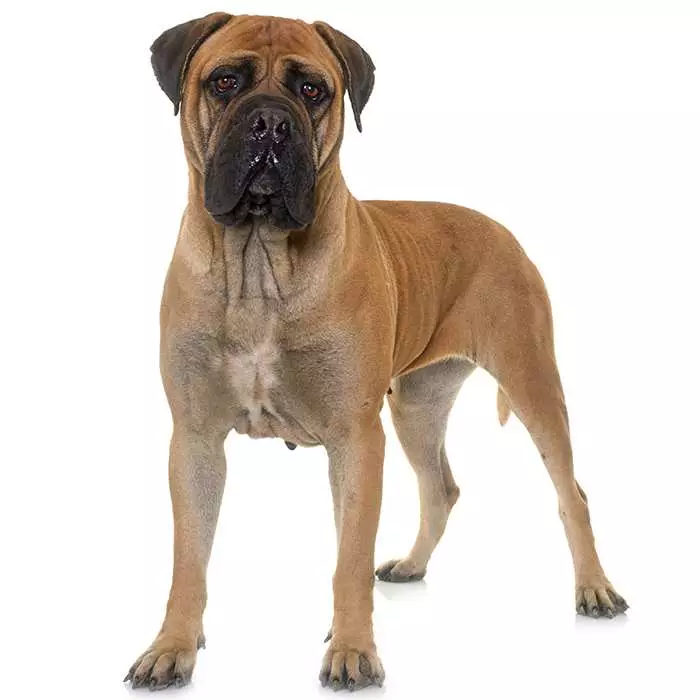
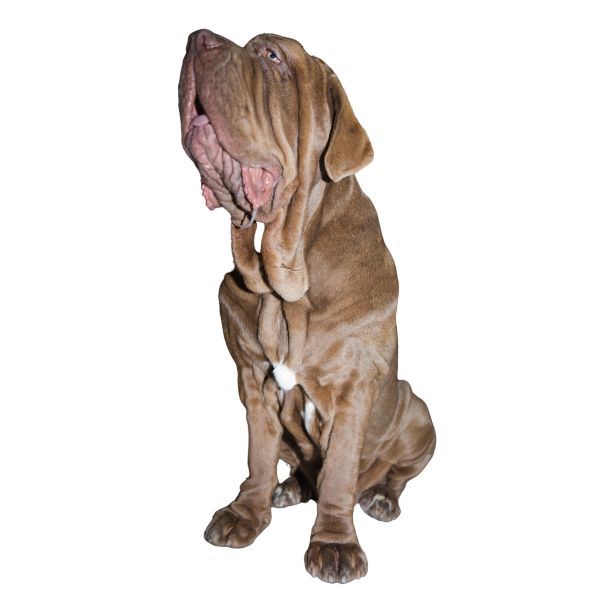
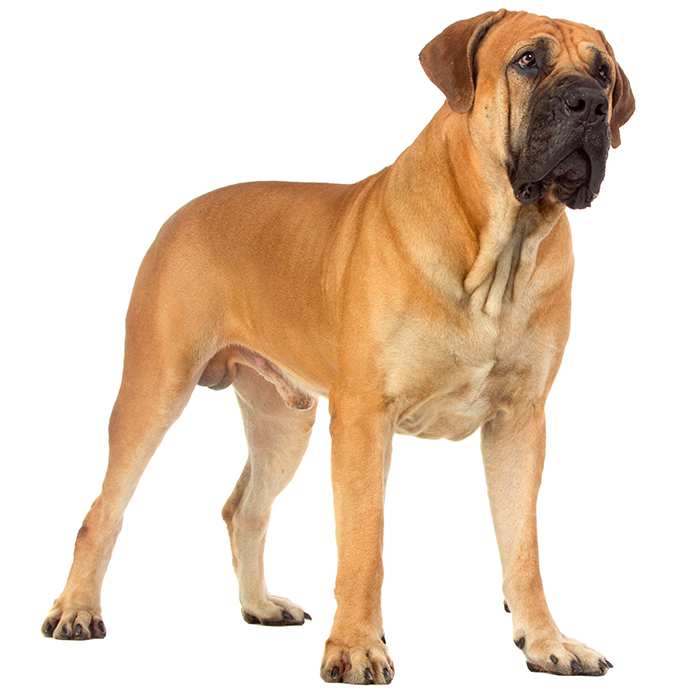
Is the Dogue De Bordeaux a good family dog?


Dogue De Bordeaux
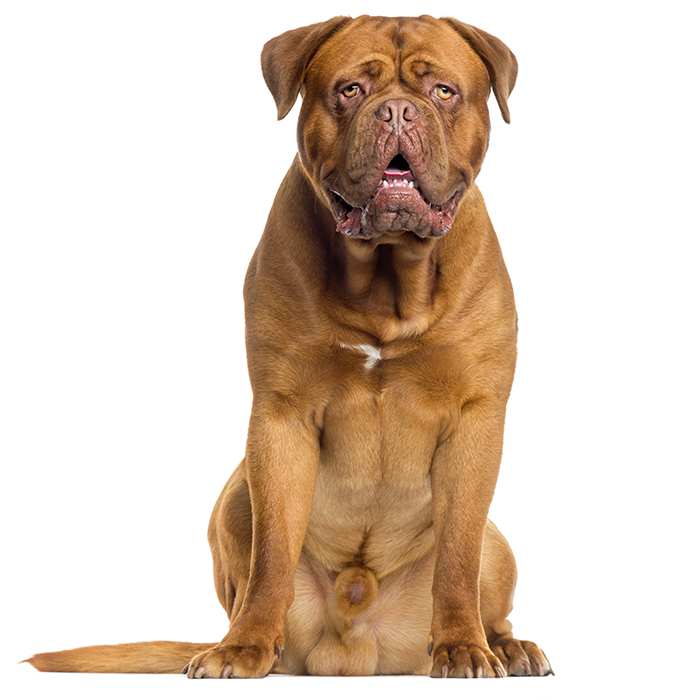
Dogue de Bordeaux are powerful and affectionate large dogs with a muscular build, broad head and calm, imposing presence. Originally developed in France as working and guard dogs, they are known for their loyalty, courage and strong protective instincts. Generally devoted and gentle with their family, Dogue de Bordeaux can be wary of strangers and need confident handling, early socialisation and consistent training due to their size and strength.
| Recommended for | Experienced owners with space who can confidently manage a large, powerful and protective dog. |
| Breed Classification | Working Group |
| Other names | French Mastiff, Bordeaux Mastiff |
| Lifespan | 5 to 8 years |
| Size | Giant |
| Temperament | Devoted, calm, protective and powerful |
| Intelligence | Generally intelligent; best results come from patient, positive and consistent training |
| Tendency to bark | Low to moderate; protective alerting |
| Maintenance Level | Low coat care; clean facial wrinkles |
| Health Risk | Dogue De Bordeauxs can be prone to several inherited or structure-related health concerns, so health testing, weight management and early veterinary advice are particularly important. |
Thinking of insuring a Dogue De Bordeaux?
Explore the Top 5 health issues claimed for Dogue De Bordeauxes, including highest claims paid and how much pet insurance could help you save on eligible vet bills.
See Dogue De Bordeaux pet insurance Ready to get cover? Get a quick quote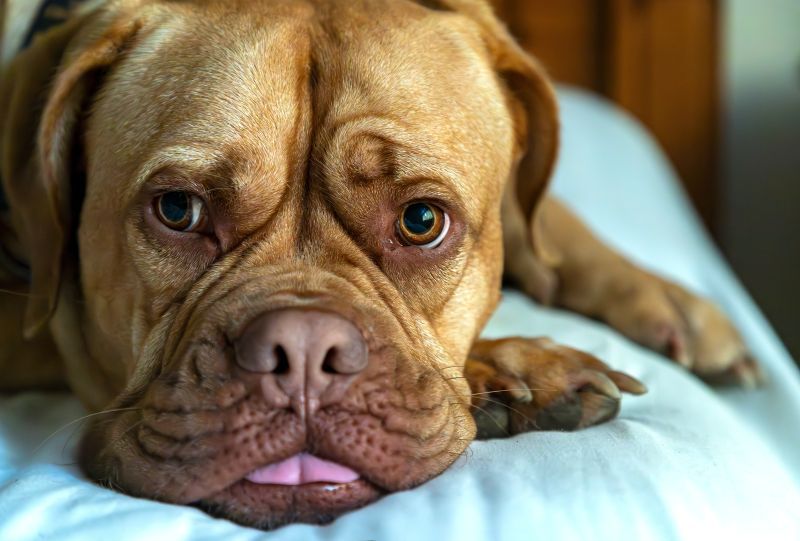
Dogue De Bordeaux personality and temperament
The Dogue de Bordeaux is calm, loyal and deeply devoted to its family. Although powerful and imposing in appearance, it is often gentle and affectionate with those it knows and trusts.
This breed can be naturally protective and reserved with strangers, so early socialisation and confident handling are important. The Dogue de Bordeaux responds best to calm, consistent training and is best suited to owners who understand large, strong guardian breeds.
Dogue De Bordeauxes with kids and other pets
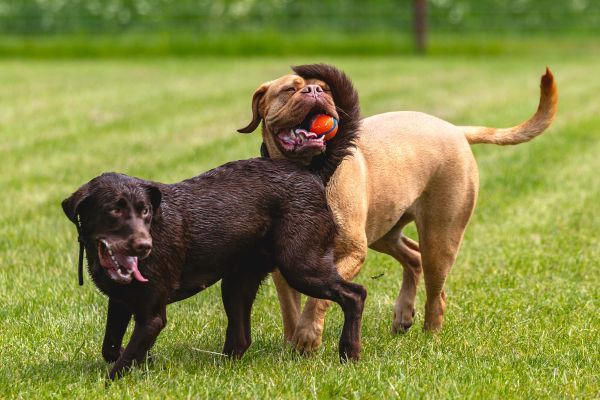
Dogue de Bordeaux can be gentle and devoted with children in their own family, but their large size and strength mean they require careful supervision. They are best suited to homes with children who understand respectful behaviour and where adults can manage interactions confidently.
With other pets, Dogue de Bordeaux may do well when raised with them, but they can be protective and sometimes dominant with unfamiliar dogs. Early socialisation, controlled introductions and confident handling are especially important.
Dogue De Bordeaux training and exercise
Dogue de Bordeaux need moderate, controlled exercise to maintain fitness without placing too much strain on their joints, especially while growing. Daily walks and gentle play are usually suitable, while excessive running, jumping or high-impact activity should be avoided, particularly in puppies and young dogs.
Training should begin early because this is a large, powerful breed. Calm, consistent and positive methods work best, with a strong focus on lead manners, impulse control and socialisation. Owners should establish clear boundaries while avoiding harsh handling, as confidence and trust are important.
| Energy level | Low to Moderate |
| Exercise requirements | Moderate - controlled walks and low-impact activity |
Common health issues for Dogue De Bordeauxes
What do Dogue De Bordeaux owners claim for the most?
- Hip dysplasia: A developmental condition where the hip joint forms abnormally, causing looseness, pain and reduced mobility. Genetics are a major factor, while rapid growth, excess weight and inappropriate exercise can worsen symptoms. Early diagnosis, weight control and veterinary care can help manage the condition.
- Elbow dysplasia: A developmental condition where the elbow joint forms abnormally, causing front-leg pain, stiffness and lameness. It can lead to progressive arthritis over time. Genetics are a major factor, while growth rate, diet, exercise and weight can influence severity. can influence severity.
- Heart disease: A broad term for conditions affecting the heart’s valves, muscle, rhythm or structure, which can reduce how well the heart pumps blood. Signs may include coughing, breathing difficulty, tiredness, exercise intolerance, weakness, fainting or a swollen abdomen.
- Gastric Dilatation-Volvulus: A life-threatening emergency, also called bloat, where the stomach fills with gas or fluid and twists on itself. Signs may include a swollen abdomen, restlessness, drooling, unproductive retching, weakness or collapse.
- Entropion: An eyelid condition where the eyelid rolls inward, causing the eyelashes or facial hair to rub against the surface of the eye. Signs may include squinting, redness, tearing, discharge, eye rubbing, pain or corneal ulcers.
- Skin fold infections: These can occur when moisture, friction and reduced airflow in skin folds allow bacteria or yeast to overgrow. Signs may include redness, itching, odour, discharge, soreness, hair loss or darkened irritated skin in the folds.
Not all conditions are covered by Pet Insurance. For details of Bow Wow Meow Pet Insurance cover, refer to the Product Disclosure Statement.
How to choose the right insurance for your Dogue De Bordeaux
When comparing cover for your Dogue De Bordeaux, look for:

Cover for common Dogue De Bordeaux conditions:
Check that the policy covers conditions Dogue De Bordeauxes can be prone to, including common health issues.

Cover for hereditary conditions:
No exclusions for hereditary or congenital conditions⑅.

Flexible cover options:
Options to adjust your annual benefit limit, reimbursement rate and excess.
Bow Wow Meow's Nose-to-Tail Cover offers flexible options for your Dogue De Bordeaux, with cover for accidental injuries, illnesses and hereditary conditions⑅. Get a quick quote for cover that suits your Dogue De Bordeaux and your budget.
Dogue De Bordeaux feeding and nutrition
The Dogue de Bordeaux needs a carefully balanced large-breed diet that supports its powerful body, muscle mass and joints. Quality protein is important, but calories should be controlled to prevent excess weight gain, which can place strain on the joints and heart.
Puppies should be fed a diet suitable for large-breed growth to avoid overly rapid development. Adult dogs should be fed measured meals, usually split into two portions per day. Because this is a deep-chested breed, avoiding large meals and intense exercise around feeding times is recommended.
Dogue De Bordeaux care and grooming
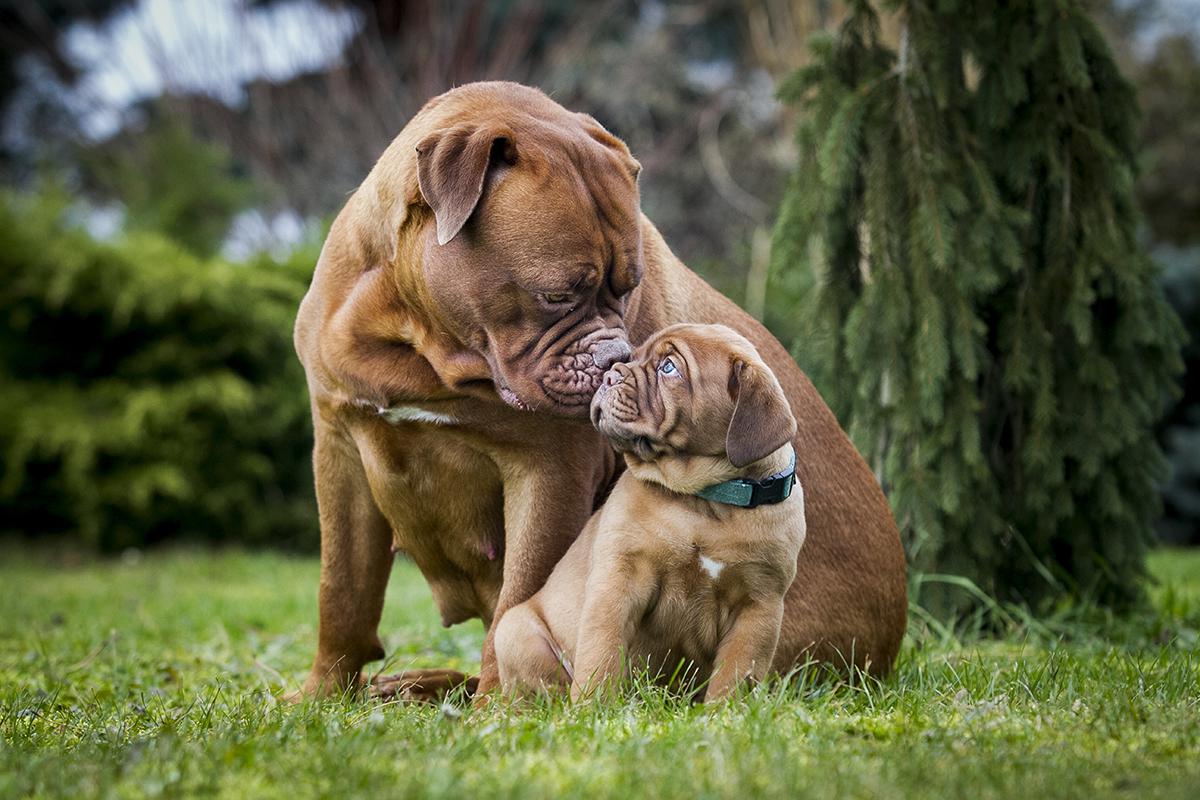
The Dogue de Bordeaux has a short, fine coat that is relatively easy to groom. Weekly brushing with a grooming mitt or soft brush helps remove loose hair and keep the coat clean. Although the coat is low maintenance, the breed’s skin folds need regular attention.
The wrinkles on the face should be checked and gently cleaned to prevent moisture, dirt and irritation from building up. Bathing should be occasional, with thorough drying around the folds. Regular nail trimming, ear checks and dental care are important, and owners should also manage drool by wiping the mouth and facial areas as needed.
Size, appearance and coat of Dogue De Bordeauxes
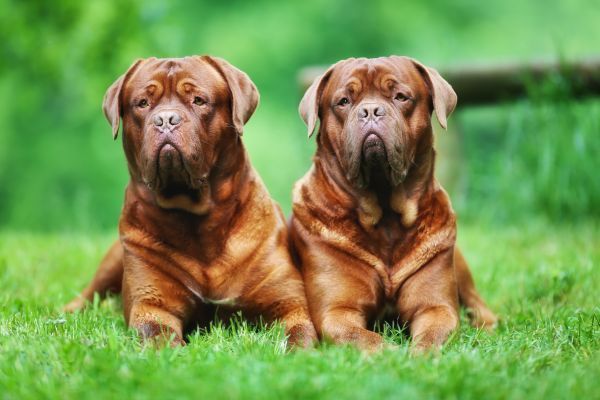
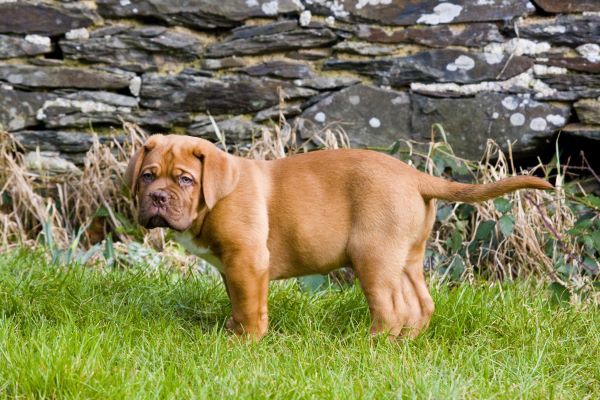
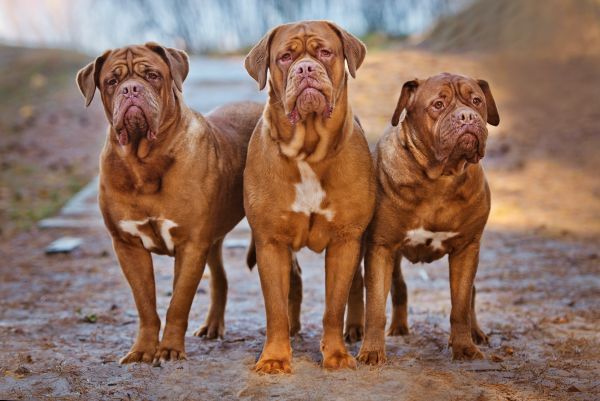
The Dogue de Bordeaux is a large, muscular mastiff-type dog with a massive head, broad chest and powerful, heavy-boned body. It has a deeply wrinkled face, strong jaws, oval eyes and a serious, imposing expression softened by its calm gaze.
Its coat is short, fine and soft to the touch, lying close to the body. Coat colours are shades of fawn, from light to deep red, often with a darker mask and sometimes small white markings on the chest or toes.
| Weight range | 45 to 68 kg |
| Height range | 58 to 68 cm |
| Colours | Fawn, mahogany or red shades, often with mask |
| Coat length | Short, fine, soft coat |
Breed history of Dogue De Bordeauxes
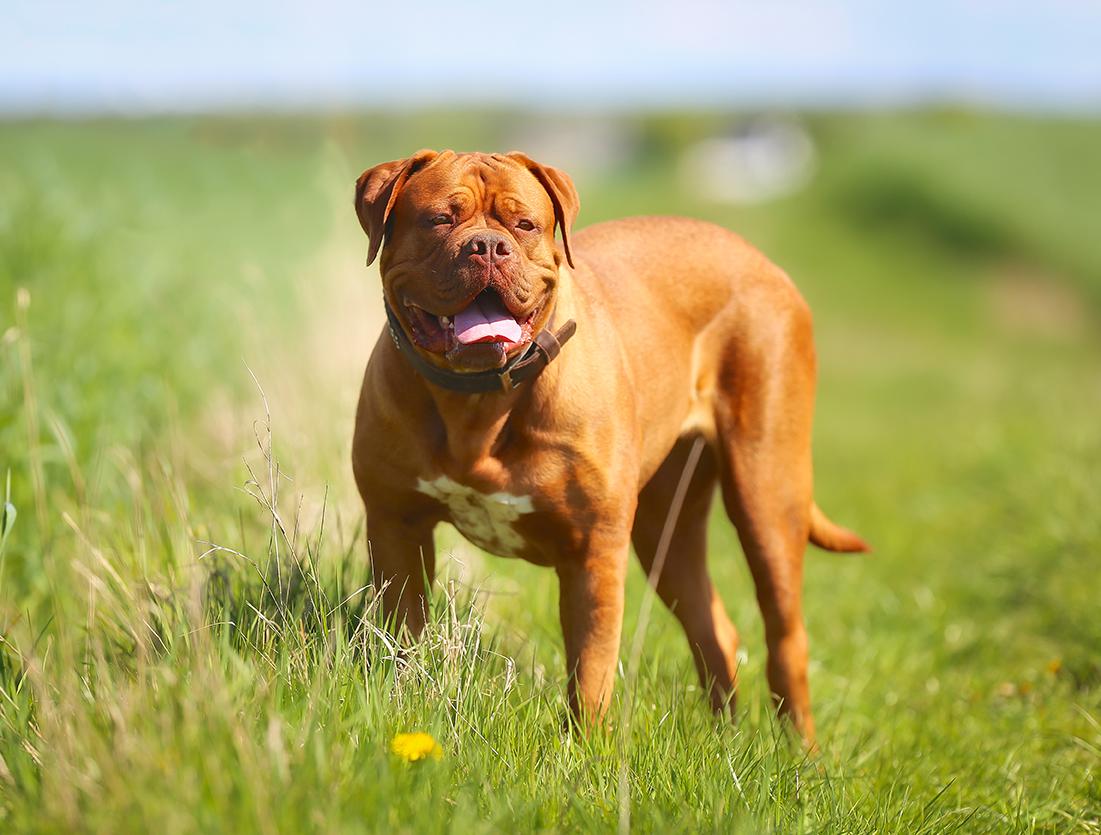
The Dogue de Bordeaux is one of France’s oldest mastiff-type breeds, associated for centuries with guarding, hunting and heavy work. Dogs of this type were used to protect estates, drive cattle, pull loads and assist in hunting large game, particularly in the Bordeaux region and broader south-west of France.
The breed’s history was turbulent, with numbers affected by war, changing agricultural practices and shifting attitudes toward large guardian dogs. French breeders later worked to preserve the Dogue’s massive head, protective instincts and powerful build, helping the breed regain recognition after periods of decline.
Explore related breeds
Dogue De Bordeaux facts!
- They are one of France’s oldest dog breeds with a long history as a guard, hunting and working dog.
- They became famous in film: a Dogue de Bordeaux starred alongside Tom Hanks in the movie Turner & Hooch.
- They have one of the largest heads in the dog world.
- Despite their imposing appearance, they are often deeply devoted to their family.
- They are known for drooling: owners of this breed usually need to keep a towel handy!
Summary
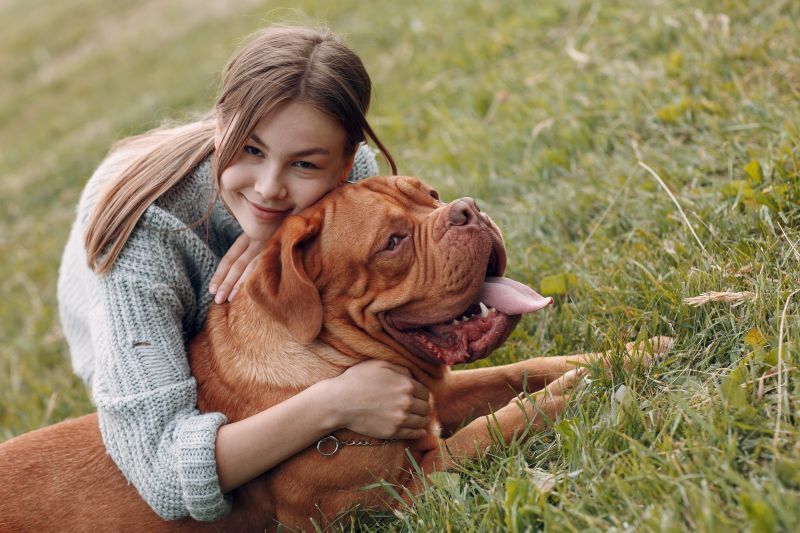
The Dogue de Bordeaux is a large, powerful mastiff-type dog with a massive head, muscular body and deeply wrinkled face. Calm, loyal and protective, it is usually gentle with family but needs confident handling due to its size and strength.
This breed requires early socialisation, controlled exercise, careful weight management and regular cleaning of facial folds, with attention to joint, heart and skin health.
FAQs about the Dogue De Bordeaux
It can be, provided the household matches the breed’s exercise, training, grooming and supervision needs.
Moderate – controlled walks and low-impact activity.
Shedding depends on coat type, season and grooming routine. The breed has a short, fine, soft coat.
No. While some individuals may shed less than others, no dog breed is truly allergy-free.
Most respond well to positive, consistent training, but owners should work with the breed’s instincts rather than against them.

Get 2 months free for your puppy!
Congrats on your new bundle of joy
To ensure your precious fur baby is covered from the start, we'd like to offer your first 2 months of our Nose-to-Tail Cover for free2!
Get a quick quote