Is the Shar Pei a good family dog?


Shar Pei
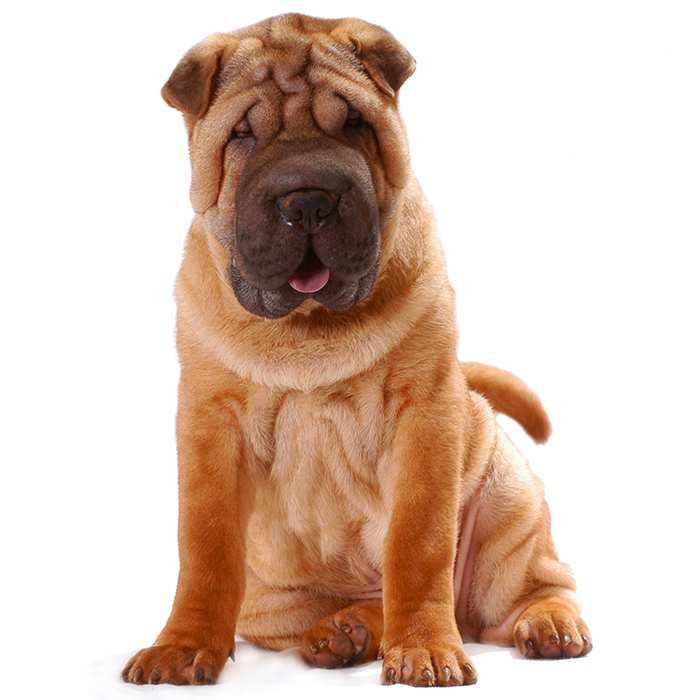
Shar Pei are distinctive and loyal medium-sized dogs with loose, wrinkled skin, a broad muzzle and a calm, watchful expression. Originally developed in China as versatile farm, guard and hunting dogs, they are known for their independence, devotion and naturally protective nature. Generally affectionate with their family but reserved with strangers, Shar Pei can be strong-willed and selective with other dogs, so they benefit from early socialisation, consistent training and careful skin and ear care.
| Recommended for | Experienced owners who can provide early socialisation, consistent training and attentive skin and ear care. |
| Breed Classification | Utility/Non-Sporting Group |
| Other names | Chinese Shar-Pei |
| Lifespan | 8 to 12 years |
| Size | Medium |
| Temperament | Loyal, calm, independent and reserved |
| Intelligence | Generally intelligent; best results come from patient, positive and consistent training |
| Tendency to bark | Low to moderate; reserved watchdog |
| Maintenance Level | Low coat care but skin folds, ears and eyes need attention |
| Health Risk | Shar Peis can be prone to several inherited or structure-related health concerns, so health testing, weight management and early veterinary advice are particularly important. |
Thinking of insuring a Shar Pei?
Explore the Top 5 health issues claimed for Shar Peis, including highest claims paid and how much pet insurance could help you save on eligible vet bills.
See Shar Pei pet insurance Ready to get cover? Get a quick quote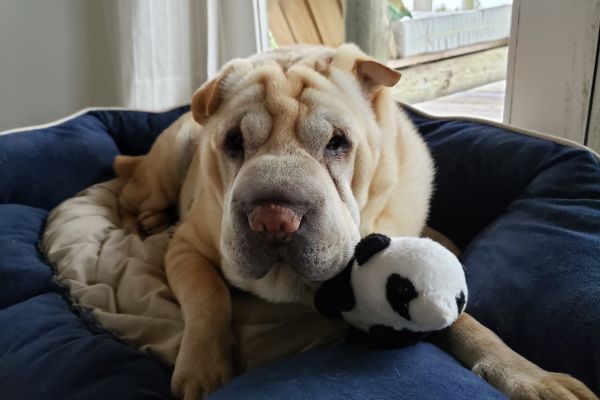
Shar Pei personality and temperament
The Shar Pei is calm, loyal and independent, with a naturally watchful temperament. Originally used as a farm, hunting and guard dog, it is often reserved with strangers and strongly attached to its family.
Shar Pei can be affectionate and devoted at home, but they are not usually overly demonstrative or eager to please. Early socialisation, consistent training and confident handling are important, especially because the breed can be strong-willed and selective with other dogs.
Shar Peis with kids and other pets
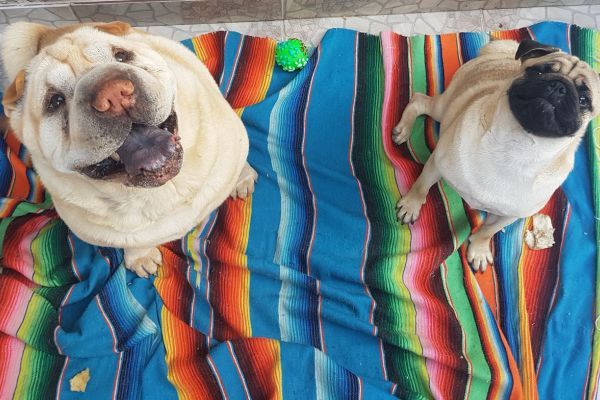
har Pei can be loyal and protective with children in their own family, but they are best suited to homes with older, respectful children. They are independent and may be wary of unfamiliar people, so calm handling and clear boundaries are important.
With other pets, Shar Pei can be selective and may not always welcome unfamiliar dogs. They can live with other pets if raised with them and well socialised, but introductions should be controlled and supervised.
Shar Pei training and exercise
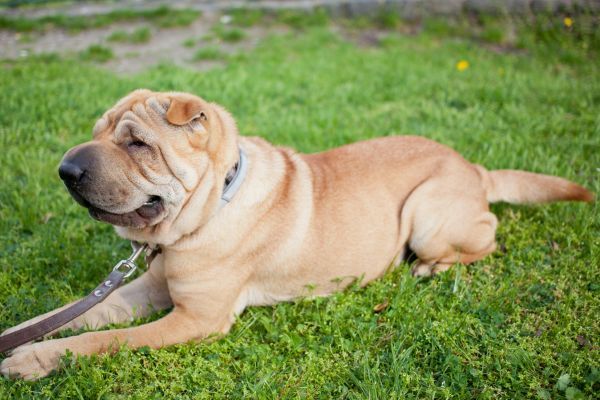
Shar Pei need moderate daily exercise, such as steady walks and controlled play. They are generally not highly demanding, but they still require regular activity to stay fit and mentally balanced. Exercise should be managed carefully in hot weather, as some may be sensitive to heat.
Training should begin early and be calm, consistent and positive. Shar Pei are intelligent but independent, and they may be reserved or strong-willed. Early socialisation is especially important to help them become confident and manageable around strangers, other dogs and new environments.
| Energy level | Moderate |
| Exercise requirements | Moderate - steady walks, play and socialisation |
Common health issues for Shar Peis
What do Shar Pei owners claim for the most?
- Entropion: An eyelid condition where the eyelid rolls inward, causing the eyelashes or facial hair to rub against the surface of the eye. Signs may include squinting, redness, tearing, discharge, eye rubbing, pain or corneal ulcers.
- Skin infections: These are commonly bacterial or yeast-related and often occur secondary to allergies, parasites, wounds, moisture or underlying skin disease. Signs may include redness, itching, pustules, crusting, hair loss, odour, discharge, soreness or hot spots.
- Shar-Pei fever: An inherited autoinflammatory condition in Shar-Pei dogs that causes recurring episodes of fever and inflammation, often with swollen or painful hocks. Episodes may include lethargy, reduced appetite, vomiting, diarrhoea or reluctance to move.
- Amyloidosis: A condition where abnormal protein deposits called amyloid build up in organs such as the kidneys, liver or heart, causing tissue damage and organ dysfunction. Signs depend on the organs affected. It can be hereditary in some breeds, especially Shar Pei.
- Hip dysplasia: A developmental condition where the hip joint forms abnormally, causing looseness, pain and reduced mobility. Genetics are a major factor, while rapid growth, excess weight and inappropriate exercise can worsen symptoms. Early diagnosis, weight control and veterinary care can help manage the condition.
- Allergies: These commonly cause itchy, inflamed skin, leading to scratching, licking, redness, hair loss, hot spots and recurring ear or skin infections. Common triggers include fleas, food sensitivities and environmental allergens.
Not all conditions are covered by Pet Insurance. For details of Bow Wow Meow Pet Insurance cover, refer to the Product Disclosure Statement.
How to choose the right insurance for your Shar Pei
When comparing cover for your Shar Pei, look for:

Cover for common Shar Pei conditions:
Check that the policy covers conditions Shar Peis can be prone to, including common health issues.

Cover for hereditary conditions:
No exclusions for hereditary or congenital conditions⑅.

Flexible cover options:
Options to adjust your annual benefit limit, reimbursement rate and excess.
Bow Wow Meow's Nose-to-Tail Cover offers flexible options for your Shar Pei, with cover for accidental injuries, illnesses and hereditary conditions⑅. Get a quick quote for cover that suits your Shar Pei and your budget.
Shar Pei feeding and nutrition
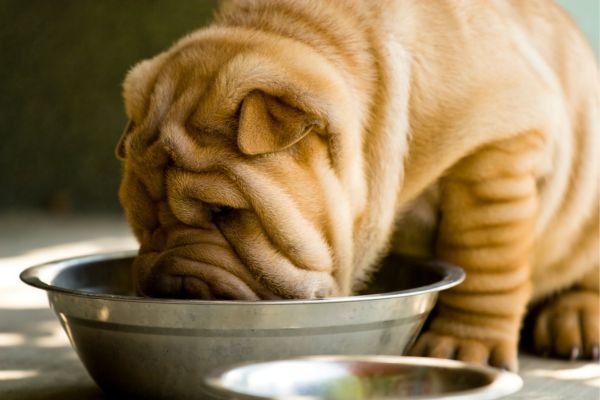
The Shar Pei needs a balanced, high-quality diet that supports its muscular body, skin health and overall condition. Protein from quality sources is important, while omega fatty acids may help support the skin and coat.
Some Shar Pei can be prone to skin or digestive sensitivities, so a simple, consistent diet may be beneficial. Sudden food changes, low-quality fillers and excessive treats should be avoided. Portion control is also important, as extra weight can place strain on the joints and worsen skin folds or mobility issues.
Shar Pei care and grooming
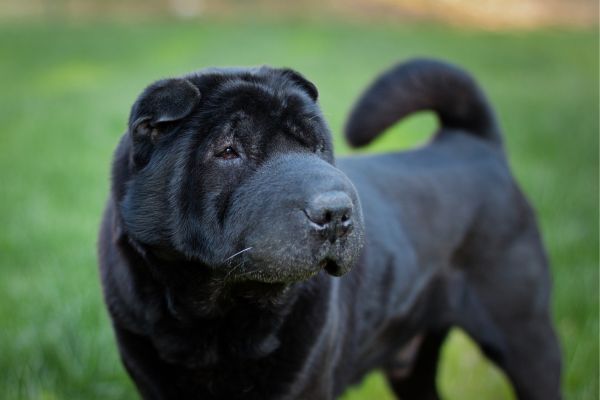
The Shar Pei has a short, harsh coat that is generally easy to brush but requires careful skin care. Weekly brushing helps remove loose hair and keeps the coat clean. The breed’s loose skin and wrinkles should be checked regularly for redness, moisture, odour or irritation.
Bathing should be occasional, but drying is very important, especially around skin folds. Ears should be checked regularly, as Shar Pei can be prone to ear issues due to their narrow ear canals. Regular nail trimming, dental care and prompt attention to any skin changes are important for this breed.
Size, appearance and coat of Shar Peis
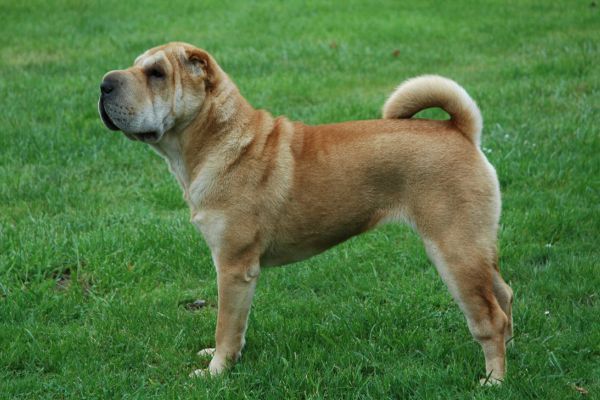
The Shar Pei is a medium-sized dog with a strong, square body, broad head and distinctive loose skin. It has small, sunken eyes, tiny triangular ears, a wide muzzle often described as “hippopotamus-like,” and a serious, watchful expression.
Its coat is short and harsh, with a bristly texture that is one of the breed’s defining traits. Coat colours include black, cream, fawn, red, blue, lilac, chocolate and apricot, while puppies are especially known for their heavy wrinkles.
| Weight range | 18 to 30 kg |
| Height range | 44 to 51 cm |
| Colours | Solid colours including fawn, cream, red, black, blue and chocolate |
| Coat length | Very short harsh horse coat or brush coat |
Breed history of Shar Peis
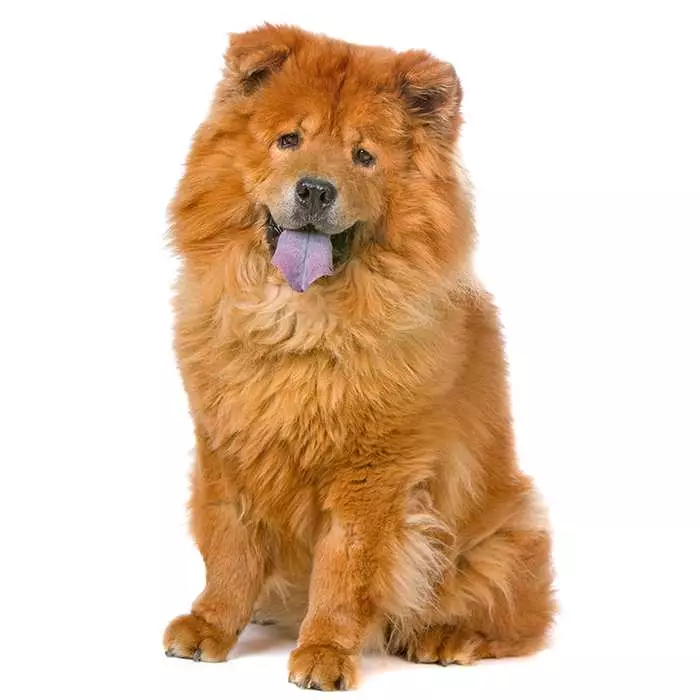
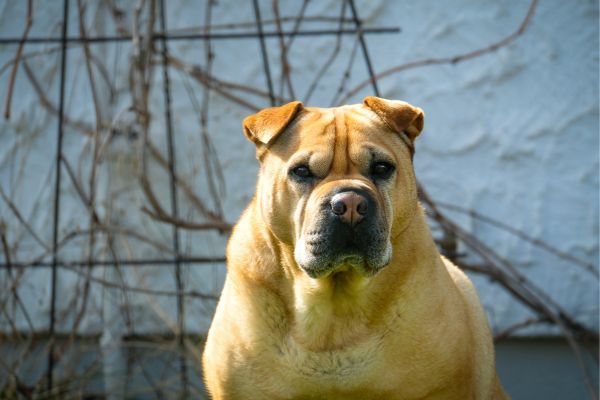
The Shar Pei originated in southern China, where it was used as a multipurpose farm dog for guarding, hunting and property protection. Its loose skin, bristly coat and serious expression made it distinct, while its blue-black tongue linked it visually with other ancient Chinese breeds such as the Chow Chow.
The breed nearly disappeared in the twentieth century during periods of political and social upheaval in China. Preservation efforts by Hong Kong and international breeders, helped by public appeals in the 1970s, brought the Shar Pei back from extreme rarity and made it one of the most recognisable Chinese breeds.
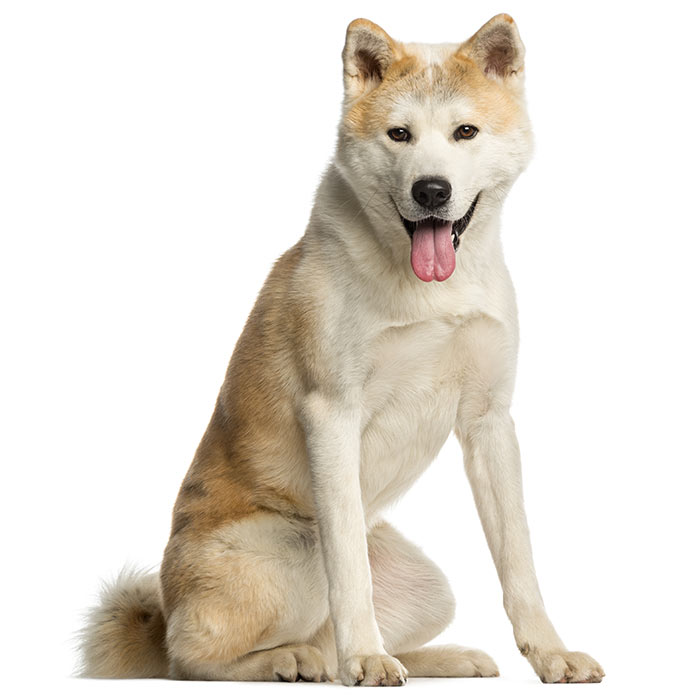
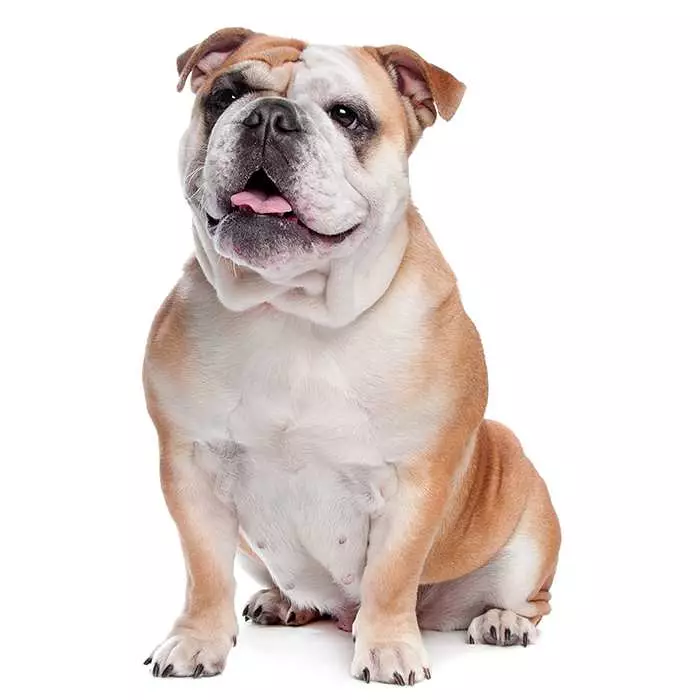
Explore related breeds
Shar Pei facts!
- Their name means “sand skin” which refers to the breed’s rough, bristly coat texture.
- They are famous for their wrinkles. Shar Pei puppies are especially wrinkly, though adults usually grow into some of their loose skin.
- They have a blue-black tongue; this unusual feature is shared with the Chow Chow.
- They are an ancient Chinese breed. Shar Pei were used as farm, guard and hunting dogs.
- Many Shar Pei are loyal to family but are naturally reserved and cautious with strangers.
Summary
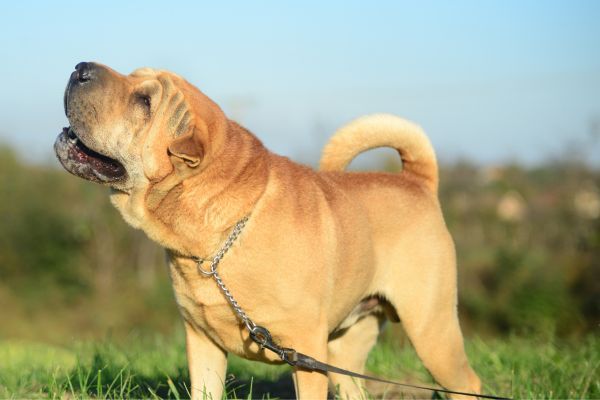
The Shar Pei is a medium-sized Chinese breed known for its loose wrinkles, broad muzzle, small ears and harsh “sand” coat. Calm, loyal and independent, Shar Pei are often devoted to family but reserved with strangers and may be selective with other dogs.
They need early socialisation, consistent training and attentive care for skin folds, ears and allergies, with monitoring for breed-linked issues such as Shar-Pei fever.
FAQs about the Shar Pei
It can be, provided the household matches the breed’s exercise, training, grooming and supervision needs.
Moderate – steady walks, play and socialisation.
Shedding depends on coat type, season and grooming routine. The breed has a very short harsh horse coat or brush coat.
No. While some individuals may shed less than others, no dog breed is truly allergy-free.
Most respond well to positive, consistent training, but owners should work with the breed’s instincts rather than against them.
MORE INFORMATION
Chinese Shar Pei Club of America: http://www.cspca.com/
Shar Pei Club of Great Britain: https://www.spcgb.org/

Get 2 months free for your puppy!
Congrats on your new bundle of joy
To ensure your precious fur baby is covered from the start, we'd like to offer your first 2 months of our Nose-to-Tail Cover for free2!
Get a quick quote