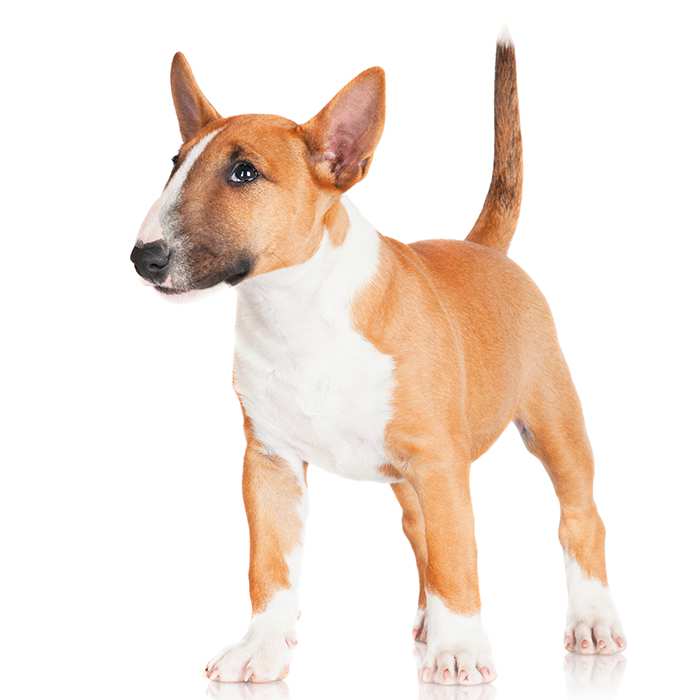
Is the Bull Terrier a good family dog?


Bull Terrier
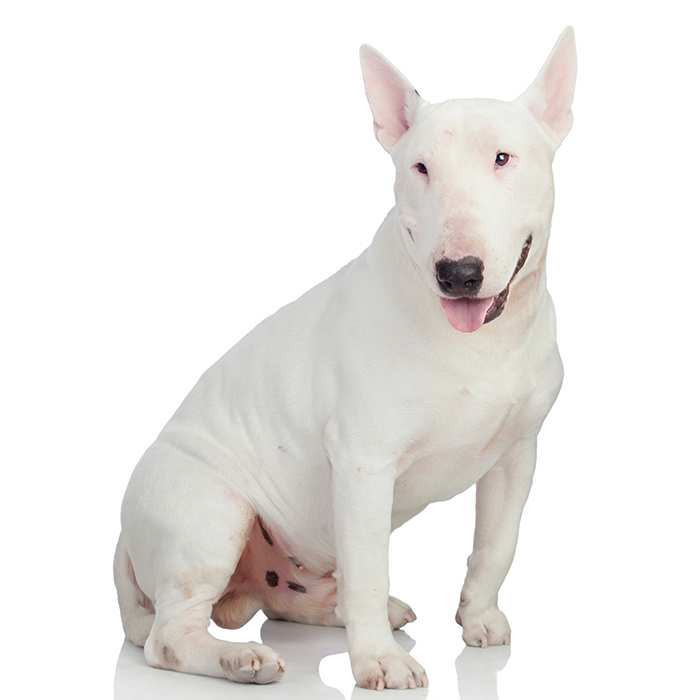
Bull Terriers are distinctive medium-sized terriers known for their egg-shaped heads, muscular build and playful, mischievous personalities. Affectionate and strongly people-oriented, they often form close bonds with their families and retain a clownish enthusiasm well into adulthood.
| Recommended for | Experienced, active owners and families with older children |
| Breed Classification | Terriers |
| Other names | BT |
| Lifespan | 12-14 years |
| Size | Medium |
| Temperament | Courageous, spirited, fun-loving and independent |
| Intelligence | High: capable learners, but independent and easily bored by repetitive training |
| Tendency to bark | Moderate: may bark when alert, excited, bored or seeking interaction |
| Maintenance Level | Medium: ccoat care is easy, but regular exercise, training and companionship require commitment |
| Health Risk | Bull Terriers can bepredisposed to significant inherited kidney, heart, hearing, joint and skin conditions and, more rarely, lethal acrodermatitis. |
Thinking of insuring a Bull Terrier?
Explore the Top 5 health issues claimed for Bull Terriers, including highest claims paid and how much pet insurance could help you save on eligible vet bills.
See Bull Terrier pet insurance Ready to get cover? Get a quick quote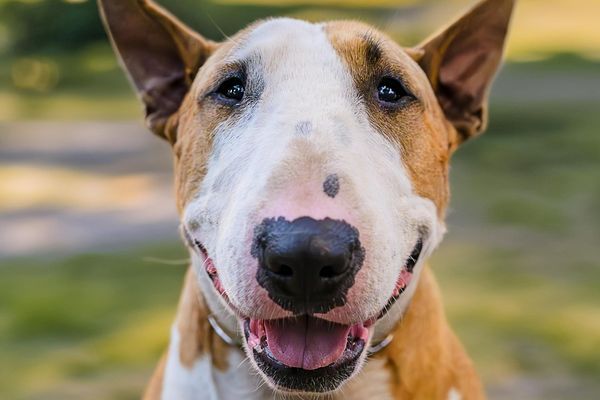
Bull Terrier personality and temperament
Bull Terriers are typically playful, affectionate and full of personality. They often enjoy close interaction with their owners and are known for their clownish behaviour, curiosity and enthusiasm for games. A well-bred Bull Terrier should have an even temperament and be amenable to training, although the breed can also be determined and independently minded.
Bull Terriers generally thrive when included in family life and given regular exercise, training and mental stimulation. Some may struggle when routinely left alone for long periods, and boredom can contribute to chewing, destructive behaviour or repetitive behaviours such as tail chasing. Early socialisation and varied, positive training can help develop a confident and manageable adult dog.
Bull Terriers with kids and other pets
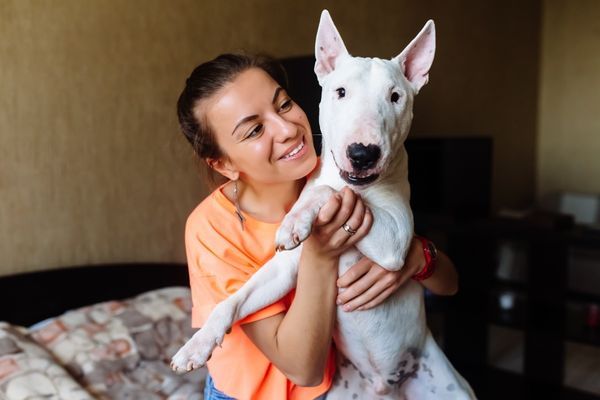
Well-socialised Bull Terriers can be affectionate, playful family companions. Their physical strength and exuberant style of play can be overwhelming for small children, however, so interactions with young children should always be supervised and calm behaviour encouraged from puppyhood.
Some Bull Terriers live successfully with other dogs, while others can be selective, so compatibility should be assessed individually rather than relying on the sex of the dogs. Their terrier ancestry may also give some individuals a strong prey drive. Cats and other pets should therefore be introduced carefully, and being raised together does not guarantee that every Bull Terrier will be safe around smaller animals.
Bull Terrier training and exercise
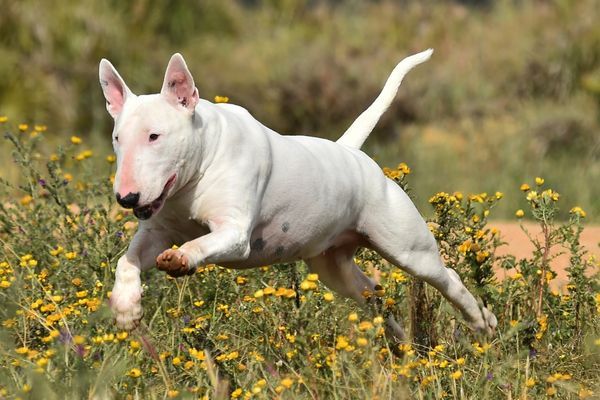
Bull Terriers are energetic, athletic dogs that need daily exercise as well as mental stimulation. Most healthy adults benefit from around 45–60 minutes of activity each day, combining walks, active play and training. Activities such as agility, scent work, tracking and obedience can provide useful outlets for their physical energy and curious nature.
They are intelligent but can be independent and easily bored by repetitive training. Short, varied sessions using positive reinforcement with food, toys, play and praise generally work best. Early socialisation and training should focus particularly on lead manners, recall, impulse control and calm behaviour around people and other animals.
| Energy level | High: lively, playful and athletic dogs |
| Exercise requirements | Medium to high: around 45–60 minutes of daily activity plus play, training and mental enrichment |
Common health issues for Bull Terriers
What do Bull Terrier owners claim for the most?
Bull Terriers can be predisposed to several inherited health conditions affecting the kidneys, heart, hearing and joints, as well as skin problems. Responsible breeders should undertake appropriate breed-specific health testing, including cardiac, kidney, hearing and patellar assessment.
- Patella luxation occurs when the kneecap moves out of its normal position. Mild cases may cause intermittent skipping or lameness, while more severe cases can result in pain and arthritis and may require surgery. Patellar screening is recommended for breeding Bull Terriers.
- Kidney disease is an important inherited concern in Bull Terriers. The breed is associated with hereditary nephritis, which can result in progressive kidney damage, and polycystic kidney disease (PKD), in which fluid-filled cysts develop within the kidneys. Screening breeding dogs for abnormal protein loss in the urine can help identify kidney disease risk.
- Heart disease can occur in Bull Terriers, including congenital abnormalities such as mitral valve dysplasia. A heart murmur may be one sign of an underlying abnormality, and cardiac evaluation is recommended for breeding dogs.
- Congenital deafness can affect one or both ears and is especially associated with predominantly white dogs. BAER testing provides an objective assessment of hearing and is recommended for Bull Terrier puppies before they leave the breeder; the BTCA recommends testing from around five weeks of age.
- Skin allergies and dermatitis can cause itching, redness, recurrent skin or ear infections and paw licking. Bull Terriers are among the breeds in which allergic skin disease is recognised, and persistent itching should be assessed by a veterinarian rather than managed simply through frequent bathing.
- Lethal acrodermatitis (LAD) is a rare inherited disorder specific to Bull Terriers and Miniature Bull Terriers that affects zinc metabolism and can cause poor growth, skin lesions and immune problems in puppies. Genetic screening is available and is included among current breed-club health-testing recommendations.
Not all conditions are covered by Pet Insurance. For details of Bow Wow Meow Pet Insurance cover, refer to the Product Disclosure Statement.
How to choose the right insurance for your Bull Terrier
When comparing cover for your Bull Terrier, look for:

Cover for common Bull Terrier conditions:
Check that the policy covers conditions Bull Terriers can be prone to, including common health issues.

Cover for hereditary conditions:
No exclusions for hereditary or congenital conditions⑅.

Flexible cover options:
Options to adjust your annual benefit limit, reimbursement rate and excess.
Bow Wow Meow's Nose-to-Tail Cover offers flexible options for your Bull Terrier, with cover for accidental injuries, illnesses and hereditary conditions⑅. Get a quick quote for cover that suits your Bull Terrier and your budget.
Bull Terrier feeding and nutrition
Bull Terriers should be fed a complete and balanced diet appropriate for their age, body condition, health and activity level. Growing puppies should receive an appropriately formulated puppy food rather than additional calcium supplements or high-calcium foods unless specifically recommended by a veterinarian.
Bull Terriers can be highly food motivated, which can be useful during training. Meals and treats should be included when calculating daily food intake, as excess calories can contribute to weight gain. If a dog displays resource guarding around food, seek advice from a qualified reward-based trainer or veterinary behaviour professional rather than attempting to forcibly remove food.
Bull Terrier care and grooming
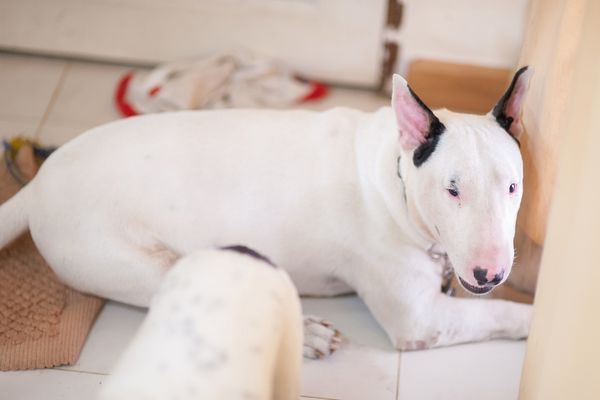
Bull Terriers have a short, glossy coat with low grooming requirements. Weekly brushing with a soft brush or grooming mitt helps remove loose hair and keep the coat in good condition. They do shed despite their short coat, and shedding may become more noticeable at certain times of year.
Bathing is generally only necessary when dirty unless a veterinarian recommends a medicated bathing routine for a skin condition. White or lightly pigmented Bull Terriers may also need protection from prolonged sun exposure, particularly in Australia’s strong UV conditions.
Size, appearance and coat of Bull Terriers
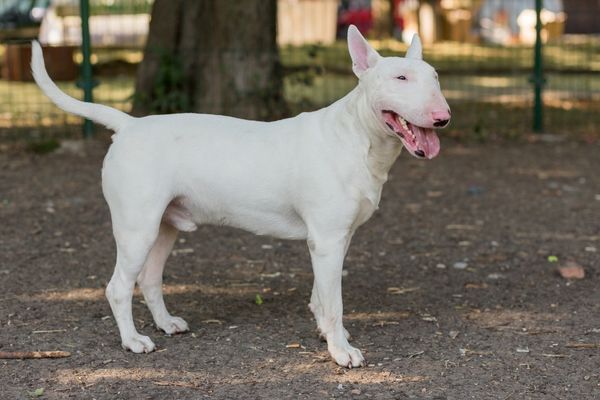
The Bull Terrier is a medium-sized, strongly built and muscular dog with an unmistakable outline. Its most distinctive feature is its long, egg-shaped head, which curves gently downward from the top of the skull to the nose without a pronounced stop. Small, erect ears and narrow, triangular dark eyes give the breed its characteristic keen expression.
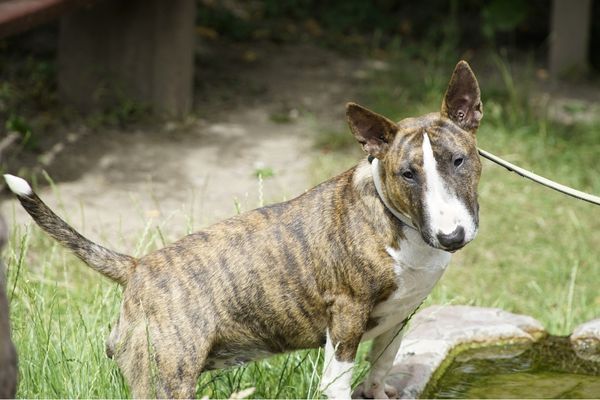
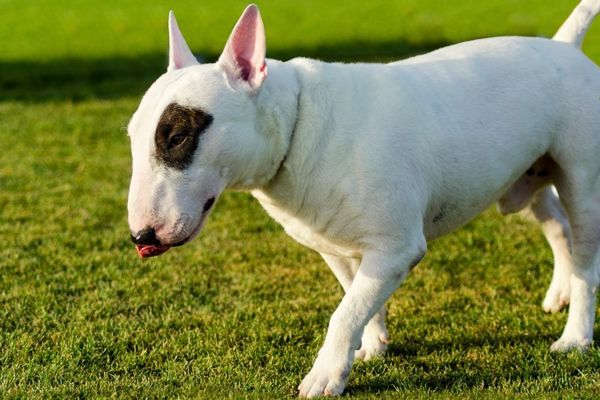
The short, flat coat is harsh to the touch with a fine gloss. Bull Terriers may be pure white, sometimes with markings on the head, or coloured in brindle, black brindle, red, fawn or tricolour patterns. In coloured dogs, colour should predominate.
| Weight range | Approximately 22–32 kg |
| Height range | Approximately 53–56 cm |
| Colours | White or any other colour, either solid or with white markings |
| Coat length | Short |
Breed history of Bull Terriers
The Bull Terrier developed in England from the bull-and-terrier dogs of the early 19th century, which combined Bulldog-type dogs with various terriers. These dogs were originally used in blood sports, including dog fighting, as well as for vermin control. Following the banning of bull- and bear-baiting in 1835 and the rise of organised dog showing later in the century, breeders increasingly selected for a more refined appearance and companion temperament.
Birmingham breeder James Hinks played a major role in shaping the modern Bull Terrier during the mid-1800s. He developed more streamlined, predominantly white dogs and showed his new Bull Terrier type at Birmingham in 1862. Dalmatian ancestry is documented in the early development of Hinks’ dogs, while other suggested influences are less certain.
During the early 20th century, coloured Bull Terriers became increasingly established, adding brindle, red, fawn, black brindle and tricolour coats to the breed. Bull Terriers had already reached Australia during the 19th century, with dogs recorded at Australia’s first dog show in Hobart in 1862.
Explore related breeds
Bull Terrier facts!
- The Bull Terrier is one of the few breeds whose standard specifically calls for triangular-shaped eyes.
- Unlike most breeds, the standard Bull Terrier has no official maximum or minimum height or weight.
- Its famous egg-shaped head was not as pronounced in early Bull Terriers; breeders increasingly selected for the curved profile during the 20th century.
- Bull Terriers were appearing at Australian dog shows as early as 1862.
- The smaller Bull Terrier (Miniature) is recognised as a separate breed in Australia and must not exceed 35.5 cm at the shoulder.
Summary
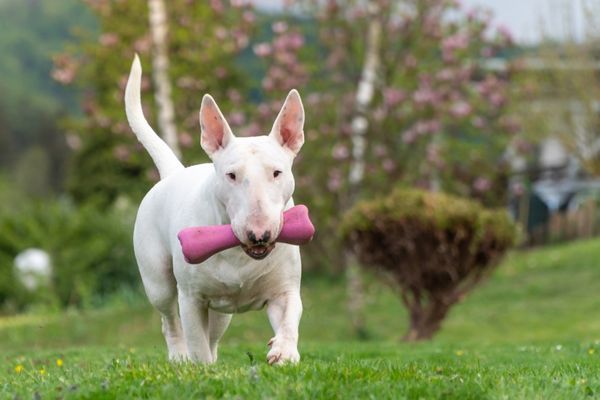
The Bull Terrier is a strong, muscular dog with a distinctive face and a mischievous, playful personality. Loyal and devoted to its family, it is energetic, boisterous and full of character.
Bull Terriers can also be stubborn and independent, so they are best suited to experienced owners who can provide consistent training and plenty of activity. Their enthusiasm can make them overexcited and physically exuberant, particularly around smaller children.
FAQs about the Bull Terrier
They can be lively, affectionate family companions, particularly for owners who enjoy an energetic, confident terrier personality.
High. They need plenty of daily exercise, including walks, active play and mental stimulation, with opportunities for more vigorous activity where appropriate.
They are intelligent but can be independent or strong-willed, so patient, consistent reward-based training and early socialisation are important.
They are generally moderate barkers, although barking can increase with boredom, excitement, anxiety or unfamiliar activity.
Yes. They generally shed a low to moderate or moderate amount and benefit from routine brushing.
They can adapt to apartment living in the right circumstances, but owners need to meet their daily exercise, enrichment and behavioural needs consistently.
They can live well with respectful children and other dogs, but terrier prey drive may make small pets tempting to chase and dog-to-dog compatibility varies.
Potential health concerns include deafness, kidney disease, heart disease, patellar luxation and skin problems.
They are recognised as separate breeds but share almost the same breed standard and characteristic egg-shaped appearance. The key distinction is size: a standard Bull Terrier has no official height limit under the Dogs Australia standard, while a Miniature Bull Terrier must not exceed 35.5 cm at the shoulder.
MORE INFORMATION:
National Bull Terrier Council Australia: http://www.nbtca.com/
Bull Terrier Club of South Australia Inc: http://www.btcsainc.com/
Bull Terrier Club of WA Inc: http://www.btcwa.asn.au/
ACT Bull Terrier Club Inc: http://www.actbtc.com/
NSW & QLD Bull Terrier Rescue: http://www.australianbullterriers.com/
Victorian Bull Terrier Rescue: http://www.vbtrinc.com/

Get 2 months free for your puppy!
Congrats on your new bundle of joy
To ensure your precious fur baby is covered from the start, we'd like to offer your first 2 months of our Nose-to-Tail Cover for free2!
Get a quick quote