
Is the Springer Spaniel a good family dog?


Springer Spaniel
Springer Spaniels are cheerful and energetic medium-sized dogs with a soft, feathered coat, athletic build and bright, eager expression. Originally bred as gundogs to flush and retrieve game, they are known for their stamina, intelligence and enthusiastic nature. Generally affectionate and sociable with their family, Springer Spaniels can be lively and easily excitable, so they benefit from plenty of exercise, mental stimulation and consistent, positive training.
| Recommended for | Active families or owners who want an affectionate, energetic dog and can provide daily exercise and training. |
| Breed Classification | Gundog/Sporting Group |
| Other names | English Springer Spaniel |
| Lifespan | 12 to 14 years |
| Size | Medium |
| Temperament | Friendly, active, eager and affectionate |
| Intelligence | Generally intelligent; best results come from patient, positive and consistent training |
| Tendency to bark | Moderate; can be excitable and vocal |
| Maintenance Level | Brush several times weekly; check ears often |
| Health Risk | Springer Spaniels can be prone to several inherited or structure-related health concerns, so health testing, weight management and early veterinary advice are particularly important. |
Thinking of insuring a Springer Spaniel?
Explore the Top 5 health issues claimed for Springer Spaniels, including highest claims paid and how much pet insurance could help you save on eligible vet bills.
See Springer Spaniel pet insurance Ready to get cover? Get a quick quote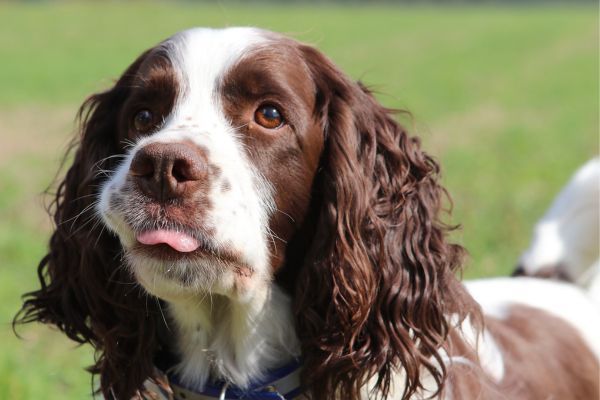
Springer Spaniel personality and temperament
The Springer Spaniel is cheerful, affectionate and energetic, with a lively temperament and strong working background. Originally bred to flush and retrieve game, it is enthusiastic, intelligent and usually eager to please.
Springers are often sociable and family-oriented, enjoying play, training and outdoor activity. They can be excitable if under-stimulated, so they need regular exercise, positive training and opportunities to use their active minds.
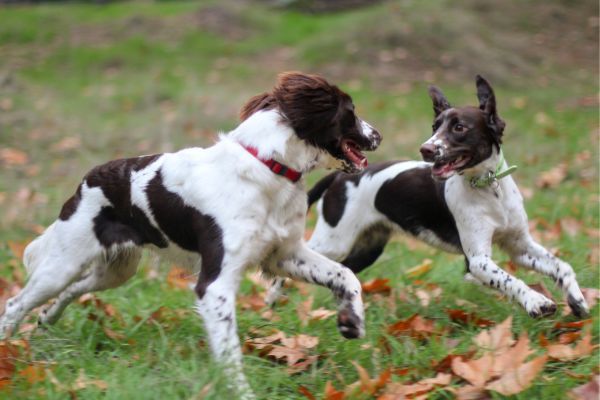
Springer Spaniels with kids and other pets
Springer Spaniels are usually affectionate, cheerful and playful with children, making them a good match for active families. They are energetic and can be excitable, so they do best with children who enjoy interactive play and families who can provide training and exercise.
With other pets, Springer Spaniels often do well when socialised properly. They are usually friendly with other dogs and can live with cats, though their gundog instincts may make them interested in birds or smaller animals.
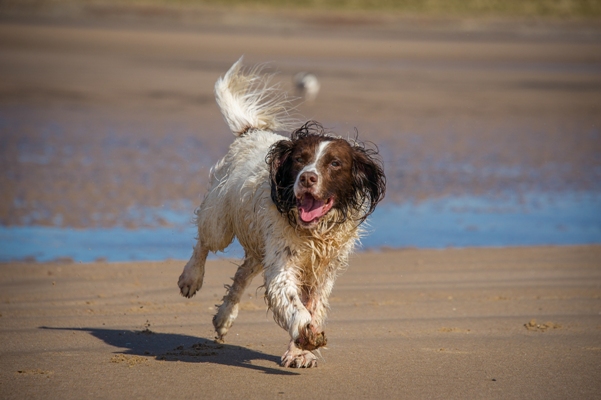
Springer Spaniel training and exercise
Springer Spaniels need plenty of daily exercise and mental stimulation. Brisk walks, running in secure spaces, retrieving games, scent work and active play are ideal for this lively sporting breed. They can become restless or excitable if they do not receive enough activity.
Training should be positive, consistent and varied. Springers are intelligent and often eager to please, but their enthusiasm can make them distractible. Early training should focus on recall, calm behaviour, lead manners and appropriate outlets for their working instincts.
| Energy level | High |
| Exercise requirements | High - long walks, retrieving, scent work and swimming |
Common health issues for Springer Spaniels
What do Springer Spaniel owners claim for the most?
- Hip dysplasia: A developmental condition where the hip joint forms abnormally, causing looseness, pain and reduced mobility. Genetics are a major factor, while rapid growth, excess weight and inappropriate exercise can worsen symptoms. Early diagnosis, weight control and veterinary care can help manage the condition..
- Elbow dysplasia: A developmental condition where the elbow joint forms abnormally, causing front-leg pain, stiffness and lameness. It can lead to progressive arthritis over time. Genetics are a major factor, while growth rate, diet, exercise and weight can influence severity.
- Ear infections: Common in dogs, often involving inflammation or infection of the outer ear canal caused by yeast, bacteria, allergies, mites or trapped moisture. Signs may include head shaking, scratching, redness, swelling, discharge, odour, pain or sensitivity around the ears.
- Eye disease: This includes problems such as cataracts, glaucoma, conjunctivitis, dry eye, corneal ulcers and inherited eye disorders. Signs may include redness, cloudiness, discharge, squinting, pawing at the eye, swelling or changes in vision.
- Phosphofructokinase deficiency: An inherited metabolic enzyme disorder where muscle and red blood cells cannot produce energy properly. Signs may include exercise intolerance, weakness, muscle cramps, anaemia, jaundice and dark-coloured urine, often triggered by strenuous exercise, barking, panting or heat.
- Rage syndrome: A rare, poorly understood condition involving sudden, intense and seemingly unprovoked episodes of aggression, sometimes thought to be seizure-related. Episodes may appear out of character and can involve staring, freezing, biting or confusion afterwards.
Not all conditions are covered by Pet Insurance. For details of Bow Wow Meow Pet Insurance cover, refer to the Product Disclosure Statement.
How to choose the right insurance for your Springer Spaniel
When comparing cover for your Springer Spaniel, look for:

Cover for common Springer Spaniel conditions:
Check that the policy covers conditions Springer Spaniels can be prone to, including common health issues.

Cover for hereditary conditions:
No exclusions for hereditary or congenital conditions⑅.

Flexible cover options:
Options to adjust your annual benefit limit, reimbursement rate and excess.
Bow Wow Meow's Nose-to-Tail Cover offers flexible options for your Springer Spaniel, with cover for accidental injuries, illnesses and hereditary conditions⑅. Get a quick quote for cover that suits your Springer Spaniel and your budget.
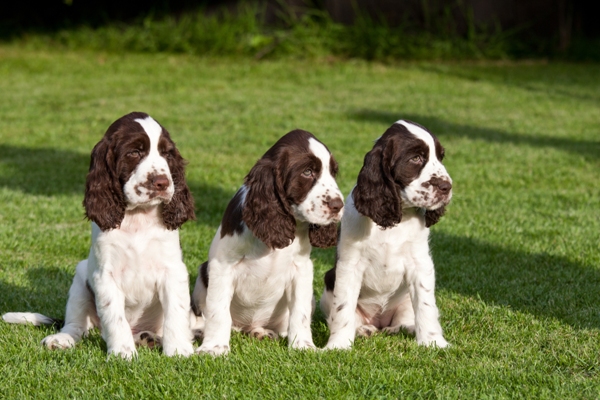
Springer Spaniel feeding and nutrition
The Springer Spaniel needs a balanced diet that supports its energetic nature, muscular body and active sporting background. Quality protein helps maintain muscle, while healthy fats provide energy and support skin and coat health.
Because Springers can be enthusiastic eaters, portion control is important. Their food intake should match their activity level, with more active dogs needing more calories than less active pets. Treats should be used sensibly during training and included in the daily calorie allowance.
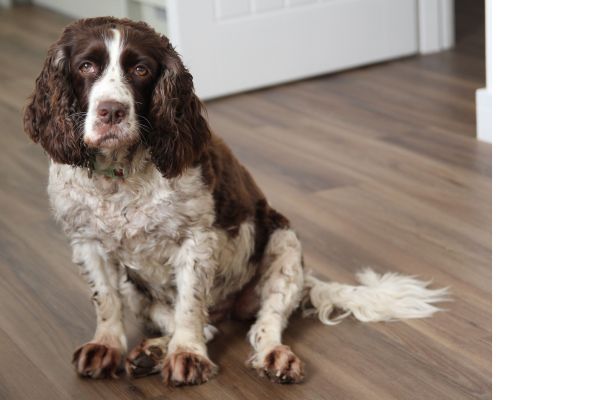
Springer Spaniel care and grooming
The Springer Spaniel has a medium-length coat with feathering on the ears, chest, legs and belly. Brushing several times a week helps prevent tangles and removes loose hair, especially after outdoor adventures where grass seeds, burrs and mud can become trapped in the coat.
Regular trimming around the feet, ears and feathering helps keep the dog tidy and comfortable. The ears should be checked and cleaned regularly, as hanging ears can trap moisture. Routine bathing, nail trimming and dental care should also be part of the grooming routine.
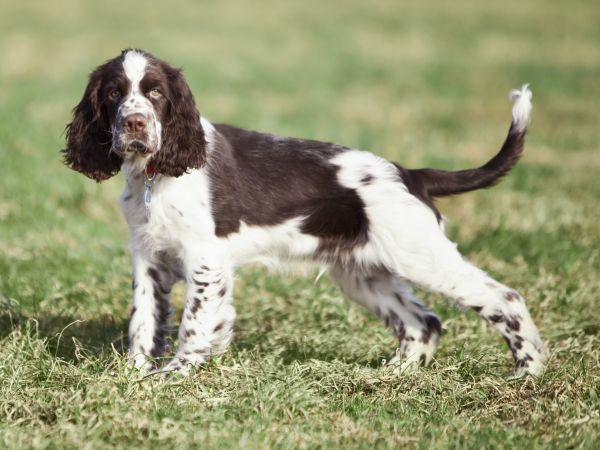
Size, appearance and coat of Springer Spaniels
The Springer Spaniel is a medium-sized, athletic dog with a balanced body, strong legs and an eager, friendly expression. It has a moderately broad head, soft eyes, long feathered ears and a lively, purposeful movement suited to field work.
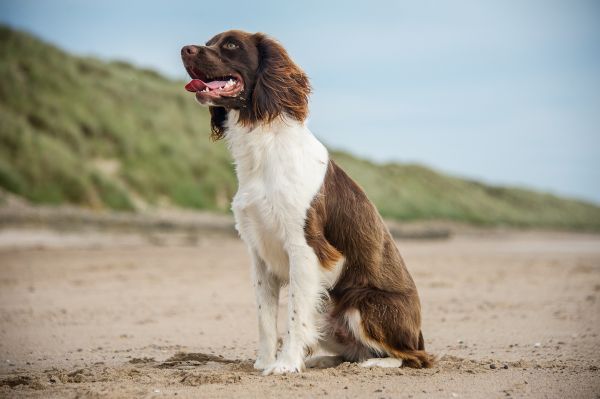
Its coat is medium-length, dense and weather-resistant, with feathering on the ears, chest, legs and belly. Common colours include liver and white, black and white, or either combination with tan markings.
| Weight range | 18 to 25 kg |
| Height range | 46 to 51 cm |
| Colours | Liver and white, black and white, sometimes with tan |
| Coat length | Medium length, flat or wavy coat with feathering |
Breed history of Springer Spaniels
The Springer Spaniel’s name comes from its traditional role of “springing” birds from cover for hunters. Before spaniels were divided into modern breeds, dogs from the same litters could be classified by size and use, with larger dogs becoming springers and smaller ones becoming cockers.
The English Springer Spaniel became a distinct breed as shooting sports developed and gundog roles became more specialised. It was prized for working close to the handler, flushing game decisively and retrieving on land or in water, traits that helped it become one of the most important sporting spaniels.
Explore related breeds
Springer Spaniel facts!
- Their name comes from their working style: Springer Spaniels were bred to “spring” or flush birds from cover.
- They are highly versatile gundogs that can flush, retrieve and work closely with handlers in the field.
- Springers often approach life with a cheerful, energetic attitude.
- Their scenting ability has made them useful in detection work as well as hunting.
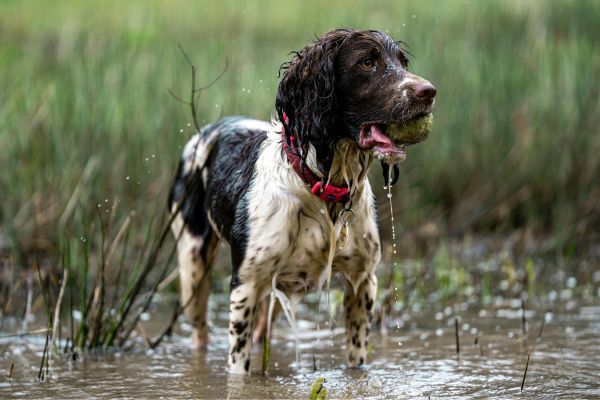
- They usually love mud and water and are happiest exploring outdoors, especially in wet or messy places.
Summary
The Springer Spaniel is a medium-sized, athletic sporting dog with a soft, feathered coat and bright, eager expression. Cheerful, affectionate and energetic, Springers are highly people-oriented and often thrive in active families that enjoy training and outdoor activities.
They need plenty of daily exercise, mental stimulation, regular ear care and brushing, especially after walks through grass, mud or bushland.
FAQs about the Springer Spaniel
It can be, provided the household matches the breed’s exercise, training, grooming and supervision needs.
High – long walks, retrieving, scent work and swimming.
Shedding depends on coat type, season and grooming routine. The breed has a medium length, flat or wavy coat with feathering.
No. While some individuals may shed less than others, no dog breed is truly allergy-free.
Most respond well to positive, consistent training, but owners should work with the breed’s instincts rather than against them.
MORE INFORMATION
English Springer Spaniel Assoc NSW Inc: https://www.springerclubnsw.com/
English Springer Spaniel Club: http://www.englishspringer.org/

Get 2 months free for your puppy!
Congrats on your new bundle of joy
To ensure your precious fur baby is covered from the start, we'd like to offer your first 2 months of our Nose-to-Tail Cover for free2!
Get a quick quote