
Desexing cats & kittens: Benefits and costs of neutering or spaying your cat


Summary
Desexing cats prevents unwanted pregnancies and helps reduce roaming, spraying and fighting. This routine surgery removes the reproductive organs under anaesthetic; costs vary by sex, size and clinic. Your vet will recommend timing, usually around four months. After surgery, keep your cat confined, monitor the wound and follow pain relief instructions. Seek advice promptly if appetite drops or there are signs of swelling or discharge.
What is cat or kitten desexing?
Desexing your cat or kitten is a routine procedure in which the vet surgically removes a cat’s reproductive organs to prevent breeding and promote stress free co-habitation between humans and their cats without hormonal ups and downs leading to problematic behaviours. Learn about the benefits of cat desexing, when the best time is to desex your cat and the costs involved in spaying/neutering your cat.
Wondering why you should desex your cat or kitten?
There are many reasons why people choose to sterilise their cat or kitten. From a personal perspective, your cat’s health is likely to benefit as a result of desexing. An added bonus is that it is generally easier to live with a desexed cat.

But one of the most persuasive arguments for desexing cats is from a societal/ animal welfare perspective. Two intact cats can produce a mind-blowing number of off-spring. In fact, it has been estimated that over a seven-year period, one pair of intact cats can be responsible for 420,000 kittens, if their kittens are also not desexed and go on to have their own kittens! This is possible because a female kitten can become pregnant from as young as four months of age, and her ability to breed does not diminish with age; in other words, she can reproduce for her entire life.
There are estimated to be 3.3 million pet cats in Australia (source: RSPCA) and sadly, every year thousands of cats are abandoned to animal shelters or simply left outside on the street to face an uncertain future. There just aren’t enough people in Australia willing to re-home all these unwanted cats and kittens, and a huge amount of pressure is placed on rescue organisations, which may resort to euthanising unwanted cats.
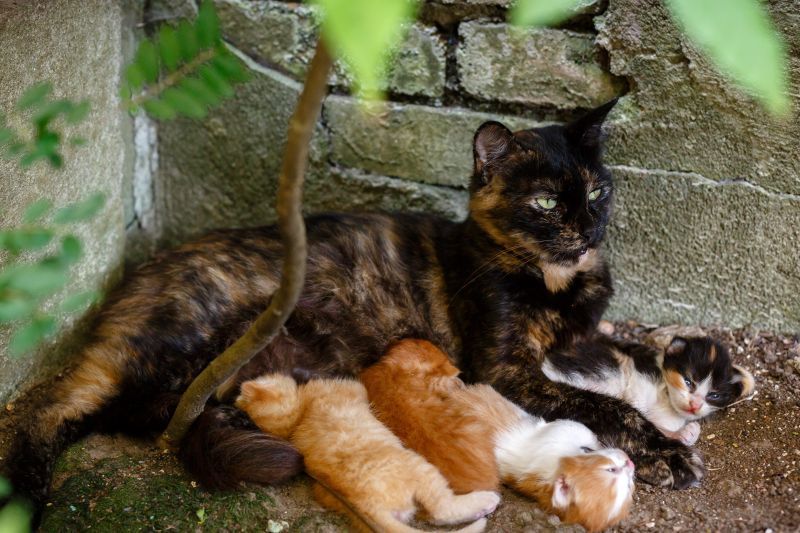
Desexing of cats is therefore an absolute necessity to help control the reproduction of cats, and also to reduce the overpopulation of unwanted kittens. If you are considering adopting a cat, be aware that most rescue organisations will desex before adopting out a kitten or cat. More info on this topic can be found here.
Desexing benefits both humans and cats
If the reasons provided above are not enough to change your mind about spaying your cat, this one might – research has shown that desexed cats can live much longer, as removal of the reproductive organs reduces the risk of cats contracting diseases like testicular and ovarian cancer.
Desexing your cat also prevents some undesirable and annoying behaviours, for example, female cats howling for weeks when in season to call male cats for mating.
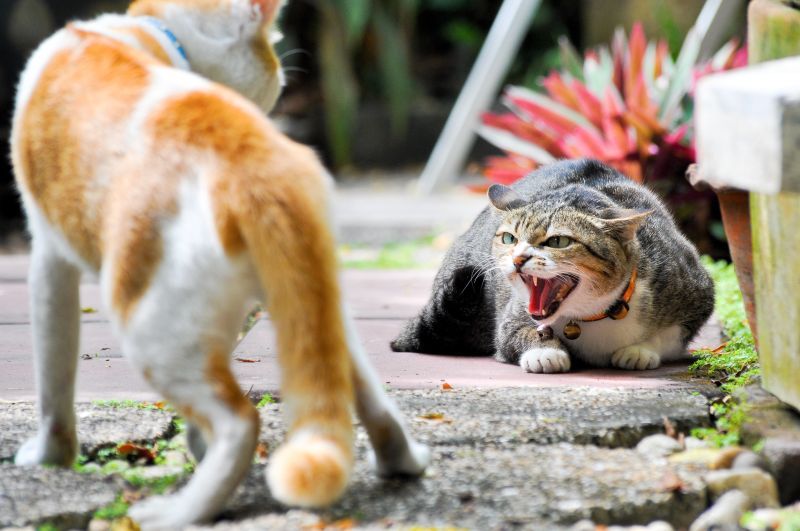
Male cats that have not been neutered are more prone to roaming and starting fights with other male cats.
Cat castration and spaying helps save Australian wildlife
Stray cats are cats that have been abandoned or become lost while out wandering. Stray cats often resort to feeding on Australian native wildlife. Some stray cats carry nasty diseases and bacteria which can be passed on to wildlife or humans.
Feral cats are cats that have never been domesticated and survive by killing and eating wildlife. Feeding feral and stray cats is not recommended. If you want to help them, it is recommended to contact your local animal shelter for advice on the best course of action.
For more information on stray and feral cats, see our article here.
One of the benefits of desexing a male cat is that is stops them roaming to find a mating partner. A desexed male is less likely to go on unauthorised outdoor adventures, which also helps protect our wildlife.
Expert advice from Dr Felicia:
From a veterinary perspective, the keeping of undesexed cats indoors is very much associated with inappropriate behaviours such as spraying/marking, aggression or noise disruption. Undesexed cats given outdoor access cause fights with other cats resulting in bite wounds and lacerations which can quickly become abscesses, transmission of diseases such as feline immunodeficiency virus, as well as disruption to wildlife.
Desexed cats on the other hand are easy to live with, typically calm, able to live in groups or with other pets. Desexing your cat is the responsible choice for yourself, as well as the cats and wildlife in your neighourhood.
When should you desex your cat?
There are varying opinions about when is the ideal time to desex cats. It is often recommended to spay female cats before they have their first ‘heat’, to avoid the nightly cat howling to call potential partners for reproduction.
Generally, it is recommended to desex your cat just before its maturity, at around five months of age and before a female goes in heat for the first time. However, some cats go into heat before they are five months old, therefore some vets will recommend desexing at an even earlier age. In some areas owners are required to pay a much higher registration fee for cats over four months that are un-desexed unless there are specific medical reasons to delay desexing.

A female cat can be desexed while she is in heat, but the operation is more complex and recovery can take a bit longer. During the heat cycle there is an increase in blood flow to the reproduction organs, which are removed during the operation. The increased blood flow can cause bleeding and engorgement can cause uterine tissue to be more fragile, adding increased risk and difficulty to the surgery. Vets typically recommend delaying surgery until your cat’s reproductive organs have returned to normal.
Expert advice from Dr Felicia:
Cats tend can put on weight after desexing. This is probably due to a number of factors related to a shift in their hormone production, they are usually less active, and therefore it uses less energy. Food intake will need to be adjusted according to the cat’s energy use in order to prevent it from becoming overweight.
The desexing procedure
You have made the decision to desex your cat and booked an appointment with your local vet. Here some details you should know about the procedure.
Preparing your cat for the procedure
Prepare your cat or kitten by fasting them (removing access to food) from after dinner night before surgery or as advised by your vet. Access to water is okay until the morning of the procedure. An empty stomach will ensure that your cat doesn’t vomit or choke whilst under general anaesthetic.
Keep your cat safe the night before the operation by not allowing it to go outside. You don’t want to have to cancel or delay surgery because of a last-minute injury. If your cat is prone to being dirty/messy it is best if possible to try clean them as being dirty can increase potential for surgical contamination.
Because it is difficult to predict the costs of veterinary care, it can help to have measures in place to help prepare for the unexpected. Pet insurance can help by covering a portion of the eligible vet bill if the unexpected does happen.
Get a quick quote
The procedure
Desexing in male cats is called castration. This is a surgical procedure in which the testicles are removed under general anaesthetic. Before the procedure, the area around the scrotum is shaved to remove the hair. A small incision is made in each testicle to remove both testes. By removing the testicles, the cat will no longer produce sperm and male sex hormones will no longer be present.
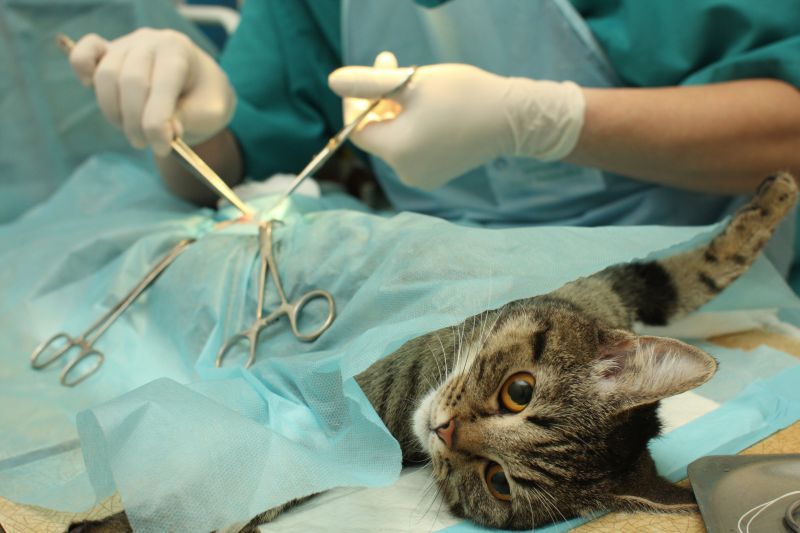
Desexing in female cats is called spaying. The cat’s abdomen is shaved prior to the procedure. Under general anaesthetic in a surgical theatre, an incision is made in the abdomen by which the ovaries and uterus are removed. This prevents pregnancy and stops the cat from coming into heat.
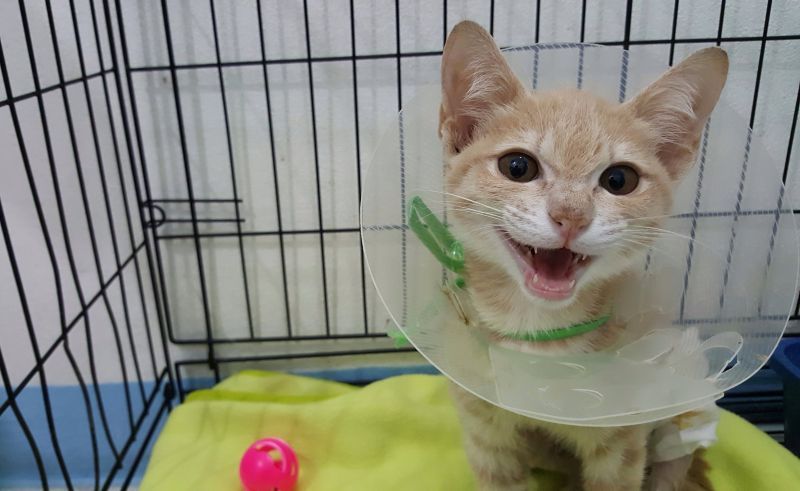
Both male and female cats are generally sent home on the day of the operation. Females will require a cone, or Elizabethan collar to prevent them from licking at their wound, risking infection or premature removal of sutures.
They may also have a tattoo placed while under anaesthetic so it is easy to externally determine whether they are desexed or not for future reference.
Risks of surgery
Desexing female cats is a major surgical procedure, and because the abdomen is opened, there is a risk of haemorrhaging (internal bleeding), particularly when desexing is performed in a cat in heat. The castration of male cats is considered a low-risk operation. Potential risks for both male and female cats include:
- Swelling
- Inflammation
- The cat pulling out their stiches, which can cause the surgical wound to re-open and get infected.
General anaesthetic can also cause side effects. Please speak to your local vet if you have any concerns.
Unsure how serious it is?
Bow Wow Meow policyholders can get access to trusted vet care anytime, anywhere, at no additional cost. Connect to an experienced Australian registered vet via video call, 24/7. Whether it’s providing vet advice, setting up at-home treatment plans, or confirming if you need to visit a vet in person, you can get help when you need it.
Find out more about our pet insurance cover options.
Post-operative care for cats
Just like humans, each cat recovers differently after a general anaesthetic and experiences a different amount of post-surgical pain. However, male cats are usually up and running around from one to two days after desexing with very little pain, while females can take up to 3 or 4 days to recover with moderate pain.
Some vets will prescribe pain relief for your cat after desexing, if required. Ensure you administer the painkillers as per the vet’s instructions – they are important to keep your cat comfortable during recovery from the procedure.
Once your cat has woken up from surgery and returned home, you may offer them some food and water. Don’t panic if your cat is not interested as they may feel a little unusual after their anaesthetic, but call your vet if you have any concerns. Commonly they are back to their usual routine by the following day.
Take your vet’s advice as to how much activity you should allow or if you should consider crating your cat for a period of time during the recovery period. Provide an comfortable area for them to rest where they can feel safe and secure. All cats, even outdoor ones, should be kept confined indoors for some days after the procedure.
Check the surgical wounds daily to ensure there are no infections or discomfort for your cat.
The cost of de-sexing your cat
Your local vet can guide you on the cost of desexing your cat. This can range between $225 and $400 for both male and female cats (Source RSPCA NSW). Some vets will charge higher fees because they include blood work analysis before the procedure to make sure that your kitten or cat doesn’t have any liver or kidney issues and that the anaesthetic will not be problematic for them.
Some local councils offer a contribution towards cat desexing. Please contact your council to find out if there are any available contributions/rebates that you may be eligible for.
You can also apply to the National Desexing Network for a reduction in cost if you can’t afford to desex your cat. More information can be found here, or contact your local Animal Welfare League.
Bow Wow Meow gives you the option to add on Routine Care (non-insurance benefit), which provides a contribution towards everyday items such as vaccinations, de-sexing and health checks.
Learn more about our Routine Care (non-insurance benefit).
Myths surrounding cat desexing
There are several commons myths and misconceptions around cat desexing. These include that you should let a female cat have her first heat and/or that you should let her have one litter and desex her afterwards. Rest assured that these are untruths and that the advantages of desexing your cat far outweigh any benefits gained by unnecessarily delaying the procedure.
It is highly recommended to leave cat breeding to reputable breeders who understand the risks and will potentially keep any unwanted kittens.

In summary
Desexing your cat or kitten is a surgical procedure to ensure your cat will not be able to reproduce. The surgery is conducted under full anaesthetic. While it is a minor surgery for males, the surgery for females is more complex and their recovery can take a little longer.
Desexing your cat will help to control cat overpopulation, remove the stress and problems of unwanted litters and have positive effects on your cat’s health. As your cat will stop coming in heat, desexing will also make living your cat a bit more relaxed and help avoid troubling behaviour like night howling.
Bow Wow Meow Pet Insurance can help protect you and your cat should an unexpected trip to the vet occur.
-
Find out more about our cat insurance options
-
Get an online pet insurance quote
Bow Wow Meow is proud to have been awarded winner of Canstar’s ‘Most Satisfied Customers’ Award in the Pet Insurance category for both 2024 and 2025!
Bow Wow Meow is proud to be the only Pet Insurer that has been awarded Product Review’s Top Rated Pet Insurance every year from 2018 to 2026! This is based on 3,193 independent customer reviews (as at 09/04/2026), with an overall rating of 4.5 stars.

We also have the following ratings on other review platforms:
Google Review rating of 4.5 stars (based on 1,358 reviews)
Trust Pilot rating of 4.6 stars (based on 555 reviews)
Bow Wow Meow has been chosen as Winner of 4 categories in the 2026 Finder Pet Insurance Customer Satisfaction Awards!




– Most Trusted Pet Insurance
– Easiest to Claim Pet Insurance
– Most Recommended Pet Insurance
– Legendary Service Pet Insurance
We also received Highly Commended Awards for Loved Brand Pet Insurance and Best Value Pet Insurance.
Bow Wow Meow is an Australian-owned and operated pet insurance provider. Our focus is purely on pets, and we are proud to have helped provide peace of mind to over 200,000 Aussie pet owners since 2008.