


Is the Maltese a good family dog?


Maltese

Maltese are relatively sturdy toy-sized dogs with long, eye-catching, pure white hair, big, dark eyes and black nose. Said to be the ultimate lap dog, they are happy to play, go for walks, or curl up in your lap, and can fit in with any lifestyle. Cute, friendly and endearing, with lots of personality and zest for life, they thrive in the company of their owners but can become overly clingy.
| Recommended for | Singles and families |
| Breed Classification | Toy |
| Other names | |
| Lifespan | 12 to 15 years |
| Size | 3 to 4 kg |
| Temperament | Loving, loyal, lively |
| Intelligence | Above average |
| Tendency to bark | Medium |
| Maintenance Level | Low – medium |
| Health Risk | This breed has an around average probability of having health issues in its lifetime, hence it is one of the more affordable breeds to insure. |
Thinking of insuring a Maltese?
Explore the Top 5 health issues claimed for Maltese, including highest claims paid and how much pet insurance could help you save on eligible vet bills.
See Maltese pet insurance Ready to get cover? Get a quick quote
Maltese personality and temperament
The Maltese is a spirited, playful, charming and affectionate little dog that thrives in the company of its owner. Jumping up to lick your face is a must for this breed. They are very intelligent, and in centuries of being companions to humans they have learned how to get exactly what they want from their people.
Maltese love everybody and anything. They could burst from curiosity when out and about and want to say hello to everyone they meet. Their friendliness will make even a non-dog lover turn into a huge fan! Hardy and adaptable, they make alert watchdogs who are fearless in a charming toy-dog way.
They are a very clingy breed and separation from their human is something they don’t appreciate. If left alone, they often start whining to inform the world about their misery. They prefer to be with somebody 24/7 and if it can’t be you, anybody will do. So if you are working long hours or you go away a lot, this breed is not for you. Maltese do tend to be prolific barkers especially if they are left alone for extended periods.
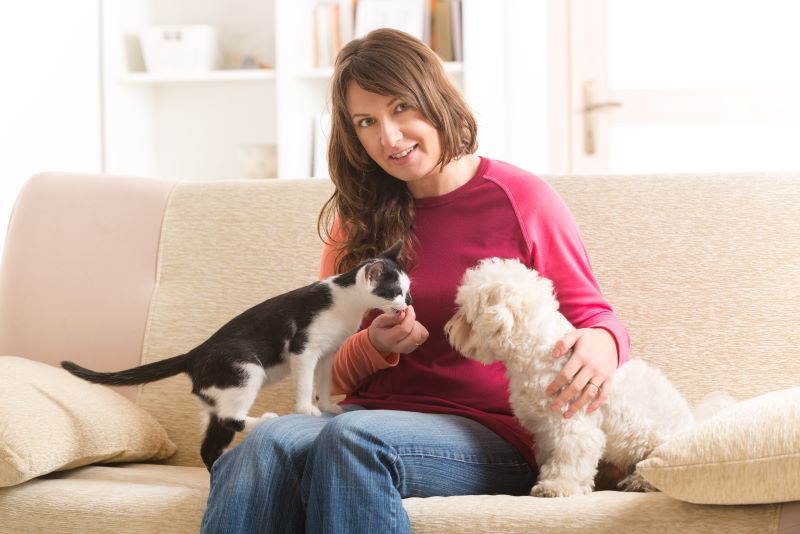
Maltese with kids and other pets
Maltese are not really suited to households with very young children because their fragility. Maltese love children, but do not always make the best pet for a child that is too young to understand that these dogs can be seriously hurt by rough handling. Very young children will need supervision whilst they learn how to gently handle a tiny Maltese.
It is a good idea to socialise your Maltese from an early age to ensure they are comfortable around other dogs and other people. Maltese can be wary of strangers and children, which is why socialisation is so important.
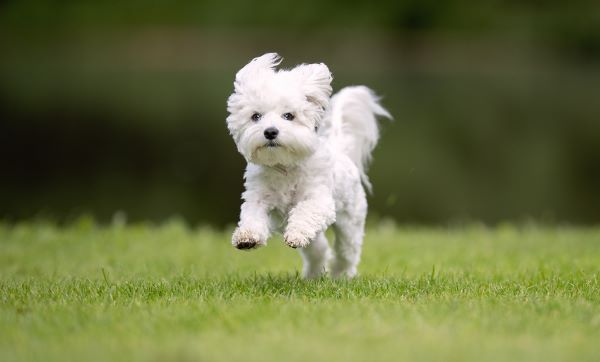
Maltese training and exercise
Maltese might be small but they are full of energy and require more exercise than one might think to keep them healthy and happy. Daily one-hour outings are recommended, taking different routes each day so their desire to smell new things can be pleased. They also love to play games, so bouncing around in their fenced yard, or even indoors, is another option to keep them fit.
Maltese are very intelligent dogs and they have been used for therapy dogs and have also competed in agility and obedience events. It is important to be consistent with their training; they can be stubborn and determined, but they respond well to positive training methods.
One thing that the Maltese can be stubborn about is toilet training. Make sure your Maltese has every opportunity to do the right thing by having an indoor litterbox or installing a doggy door.
| Energy level | Medium |
| Exercise requirements | Low to medium |
Common health issues for Maltese
What do Maltese owners claim for the most?
- Patellar luxation occurs when the bones of the patella are not aligned properly and as a result slip in and out of place, causing pain and an abnormal gait. Mild cases generally do not require treatment and do not impact too much on the dog’s life, but severe cases may require surgery.
- Portosystemic shunt of the liver is when an abnormal connection forms in between the portal vein or one of its offshoots and another vein, causing clood to bypass or ‘shunt’ the liver. It’s usually caused by a birth defect and symptoms include poor muscle development or stunted growth. Disorientation is another sign of portosystemic shunt of the liver.
- Progressive retinal atrophy refers to a family of eye conditions which lead to the gradual deterioration of the retina, causing first night blindness, then full blindness. There is no cure, but many dogs adapt easily to the loss of sight and can lead relatively normal lives, as long as their environment does not change too drastically.
- Hypoglycaemia, or low blood sugar, is common among dogs that are extremely stressed. Symptoms include weakness, confusion, an abnormal gait, and seizures. Treatment is available.
- White Dog Shaker Syndrome is a condition that affects white dogs. The symptoms include body tremors, lack of co-ordination and rapid eye movement. The symptoms usually present when the dog is six months to three years old.

- Collapsed trachea occurs when rapid inhalation causes the trachea to flatten, making it difficult to receive air into the lungs. Symptoms include dry, honking coughing, intolerance to exercise, difficulty breathing and gagging when eating or drinking. Any dog exhibiting these symptoms should see a vet as soon as possible.
- Reverse sneezing can occasionally be confused with a collapsed trachea, but is much less serious. It occurs when the dog becomes over-excited, drinks/eats too quickly, or if there is an increased amount of irritants in the air. Though it can be scary to witness, it will stop as soon as the Yorkie relaxes. Stroking the dog’s throat may help the dog calm down. Maltese are also susceptible to chills and can get sunburnt when they have long hair that is parted on their backs.
Not all conditions are covered by Pet Insurance. For details of Bow Wow Meow Pet Insurance cover, refer to the Product Disclosure Statement.
How to choose the right insurance for your Maltese
When comparing cover for your Maltese, look for:

Cover for common Maltese conditions:
Check that the policy covers conditions Maltese can be prone to, including common health issues.

Cover for hereditary conditions:
No exclusions for hereditary or congenital conditions⑅.

Flexible cover options:
Options to adjust your annual benefit limit, reimbursement rate and excess.
Bow Wow Meow's Nose-to-Tail Cover offers flexible options for your Maltese, with cover for accidental injuries, illnesses and hereditary conditions⑅. Get a quick quote for cover that suits your Maltese and your budget.

Maltese feeding and nutrition
The Maltese should do well on a high-quality dog food that is appropriate for its age (puppy, adult, or senior), size and activity level.
They can become overweight so it’s important to monitor their weight and calorie consumption. Avoid feeding table scraps or overindulging them with treats.
Check with your vet if you have any concerns about your dog’s weight or diet.

Maltese care and grooming
Owning a Maltese requires a commitment to grooming, particularly if you are going to keep your dog’s hair long. This requires daily gentle brushing and combing to the skin to prevent mats and tangles. Many owners choose to have the Maltese coat clipped to a more manageable length.
Maltese should have regular baths and coat conditioning to keep their hair looking its best. They have a tendency to have tear stains on their faces.
While Maltese have plenty of hair, they do not have an undercoat and do not shed very much. Therefore, they are considered to be hypoallergenic dogs.
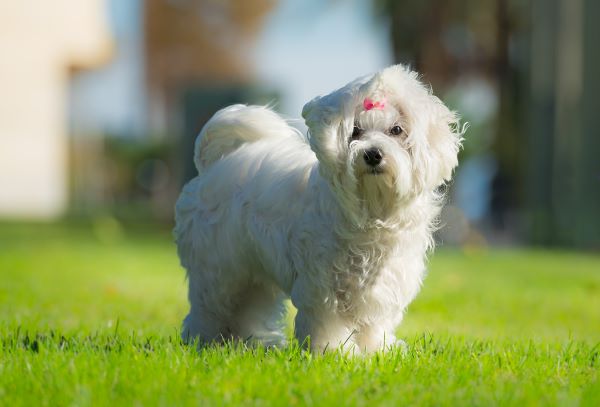
Size, appearance and coat of Maltese
The Maltese a small sized dog known for its eye-catching, long, pure white, flowing hair. With big, dark eyes and black nose, the Maltese is said to be the ultimate lap dog.
While they are a fine-boned dog, the Maltese is relatively sturdy, hardy and adaptable.
The silky coat of the Maltese can hang to the floor if it is allowed to grow.
| Weight range | 3 to 4 kg |
| Height range | 21 to 23 cm |
| Colours | White |
| Coat length | Long |

Breed history of Maltese
The Maltese was once called “ye ancient dog of Malta” as the breed is believed by some to have originated on the island of Malta, south of Sicily in the Mediterranean Sea. Another school of thought is that these little dogs originally developed in Asia.
The Maltese is one of the oldest toy breeds and there are representations of Maltese-like dogs in Egyptian artefacts. The Maltese was well integrated into Mediterranean culture prior to the Christian Era. It has been reported that the Greeks built tombs for their Maltese dogs. The Europeans believes that Maltese had the ability to cure people who were ill and they would place these dogs on the pillow of the ill person.
During the 15th Century the Maltese was well loved by French aristocrats and towards the end of the 16th century the Maltese was the must-have accessory of many royal ladies. A number of British royals owned Maltese including Mary Queen of Scots, Queen Victoria and Queen Elizabeth I. The Maltese featured in portraits with their owners that were painted by famous artists like Goya.
In spite of their popularity during the 15th and 16th Century, the Maltese breed was pushed to the brink of extinction when people tried to decrease the size of the dog through breeding it down to the size of a squirrel. It is believed that dogs like the Bichon Frise, Bolognese and Havanese breeds were developed during this time as breeders used Poodles, Miniature Spaniels and other miniature dogs in an attempt to save the breed from being wiped out.
Explore related breeds
Maltese facts!
 Charles Darwin estimated that the Maltese originated in 6000 B.C.
- The Greeks erected tombs to their Maltese.
- Over the years Maltese have been the favourite dog of many a celebrity including Elizabeth Taylor, Marilyn Monroe and Barbara Streisand.
- In 2007, Leona Helmsley, a billionaire from New York City, left $12 million to her pet Maltese, Trouble, when she died.
- Despite their obvious intelligence, the Maltese didn’t make it onto the 100 Smartest Dog Breeds list devised by Stanley Coren.
Summary
The Maltese is a sturdy toy-sized dog with long, pure white hair, dark eyes and a lively personality. Friendly and endearing, Maltese dogs are equally happy playing, going for walks or curling up on a lap.
Their adaptable nature means they can fit into many lifestyles, but they thrive on close companionship with their owners. Because they enjoy attention so much, some can become overly clingy, making a balanced routine of affection, activity and independence helpful.
FAQs about the Maltese
They are generally affectionate companions and can suit families, couples or singles when their individual exercise, training and grooming needs are met.
Moderate. Daily walks and play are generally appropriate, adjusted for the dog’s age, health and individual energy level.
Generally yes. They are intelligent and usually respond well to positive, consistent training, particularly when sessions are engaging and rewarding.
They are generally low to moderate or moderate barkers, although barking can increase with boredom, excitement, anxiety or unfamiliar activity.
They are relatively low shedding, but their coat or skin still requires regular grooming and maintenance to stay healthy and free of mats.
Yes, they can adapt well to apartment living provided they receive sufficient daily exercise, mental stimulation and companionship.
They can live happily with respectful children and other pets when well socialised, but their small or delicate size means interactions with young children should be closely supervised.
Potential health concerns include dental disease, patellar luxation, eye disorders and portosystemic shunts.
MORE INFORMATION
Maltese Kennel Club of NSW: http://maltesedogs.tripod.com/
Maltese Club of Victoria Inc: http://www.malteseclubvic.net/

Get 2 months free for your puppy!
Congrats on your new bundle of joy
To ensure your precious fur baby is covered from the start, we'd like to offer your first 2 months of our Nose-to-Tail Cover for free2!
Get a quick quote