What is a Maltese Shih Tzu?


Maltese Shih Tzu
Maltese Shih Tzus are toy-sized dogs that are one of the most popular crossbreeds in Australia. Playful, loving, relaxed, cheerful, confident and gutsy, they are known as the ‘friendly toy’. They thrive on human contact, whether it be game-playing, going for walks, or simply being included in day-to-day activities around the home, making great companions for people of all ages.
| Recommended for | Families with kids of all ages, singles, older people; well-suited to apartment living |
| Breed Classification | Hybrid / designer breed |
| Other names | Malshi, Mal-Shi, Maltese Shitzu |
| Lifespan | Around 12 to 14 years |
| Size | Toy |
| Temperament | Gentle, friendly, loyal, confident, full of character |
| Intelligence | Above average: they often pick up tricks and commands quickly, especially when treats and praise are involved. |
| Tendency to bark | Moderately vocal, especially when alerting to visitors, unfamiliar noises or being left alone. Boredom, separation anxiety and inconsistent training can increase barking. |
| Maintenance Level | Low to medium: while they need regular grooming, they are generally low shedders, making them a popular choice for tidy homes. |
| Health Risk | The Maltese Shih Tzu is generally considered a healthy crossbreed, but it may inherit health risks associated with either parent breed and may be susceptible to dental disease, luxating patellas, ear infections, skin allergies and several eye conditions. |
Thinking of insuring a Maltese Shih Tzu?
Explore the Top 5 health issues claimed for Maltese Shih Tzus, including highest claims paid and how much pet insurance could help you save on eligible vet bills.
See Maltese Shih Tzu pet insurance Ready to get cover? Get a quick quote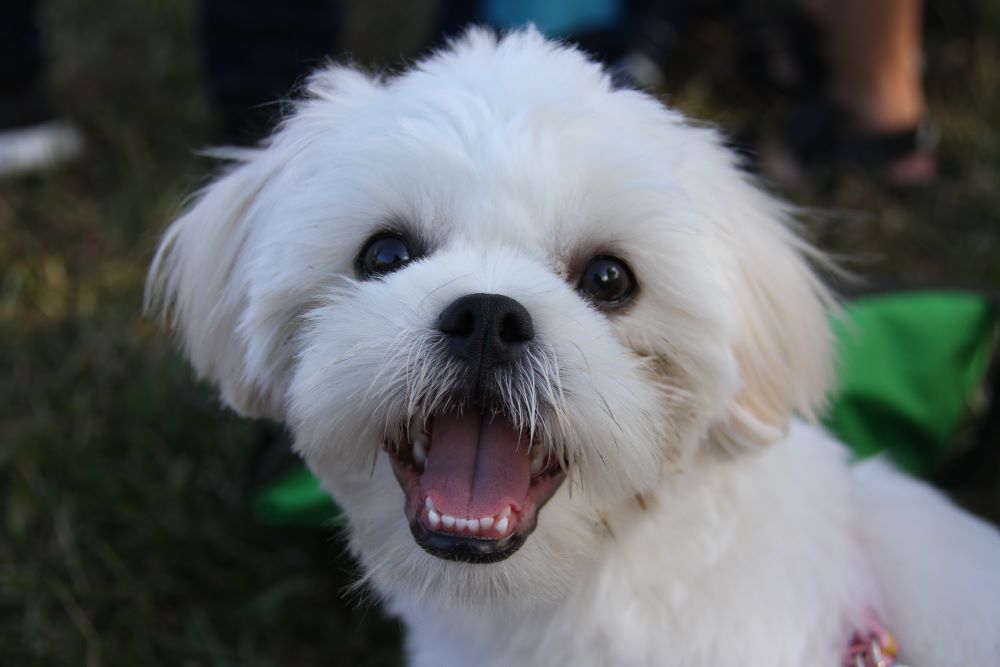
Maltese Shih Tzu personality and temperament
Playful, affectionate, relaxed, cheerful, confident and gutsy, the Maltese Shih Tzu is considered to be more tolerant and better natured than the Maltese. Known as the ‘friendly toy’, their well-rounded temperament makes for a great family companion.
Being extremely people-orientated and very loyal, Maltese Shih Tzus require a great deal of human attention to remain happy. The breed thrives on human contact, whether it be game-playing, going for walks, or simply being included in day-to-day activities around the home.
The more they can be carried around or sit on your lap, the happier Maltese Shih Tzus will be, making them a popular choice for retired people and those who are home a lot or can take the dog with them when they go out. However, being overly carried around and babied can lead to the development of so-called “small dog syndrome”, where the dog has an overabundance of confidence and bravado for its small size.
Behavioural problems have been known to occur in Maltese Shih Tzus that are either overly spoilt, under-stimulated or left unto their own devises for extended periods of time, including issues such as separation anxiety, excessive barking, snappiness and destructiveness around the home.
Maltese Shih Tzus with kids and other pets
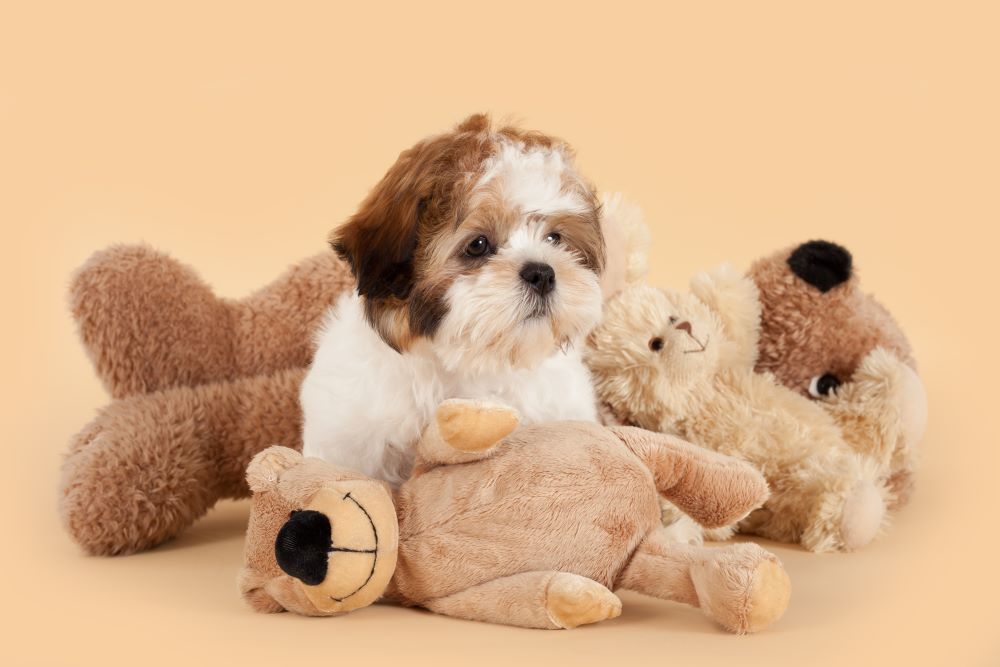
Maltese Shih Tzus have a good reputation for being highly tolerant of kids of all ages and will happily play along with them. They are friendly dogs who make excellent companions for older, more considerate children, but who also love the small kids.
The breed is cheerful and good-natured and will often live harmoniously with other pets in the home, regardless of species. As with all breeds, it’s best to socialise them as a puppy; this will help to curb any potential disharmony later on.
Maltese Shih Tzu training and exercise
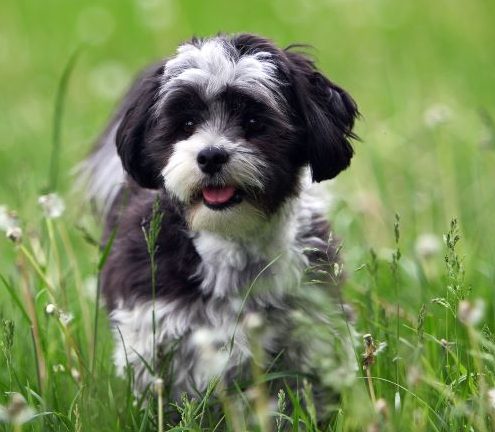
Maltese Shih Tzus are intelligent, people-focused dogs that usually respond well to gentle, reward-based training. Keep sessions short, upbeat and consistent, using treats, praise and play to hold their attention. Early socialisation can help them grow into confident, well-mannered companions, while patient toilet training is important because some small dogs can take a little longer to become reliable indoors.
The Maltese Shih Tzu has moderate exercise needs and is usually happy with around 30 minutes of activity each day, split between short walks and indoor play. Puzzle toys, training games and sniffing activities also provide valuable mental stimulation. Avoid strenuous exercise in hot weather, particularly if your dog has inherited the Shih Tzu’s shorter muzzle, as this may make it more susceptible to overheating.
| Energy level | Medium |
| Exercise requirements | Medium |
Common health issues for Maltese Shih Tzus
What do Maltese Shih Tzu owners claim for the most?
The Maltese Shih Tzu is generally considered a healthy crossbreed, but it may inherit health risks associated with either parent breed.
- Dental disease: Small, crowded mouths can encourage plaque buildup, gum disease and tooth loss. Periodontal disease is the most commonly recorded disorder in Shih Tzus.
- Patellar luxation: The kneecap slips out of position, potentially causing skipping, limping or arthritis. Maltese and other toy breeds have a recognised genetic predisposition.
- Eye problems: These may include dry eye, corneal ulcers, cataracts and other inherited eye disorders. The Shih Tzu’s prominent eyes can be vulnerable to irritation and injury, while cataracts have been documented in Maltese.
- Breathing difficulties and heat intolerance: Maltese Shih Tzus that inherit a particularly short muzzle may experience brachycephalic obstructive airway syndrome, which can interfere with breathing, exercise and temperature regulation.
- Ear infections: Hairy or poorly ventilated ear canals may trap moisture and debris; ear disorders and otitis externa are among the more frequently diagnosed problems in Shih Tzus.
- Skin allergies and dermatitis: Some dogs may develop itchy, inflamed skin in response to environmental, flea or food allergens.
- Anal sac problems: Anal sac impaction is another commonly recorded condition in Shih Tzus.
- Portosystemic liver shunt: This is less common but important, as research supports an inherited predisposition in Maltese dogs. It is usually caused by a birth defect and symptoms include poor muscle development or stunted growth.
Not all conditions are covered by Pet Insurance. For details of Bow Wow Meow Pet Insurance cover, refer to the Product Disclosure Statement.
How to choose the right insurance for your Maltese Shih Tzu
When comparing cover for your Maltese Shih Tzu, look for:

Cover for common Maltese Shih Tzu conditions:
Check that the policy covers conditions Maltese Shih Tzus can be prone to, including common health issues.

Cover for hereditary conditions:
No exclusions for hereditary or congenital conditions⑅.

Flexible cover options:
Options to adjust your annual benefit limit, reimbursement rate and excess.
Bow Wow Meow's Nose-to-Tail Cover offers flexible options for your Maltese Shih Tzu, with cover for accidental injuries, illnesses and hereditary conditions⑅. Get a quick quote for cover that suits your Maltese Shih Tzu and your budget.
Maltese Shih Tzu feeding and nutrition
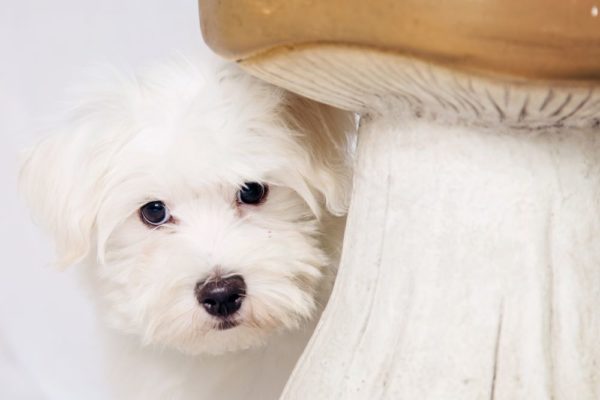
Feed your Maltese Shih Tzu a high-quality, complete and balanced dog food suited to their age, size and activity level. Measure each serving and divide the daily allowance into two meals, as these small dogs can gain weight when overfed. Treats are useful for training but should remain a small part of their overall intake, and fresh water should always be available.
Maltese Shih Tzus do not have special breed-specific nutritional requirements, but they need the right balance of protein, fats, carbohydrates, vitamins and minerals to support their energy, skin, coat and general health. Their needs may change with age, activity and medical conditions, so monitor their weight and body condition and ask your vet for advice before changing diets or adding supplements.
Maltese Shih Tzu care and grooming
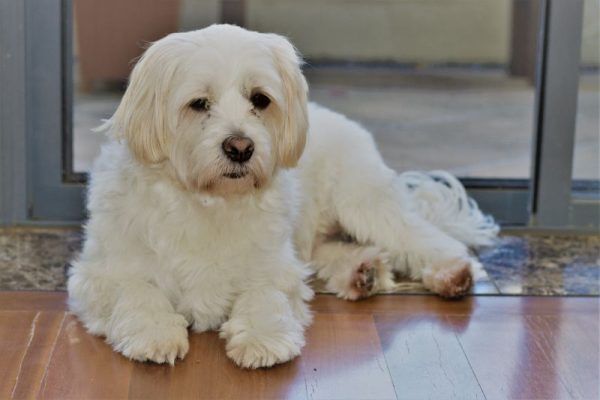
While marketed as the dog that doesn’t shed, this is not exactly true. While the Maltese Shih Tzu sheds less than many other breeds, it does still shed, so grooming is still required. The fine coat requires frequent care, including daily brushing to keep out tangles and mats. Regular bathing will keep the coat soft and silky. They can be clipped every six to nine weeks in order to make grooming a bit easier, but will still need to be brushed weekly at a minimum.
Maltese Shih Tzus can have some problems with tearstains under the eyes, which may need to be treated with commercial tearstain removers. Keeping the area around the eye clean can help to reduce staining.
Size, appearance and coat of Maltese Shih Tzus
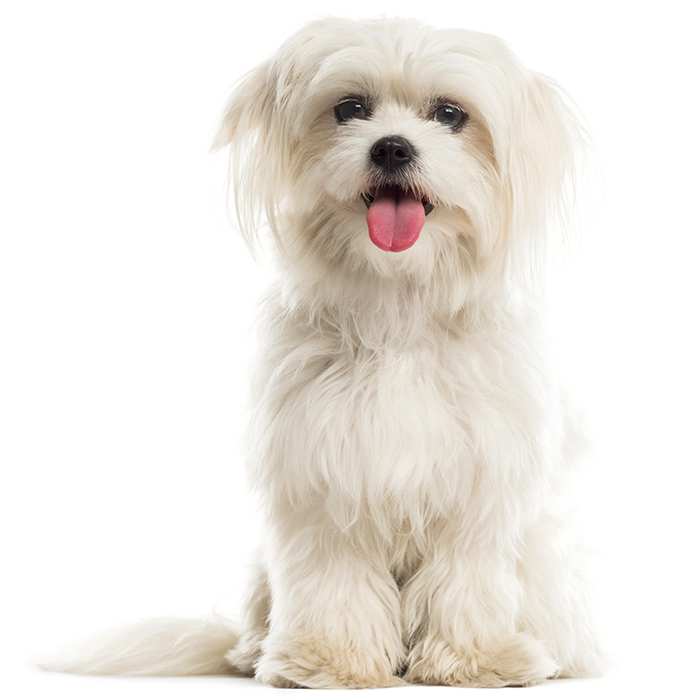
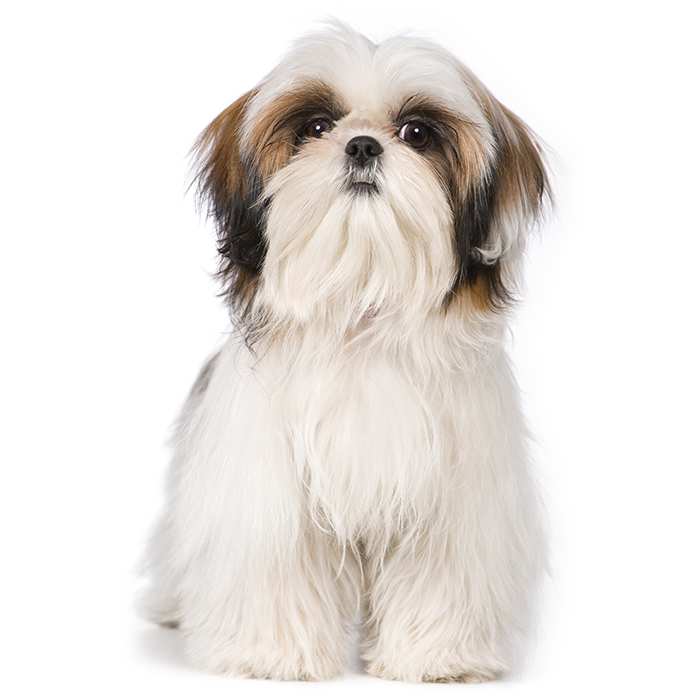
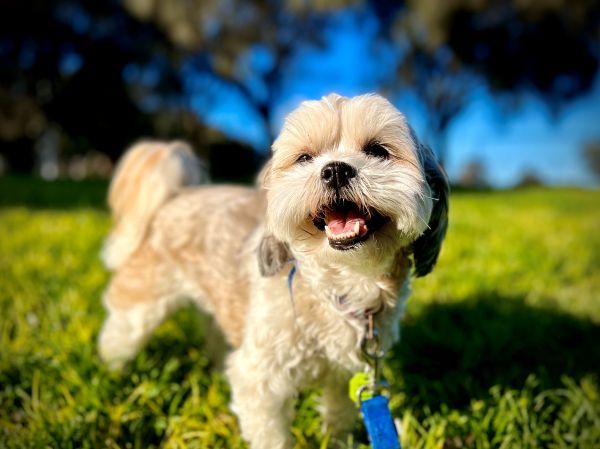
The Maltese Shih Tzu has no official breed standard and the appearance of each animal can vary. Generally, they are very small sized dogs with a small, rounded head and a short muzzle. They tend not to have the bulging eyes and stubby nose of the Shih Tzu, nor the long hair of the Maltese.
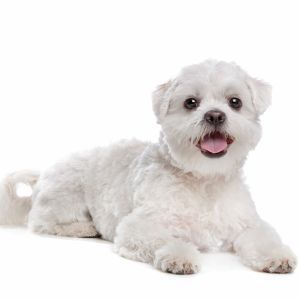
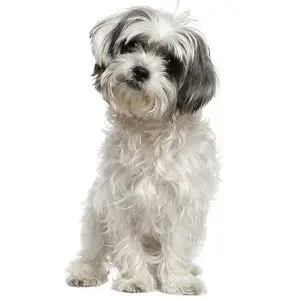
Generally their coat is white or white with tan markings on the body and ears, but they can sport a combination of other colours, such as black, brown, black and white, brown and white, and black and brown. The coat is medium in length, thick, soft and silky in texture, and it should have some wave to it, but should never be curly.
| Weight range | 3 to 6 kg |
| Height range | 20 to 30 cm |
| Colours | White or white with tan markings |
| Coat length | Medium |
Breed history of Maltese Shih Tzus
The Maltese Shih Tzu or Malshi was one of the first “designer” crossbreeds developed specifically as a companion dog. It was developed in the 1990’s by cross breeding a Maltese and a Shih Tzu in order to produce a small, low-shedding dog with a good-natured and outgoing temperament.
Although a new hybrid breed, the histories of its two parent breeds go back a long way. The Maltese dog first appeared in Europe as far back as 500 BCE, and it is believed this ancient breed originated in Asia. It was very popular throughout the Middle Ages among European nobles and often served as lapdogs in many a royal court.
The Shih Tzu is one of the oldest known breeds of domesticated dogs and is originally native to Tibet. Known to have been kept as companion animals as far back as 1000 BCE, the breed was especially popular with Chinese nobles and royalty. The Shih Tzu was first introduced to Europe as late as the 1930’s and to the USA only after the Second World War.
The cross breeding of the Maltese and the Shih Tzu is considered to have been a great success, and despite not being completely non-shedding, the Maltese Shih Tzu sheds far less hair than its parent breeds. The popularity of the Maltese Shih Tzu has sky-rocketed in Australia in recent years and is quickly gaining notoriety in the United States, where it is commonly known as the ‘Mal-Shi’.
Explore related breeds
Maltese Shih Tzu facts!
- Although the Maltese Shih Tzu is a very new hybrid breed, its parent breeds, the Shih Tzu and Maltese are two of the oldest known breeds of domesticated dog that were once treasured by European and Chinese royalty.
- The “Malshi” was one of the first “designer” crossbreeds developed specifically as a companion dog.
- They are often marketed as the dog that doesn’t shed hair. While this is not true, the Maltese Shih Tzu does shed considerably less than both of its parent breeds.
- They are not as allergy friendly as some of the other new hybrid dog breeds.
- Thanks to their fluffy coat and expressive round eyes, many Malshis keep their adorable puppy-like appearance well into adulthood, making them social media favourites.
Summary
The Maltese Shih Tzu, often called the Malshi, is a small companion dog created by crossing the Maltese with the Shih Tzu. Affectionate, playful and people-oriented, this adaptable crossbreed is well suited to families, singles and apartment living. Malshis are known for their fluffy appearance, expressive faces and lively personalities, and they usually enjoy being closely involved in everyday family life.
Although generally low shedding, their coat requires regular brushing and professional grooming to prevent knots and matting. Maltese Shih Tzus need moderate daily exercise, mental stimulation and gentle, consistent training, along with early socialisation. Like either parent breed, they may be susceptible to dental disease, luxating patellas, eye and ear problems, skin allergies, and breathing or heat-related difficulties if they inherit a shorter muzzle.
FAQs about the Maltese Shih Tzu
A Maltese Shih Tzu is a cross between a Maltese and a Shih Tzu. As a crossbreed, appearance, coat, size and temperament can vary between individuals.
They can make good family companions, but temperament can vary between individuals and, for crosses, according to the other breed in the mix. Early socialisation and consistent training are important.
Moderate. Daily walks and play are generally appropriate, adjusted for the dog’s age, health and individual energy level.
Generally yes. They are intelligent and usually respond well to positive, consistent training, particularly when sessions are engaging and rewarding.
They are generally low to moderate or moderate barkers, although barking can increase with boredom, excitement, anxiety or unfamiliar activity.
Coat type and shedding can vary considerably depending on the other breed in the mix, so neither low shedding nor a particular grooming requirement can be guaranteed.
Yes, they can adapt well to apartment living provided they receive sufficient daily exercise, mental stimulation and companionship.
Many can live happily with children and other pets when socialised from a young age, although individual temperament and compatibility always vary.
Potential health concerns include dental disease, patellar luxation, eye and ear problems, skin allergies and possible breathing difficulties.
null

Get 2 months free for your puppy!
Congrats on your new bundle of joy
To ensure your precious fur baby is covered from the start, we'd like to offer your first 2 months of our Nose-to-Tail Cover for free2!
Get a quick quote