IVDD Pet Insurance in Australia: Comprehensive coverage

Does Bow Wow Meow pet insurance cover IVDD in dogs?
Yes, Bow Wow Meow’s Nose-to-Tail Cover provides cover for IVDD if the condition is not pre-existing and the waiting period has passed⑅.
Summary
Intervertebral disc disease (IVDD) in dogs can be frightening for pet owners, especially when your dog suddenly seems in pain, weak, wobbly or unable to walk. In this article, we explain what IVDD is, the symptoms to watch for, which breeds are more prone to this spinal condition, how it is diagnosed, and the treatment options that may help, from rest and medication to surgery.
We also look at the cost of IVDD treatment in Australia, which can range from several thousand dollars for diagnostic tests and conservative care to as much as $41,850Ø, helping dog owners understand both the emotional and financial impact of this serious condition.
What is IVDD in dogs?
Intervertebral Disc Disease, or IVDD, is a common neurological condition that affects a dog’s spine, causing pain and inflammation, in some cases leading to paralysis, which may require spinal surgery to resolve.
IVDD reportedly affects 2% of domestic dogs. It is more common in breeds with long backs and short legs, such as Dachshunds and Basset Hounds.
IVDD affects the intervertebral discs that act as a cushion between the bones making up the spine. As a result of age, movement, and injuries, the discs can degenerate, causing spinal pain.
The discs can also herniate (bulge out) and press on the spinal cord, which is not only very painful but can cause nerve damage and even paralysis. This may occur suddenly, or more slowly over time depending on the type of herniation that has occurred.
Whether onset is sudden or slow, Intervertebral Disc Disease is a serious condition that can significantly impact a dog’s quality of life. In the most severe cases, some dogs with IVDD are euthanised.
Immediate veterinary attention is essential because there are options available to treat the disease and slow its progression, especially if it is diagnosed in the early stages.

Importance of IVDD pet insurance cover in Australia
Unfortunately, IVDD is a degenerative disease that can cause a host of problems for your dog. IVDD can be a very costly condition because of the many diagnostic tests, treatments and/or surgeries required to help an affected dog.
Pet insurance that covers IVDD can help cover a portion of eligible veterinary expenses if your dog unexpectedly develops the condition#. However, not all pet insurance policies in Australia cover IVDD, so check the Product Disclosure Statement (PDS), exclusions and policy terms carefully before choosing cover.
Pet insurance that covers IVDD in Australia:
Bow Wow Meow’s Nose-to-Tail Cover provides cover for IVDD as an illness#.
Does IVDD only occur in Dachshunds?
Intervertebral Disc Disease is a genetic condition which causes the discs in a dog’s spine to degenerate. Any breed, age or gender can be affected with IVDD. However, certain breeds are more likely to be affected, and obesity and age are risk factors for this condition.
Find Pet Insurance for Dachshunds and Miniature Dachshunds
IVDD occurs more commonly in the following breeds:
- Breeds with hereditary skeletal abnormalities such as Dachshunds, Shih-Tzus, Beagles, Pekingese, Poodles, Corgis and Basset Hounds.
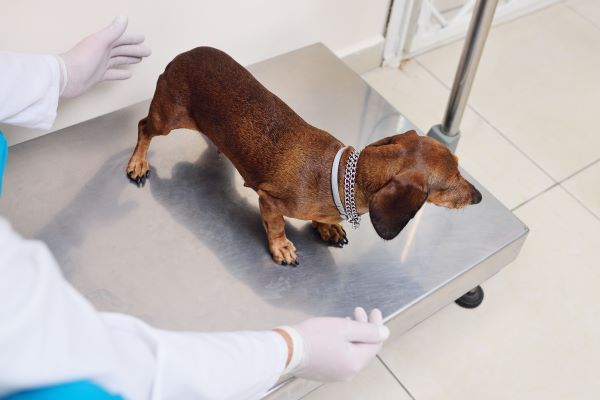
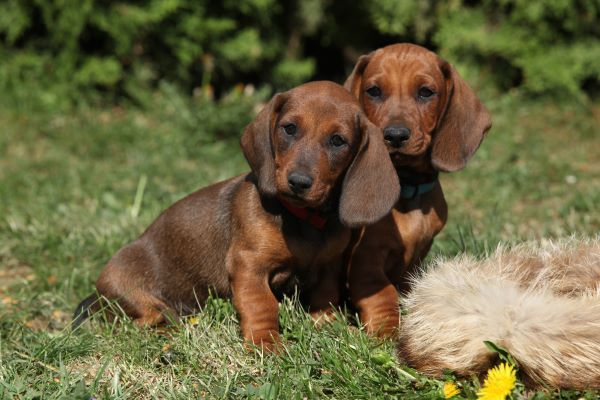
- Miniature Dachshunds are significantly more prone to intervertebral disc disease and spinal issues—about 4.8 times more likely than other dogs due to their long body structure. They’re also
more likely to experience lameness and back pain. - Standard Dachshunds are also highly susceptible to intervertebral disc disease and spinal issues, with a risk around 4.5 times higher than the average dog. Their long backs and short legs increase the strain on the spine.
- French Bulldogs are five times more likely to develop intervertebral disc disease than other breeds.
How much does IVDD treatment cost?
According to PetSure claims data 2024, the average treatment cost for IVDD in 2024 for dogs was $5,018Ø, with the highest treatment cost being $41,850Ø.
These costs reflect the diagnostic imaging, surgical expertise and intensive nursing care involved in initial workup of dogs affected with IVDD. The actual cost of treating IVDD depends on what sort of treatment your dog is getting. Like all veterinary care, the cost of care also depends on where your dog is receiving treatment, with specialist surgery frequently required in cases of severe IVDD.

ØBased on PetSure claims data, 2024 calendar year. Reimbursement for these claims under a pet insurance policy would be subject to limits, such as annual benefit limits or sub-limits, benefit percentage, applicable waiting periods and any applicable excess. Cover is subject to the policy terms and conditions. You should consider the relevant Product Disclosure Statement or policy wording available from the relevant provider. Please note that values calculated are based on all claims for that condition and medically related conditions in each calendar year.
Common symptoms and signs of IVDD in dogs
Knowing the signs and symptoms of IVDD can help you determine if your dog is developing the condition. It’s important to be able to recognise the symptoms early and to act quickly, especially if your dog is considered a high-risk breed.
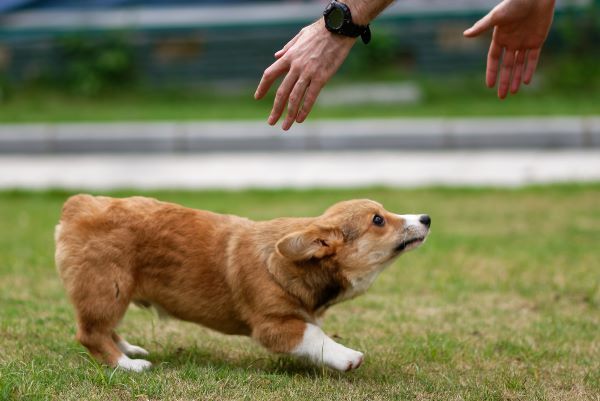
Signs of IVDD can depend on whether the condition occurs suddenly or over time, as well as where the affected disc is located along the spine:
- Sudden IVDD: the dog may yelp, followed by paralysis, involuntary urination, a reluctance to move and/or distress. Some dogs may vomit, shake or show other signs related to pain or stress.
- Slow onset IVDD: there is a longer period of pain, weakness, decreasing mobility or muscle wastage.
- Affected disc is in the neck (Cervical IVDD): the dog may have mobility issues affecting all four limbs, be reluctant to move or turn its head, carry its head cautiously and held low, and/or have difficulty lowering its head to eat or drink.
- Affected disc is in the middle back (the Thoracolumbar area): the dog’s rear legs may appear weak and show signs of incoordination or paralysis.
- Affected disc is in the lower back (the Lumbosacral area): the dog may suffer from incontinence (urinary and/or faecal), have mobility issues including inability or reluctance to jump or navigate stairs, and reduced tail movement.
Unsure how serious it is?
Bow Wow Meow policyholders can get access to trusted vet care anytime, anywhere, at no additional cost. Connect to an experienced Australian registered vet via video call, 24/7. Whether it’s providing vet advice, setting up at-home treatment plans, or confirming if you need to visit a vet in person, you can get help when you need it.
Find out more about our pet insurance cover options.
Case study
Bow Wow Meow’s Hero Pet, Bronte the French Bulldog, battled bravely through the pain and treatment of Intervertebral disc disease.
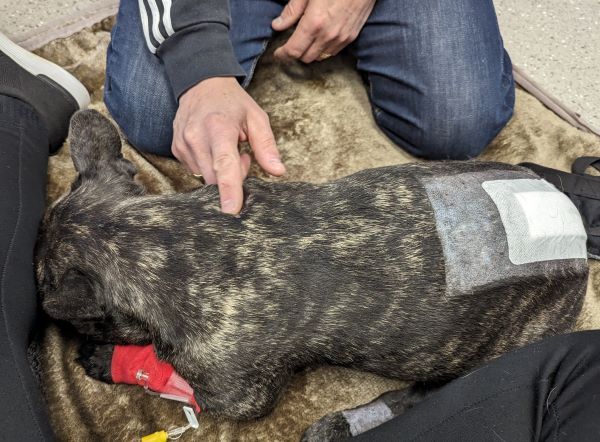
Bow Wow Meow is proud to have paid out more than $8,000 towards Bronte’s life-saving treatment, and to provide cover for hundreds of IVDD claims each year.
Why is the cost of IVDD treatment for dogs so high?
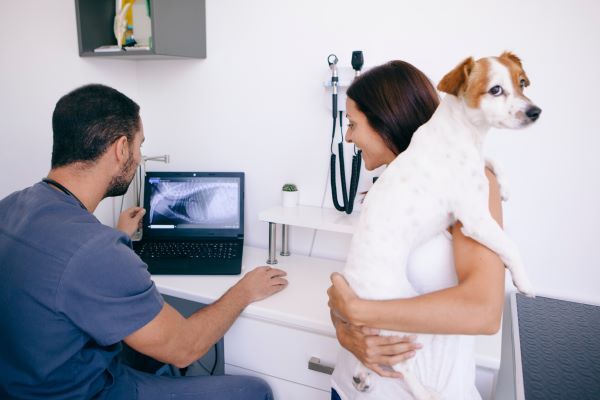
- Diagnosis of IVDD may include X-rays, CT scan, MRI or a type of sonogram called a myelogram to identify the affected areas of the spinal cord. These procedures may not be available at many general vet practices, so a visit to a veterinary hospital or specialised practice may be required.
- Treatment for IVDD will depend on the severity of the disorder. If the damage to the spine isn’t too severe, the vet may prescribe steroids and anti-inflammatory medications. Ongoing monitoring and physical therapy may also be necessary to prevent or slow further deterioration.
- IVDD surgery costs in Australia can run into tens of thousands of dollars. Surgery is often undertaken to decompress the spine at the site of the affected disc. Dogs that undergo surgery have a better chance of recovery if they are operated on soon after initial diagnosis. Others recover but have subsequent bouts with IVDD if other discs herniate later in life, requiring further treatments and/or surgeries.
- Rehabilitation post-surgery is important to help dogs regain function and support recovery.
Managing a progressive disease like IVDD can be very stressful, both emotionally and financially. That’s why it can be beneficial to have the security of pet insurance that covers IVDD#.
Get a quick quote
What to check when choosing pet insurance for IVDD
If you are concerned about IVDD, it is important to check exactly what a pet insurance policy covers before taking it out. IVDD is typically considered an illness rather than an injury, so it is unlikely to be covered by Accident Only policies. Look for cover that includes both accidents and illnesses, and check the Product Disclosure Statement (PDS) and policy wording carefully for applicable limits, exclusions and waiting periods.
If you already have pet insurance and are unsure whether IVDD is covered, refer to your policy documents, including your Certificate of Insurance and PDS, or contact your insurer directly.
Is IVDD covered under the policy?
Check that IVDD is covered as an illness and is not specifically excluded. It is also important to see whether the insurer excludes certain hereditary or congenital conditions, either generally or for particular breeds that are more susceptible to IVDD.
When comparing policies, consider the type and level of cover provided rather than price alone. Comparing quotes, policy benefits and exclusions from several insurers can help you understand the differences between available options.
What limits and out-of-pocket costs apply?
IVDD treatment can range from medication and physiotherapy to advanced diagnostic imaging, specialist care and spinal surgery. Because treatment costs can vary considerably, check:
- the annual benefit limit
- whether an IVDD-specific or other relevant sub-limit applies
- the percentage of eligible veterinary expenses the insurer reimburses
- any applicable excess or co-payment
- applicable waiting periods
- exclusions or other restrictions that may affect an IVDD claim.
These details can make a substantial difference to how much of an eligible veterinary bill may be reimbursed.
Check the insurer as well as the policy
Policy features are important, but it can also be useful to consider the insurer’s reputation and customer service. Independent reviews and ratings, recommendations from other pet owners and the experiences of existing customers can provide additional insight.
Once you have shortlisted suitable providers, compare their quotes and cover, read their policy documentation and contact them directly if you have questions about how IVDD would be treated under the policy.
Pre-existing conditions and waiting periods
Taking out pet insurance before your dog develops signs of IVDD is particularly important. If symptoms or signs of the condition existed before the policy commenced, or arose during an applicable waiting period, IVDD may be considered a pre-existing condition and excluded from cover.
A pre-existing condition is generally a condition that:
- existed or occurred before the commencement date of the first policy period or within an applicable waiting period
- you or your veterinarian were aware of, or a reasonable person in your circumstances would have been aware of
- may be considered pre-existing even if the underlying or causative condition had not yet been formally diagnosed.
As definitions and conditions vary between insurers, always check the relevant PDS and policy wording for the policy you are considering.
Bow Wow Meow cover and IVDD
Bow Wow Meow’s Nose-to-Tail Cover provides cover for IVDD as an illness, provided it is not a pre-existing condition and the applicable waiting period has passed.#
Long-term outlook for dogs with IVDD
The outlook for a dog with IVDD depends on factors including the location and severity of the spinal cord compression and how quickly treatment begins. If you suspect your dog may have IVDD, seek veterinary attention promptly. Early diagnosis and treatment can be important for achieving the best possible outcome, and in severe cases, the time to surgery can have a significant impact on recovery.
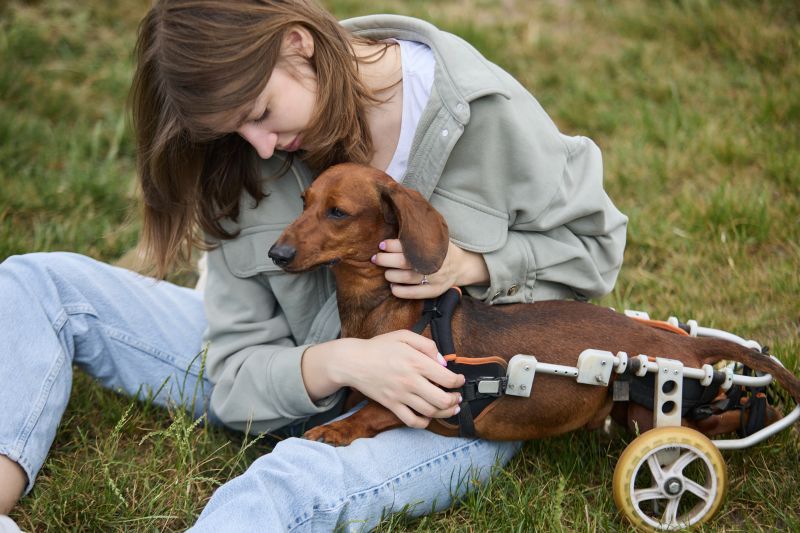
Some dogs recover well with appropriate treatment, while others require ongoing management. Dogs that undergo surgery may face a lengthy recovery involving rest, medication, physiotherapy and rehabilitation. Some dogs are left with long-term mobility problems and may need a pet wheelchair or other mobility aids, while others may experience ongoing urinary or faecal incontinence. In the most severe cases, paralysis may be permanent and euthanasia may need to be considered.
Because IVDD cannot be cured and further disc problems can occur, lifelong management may be necessary for some dogs. Your veterinarian is the best person to advise on your dog’s individual prognosis, treatment options and ongoing care.
To learn more about the condition itself, including diagnosis and treatment, read our comprehensive article on Intervertebral disc disease (IVDD) in dogs.
In summary
IVDD can range from manageable back pain to a serious neurological emergency, so recognising the signs and seeking veterinary care early is important. Treatment and ongoing care can also be costly, particularly when specialist imaging, surgery and rehabilitation are required.
If you are considering pet insurance for IVDD, check that the policy covers IVDD as an illness and carefully review its limits, exclusions, waiting periods and pre-existing condition rules before taking out cover.
#Policy T&Cs, limits, exclusions and waiting periods apply. Annual excess may apply. Because IVDD is typically considered to be an illness rather than an injury, it is not likely to be covered by Accident Only policies.
Bow Wow Meow Pet Insurance can help protect you and your dog should an unexpected trip to the vet occur.
-
Find out more about our dog insurance options
-
Get an online pet insurance quote
Bow Wow Meow is proud to have been awarded winner of Canstar’s ‘Most Satisfied Customers’ Award in the Pet Insurance category for both 2024 and 2025!
Bow Wow Meow is proud to be the only Pet Insurer that has been awarded Product Review’s Top Rated Pet Insurance every year from 2018 to 2026! This is based on 3,193 independent customer reviews (as at 09/04/2026), with an overall rating of 4.5 stars.

We also have the following ratings on other review platforms:
Google Review rating of 4.5 stars (based on 1,358 reviews)
Trust Pilot rating of 4.6 stars (based on 555 reviews)
Bow Wow Meow has been chosen as Winner of 4 categories in the 2026 Finder Pet Insurance Customer Satisfaction Awards!



– Most Trusted Pet Insurance
– Easiest to Claim Pet Insurance
– Most Recommended Pet Insurance
– Legendary Service Pet Insurance
We also received Highly Commended Awards for Loved Brand Pet Insurance and Best Value Pet Insurance.
Bow Wow Meow is an Australian-owned and operated pet insurance provider. Our focus is purely on pets, and we are proud to have helped provide peace of mind to over 200,000 Aussie pet owners since 2008.
Sources:
“Intervertebral Disc Disease (IVDD)”, PetSure, https://petsure.com.au/knowledge-hub/intervertebral-disk-disease-ivdd/. Accessed 3 September 2026
“Inside the Mind of a Veterinary Neurologist”, PetSure, https://petsure.com.au/?p=15809. Accessed 3 September 2026
“Top 10 Dog Breeds in Australia 2024 & Their Health Risks”, PetSure, https://petsure.com.au/knowledge-hub/top-10-dogs-of-2024/. Accessed 3 September 2026
“Intervertebral Disc Disease”, American College of Veterinary Surgeons, https://www.acvs.org/small-animal/intervertebral-disc-disease/. Accessed 3 September 2026
“Disorders of the Spinal Column and Cord in Dogs”, Merck Veterinary Manual, https://www.merckvetmanual.com/dog-owners/brain-spinal-cord-and-nerve-disorders-of-dogs/disorders-of-the-spinal-column-and-cord-in-dogs. Accessed 3 September 2026