Are Maine Coons good family cats?


Maine Coon
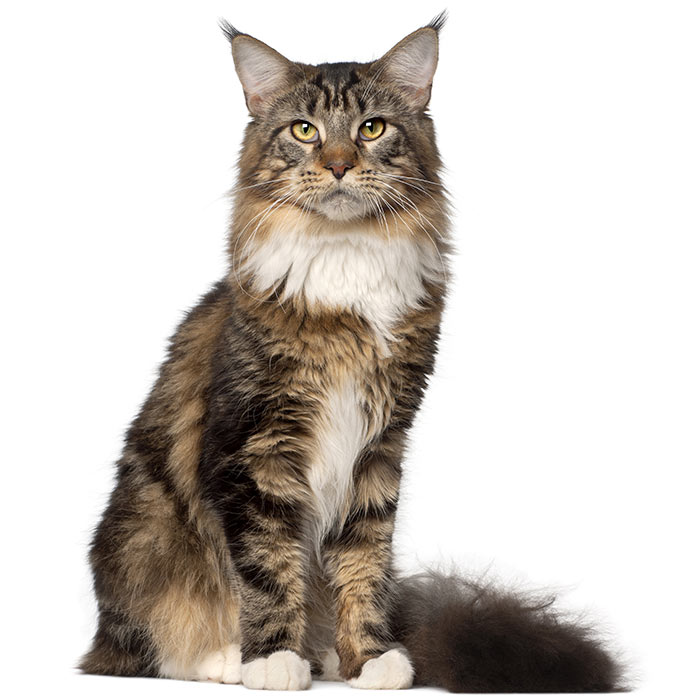
Maine Coons are gentle, affectionate, large-sized cats with a distinct bushy tail and tufted ears. Social and intelligent, they enjoy human interaction and are often described as being “dog-like” in behaviour. They adapt well to indoor living and even apartments. Known to be good with children, other cats, and even dogs, they are an excellent choice for families and busy homes.
| Recommended for | Families, couples, and active households |
| Breed Classification | Longhair (semi-longhaired) |
| Other names | Coon Cat, American Longhair |
| Lifespan | 12 to 15 years |
| Size | Large |
| Temperament | Gentle, friendly, affectionate |
| Intelligence | High; quick learners, good problem-solvers, excellent memory |
| Tendency to vocalise | Talkative but not noisy, their most distinctive sound is a trill (a cross between a purr and a chirp) |
| Maintenance Level | Moderate grooming needs, high exercise and attention needs |
| Health Risk | Prone to heart disease (HCM), hip dysplasia, spinal muscular atrophy, dental issues, and obesity due to their large size and genetics |
Thinking of insuring a Maine Coon?
Explore the Top 5 health issues claimed for Maine Coons, including highest claims paid and how much pet insurance could help you save on eligible vet bills.
See Maine Coon pet insurance Ready to get cover? Get a quick quote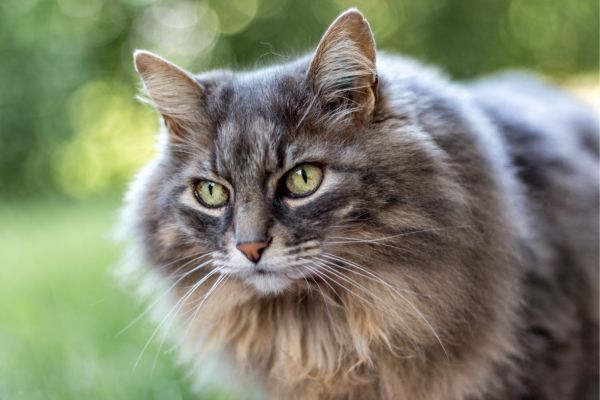
Maine Coon personality and temperament
Maine Coons are known for being friendly, affectionate and goofy – they’re not only huge in size but also huge in personality. The Maine Coon loves to be around its family, following their owners from room to room, enjoying company and interaction but rarely become clingy or overwhelming.
Maine Coons are obedient and will come when called. They also love to greet guests, who are often surprised at their sociable nature. Affectionate without being needy and usually forming strong bonds with family members, they are often described as dog-like in their loyalty and willingness to engage.
Playful, curious, and quick to learn, Maine Coons are generally an excellent breed for families. They are fun companions in both busy and quiet homes and tend to take changes to routine in stride. Their laid-back personality means they rarely show aggression, coping well even in noisy or active households.
Maine Coons with kids and other pets
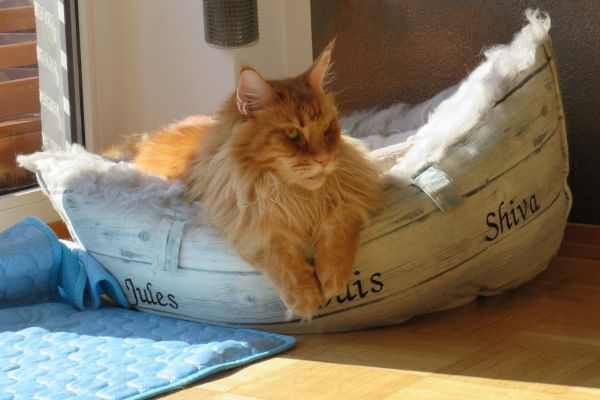
Often regarded as one of the most family-friendly cat breeds, Maine Coons are known for their calm, patient nature, even with younger children who are still learning to be gentle. Their size and confident temperament make them good playmates without being fragile, and they enjoy company and interaction without becoming clingy or overwhelming..
Maine Coons usually get along well with other cats and cat-friendly dogs, especially when introduced at a young age. In fact, they’re one of the more “dog-like” cat breeds in terms of temperament, often enjoying companionship and play. Their calm, steady nature means they rarely feel threatened, which helps reduce tension with other pets. They also have a low prey drive compared to some breeds, although supervision is still essential around small pets.
Maine Coon training and exercise
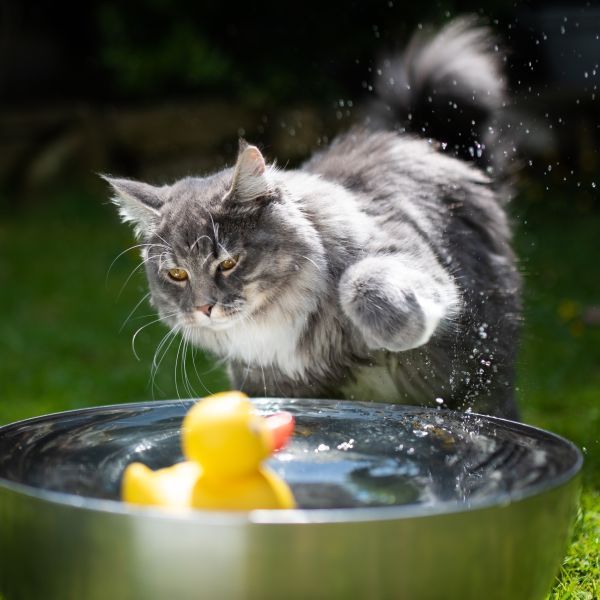
Maine Coons are playful and energetic, with moderate to high energy levels, so they need daily activity to stay fit and mentally stimulated. While not hyperactive, they do best in homes where they can explore, stay mentally stimulated, and feel like part of the family’s daily life.
Maine Coons enjoy interactive toys and puzzle feeders, which help keep them engaged. They enjoy climbing and exploring, so tall scratching posts or cat trees work well. They enjoy regular play sessions, which help manage their energy and reduce boredom, but can also entertain themselves when needed. Their large size and easy-going temperament mean they’re active in short, enthusiastic bursts rather than constantly on the move like some high-energy breeds (e.g., Abyssinians or Bengals).
| Energy level | Moderate to high |
| Exercise requirements | Moderate |
Common health issues for Maine Coons
What do Maine Coon owners claim for the most?
- Hypertrophic Cardiomyopathy (HCM) is the most well-known genetic condition in Maine Coons. This disease thickens the heart muscle and can lead to heart failure if not caught early. Regular heart screenings, especially for breeding lines, are recommended to detect signs early.
- Hip Dysplasia is another concern, particularly in larger Maine Coons. This joint condition can cause pain and reduced mobility, especially as the cat ages. Maintaining a healthy weight and encouraging gentle exercise can help reduce the risk.
- Spinal Muscular Atrophy (SMA) is a genetic disorder affecting the spinal cord’s motor neurons, leading to muscle weakness and loss of coordination. While it is not painful, affected cats may show wobbly movement from a young age.
- Polycystic Kidney Disease (PKD) has also been observed, though less commonly. This condition causes cysts in the kidneys and can lead to kidney failure. Screening breeding cats helps reduce the risk in future generations.
Not all conditions are covered by Pet Insurance. For details of Bow Wow Meow Pet Insurance cover, refer to the Product Disclosure Statement.
How to choose the right insurance for your Maine Coon
When comparing cover for your Maine Coon, look for:

Cover for common Maine Coon conditions:
Check that the policy covers conditions Maine Coons can be prone to, including common health issues.

Cover for hereditary conditions:
No exclusions for hereditary or congenital conditions⑅.

Flexible cover options:
Options to adjust your annual benefit limit, reimbursement rate and excess.
Bow Wow Meow's Nose-to-Tail Cover offers flexible options for your Maine Coon, with cover for accidental injuries, illnesses and hereditary conditions⑅. Get a quick quote for cover that suits your Maine Coon and your budget.
Maine Coon feeding and nutrition
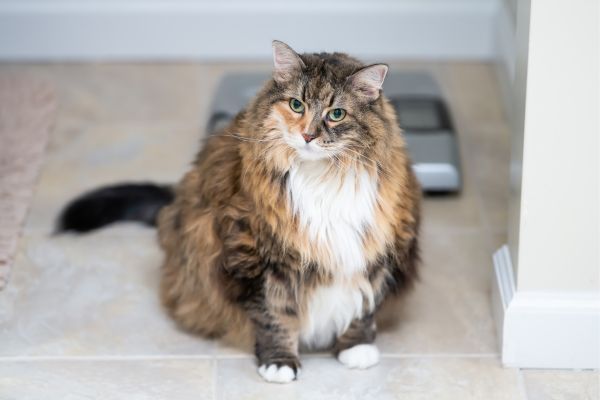
The Maine Coon benefits from a well-balanced diet that supports its large frame and active lifestyle. High-protein food is essential for maintaining muscle strength and overall condition. A mix of quality wet and dry food helps with hydration and dental health. Choose food that includes taurine, omega fatty acids, and other key nutrients to support joint function, coat quality, and heart health.
Portion control is important, as Maine Coons can be prone to overeating if free-fed. Divide their meals into two or three servings a day to manage their weight as they grow. Always provide access to fresh, clean water. Your vet can help guide food choices based on your cat’s size, age, and activity level to avoid common issues like obesity or joint strain.
Maine Coon care and grooming
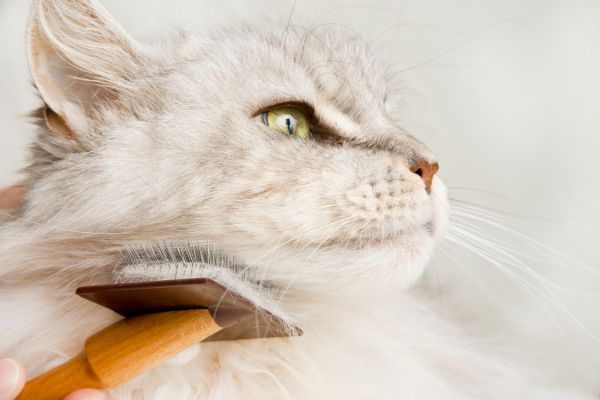
The Maine Coon has a semi-long, dense coat that needs regular grooming to stay in good condition. Brush two to three times a week to remove loose hair and prevent tangles, especially around the neck and belly. Occasional bathing helps remove dirt and keep the coat clean.
Regular ear checks, nail trimming, and dental care are also essential. Use cat-safe toothpaste or dental treats to support oral health.
Size, appearance and coat of Maine Coons
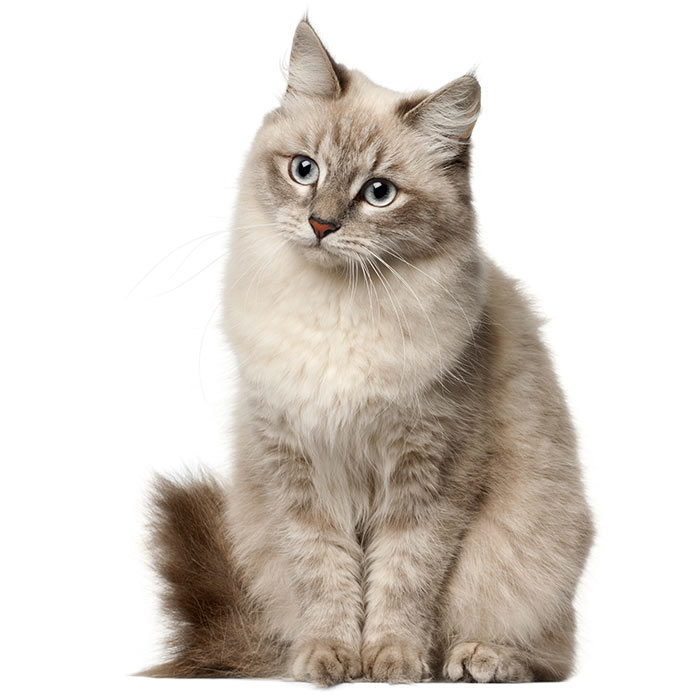
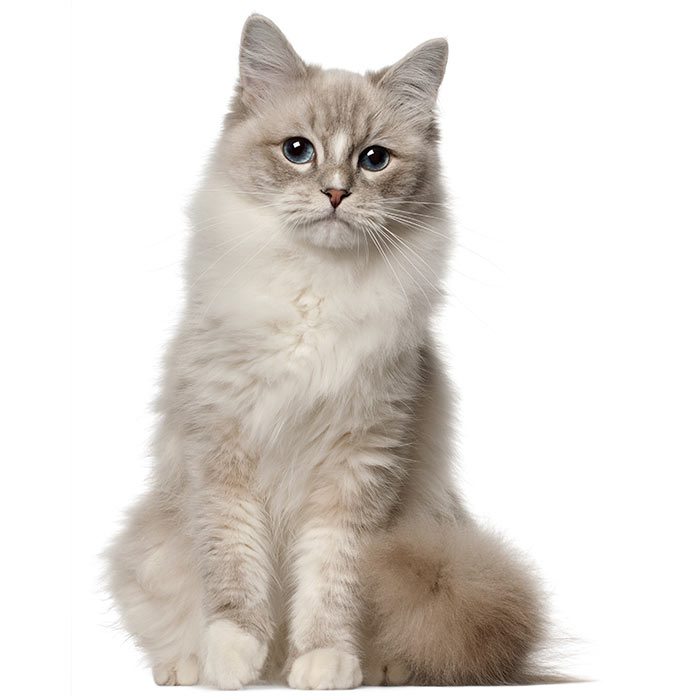
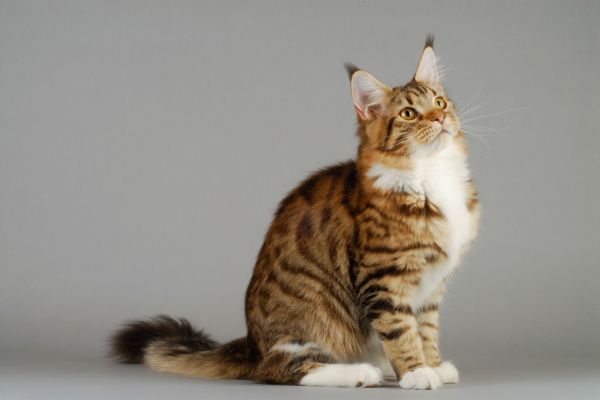
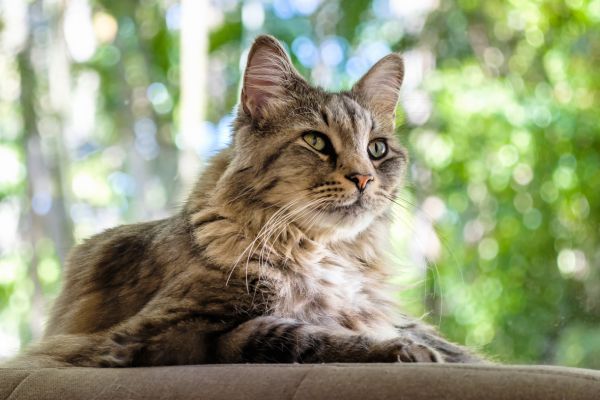
The Maine Coon is a large, muscular cat with a broad chest and strong frame, making it the largest domestic cat breed. They have wide-set, oval-shaped eyes in shades of green, gold, or copper, their ears are large, high-set, and often have tufted tips, and their tail is long and bushy,
They have a shaggy, semi-long, soft waterproof coat comprising an undercoat overlayed with a glossy topcoat. The hair varies in length around the body, with shorter hair on the head, neck and shoulders and longer hair down the back, sides and tail. Their ears have a feathered appearance and their paws have tufts which extend backwards, giving them a snowshoe-like function.
Maine Coons come in a large variety of colours, including white, tortoiseshell, tabby (with or without silver) and smoke, all with or without white patches. Their eyes can range anywhere between green, gold and copper, although blue or odd-eye colour is not uncommon among white cats. As a result of all these variations, no two Maine Coons look the same.
| Weight range | Males: 6 to 8 kg; females: 4 to 6 kg |
| Height range | Up to 41 cm in height and up to 100cm in length |
| Colours | Many colours and patterns, except for pointed types |
| Coat length | Semi-long |
Breed history of Maine Coons
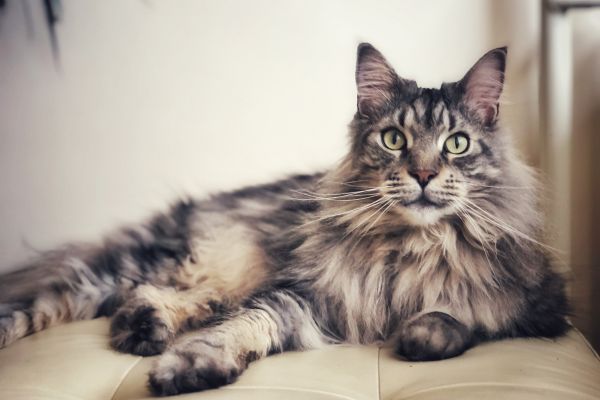
Originating in the United States in the 18th century, the Maine Coon is one of the oldest natural breeds in North America. It is believed to have developed in the state of Maine, adapting naturally to the cold climate with a dense coat and muscular build. Farmers valued them for their exceptional mousing ability, and they became a common sight on homesteads and ships along the New England coast.
Some believe the Maine Coon descended from Marie Antoinette’s long-haired cats, supposedly sent to America during her failed escape, while others link its features to Viking cats brought by seafarers (which is plausible, given their similarity to Norwegian Forest Cats). In reality, it is most likely that the Maine Coon originated through natural selection from mixed-breed cats brought by early European settlers.
By the late 1800’s, Maine Coons were stars of early American cat shows. However, around the 1900’s, their popularity began to wane with the arrival of glamorous imported long-haired breeds like Persians into the US. From the 1960s onwards, organised breeding programs revived the breed and the Maine Coon was officially recognised by major cat registries in the 1970s.
Explore related breeds
Maine Coon facts!
- The Maine Coon is known as the “Gentle Giant” of the feline world.
- Despite their large sizes, you may be surprised to learn that Maine Coons have quite high-pitched voices.
- A brown tabby named Cosey won “Best Cat” at the first major North American cat show in 1895 at Madison Square Garden, putting the breed in the spotlight.
- The breed was incorrectly declared extinct in the 1950s, but dedicated breeders kept it going.
- Some Maine Coons can learn to turn on taps, fetch small toys, or walk on a leash, making them one of the few cat breeds that truly enjoy interactive, intelligent play.
- Maine Coons can adjust well to apartment living as long as they have enough vertical space and mental stimulation.
Summary
The Maine Coon is a gentle, affectionate large cat recognised by its bushy tail and tufted ears. Social and intelligent, Maine Coons enjoy human interaction and are often described as dog-like in the way they engage with their families.
They adapt well to indoor living and can even suit apartments when their needs are met. Maine Coons are known for getting along well with children, other cats and dogs, making them a popular choice for families and busy multi-pet households.
FAQs about the Maine Coon
Yes. Maine Coons are often described as friendly, easygoing and sociable cats and can make excellent companions for families.
Maine Coons are one of the largest pedigree cat breeds. Adult males are generally larger than females, and the breed can take several years to reach full maturity.
They are often tolerant and sociable with respectful children, other cats and cat-friendly dogs when introduced appropriately.
They have moderate activity levels and enjoy climbing, exploring and interactive play, even though many have a relaxed temperament around the home.
They can be communicative but are famous for chirps and trills as much as traditional meows. They are not necessarily constant or loud vocalisers.
Their long, shaggy coat benefits from brushing several times a week, with extra attention to areas prone to tangles such as the belly and behind the legs.
Yes. They are intelligent, curious cats that often enjoy puzzle toys, retrieving games and learning household routines.
Important inherited concerns include hypertrophic cardiomyopathy and spinal muscular atrophy, and pyruvate kinase deficiency can also occur. Hip dysplasia is another recognised concern in this large breed.
MORE INFORMATION
United Maine Coon Fanciers of Australia: http://www.umcfa.com/
The Maine Coon Cat Club (UK): http://www.maine-coon-cat-club.com/

Get 2 months free for your kitten!
Cover your kitten from Nose-to-Tail
To ensure your precious fur baby is covered from the start, we'd like to offer your first 2 months of our Nose-to-Tail Cover for free2!
Get a quick quote