Is the Bloodhound a good family dog?


Bloodhound
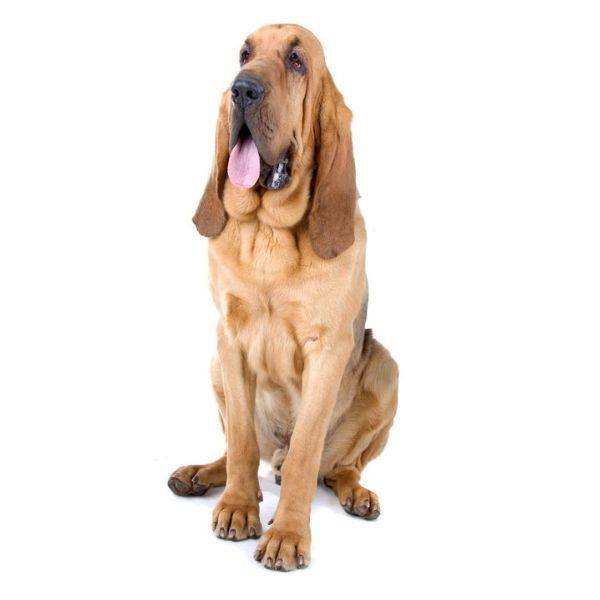
Bloodhounds are large, powerful scent hounds famous for their extraordinary sense of smell, long drooping ears and distinctive loose, wrinkled skin. Originally developed to follow scent trails over long distances, they remain renowned for mantrailing and search work.
| Recommended for | Experienced owners and families |
| Breed Classification | Hounds |
| Other names | Sleuth Hound |
| Lifespan | 10-12 years |
| Size | Large |
| Temperament | Independent, affectionate, sensitive and good-natured |
| Intelligence | High: exceptional scenting and problem-solving ability, although their independent nature can make obedience challenging |
| Tendency to bark | High: naturally vocal and well known for their deep baying and howling |
| Maintenance Level | Medium: coat grooming is low, but their ears, facial folds, drooling and shedding require regular attention |
| Health Risk | Bloodhounds have several significant breed-related risks, particularly GDV, hip and elbow dysplasia, ear infections, skin-fold dermatitis, eyelid disorders, heart disease and degenerative myelopathy. |
Thinking of insuring a Bloodhound?
Explore the Top 5 health issues claimed for Bloodhounds, including highest claims paid and how much pet insurance could help you save on eligible vet bills.
See Bloodhound pet insurance Ready to get cover? Get a quick quote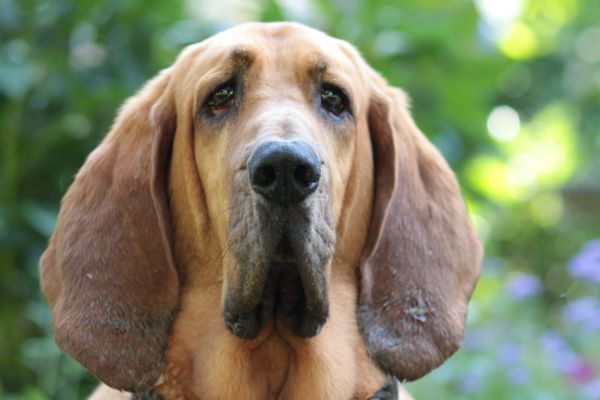
Bloodhound personality and temperament
Bloodhounds are generally affectionate, sensitive and gentle dogs that enjoy being part of family life. They were bred to work alongside other hounds and tend to be sociable, although some individuals may be somewhat reserved when first meeting unfamiliar people.
Their greatest defining trait is their determination to follow scent. Once a Bloodhound becomes interested in a trail, it can be extremely difficult to distract or recall them, which can sometimes be mistaken for stubbornness. They need regular exercise, mental stimulation and secure boundaries, as boredom or insufficient activity may contribute to baying, chewing, digging or escape behaviour.
Bloodhounds with kids and other pets
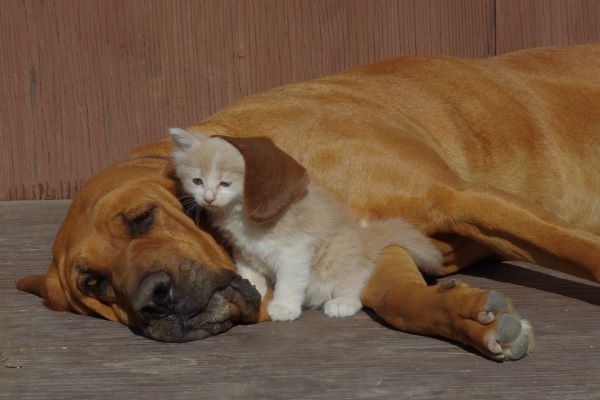
Well-socialised Bloodhounds can make gentle and affectionate family dogs and often enjoy the company of children and other dogs. Because they are very large and powerful, however, they can accidentally knock over small children, so interactions should always be supervised.
Many Bloodhounds can live successfully with other pets, particularly when introduced from a young age. Some individuals retain stronger hunting or chasing instincts, so introductions to cats and smaller animals should be gradual and carefully supervised.
Bloodhound training and exercise
Bloodhounds have tremendous endurance and benefit from substantial daily exercise. Long walks, hiking, tracking and scent-based activities are particularly suitable, with the Royal Kennel Club recommending more than two hours of exercise per day for the breed. Because their nose can override their recall, outdoor exercise should generally take place on lead or within a securely fenced area.
They are intelligent but highly independent and easily distracted by smells, so training requires patience and consistency. Positive reinforcement using food, praise or other rewards tends to work best, and short, engaging sessions are generally more effective than repetitive drilling. Early socialisation and recall training are important, although even a well-trained Bloodhound should not be relied upon off lead around unfenced areas if an interesting scent is present.
Scent work and mantrailing are especially valuable forms of enrichment because they allow Bloodhounds to use the ability for which the breed was developed.
| Energy level | Moderate: generally calm at home, but with strong stamina and endurance when following a scent or exercising |
| Exercise requirements | High: generally around two hours or more of daily physical activity, with scent work and mental enrichment particularly beneficial |
Common health issues for Bloodhounds
What do Bloodhound owners claim for the most?
Bloodhounds can be predisposed to several health problems related to their large size, deep chest, joints, ears, eyes and loose skin. Responsible breeders should undertake appropriate health screening, including hip, elbow and cardiac assessment.
- Gastric dilatation-volvulus (GDV or bloat) is a life-threatening emergency in which the stomach becomes distended and may twist. Bloodhounds are at increased risk because of their large, deep-chested build. Signs can include a swollen abdomen, repeated unsuccessful retching, drooling and restlessness, and immediate veterinary treatment is essential.
- Hip dysplasia and elbow dysplasia are developmental joint disorders that can cause pain, lameness and arthritis. Bloodhound breeding programs recommend screening both hips and elbows before breeding.
- Ear infections are common concerns because the Bloodhound’s long, hanging ears can trap moisture and reduce airflow through the ear canal. Regular checks and appropriate cleaning can help identify or prevent problems.
- Skin-fold dermatitis can develop when moisture, saliva and debris collect within the deep folds around the face and neck, causing irritation or infection. Keeping these areas clean and dry is important.
- Entropion and ectropion affect the position of the eyelids. Entropion causes the eyelid to roll inward, potentially rubbing against the eye, while ectropion causes it to turn outward and expose more of the eye surface. Severe cases may require veterinary treatment or surgery.
- Heart disease can occur in Bloodhounds, and cardiac screening is recommended for breeding dogs. The effects and treatment depend on the specific condition identified.
- Degenerative myelopathy (DM) is an inherited neurological disease that can cause progressive weakness and loss of coordination in the hind limbs. DNA testing is available and is listed as an optional health test for Bloodhounds.
Not all conditions are covered by Pet Insurance. For details of Bow Wow Meow Pet Insurance cover, refer to the Product Disclosure Statement.
How to choose the right insurance for your Bloodhound
When comparing cover for your Bloodhound, look for:

Cover for common Bloodhound conditions:
Check that the policy covers conditions Bloodhounds can be prone to, including common health issues.

Cover for hereditary conditions:
No exclusions for hereditary or congenital conditions⑅.

Flexible cover options:
Options to adjust your annual benefit limit, reimbursement rate and excess.
Bow Wow Meow's Nose-to-Tail Cover offers flexible options for your Bloodhound, with cover for accidental injuries, illnesses and hereditary conditions⑅. Get a quick quote for cover that suits your Bloodhound and your budget.
Bloodhound feeding and nutrition
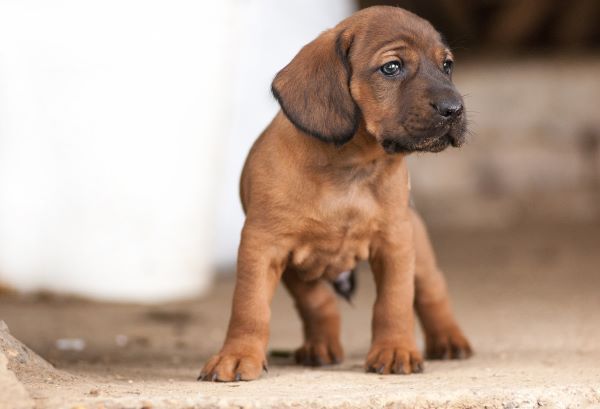
Bloodhounds should be fed a complete and balanced diet appropriate for their age, body condition, health and activity level. Large-breed puppy food is generally appropriate during growth, while adult portions should be adjusted to maintain a healthy body condition and avoid excess weight, which can place additional stress on the joints.
Because Bloodhounds are susceptible to GDV, it is generally preferable to divide their daily food into two or three smaller meals rather than one large meal and avoid vigorous exercise around feeding times. Discuss individual feeding strategies and whether preventive gastropexy may be appropriate with your veterinarian.
Bloodhound care and grooming
Bloodhounds have relatively straightforward coat care. Their short, dense coat sheds moderately throughout the year, with heavier shedding during seasonal coat changes, and weekly brushing generally helps remove loose hair and keep the coat in good condition.
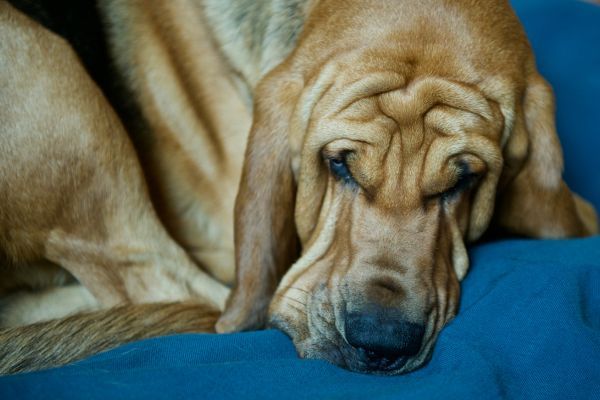
Their ears, facial folds and jowls require more attention than their coat. The ears should be checked and cleaned regularly, particularly after swimming or bathing, while skin folds should be inspected frequently and kept clean and dry to reduce the risk of irritation and infection. Bloodhounds also drool considerably, so owners should be prepared for regular wiping around the mouth and face
Size, appearance and coat of Bloodhounds
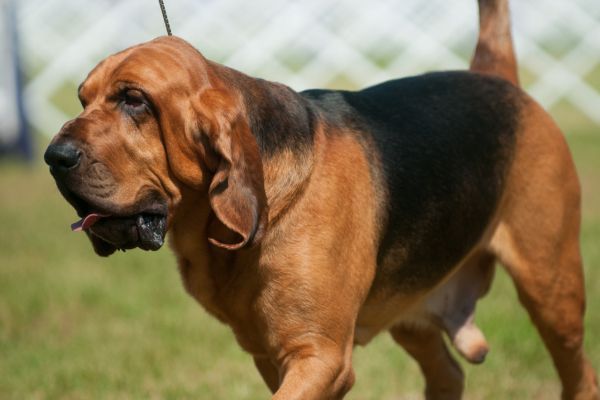
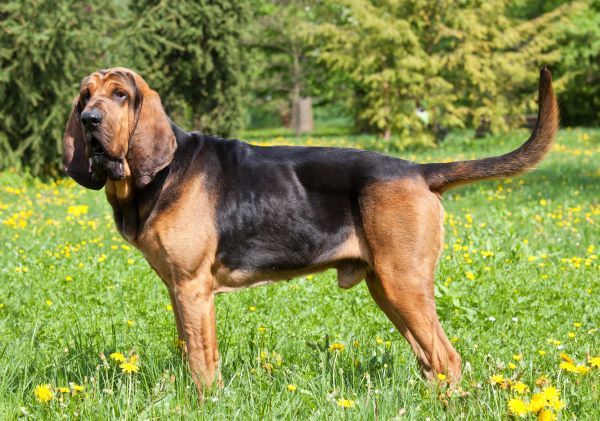
The Bloodhound is a large, powerful hound with a long, narrow head, very long pendulous ears and loose skin that forms characteristic folds around the head and neck. These features are traditionally thought to help retain scent around the face as the dog works with its nose close to the ground.
Its smooth, short, weather-resistant coat occurs in black and tan, liver and tan, or red, with a small amount of white permitted on the chest, feet and tip of the tail.
| Weight range | Males average around 41 kg but may reach 50 kg; females average around 36 kg but may reach roughly 45.5 kg |
| Height range | Males 63–69 cm; females 58-63 cm |
| Colours | Black and tan, liver and tan (red and tan) and red |
| Coat length | Short: a smooth, dense, weather-resistant coat that sheds moderately |
Breed history of Bloodhounds
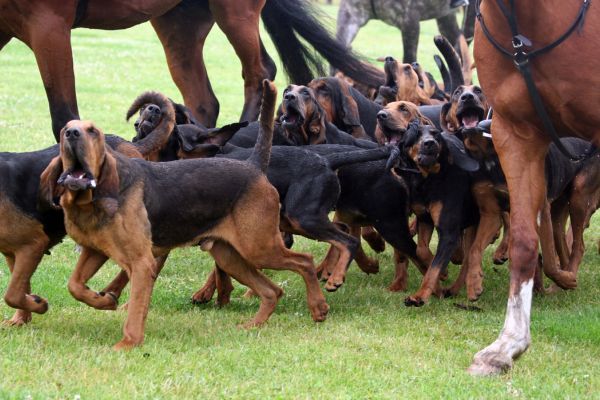
The Bloodhound has a very long history as a European scent hound, although its earliest ancestry is not completely documented. The breed is traditionally associated with the St Hubert Hounds bred by monks at the Abbey of Saint-Hubert in what is now Belgium during the Middle Ages. These hounds became renowned for their ability to follow scent over long distances and contributed to the development of later European scenthounds.
Bloodhounds were subsequently developed extensively in Britain, where they were used as leashed hounds to track deer and wild boar and, from an early period, to follow human scent. In Scotland, similar dogs were known as sleuth hounds and were used to pursue raiders and cattle thieves.
Over time, the Bloodhound became particularly famous for mantrailing. Its persistence and scenting ability have led to its use in search and rescue and law enforcement, where trained Bloodhounds can follow human scent trails over considerable distances and after substantial periods of time.
Explore related breeds
Bloodhound facts!
- The name “Bloodhound” is generally linked to the breed’s carefully bred or “blooded” ancestry, rather than implying that these dogs are aggressive or bloodthirsty.
- The Bloodhound is reputed to have the keenest sense of smell of any dog breed.
- Bloodhound tracking evidence has historically been admitted in some court cases, provided requirements concerning the dog’s training and reliability are met.
- Bloodhounds are sometimes called “sleuth hounds”, a name historically associated with their use tracking people.
- Bloodhound working trials can involve following a human scent trail several kilometres long that is already hours old.
- Their characteristic bay is quite different from an ordinary bark and was historically useful for communicating while working a scent trail.
Bloodhounds can work both ground scent and scent carried through the air, adjusting how they follow a trail depending on conditions.
Summary
The Bloodhound is a large tracking hound known for its wrinkled face, drooping ears, loose skin and exceptional sense of smell. Affectionate, gentle and friendly, it can be a loving companion while retaining the independent determination of a working scent hound.
Bloodhounds are best suited to experienced owners who understand their size, sensitivity and powerful scenting instincts. They can be reserved or clingy and may become unruly without appropriate guidance, exercise and opportunities to use their nose.
FAQs about the Bloodhound
They can be gentle, devoted family companions, but their very large size means space, training and supervision around small children are important.
Moderate to high. Daily walks, play and mental enrichment are important, with regular opportunities for more active exercise.
They are intelligent but can be independent or strong-willed, so patient, consistent reward-based training and early socialisation are important.
Bloodhounds are naturally vocal and are particularly known for their deep baying and howling. They may vocalise when excited, lonely, alert or frustrated, so their noise level should be considered in homes with close neighbours.
Yes. They generally shed a low to moderate or moderate amount and benefit from routine brushing.
They are generally better suited to homes with more space because of their size, energy level or working and guarding instincts, although individual circumstances vary.
They are often sociable with children and other dogs, although their hunting instincts mean smaller pets should be introduced and supervised carefully.
Potential health concerns include gastric dilatation-volvulus, hip and elbow dysplasia, eyelid problems and ear infections.
Bloodhounds combine an exceptionally sensitive nose with enormous persistence and endurance. Their long history of selective breeding for scent work allows them to follow human or animal scent trails over long distances and, in favourable circumstances, long after the trail was laid. Their loose facial skin and long ears are also traditionally thought to help retain scent near the nose while tracking.

Get 2 months free for your puppy!
Congrats on your new bundle of joy
To ensure your precious fur baby is covered from the start, we'd like to offer your first 2 months of our Nose-to-Tail Cover for free2!
Get a quick quote