Brachycephalic obstructive airway syndrome (BOAS) in dogs

Summary
Brachycephalic airway obstruction syndrome affects short nosed breeds with narrow nostrils and elongated soft palates. Signs include snoring, exercise intolerance, heat sensitivity and collapse. Vets assess via exam and airway imaging. Management focuses on weight control, activity in cooler hours and early corrective surgery to improve airflow. Prompt treatment reduces breathing crises and supports safer anaesthesia and better long term comfort.
What is brachycephaly?
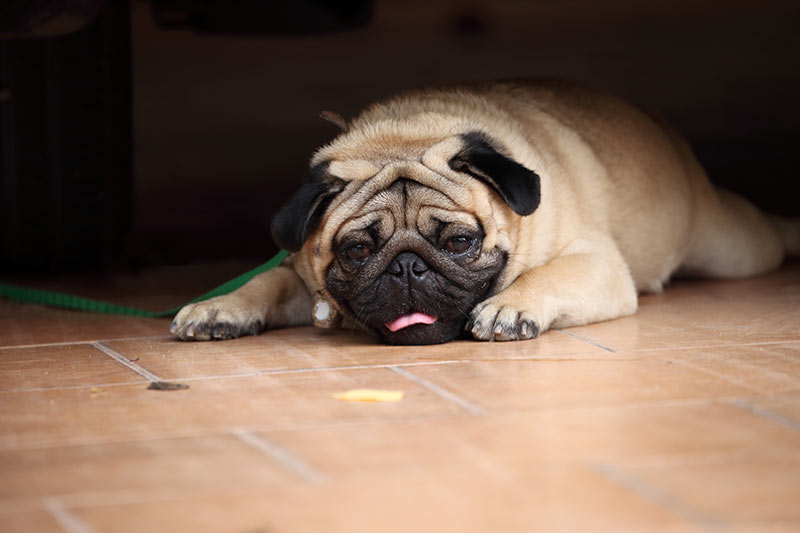
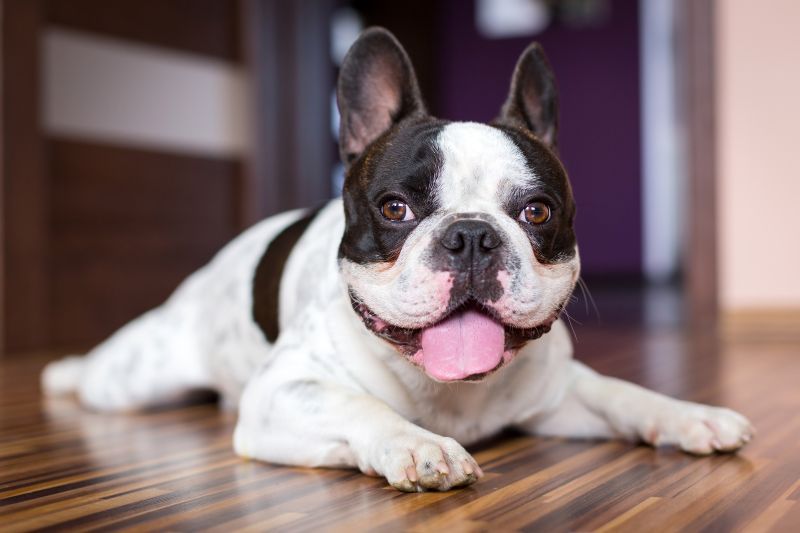
The term “brachycephaly” comes from the Greek words meaning “short” and “head” (“brachycephalic” means “short-headed”). Brachycephalic dog breeds typically have domed heads, broad foreheads, extremely shortened muzzles and wide skulls with flat faces and noses. Brachycephaly is, in fact, an abnormally short head shape compared with the ancestral, natural, head shape of dogs.
Brachycephalic breeds include:
- English bulldog
- French bulldog
- Pug
- Pekingese
- Boston terrier
- Boxer
- Lhasa Apso
- Shih Tzu
- Bull Mastiff
- Cavalier King Charles Spaniel
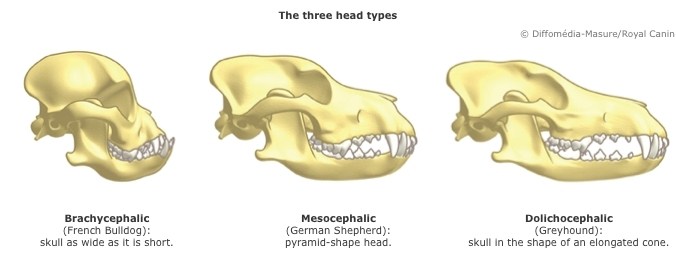
As a result of their shortened head shape, the skull and jaw of brachycephalic breeds are commonly undersized or flattened. However, the soft tissues within these areas, such as the nostrils, soft palate and tongue, are not reduced in size and must fit into a significantly smaller space.
This overcrowding results in a narrowing of the nasal passages and upper airways, obstructing the flow of air into the lower airways and lungs. Over time, the increased resistance and airway obstruction causes further inflammation and swelling of the airways, leading to more severe airway obstruction and secondary complications.
What is brachycephalic obstructive airway syndrome (BOAS)?
Brachycephalic obstructive airway syndrome (BOAS) refers to the set of respiratory disorders that commonly affect the brachycephalic breeds. This syndrome is also known as brachycephalic respiratory syndrome, brachycephalic syndrome or congenital obstructive upper airway disease. BOAS occurs to a greater or lesser extent in all breeds with significant brachycephaly.
An individual dog with BOAS may suffer from one or more of these respiratory disorders:
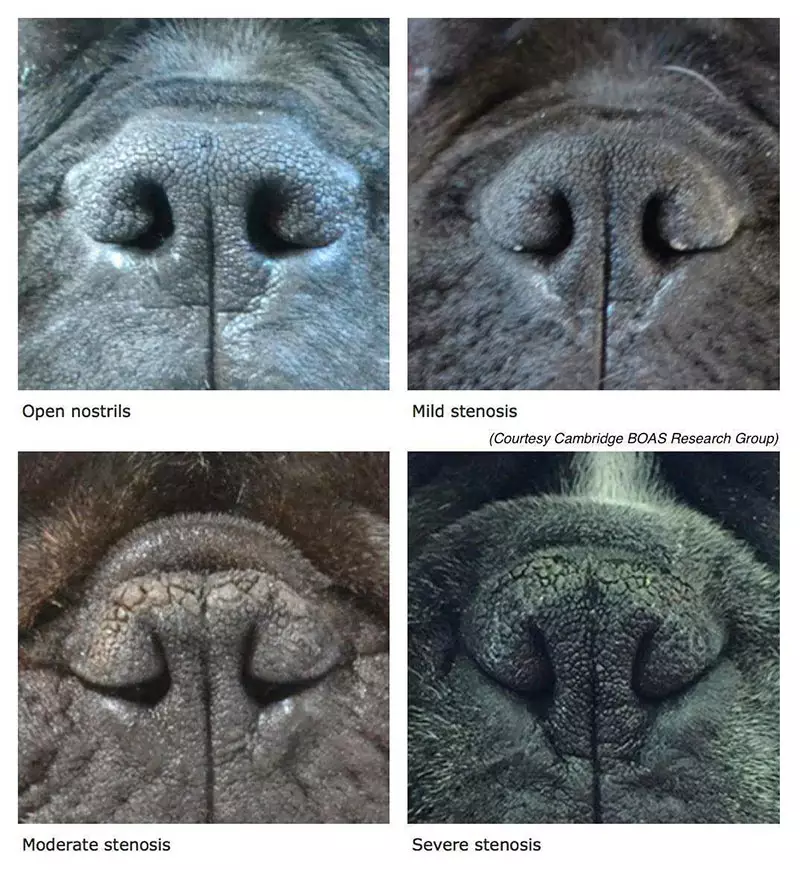
- Stenotic nares – abnormally narrow or small nostrils – the narrowing restricts the amount of air that can flow into the nostrils, making it difficult to breathe through the nose.
- An elongated soft palate (the soft part of the roof of the mouth) – the soft palate is too long for the length of the mouth – the excess length protrudes back into the airway and partially blocks the entrance to the trachea at the back of the throat, interfering with the movement of air into the lungs.
- A hypoplastic trachea– the trachea or windpipe has a smaller diameter than normal.
- Everted laryngeal saccules – small sacs or pouches of tissue that are located near the larynx or voice box – these saccules turn outwards or are sucked into the airway, further obstructing airway flow.
- Laryngeal collapse – the larynx (the voice box at the entrance of the windpipe) can collapse as a secondary complication from chronic increased resistance to airflow on inhalation.
BOAS typically affects brachycephalic breeds from early in their lives and is a life-long and progressively-worsening condition. Most sufferers are diagnosed as young adults between 2 and 3 years of age. Males and females appear to be equally affected. Dogs with multiple abnormalities tend to develop problems at an earlier age.
Symptoms of BOAS in dogs
The typical symptoms of BOAS are breathing difficulties. Any of the respiratory disorders present can cause greater airway resistance, increasing the effort required to inhale. Generally, the more disorders present, the more severe the symptoms. Most dogs with this syndrome can breathe more easily through their mouth than their nose. Symptoms are often worse in hot or humid weather and obesity will aggravate the problems.
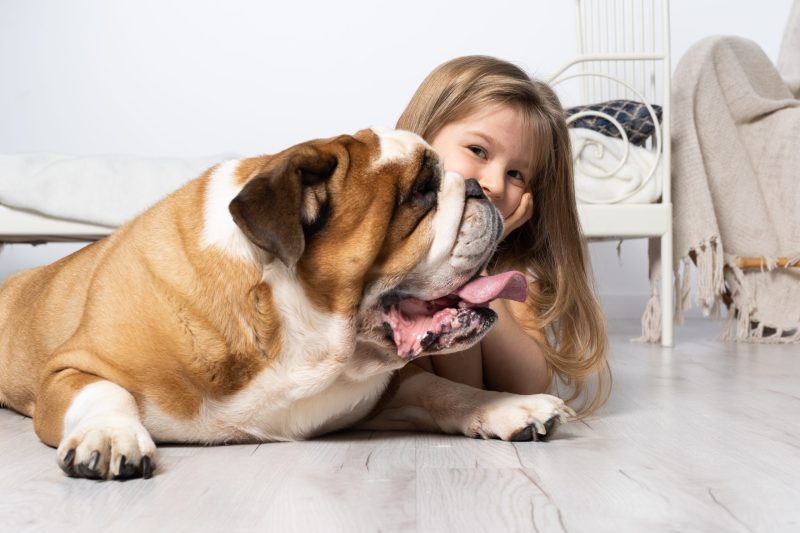
Symptoms of mildly affected dogs include:
- Noisy breathing, especially when inhaling
- Mouth breathing
- Frequent panting
- Snorting when excited
- Snoring when relaxed or asleep
- Tiring easily with exercise
Expert advice from Dr Felicia:
A lot of dog owners think that their dog having noisy breathing, snoring and snorting to be normal. This means that BOAS is over under-diagnosed in veterinary practice.
In addition to the above, symptoms of more severely affected animals may include:
- Rapid breathing
- Constant panting
- Exercise and heat intolerance
- Hypersalivation
- Abnormally high body temperature
- Collapsing or fainting after over-activity, excitement, excessive heat or humidity
- Coughing
- Gagging, regurgitating or retching, especially while swallowing
- Vomiting
- Cyanosis (blue tongue and gums from lack of oxygen in the blood)
- Dysphagia (difficulty in swallowing)
- Flatulence, from swallowing air
- Abnormal posture
- Sleep disorders
Causes of BOAS in dogs
This syndrome has resulted from the conformation or breed trait for brachycephalic dogs; i.e., breeding for a short face and head shape. Most brachycephalic dogs are affected by upper airway obstruction to some extent.
The incidence of BOAS increases significantly as relative muzzle length shortens and generally occurs in dogs whose muzzles are less than half their head lengths. One or more of the typical respiratory disorders will be present, with almost all affected animals appearing to have an elongated soft palate, and about half having narrowed nasal passages.
Genetics has long been implicated in BOAS; the region of the canine genome associated with brachycephaly has been identified and two genes have been implicated. However, this inherited defect defines all brachycephalic breeds and without it, these breeds would no longer exist in their current form.
Contributing and complicating factors that can increase the severity of the syndrome include:
- Obesity
- Allergies
- Over-excitement
- Exercise
- Warm, humid weather
Expert advice from Dr Felicia:
Brachycephalic patients are also at higher risk of disease in other body systems including the middle ear and gastrointestinal tract due to abnormal anatomy and pressure from obstructive breathing.
How is BOAS in dogs diagnosed?
BOAS will be suspected in any brachycephalic dog showing the characteristic signs, because it is so common in these breeds. The veterinarian may identify this syndrome as part of a routine health examination, or the dog may be brought in for an examination because it is exhibiting symptoms of respiratory distress. BOAS is typically diagnosed based on the dog’s breed, clinical signs and results of a physical examination. Additional diagnostic techniques include laryngoscopic examination and radiography.
Physical examination
Stenotic nares (abnormally narrow or small nostrils) are easily diagnosed by visual inspection of the animal while conscious. However, brachycephalic breeds typically have a thick tongue that makes inspection of the palate and larynx in an awake animal very difficult. Therefore, diagnosis of an elongated soft palate, everted laryngeal saccules and other secondary complications will require sedation or general anaesthesia.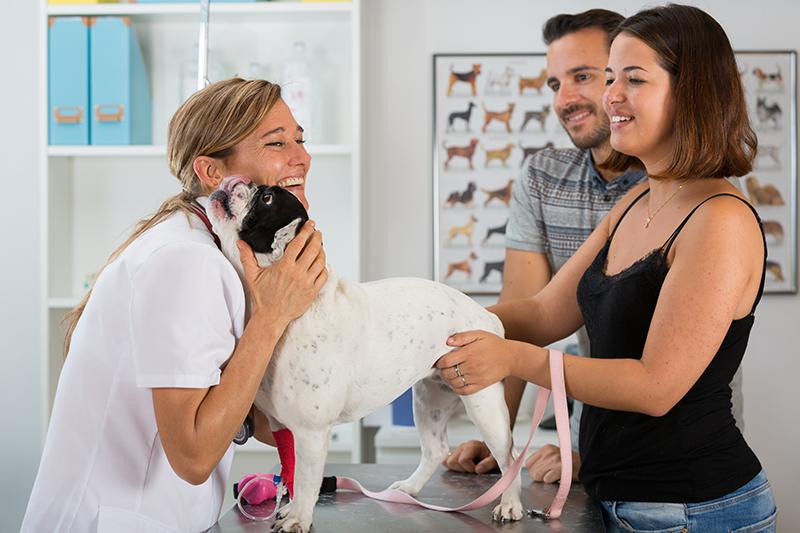
Laryngoscopic examination under sedation or anaesthesia
- Laryngoscopic examination (examination of the airway with a piece of equipment called a laryngoscope) is usually performed under light anaesthesia.
- The elongated soft palate typically extends past the tip of the epiglottis (the entrance to the airway).
- In severe cases the soft palate extends directly into the laryngeal opening.
- The tip of the soft palate and the edges of the larynx are often inflamed (swollen and red).
- In chronic cases, the cartilages of the larynx begin to collapse, further narrowing the airway.
- Everted laryngeal saccules look like blue-grey soft tissue masses protruding into the airway just in front of the vocal folds.
The increased risks of anaesthesia for BOAS sufferers
Anaesthesia carries significantly increased risks for BAOS sufferers because anaesthetic drugs relax the muscles of the upper respiratory tract, which can lead to further collapse of the upper airway. For this reason, the veterinarian may perform blood work and chest x-rays to evaluate the general health of the dog before anaesthesia is undertaken, which can help in minimizing the risks. Additionally, when general anaesthesia is performed for diagnostic purposes, the veterinarian will generally recommend that any required surgical correction be performed at the same time.
Expert advice from Dr Felicia:
Veterinary clinics will often have a specific protocols in place for brachycephalic patients, which includes treatment with anti-anxiety medication to keep them calm in hospital, pre-oxygenation prior to anaesthetic, use of medications to help with reflux and vomiting and longer post-op monitoring in recovery.
Radiographs (x-rays)
- X-rays of the cervical and thoracic regions will confirm a hypoplastic trachea (where the trachea or windpipe has a smaller diameter than normal).
- X-rays can also reveal soft palate abnormalities and narrowing of the trachea.
- A collapse of the larynx is not usually evident on x-rays unless it is severe.
- Chest x-rays may be performed to evaluate the dog’s lower airways and lungs.
Prognosis
BOAS is a life-long and progressive disease, and can even shorten an animal’s lifespan. The overall prognosis for animals with BOAS depends upon which respiratory disorders are present, how advanced these are, and the animal’s age the time of diagnosis and treatment.
Appropriate treatment can significantly improve the prognosis of affected animals. Without treatment, moderate to severely affected dogs will typically experience progressive respiratory distress, incapacity and ultimately death. Although surgical treatment is a major intervention with substantial risks, most prognoses do improve following surgery, and in particular:
- Dogs under 2 years of age at the time of surgical correction have a good post-operative prognosis, with greatly improved breathing and activity levels, and significantly reduced respiratory distress.
- Dogs that only require surgical correction for stenotic nares and/or an elongated soft palate have a better prognosis than dogs with additional abnormalities.
- The prognosis for a full recovery after soft palate correction is generally good if BOAS has not resulted in laryngeal collapse.
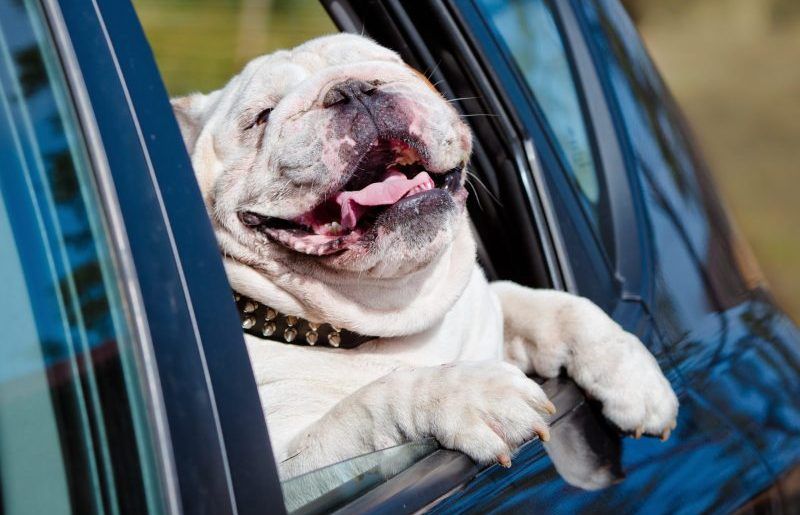
Unfortunately, surgery is not always a viable option or a long-term solution, and in these cases, prognosis is less optimistic, for example:
- English bulldogs typically have a worse prognosis than other brachycephalic breeds as they are prone to postoperative complications such as aspiration pneumonia.
- Recurrence of clinical signs may develop in some dogs post-surgery.
- Tracheal hypoplasia is untreatable; dogs with this abnormality have a variable prognosis.
- Dogs that have other problems such as allergic airway disease or that have developed secondary problems have a poorer prognosis.
- Older animals have a less favourable prognosis, especially if the process of laryngeal collapse has already started. If the laryngeal collapse is advanced, the prognosis is poor.
Treatment for BOAS in dogs
Conservative management
For dogs with only mild or intermittent symptoms, BAOS can be managed conservatively by modifying the animal’s lifestyle and environment, including:
- Controlling exercise levels
- Avoiding hot or humid conditions
- Keeping the dog in an air-conditioned place during the summer
- Avoiding stress
- Avoiding allergens
- Maintaining a healthy weight (since obesity worsens the symptoms of brachycephalic airway syndrome, weight loss is an important part of treatment if the pet is overweight)
- Using a harness that does not pull on the neck (a normal neck collar can place excessive pressure on the neck of affected animals)
Treatment for secondary diseases such as reflux may include dietary modification and medications to help increase transit time of food through the gastrointestinal tract or reducing the acidity of the stomach.
Medical management may also be helpful for some affected animals. Corticosteroids, non-steroidal anti-inflammatory medications and oxygen therapy may all be useful for short term relief of airway inflammation or respiratory distress. However, medical management of BAOS does not correct the underlying anatomical abnormalities.

Surgical treatment
Surgery is the treatment of choice whenever the anatomic abnormalities interfere with the animal’s breathing. Surgical techniques include:
- Widening of the stenotic nares – a wedge of tissue can be removed from the nostrils, allowing improved airflow through the nostrils; this is considered the most important and effective treatment, with a review of airway obstruction surgery showing that 96% of dogs improved after the procedure.
- Soft palate resection – an elongated soft palate can be surgically shortened to a more normal length.
- Resection of everted laryngeal saccules – these can be surgically removed to eliminate the obstruction in the larynx.
- Tracheostomy for severe cases – an obstructed airway can be opened by means of an endotracheal tube (a tube which passes through the mouth and windpipe) or a tracheostomy (a surgical cut in the windpipe).
The pros and cons of surgical treatment of BOAS:
The earlier that the abnormalities associated with BOAS are corrected, the better since the condition worsens over time and may cause further abnormalities. Early correction of stenotic nares and/or an elongated soft palate will significantly improve airway function and may prevent development of everted laryngeal saccules and other secondary disorders.
However, all surgical procedures carry a risk and require strict post-operative monitoring. Significant inflammation or bleeding can obstruct the airway, making breathing difficult or impossible. Occasionally a tube must be placed and maintained through an incision in the neck into the trachea (temporary tracheostomy) until the swelling in the throat subsides enough that the animal can breathe normally.
In conclusion
The most common dogs affected by BOAS are the brachycephalic (or”short-head”) breeds. These breeds are prone to breathing difficulties because the shape of their head, muzzle and throat leads to permanent narrowing of the nose and upper airways and increased resistance to airflow. The increased respiratory effort required often leads to secondary changes which further impair the airways and can contribute to the collapse of the larynx.
Typical symptoms of BOAS relate to respiratory difficulties, including noisy mouth breathing, exercise intolerance, snoring and disrupted sleep. The vet will suspect BAOS in any brachycephalic breed showing the typical signs. However, specific diagnosis of the anatomical abnormalities that comprise the syndrome may require examination under anaesthetic and radiographs.
Overall prognosis for dogs with BOAS varies, but often improves with surgical intervention. Some of the primary problems, such as stenotic nares and over-large soft palate can be surgically corrected. The prognosis is good for young animals; they generally will breathe much easier and their activity level can improve significantly.
Bow Wow Meow Pet Insurance can help protect you and your dog should an unexpected trip to the vet occur.
-
Find out more about our dog insurance options
-
Get an online pet insurance quote
Bow Wow Meow is proud to have been awarded winner of Canstar’s ‘Most Satisfied Customers’ Award in the Pet Insurance category for both 2024 and 2025!
Bow Wow Meow is proud to have been chosen as Product Review’s Pet Insurance Award Winner every year from 2018 to 2025! This is based on 2,995 independent customer reviews (as at 21/01/2025), with an overall rating of 4.3*
Google Review rating = 4.5* (based on 968 reviews)
Trust Pilot rating = 4.6* (based on 531 reviews)
Bow Wow Meow has been chosen as a winner in the Finder Pet Insurance Awards 2024. Finder’s panel of experts analysed over 140 quotes to award our Ultimate Care Plan the winner of the “Pet Insurance – Value” category.
Bow Wow Meow is an Australian-owned and operated pet insurance provider. Our focus is purely on pets, and we are proud to have helped provide peace of mind to over 200,000 Aussie pet owners since 2008.
More information
- https://vcahospitals.com/know-your-pet/brachycephalic-airway-syndrome-in-dogs
- https://www.ufaw.org.uk/dogs/pug-brachycephalic-airway-obstruction-syndrome
- https://www.acvs.org/small-animal/brachycephalic-syndrome
- https://www.petmd.com/dog/conditions/respiratory/c_multi_brachycephalic_airway_syndrome
- https://www.sciencedirect.com/topics/veterinary-science-and-veterinary-medicine/brachycephalic-syndrome
- https://cavalierhealth.org/brachycephalic.htm