

Is the English Toy Terrier a good family dog?


English Toy Terrier
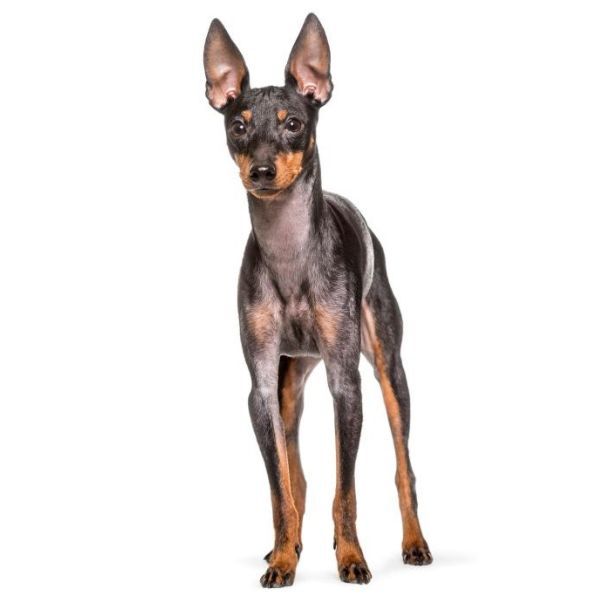
English Toy Terriers are small, elegant and lively companion dogs with the alertness and confidence of a true terrier. Recognisable by their sleek black-and-tan coats and distinctive candle-flame ears, they are intelligent, affectionate and strongly attached to their families.
| Recommended for | Singles, couples, seniors and families with older children |
| Breed Classification | Toys |
| Other names | Toy Manchester Terrier, Black-and-tan Toy Terrier |
| Lifespan | 12–15 years |
| Size | Small |
| Temperament | Alert, affectionate, loyal |
| Intelligence | High: bright, responsive and quick to learn, with an independent terrier streak |
| Tendency to bark | Low to moderate: alert and likely to announce visitors or unusual sounds |
| Maintenance Level | Low: short coat needs minimal grooming, although dental care is particularly important |
| Health Risk | English Toy Terriers are generally a relatively healthy breed, although inherited heart, joint and urinary conditions can occur and dental disease is common. |
Thinking of insuring an English Toy Terrier?
Explore the Top 5 health issues claimed for English Toy Terriers, including highest claims paid and how much pet insurance could help you save on eligible vet bills.
See English Toy Terrier pet insurance Ready to get cover? Get a quick quote
English Toy Terrier personality and temperament
English Toy Terriers are alert, intelligent and lively dogs with the confidence and curiosity typical of their terrier ancestry. They tend to form close bonds with their families and can be affectionate, playful companions while retaining an independent streak.
They are naturally observant and may alert their owners to unfamiliar people or sounds, but they are not necessarily excessive barkers. Early positive socialisation can help them develop confidence around new people, dogs and environments. Their small size and moderate exercise needs also mean they can adapt well to apartment living when given sufficient activity, enrichment and companionship.

English Toy Terriers with kids and other pets
English Toy Terriers can make affectionate family companions, but their small, fine-boned bodies mean they are generally better suited to older children who understand how to handle dogs gently. Interactions with young children should be supervised to prevent accidental injury.
They can live successfully with other dogs and cats when appropriately introduced and socialised. However, their history as ratters means some retain a strong prey drive towards rodents, rabbits and other small animals, so these pets should be carefully managed.

English Toy Terrier training and exercise
English Toy Terriers are lively and athletic but, because of their small size, their formal exercise requirements are relatively modest. Around 20–30 minutes of daily walking, together with play and mental enrichment, is generally sufficient for a healthy adult, although many will happily participate in longer walks and dog sports.
They are intelligent and usually enjoy learning but can have an independent terrier streak. Short, varied training sessions using positive reinforcement work well, and activities such as obedience, agility and scent games can provide valuable mental stimulation.
| Energy level | High: ively, active and playful despite the breed’s tiny size |
| Exercise requirements | Low to medium: around 20–30 minutes daily plus play and mental enrichment |
Common health issues for English Toy Terriers
What do English Toy Terrier owners claim for the most?
English Toy Terriers are generally considered a relatively healthy, long-lived breed, but they can be predisposed to several inherited and breed-related conditions affecting the joints, heart, urinary system, teeth and eyes. Responsible breeders should undertake appropriate health screening and DNA testing.
- Patellar luxation: This occurs when the kneecap slips out of its normal position, potentially causing an intermittent skipping gait, lameness and discomfort. More severe cases can lead to arthritis or require surgery. Patellar testing is recommended for breeding English Toy Terriers.
- Juvenile dilated cardiomyopathy (JDCM): This rare inherited heart condition affects young dogs and can cause sudden cardiac death, sometimes with few or no warning signs beforehand. DNA testing is available and is recommended to prevent affected puppies being produced.
- Xanthinuria: This inherited metabolic disorder causes excessive xanthine in the urine, increasing the risk of urinary stones, kidney damage and potentially life-threatening urinary obstruction. DNA testing for the relevant mutation is available.
- Dental disease: Dental and periodontal problems are commonly reported in English Toy Terriers, as in many very small breeds. Daily tooth brushing and regular veterinary dental checks can help reduce plaque, gum disease and tooth loss. Dental problems were the most frequently reported health category in the breed’s 2022 health survey.
- Eye conditions: Cataracts and other eye disorders can occur in the breed, which is why specialist eye screening is included in current breed-health recommendations.
- Von Willebrand disease and hereditary deafness are also screened for in some breeding programs, although hereditary deafness is currently considered uncommon in the breed.
Not all conditions are covered by Pet Insurance. For details of Bow Wow Meow Pet Insurance cover, refer to the Product Disclosure Statement.
How to choose the right insurance for your English Toy Terrier
When comparing cover for your English Toy Terrier, look for:

Cover for common English Toy Terrier conditions:
Check that the policy covers conditions English Toy Terriers can be prone to, including common health issues.

Cover for hereditary conditions:
No exclusions for hereditary or congenital conditions⑅.

Flexible cover options:
Options to adjust your annual benefit limit, reimbursement rate and excess.
Bow Wow Meow's Nose-to-Tail Cover offers flexible options for your English Toy Terrier, with cover for accidental injuries, illnesses and hereditary conditions⑅. Get a quick quote for cover that suits your English Toy Terrier and your budget.

English Toy Terrier feeding and nutrition
English Toy Terriers should be fed a complete and balanced diet appropriate for their age, body condition, activity level and health. Because they are very small dogs, portions and treats should be measured carefully to prevent unwanted weight gain.
Maintaining good dental health is also particularly important, with regular tooth brushing recommended. Speak to your vet if you have concerns about your English Toy Terrier’s weight, diet or individual nutritional needs.

English Toy Terrier care and grooming
English Toy Terriers have short, close coats that need very little grooming. Weekly brushing or wiping with a grooming mitt can remove loose hair and help maintain the coat’s natural gloss, while bathing is generally only necessary when the dog is dirty.
Routine nail and ear care is important, but particular attention should be given to dental health. Daily tooth brushing is ideal, together with regular veterinary dental checks.

Size, appearance and coat of English Toy Terriers
The English Toy Terrier is a small, elegant and compact dog with a sleek outline, long wedge-shaped head and distinctive erect ears shaped like candle flames. Its eyes are small, dark and almond-shaped, while the tail is slender, set low and tapers towards the tip.
The coat is short, dense, close and glossy and occurs only in black and tan. The black should be a rich ebony colour and the tan a deep chestnut, with clearly defined markings above the eyes, on the muzzle, chest, legs and beneath the tail.
| Weight range | 2.7–3.6 kg |
| Height range | 25–30 cm |
| Colours | Black and tan only |
| Coat length | Short |

Breed history of English Toy Terriers
The English Toy Terrier developed from Britain’s old Black and Tan Terriers, dogs that had been used for centuries to control rodents on farms, ships and in towns. During the 19th century, Black and Tan Terriers became particularly associated with the industrial city of Manchester and were widely used as ratters.
Victorian interest in smaller companion dogs encouraged breeders to develop a miniature version of the Black and Tan/Manchester Terrier. These tiny dogs retained their terrier character and ratting ability but became increasingly popular as companions. The breed is known in North America as the Toy Manchester Terrier.
In Australia, English Toy Terriers were relatively popular during the 1960s, but numbers declined dramatically and by the 1990s only two breeding pairs remained. Imports have since been used to broaden the Australian gene pool, although the breed remains uncommon.
Explore related breeds
English Toy Terrier facts!
- The English Toy Terrier’s upright ears are traditionally described as “candle-flame” shaped, one of the breed’s most distinctive features.
- The English Toy Terrier is known as the Toy Manchester Terrier in North America, reflecting its close relationship with the Manchester Terrier.
- Despite weighing only around 2.7–3.6 kg, the breed was historically an effective ratter and still retains strong terrier instincts.
- English Toy Terriers are considered a vulnerable native breed in the UK because relatively few puppies are registered each year.
- Australia’s English Toy Terrier population became so small during the 1990s that only two breeding pairs were reportedly left, prompting efforts to broaden the gene pool with imported dogs.
- Black and tan is the breed’s only recognised colour, with very precise placement of the tan markings described in the official standard.

Summary
The English Toy Terrier is a cute, smart and energetic toy-sized dog with an alert, spirited personality. Affectionate, friendly and devoted, it forms close bonds with its family and may become especially attached to one person.
This lively little terrier makes an entertaining companion for owners who enjoy a confident small dog with plenty of zest for life. Its bravery and alertness are part of its character despite its very compact size.
FAQs about the English Toy Terrier
They can be lively, affectionate family companions, particularly for owners who enjoy an energetic, confident terrier personality.
Moderate to high. Daily walks, play and mental enrichment are important, with regular opportunities for more active exercise.
They are intelligent but can be independent or strong-willed, so patient, consistent reward-based training and early socialisation are important.
They are generally low to moderate or moderate barkers, although barking can increase with boredom, excitement, anxiety or unfamiliar activity.
Yes. They generally shed a low to moderate or moderate amount and benefit from routine brushing.
Yes, they can adapt well to apartment living provided they receive sufficient daily exercise, mental stimulation and companionship.
They can live happily with respectful children and other pets when well socialised, but their small or delicate size means interactions with young children should be closely supervised.
Potential health concerns include patellar luxation, Legg-Calvé-Perthes disease, dental disease and some eye problems.
No. They are closely related, but the English Toy Terrier is a separate, much smaller breed. In North America, the equivalent small variety is known as the Toy Manchester Terrier, which can cause some confusion over the names.
Yes. Their small size and relatively modest exercise requirements make them well suited to apartment living, provided they receive regular walks, play, mental stimulation and companionship.

Get 2 months free for your puppy!
Congrats on your new bundle of joy
To ensure your precious fur baby is covered from the start, we'd like to offer your first 2 months of our Nose-to-Tail Cover for free2!
Get a quick quote