Is the Bearded Collie a good family dog?


Bearded Collie
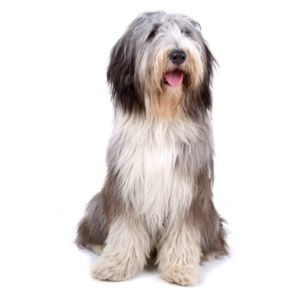
Bearded Collies, affectionately known as Beardies, are energetic, intelligent medium-sized working dogs with a distinctive long, shaggy double coat. Originally developed in Scotland to herd and drive livestock, they are lively, affectionate and independent thinkers that generally thrive in active households.
| Recommended for | Families and individuals who have plenty of time to keep them active and engaged |
| Breed Classification | Working Dogs |
| Other names | Beardie |
| Lifespan | 12 to 14 years |
| Size | Medium |
| Temperament | Friendly, outgoing, playful, energetic |
| Intelligence | High: quick learners with an independent, problem-solving nature |
| Tendency to bark | Moderate: may bark from excitement, boredom or to alert |
| Maintenance Level | High: frequent grooming, substantial exercise and mental stimulation |
| Health Risk | Bearded Collies are generally healthy, but can be prone to hip and elbow dysplasia, Addison’s disease, hypothyroidism and inherited eye conditions such as CEA and PRA. |
Thinking of insuring a Bearded Collie?
Explore the Top 5 health issues claimed for Bearded Collies, including highest claims paid and how much pet insurance could help you save on eligible vet bills.
See Bearded Collie pet insurance Ready to get cover? Get a quick quote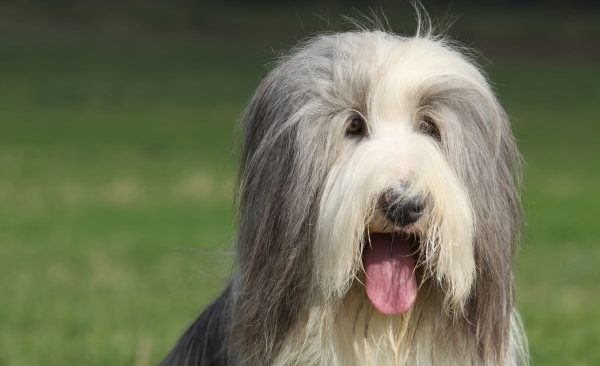
Bearded Collie personality and temperament
Bearded Collies are lively, affectionate and intelligent dogs that generally form close bonds with their families. They are known for their outgoing, playful nature and usually enjoy being involved in family activities, games and outdoor adventures. The official breed standard describes them as alert, lively, self-confident and active.
Their history as working herding dogs also gave Beardies the ability to think and make decisions independently. This can make them clever problem-solvers but occasionally strong-willed during training. They generally thrive on companionship and having something to do, and insufficient exercise, interaction or mental stimulation can contribute to boredom-related behaviours.
Bearded Collies with kids and other pets
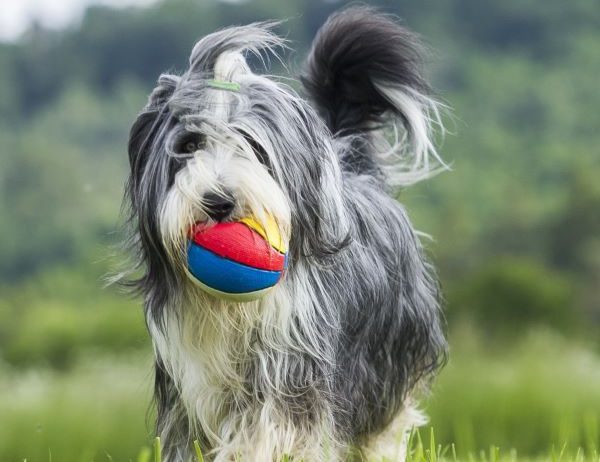
Well-socialised Bearded Collies can make affectionate, playful family dogs and often enjoy participating in activities with children. Their energetic and exuberant play style can be overwhelming for very young children, however, so interactions should always be supervised.
Beardies can also live successfully with other dogs and pets, particularly when socialised with them from a young age. Because of their herding heritage, some may try to chase, circle or control the movement of children or other animals. Early training can help redirect these behaviours appropriately.
Bearded Collie training and exercise
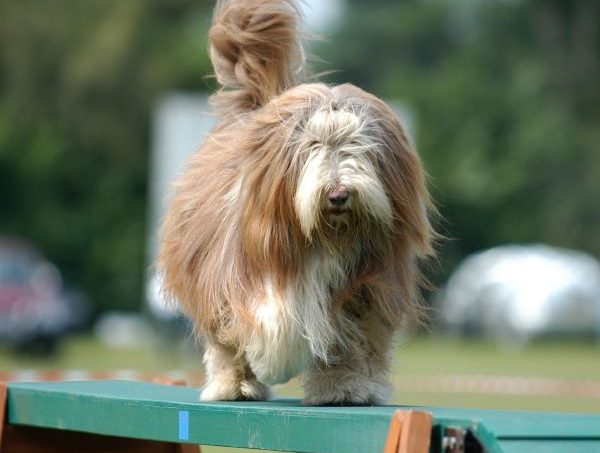
Bearded Collies are energetic working dogs that need regular daily exercise as well as mental stimulation. Most healthy adults benefit from around an hour of exercise each day, combining walks, active play and opportunities to run or explore. Activities such as agility, obedience, herding, scent games and interactive play can provide particularly useful outlets for their physical and mental energy. The Royal Kennel Club gives a general guide of up to an hour of daily exercise.
Beardies are intelligent, quick learners but can also think independently. Positive reinforcement and varied, engaging training sessions generally work best. Repetitive training can lose their attention, so introducing new exercises, skills and challenges can help keep them motivated.
.
| Energy level | High: lively working dogs |
| Exercise requirements | High; around an hour of daily activity plus regular training, play and mental enrichment |
Common health issues for Bearded Collies
What do Bearded Collie owners claim for the most?
Bearded Collies are generally considered a relatively healthy breed, but they can be predisposed to several inherited, joint, eye and immune-mediated conditions, including:
- Hip Dysplasia is abnormal development of the hip joint that can cause joint instability, pain and arthritis. Genetics play an important role, while factors such as growth, body weight and exercise can also influence how severely a dog is affected. Hip screening is recommended for breeding Bearded Collies.
- Elbow dysplasia refers to abnormal development of the elbow joint and may result in pain, lameness and arthritis. Maintaining a healthy weight can help reduce stress on affected joints. Elbow screening is increasingly undertaken by Bearded Collie breeders, although it is not as universally required as hip screening.
- Addison’s Disease (hypoadrenocorticism) occurs when the adrenal glands do not produce sufficient hormones needed for normal body function. Signs can include lethargy, weakness, vomiting, diarrhoea and reduced appetite, and severe episodes can become medical emergencies. Addison’s disease has been identified as an important immune-mediated health concern in Bearded Collies.
- Hypothyroidism, often associated with autoimmune thyroiditis, occurs when insufficient thyroid hormone is produced. Signs can include lethargy, weight gain and skin or coat changes. The condition can usually be managed with ongoing thyroid hormone medication, and thyroid screening is recommended for breeding dogs.
- Collie eye anomaly (CEA) is an inherited condition that causes abnormal development of structures at the back of the eye. Severity varies greatly: some affected dogs have little noticeable visual impairment, while more severe cases can involve retinal detachment or vision loss. A DNA test is available.
- Progressive Retinal Atrophy (PRA) is a group of inherited eye diseases in which the retina gradually deteriorates, resulting in progressive vision loss and potentially blindness. There is currently no cure, although affected dogs can often adapt well to declining vision.
Not all conditions are covered by Pet Insurance. For details of Bow Wow Meow Pet Insurance cover, refer to the Product Disclosure Statement.
How to choose the right insurance for your Bearded Collie
When comparing cover for your Bearded Collie, look for:

Cover for common Bearded Collie conditions:
Check that the policy covers conditions Bearded Collies can be prone to, including common health issues.

Cover for hereditary conditions:
No exclusions for hereditary or congenital conditions⑅.

Flexible cover options:
Options to adjust your annual benefit limit, reimbursement rate and excess.
Bow Wow Meow's Nose-to-Tail Cover offers flexible options for your Bearded Collie, with cover for accidental injuries, illnesses and hereditary conditions⑅. Get a quick quote for cover that suits your Bearded Collie and your budget.
Bearded Collie feeding and nutrition
Bearded Collies should be fed a complete and balanced diet appropriate for their age, size, activity level and health. Highly active dogs may have different energy requirements from less active companion Beardies, so portions should be adjusted according to body condition and activity level.
Monitor your Beardie’s weight and account for treats when calculating daily food intake. Speak to your vet if you have questions about diet, supplements, weight management or changing nutritional requirements as your dog ages.
Bearded Collie care and grooming
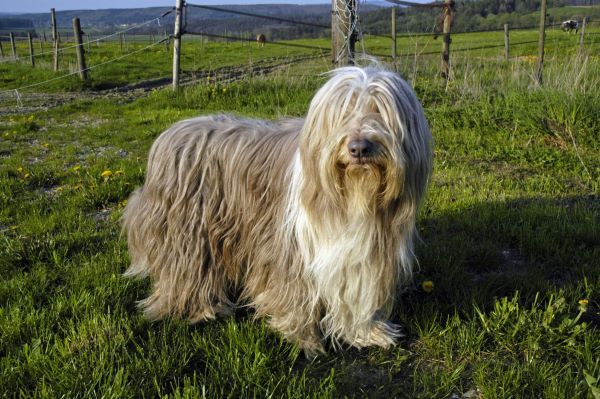
The Bearded Collie has a long, weather-resistant double coat comprising a soft, close undercoat and a harsher, shaggy outer coat. The coat sheds and is prone to tangling and matting, so regular grooming is an important part of Beardie ownership.
Ideally, the coat should receive frequent brushing, with a thorough brush and comb through at least once a week to reach the undercoat and remove knots, loose hair and debris. Areas behind the ears, around the legs, feet and belly deserve particular attention. Bathing can be done as needed, along with routine nail, ear and dental care.
Size, appearance and coat of Bearded Collies
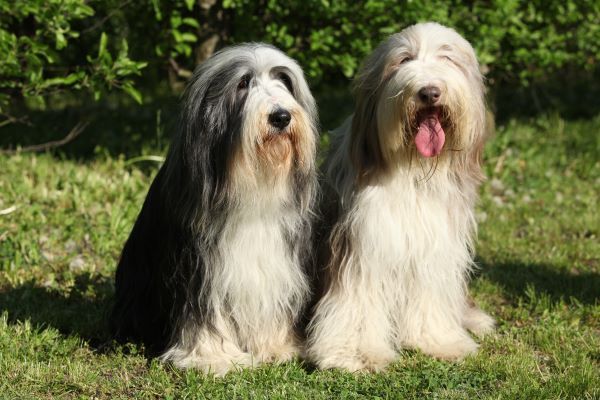
The Bearded Collie is a medium-sized, lean and athletic dog built for agility, stamina and efficient movement. The body is slightly longer than it is tall, while the broad, flat skull, expressive eyes and long facial hair forming the characteristic “beard” give the breed its distinctive appearance. Eye colour generally harmonises with the coat colour.
Its long double coat consists of a soft, furry undercoat and a flat, harsh, shaggy outer coat that may have a slight wave but should not be woolly or curly. Recognised colours include slate grey, reddish fawn, black, blue, shades of grey, brown and sandy, with or without permitted white and tan markings.
| Weight range | Male: 20 to 25 kg; female: 18 to 23 kg |
| Height range | Male: 53 to 56 cm; female: 51 to 53 cm |
| Colours | Black, blue, brown, or fawn, often with white markings |
| Coat length | Long: a dense double coat with a straight, shaggy outer layer and a soft, insulating undercoat |
Breed history of Bearded Collies
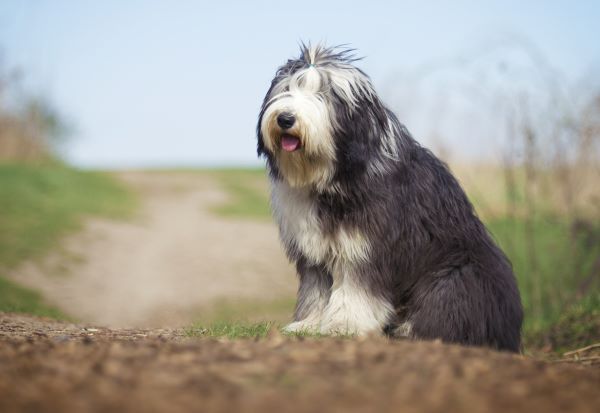
The Bearded Collie is an old Scottish working breed traditionally used to herd sheep and drive cattle in the Borders and Highlands. Its precise ancestry is uncertain. According to a longstanding story, Polish sheepdogs brought to Scotland by a merchant in the early 1500s were crossed with local herding dogs and contributed to the development of the Beardie, although the breed’s early history is not definitively documented.
Bearded Collie-type dogs were known in Scotland for centuries, and the first breed standard was drawn up in 1912. By the 1940s, however, registered Beardies had become extremely scarce. The modern breed was revived largely through G. Olive Willison, who unexpectedly acquired a Bearded Collie puppy named Jeannie in 1944 after attempting to obtain a working Shetland Sheepdog. Jeannie and a male later found by Willison, Bailie of Bothkennar, became important founders of the modern registered breed.
Explore related breeds
Bearded Collie facts!
- Affectionately known as the Beardie, the breed has also been known as the Highland Collie, the Mountain Collie and the Hairy Mou’ed Collie.
- They are often referred to as “Bouncing Beardies” due to their enthusiastic and lively nature.
- A 1771 portrait of the Duke of Buccleuch by Thomas Gainsborough includes a dog resembling a Bearded Collie and is one of the earliest known artistic depictions associated with the breed.
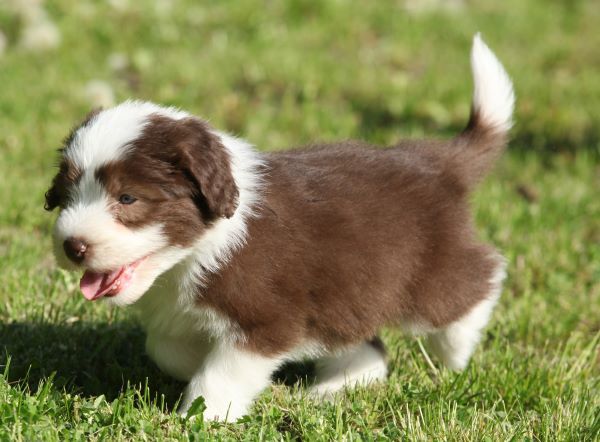
- Beardie puppies can change colour dramatically as they mature. Their coats often lighten or “grey out” during development before some colour deepens again later.
- Barking is an important part of this breed’s working style with livestock, so they will tend to express extremes of emotion this way.
- Almost all modern registered Bearded Collies trace back to Jeannie of Bothkennar, the puppy acquired by chance in 1944 who helped launch the breed’s modern revival.
Summary
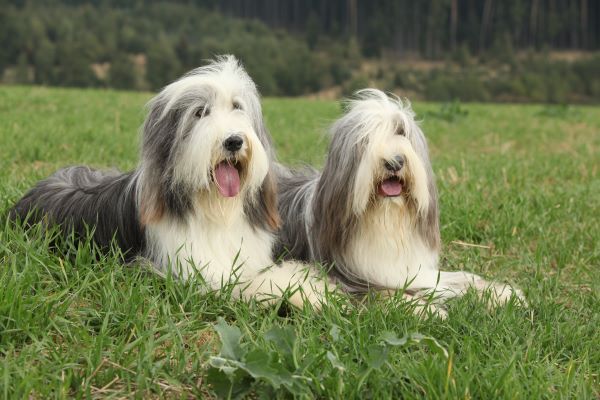
The Bearded Collie is an energetic, affectionate, and intelligent breed, making it a great choice for active families or individuals who enjoy outdoor adventures. With their friendly nature and playful spirit, they thrive in social environments and form strong bonds with their owners.
Their herding instincts, high intelligence, and eagerness to please make them highly trainable, while their shaggy double coat adds to their distinctive charm. If you are looking for a lively, loving, and devoted companion, the Bearded Collie could be a wonderful addition to your home.
FAQs about the Bearded Collie
They can be excellent family dogs for active households, but they need plenty of exercise and mental stimulation and may display herding behaviour around children or other pets.
High. They need plenty of daily exercise, including walks, active play and mental stimulation, with opportunities for more vigorous activity where appropriate.
Generally yes. They are intelligent and usually respond well to positive, consistent training, particularly when sessions are engaging and rewarding.
They are generally low to moderate or moderate barkers, although barking can increase with boredom, excitement, anxiety or unfamiliar activity.
Bearded Collies are moderate shedders, with shedding sometimes increasing during seasonal coat changes.
They are generally better suited to homes with more space because of their size, energy level or working and guarding instincts, although individual circumstances vary.
They often live well with children and other pets, but some may try to herd, chase or nip at moving family members, particularly when young.
Potential health concerns include hip dysplasia, autoimmune disease, thyroid disorders and eye conditions.
Yes. Many Bearded Collies undergo noticeable coat-colour changes as they mature. Dark puppies may lighten considerably or “grey out” before the adult coat develops, while the ears and tail often retain darker colouring.

Get 2 months free for your puppy!
Congrats on your new bundle of joy
To ensure your precious fur baby is covered from the start, we'd like to offer your first 2 months of our Nose-to-Tail Cover for free2!
Get a quick quote