Addison’s disease in dogs and cats: symptoms, diagnosis and treatment



Summary
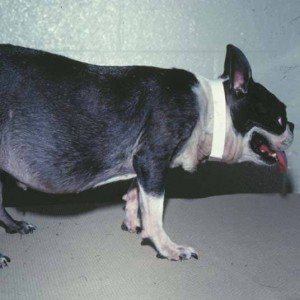
Addison’s disease, or hypoadrenocorticism, occurs when the adrenal glands do not produce enough of the hormones cortisol, aldosterone or both. It is most commonly diagnosed in dogs and is rare in cats. Signs can be vague and may come and go, including lethargy, reduced appetite, vomiting, diarrhoea, weight loss, weakness and increased thirst or urination.
In severe cases, an Addisonian crisis can cause sudden collapse and shock and requires emergency veterinary treatment. With lifelong hormone replacement and regular monitoring, most affected dogs have a good long-term outlook.
What is Addison’s disease?
Addison’s disease, also called hypoadrenocorticism, is an endocrine disorder caused by insufficient production of important hormones by the adrenal glands. These include cortisol, which helps the body respond to stress and supports metabolism and immune function, and aldosterone, which helps regulate sodium, potassium, blood pressure and fluid balance.
Addison’s disease occurs most commonly in dogs and is uncommon in cats. In most canine cases, the adrenal glands themselves are damaged and cannot produce enough hormone. Less commonly, the problem originates elsewhere in the hormonal signalling pathway.
Addison’s disease is much more common in dogs but can rarely occur in cats.

What causes Addison’s disease?
Most cases in dogs are primary Addison’s disease, where the adrenal cortex is damaged and cannot produce enough hormones. The underlying cause is often unknown but is believed to be immune-mediated in many dogs.
Some dogs have atypical Addison’s disease, in which cortisol is deficient but sodium and potassium levels remain normal because aldosterone production is initially preserved. Some of these dogs later develop mineralocorticoid deficiency and therefore require ongoing electrolyte monitoring.
Rarely, Addison’s disease can occur because the pituitary gland does not produce enough ACTH, the hormone that stimulates cortisol production. Adrenal insufficiency can also develop following certain treatments for Cushing’s disease or after corticosteroid medication is withdrawn too quickly.
Expert advice from Dr Felicia:
Breeds such as the standard poodle, West Highland white terrier, Cocker spaniel, Bearded collie, Portuguese water dog and Labrador retriever are genetically predisposed to developing hypoadrenocorticism.
Symptoms of Addison’s disease in dogs and cats
The signs of Addison’s disease are often vague, may come and go, and can resemble many other illnesses. They may include:
- Vomitinganddiarrhoea: Gastrointestinal signs are common and may occur intermittently. Blood may occasionally be present in vomit or faeces in more severe cases.
- Lethargy and weakness: Affected pets may seem unusually tired, weak or less willing to exercise.
- Reduced appetite: Appetite may decrease or disappear during episodes of illness.
- Weight loss: Recurrent gastrointestinal signs and reduced appetite can lead to gradual weight loss.
- Increased thirst and urination (polyuria and polydipsia): Some affected pets drink and urinate more than usual.
- Shaking or trembling: Some dogs may appear shaky or weak.
- Collapse: Severe Addison’s disease can cause dehydration, low blood pressure and shock.
Expert advice from Dr Felicia:
Many of these signs are vague and non-specific, particularly if they wax and wane. A vet check and some further testing should be considered for dogs with recurrent bouts of gastrointestinal disease especially in predisposed breeds.
What is an Addisonian crisis?
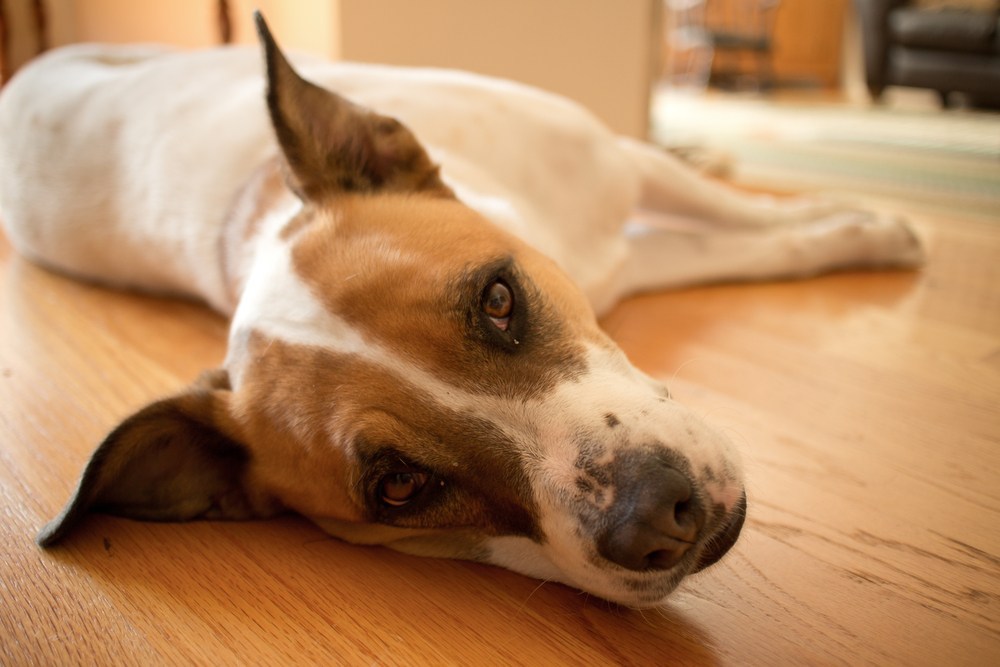
An Addisonian crisis is the most severe form of Addison’s disease and is a life-threatening veterinary emergency. It is uncommon but can be life-threatening, occurring when hormone deficiency causes severe dehydration, low blood pressure, electrolyte abnormalities and shock.
Warning signs can include sudden profound weakness, repeated vomiting or diarrhoea, collapse, severe lethargy, a very slow or abnormal heart rate, and an inability to stand.
Seek emergency veterinary care immediately if your pet collapses or becomes severely weak or unwell. An Addisonian crisis requires urgent treatment, usually including intravenous fluids, glucocorticoids and correction of potentially dangerous electrolyte or blood-glucose abnormalities.
How is Addison’s disease diagnosed?
Addison’s disease is difficult to diagnose because its symptoms are vague and overlap with many other diseases. Excessive drinking and urination could be symptoms of diabetes, while anorexia, vomiting and diarrhoea could indicate a gastrointestinal disease or parasitic infection. It is important to see a vet at the first sign of any abnormality to rule out any of these conditions. Furthermore, around 5% of pets may suffer other endocrine diseases at the same time as Addison’s disease, meaning they could have both Addison’s disease and hypothyroidism and/or diabetes.
If Addison’s disease is suspected at the vet from the history of results of preliminary bloodwork, basal cortisol can be measured via blood test. If basal cortisol levels are high then Addison’s disease is unlikely, but if basal cortisol levels are low then an ACTH stimulation test is required to confirm that Addison’s disease is present.
Expert advice from Dr Felicia:
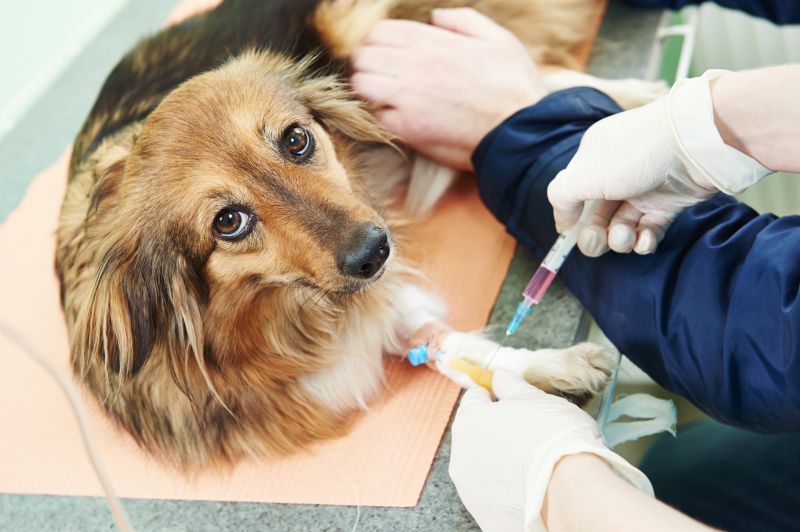
Testing for Addison’s disease is relatively non-invasive but usually requires a short stay in hospital as the ACTH stimulation test requires a blood test prior to giving an injection of ACTH, and a blood test one hour after the injection.
Treatment of Addison’s disease
An acute adrenocortical crisis (sudden onset Addison’s disease) is a medical emergency that requires immediate hospital treatment, usually including IV fluids, close monitoring of electrolyte abnormalities and short-acting cortisol.
Once stabilised or for gradual, chronic cases of Addison’s, treatment involves supplementation with daily oral glucocorticoids and mineralocorticoids, or a mineralocorticoid injection (called DOCP) every 3-4 weeks.
Regular veterinary monitoring is important to ensure medication doses remain appropriate. Your vet may also advise temporarily increasing glucocorticoid medication during periods of significant stress, illness or certain medical procedures.
Can Addison’s disease be prevented?
Most naturally occurring cases of Addison’s disease cannot be prevented because the underlying adrenal damage is usually unpredictable and is often suspected to be immune-mediated.
Medication-related adrenal insufficiency can sometimes be avoided by following veterinary instructions carefully. In particular, long-term corticosteroid medications should not be stopped suddenly unless directed by a veterinarian, as the dose may need to be reduced gradually.
Dogs being treated for Cushing’s disease also require regular monitoring because some medications used to reduce cortisol production can occasionally suppress adrenal function too far.

What is the outlook for pets with Addison’s disease?
Once Addison’s disease has been correctly diagnosed and treatment is stabilised, the long-term outlook is generally very good. Most affected dogs can live active, normal lives with appropriate lifelong medication and regular veterinary monitoring.
Owners need to give medication consistently, attend recommended blood tests and check-ups, and know when their dog may require additional glucocorticoid medication during periods of stress or illness. Atypical cases also require periodic electrolyte monitoring because mineralocorticoid deficiency can sometimes develop later.
Expert advice from Dr Felicia:
Treatment for Addison’s disease is lifelong, with tablets daily or tablets with an ongoing monthly injection. Most dogs tolerate it very well.
Interesting facts
- Addison’s disease is sometimes called “the great imitator” because its signs resemble many other illnesses.
- It can affect any breed, although Standard Poodles, Portuguese Water Dogs, Great Danes, Bearded Collies and some other breeds are overrepresented.
- Addison’s disease is much more commonly diagnosed in dogs than cats.
- Some dogs have atypical Addison’s disease and do not initially develop the characteristic sodium and potassium abnormalities.
- With appropriate lifelong treatment, most affected dogs have a good long-term prognosis.
Bow Wow Meow Pet Insurance can help protect you and your pet should an unexpected trip to your vet occur.
- Find out more about our dog insurance options
- Find out more about our cat insurance options
- Get an instant online pet insurance quote
Bow Wow Meow is proud to have been awarded winner of Canstar’s ‘Most Satisfied Customers’ Award in the Pet Insurance category for both 2024 and 2025!
Bow Wow Meow is proud to be the only Pet Insurer that has been awarded Product Review’s Top Rated Pet Insurance every year from 2018 to 2026! This is based on 3,193 independent customer reviews (as at 09/04/2026), with an overall rating of 4.5 stars.

We also have the following ratings on other review platforms:
Google Review rating of 4.5 stars (based on 1,358 reviews)
Trust Pilot rating of 4.6 stars (based on 555 reviews)
Bow Wow Meow has been chosen as Winner of 4 categories in the 2026 Finder Pet Insurance Customer Satisfaction Awards!




– Most Trusted Pet Insurance
– Easiest to Claim Pet Insurance
– Most Recommended Pet Insurance
– Legendary Service Pet Insurance
We also received Highly Commended Awards for Loved Brand Pet Insurance and Best Value Pet Insurance.
Bow Wow Meow is an Australian-owned and operated pet insurance provider. Our focus is purely on pets, and we are proud to have helped provide peace of mind to over 200,000 Aussie pet owners since 2008.
Sources
“Addison Disease (Hypoadrenocorticism) in Animals”, MSD Veterinary Manual, https://www.msdvetmanual.com/endocrine-system/the-adrenal-glands/addison-disease-hypoadrenocorticism-in-animals. Accessed 8 September 2026.
“Canine Hypoadrenocorticism (Addison’s disease)”, American Animal Hospital Association, https://www.aaha.org/resources/2023-aaha-selected-endocrinopathies-of-dogs-and-cats-guidelines/canine-hypoadrenocorticism-addisons-disease/. Accessed 8 September 2026.
“Canine Hypoadrenocorticism Diagnostic Testing and Monitoring”, American Animal Hospital Association, https://www.aaha.org/resources/2023-aaha-selected-endocrinopathies-of-dogs-and-cats-guidelines/diagnostic-testing-and-monitoring-3/. Accessed 8 September 2026.
“Canine Hypoadrenocorticism Therapy”, American Animal Hospital Association, https://www.aaha.org/resources/2023-aaha-selected-endocrinopathies-of-dogs-and-cats-guidelines/therapy-3/. Accessed 8 September 2026.
Bugbee A, Rucinsky R, Cazabon S, et al. “2023 AAHA Selected Endocrinopathies of Dogs and Cats Guidelines”, Journal of the American Animal Hospital Association, 2023;59:113–135. https://meridian.allenpress.com/jaaha/article/59/3/113/492975/2023-AAHA-Selected-Endocrinopathies-of-Dogs-and-Cats-Guidelines. Accessed 8 September 2026.