
Is the Pomeranian a good family dog?


Pomeranian
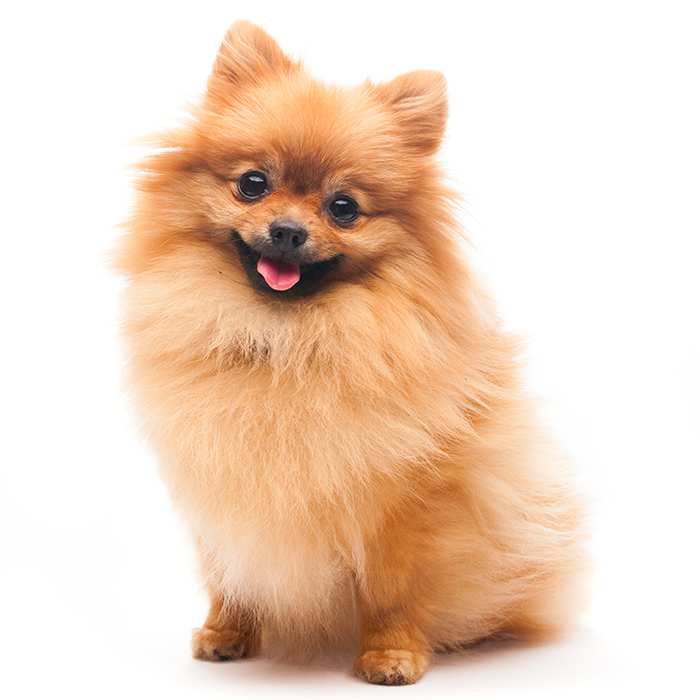
Pomeranians are cute small-sized dogs with a glorious, fluffy coat and a smiling, foxy face. Very popular companions, they are alert, extroverted and inquisitive dogs who love being part of a busy yet attentive family. They need action and constantly want to do new things, often bark when encountering new people, places or animals and don’t like being left home alone.
| Recommended for | Singles, families |
| Breed Classification | Toy group |
| Other names | Pom, Pompom |
| Lifespan | 12-16 years |
| Size | Small |
| Temperament | Friendly, playful & independent |
| Intelligence | High |
| Tendency to bark | High |
| Maintenance Level | Medium |
| Health Risk | This breed is in the lower risk category for developing health issues, hence it is one of the least expensive breeds to insure. |
Thinking of insuring a Pomeranian?
Explore the Top 5 health issues claimed for Pomeranians, including highest claims paid and how much pet insurance could help you save on eligible vet bills.
See Pomeranian pet insurance Ready to get cover? Get a quick quote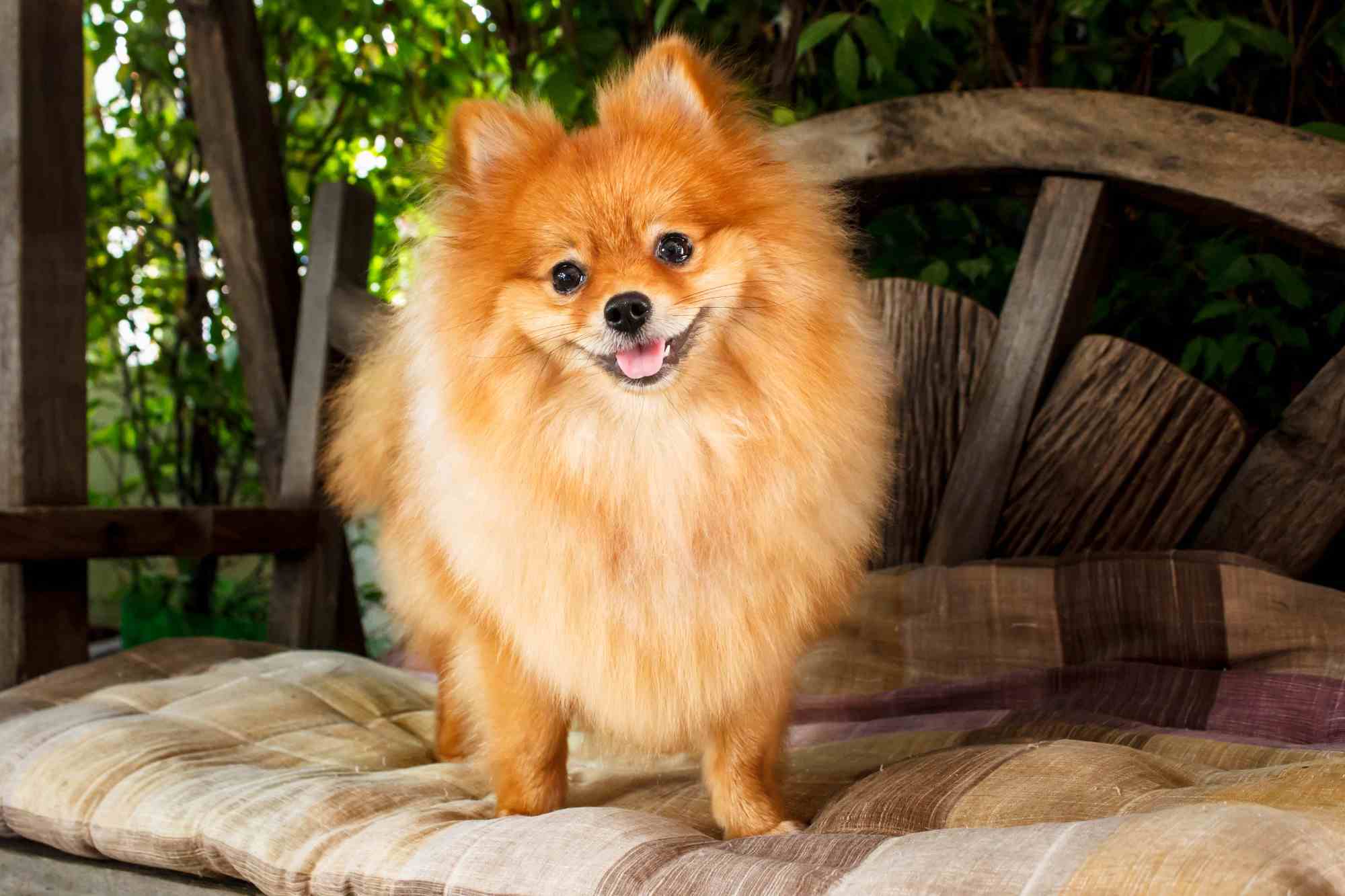
Pomeranian personality and temperament
The Pomeranian is a proud, bold, inquisitive, extroverted, energetic and spirited dog with a vivacious personality and a big-dog demeanour.
This is a loyal, affectionate, playful and friendly breed that enjoys a lot of entertainment. The bigger the crowd the happier they are. They need action and constantly want to do new things.
Pomeranians are very intelligent, curious and alert. They often bark when encountering new environments and people/animals; they are great watchdogs and will alert you when there are visitors. However, this behaviour can often get out of hand and they can develop a habit of barking excessively.
Quite an independent breed, Pomeranians will not agree with everything you want them to do, especially not to being left home alone. Poms may well have a melt down when their owners leave and they realise that they can’t go with them!
Pomeranians with kids and other pets
While they are generally good with children and not at all intimidating, Pomeranians are not well suited to very young or highly active children because of their small size. Also, they may snap at kids who make sudden movements or take them by surprise. For these reasons, Poms and young kids should always be supervised when playing together.
Poms are an excellent option for families with kids who are old enough to know the difference between a toy dog and a toy.
If properly introduced to other dogs and pets, the Pomeranian will usually get along well with them.
Pomeranian training and exercise
Pomeranians make great companions for the elderly people and people who live in apartments as they are very active indoors, especially when given toys. However, as much as they enjoy being lapdogs, Poms will benefit greatly from some outdoor exercise and the chance to run, play and go for walks.
Short walks every day and lots of adventures are first prize for this little ball of energy. Poms expect your genuine interest not just ball throwing at the park – when you engage with them, they want your full attention.
Always keep a close eye on your Pom when he or she is outside; they are notorious escape artists. Additionally, small breeds like Pomeranians can be mistaken for prey by large, predatory birds, and unrestrained dogs can easily hurt them.
Pomeranians are easily trained and make fine watchdogs. They will master tricks and games with ease, though their favourite activity is providing laughs and companionship to their special human.
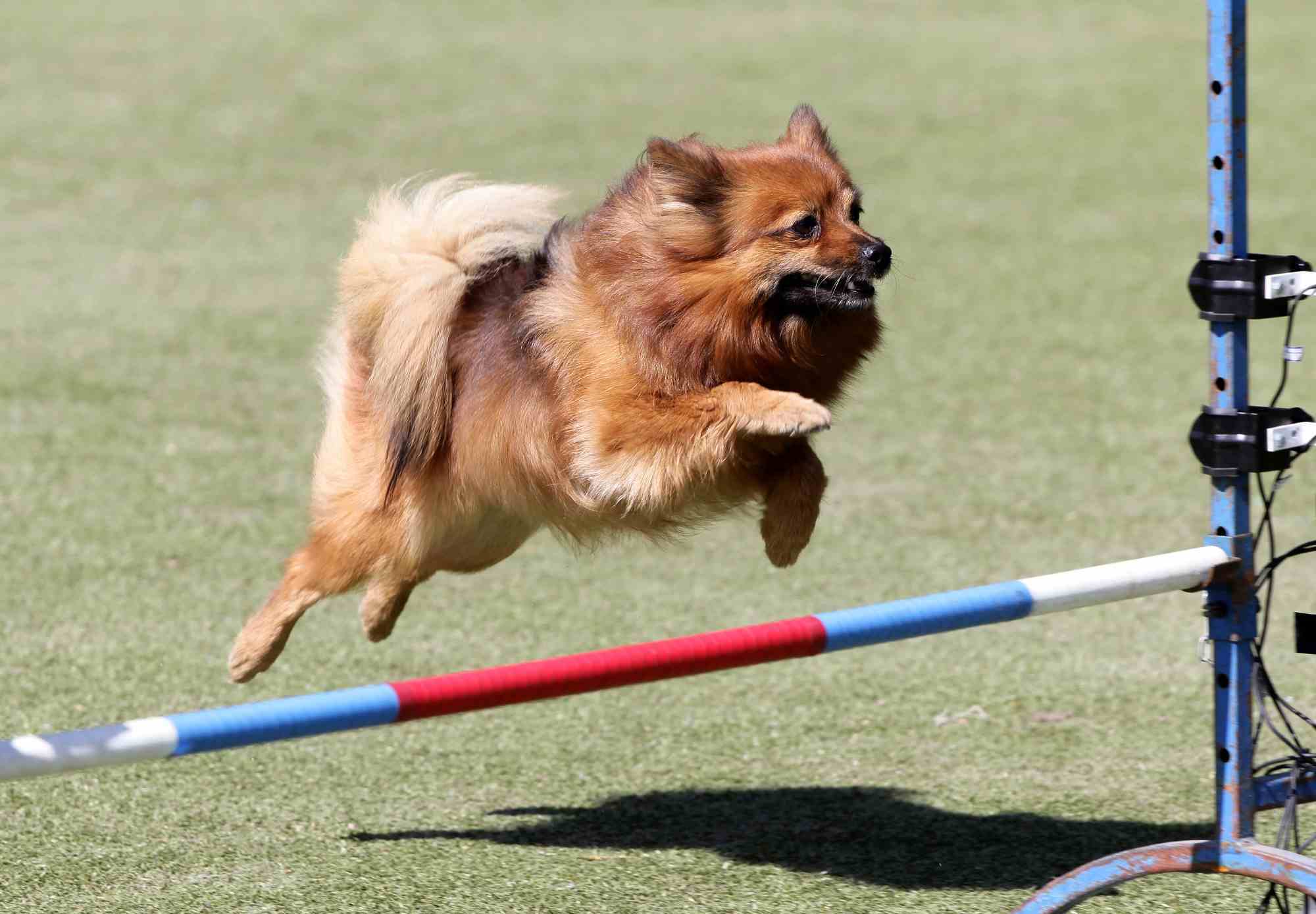
As they are very intelligent, alert dogs who are eager to learn, they can be taught many tricks. Training them is a great way to stimulate them mentally, which is just as important for Poms as physical activity. Poms enjoy and can excel in canine activities like agility, rally, and obedience, or working as therapy dogs. Loyal to their owners, they will alert of intruders and make good watchdogs.
| Energy level | High |
| Exercise requirements | Medium |
Common health issues for Pomeranians
What do Pomeranian owners claim for the most?
- Eye Problems such as intraocular pressure, ametropia, microphthalmia and colobomas, can affect Pomeranians. These conditions can appear in adolescent dogs and if left untreated may lead to blindness. Symptoms include redness, scarring and excessive tearing.
- Patellar luxation is caused either by a deformity or trauma, which results in frequent dislocation of the patella in the knee, locking the leg. It causes pain and can be crippling, but many dogs lead relatively normal lives.
- Legg-Perthes disease affects the hip joint and has been known to affect toy dog breeds. It lowers the blood supply to the femur and causes the pelvis to disintegrate. Symptoms such as limping and atrophy of the leg muscle occur around the age of 4 – 6 months. Surgery can be undertaken to remove the affected area and the resulting scar tissue creates a “false joint” and the dog usually ends up pain-free.
- Tracheal collapse has also been known to occur in Pomeranians, in which the tracheal rings of the windpipe weaken and restrict the airway. Symptoms include a honking cough made worse by physical activity, excitement or heat, intolerance to exercise and fainting spells.

- “Black Skin Disease”, which is a combination of alopecia and hyperpigmentation (skin darkening) can occur in Pomeranians. Possibly hereditary, it affects males more often than females, and though it mostly occurs during puberty, it can happen at any age.
- Cryptorchidism, a common issue among male Pomeranians, occurs when one or both of the testicles do not descend into the scrotum. This can be fixed through surgical removal of the retained testicle.
Not all conditions are covered by Pet Insurance. For details of Bow Wow Meow Pet Insurance cover, refer to the Product Disclosure Statement.
How to choose the right insurance for your Pomeranian
When comparing cover for your Pomeranian, look for:

Cover for common Pomeranian conditions:
Check that the policy covers conditions Pomeranians can be prone to, including common health issues.

Cover for hereditary conditions:
No exclusions for hereditary or congenital conditions⑅.

Flexible cover options:
Options to adjust your annual benefit limit, reimbursement rate and excess.
Bow Wow Meow's Nose-to-Tail Cover offers flexible options for your Pomeranian, with cover for accidental injuries, illnesses and hereditary conditions⑅. Get a quick quote for cover that suits your Pomeranian and your budget.
Pomeranian feeding and nutrition
The Pomeranian should do well on a high-quality dog food, appropriate to the dog’s age (puppy, adult, or senior) and activity level.
Some dogs are prone to getting overweight, so monitor your dog’s calorie consumption and weight on a regular basis.
Check with your vet if you have any concerns about your dog’s weight or diet.
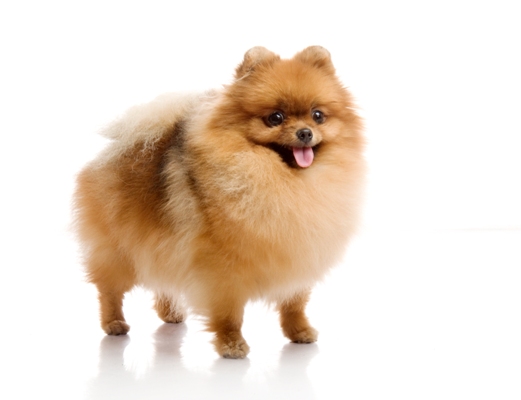
Pomeranian care and grooming
The Pomeranian’s profuse double coat requires frequent brushing to maintain its beautiful appearance. You should brush through with a pin brush and a slicker brush down to the skin once a week to keep the hair from matting.
If you are unable to do it yourself, it is highly recommended that you find a groomer to do a full groom, including bath, brushing, ears, nails, and anal glands, every four to six weeks.
Size, appearance and coat of Pomeranians
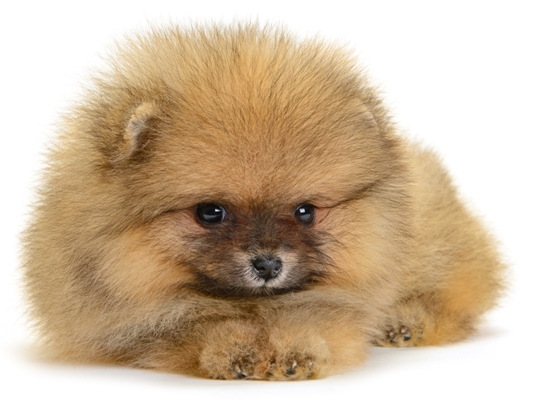
The Pomeranian combines a tiny body, a glorious fluffy coat and a smiling, foxy face, giving it a distinctive appearance.
The abundant double coat, with its frill extending over the chest and shoulders, gives the Pom its “ball of fluff” appearance. The under-coat is very short and thick, while the outer coat is long and soft.
The coat comes in almost two dozen colours, the widest variety of any dog breed. and various patterns and markings, but is most commonly seen in orange, black or white.
| Weight range | 2 to 3.5 kg |
| Height range | 13 to 28 cm |
| Colours | Wide variety, the most common being orange, black or white |
| Coat length | Long |
Breed history of Pomeranians
The Pomeranian is the smallest of the Spitz breeds (‘Spitz’ is German for “sharp point”, referring to the distinctive nose and muzzle). Its ancestors were large working Spitz-type sled dogs from the Arctic regions. It is named after the region of Pomerania that is now part of northern Poland and eastern Germany, which is credited with developing the Pomeranian into a smaller dog than its burlier and stronger Arctic cousins.
A long-time favourite of royalty, two Pomeranians were brought to England in 1767 by Queen Charlotte and King George III. Paintings of the dog in this period show a noticeably larger type (weighing between 14-23 kg) than the dog of today.
Queen Victoria, however, is credited with the surge in popularity of the breed. During her 64 year reign, she bred more than 15 different breeds of dogs, and in her later years fell in love with the Pomeranian while visiting Florence, Italy, returning to Britain with Pomeranians in tow. She owned a particularly small Pomeranian and began importing other small Pomeranians to add to her breeding program. In fact, she is credited with the resulting 50% decrease in breed size during her time. Her contemporaries King George IV and the wife of Napoleon I were both Pomeranian owners.
The earliest known Pomeranian brought to Australia was a chocolate-coloured dog in 1910. However, an 1879 advertisement offers a reward for the return of a white Pomeranian to Melbourne, so it is possible that the dogs have been in Australia since the 19th century.
Explore related breeds
Pomeranian facts!
- Because Pomeranians come in almost any colour imaginable, no Pomeranian is the same as another. Every one is unique.
- The breed has featured in the top 20 most popular dog breeds in the USA every year since at least 1998.
- Just like humans, Pomeranians have an awkward pubescent phase where it’s grown out of its puppy body but not quite grown into its adult one – more specifically, the puppy coat falls out before the adult coat grows in, leading to a weird stage where the dog has bald spots and looking like it’s been electrocuted! This phase is referred to as the “puppy uglies”.
- We use different words to describe groups of animals, such as a flock of birds, a school of fish, a herd of sheep etc… but, did you know that a pair of Pomeranians is called a “puff” and a group of 3 or more is a “tuft”?
- Internet sensation “Boo” is an 8-year-old Pomeranian from San Francisco and is frequently referred to as the “World’s Cutest Dog”. Famous for his toy-like appearance, Boo has 16 million Facebook fans, two books, and a stuffed animal version of himself. Kesha and Khloe Kardashian count themselves among his fans.
- Celebrity Pomeranian owners include Paris Hilton, Nicole Richie, Jessica Alba, Sharon & Kelly Osborne own one each and Hilary Duff owns two.
- While lying on her deathbed, Queen Victoria requested that her favourite Pomeranian, called Turi, be brought to her.
- Only three dogs survived the Titanic’s sinking in 1912, two of which were Pomeranians. Both escaped with their owners in lifeboats 6 and 7.
Summary
The Pomeranian is a small companion dog with a fluffy coat, foxy face and lively, extroverted personality. Alert and inquisitive, Pomeranians enjoy being part of a busy but attentive household and are always interested in what is happening around them.
They need regular activity, novelty and companionship and do not generally enjoy being left home alone for long periods. Pomeranians can be vocal when meeting new people, animals or situations, making training and socialisation useful from an early age.
FAQs about the Pomeranian
They are generally affectionate companions and can suit families, couples or singles when their individual exercise, training and grooming needs are met.
Moderate. Daily walks and play are generally appropriate, adjusted for the dog’s age, health and individual energy level.
They are intelligent but can be independent or strong-willed, so patient, consistent reward-based training and early socialisation are important.
They can be quite vocal, particularly when alerting, excited, bored or under-stimulated, so early training can help manage unnecessary barking.
They shed to some degree and require regular brushing or professional grooming to keep the coat in good condition.
Yes, they can adapt well to apartment living provided they receive sufficient daily exercise, mental stimulation and companionship.
They can live happily with respectful children and other pets when well socialised, but their small or delicate size means interactions with young children should be closely supervised.
Potential health concerns include dental disease, patellar luxation, collapsing trachea and some heart or coat disorders.
null

Get 2 months free for your puppy!
Congrats on your new bundle of joy
To ensure your precious fur baby is covered from the start, we'd like to offer your first 2 months of our Nose-to-Tail Cover for free2!
Get a quick quote