Is the Yorkshire Terrier a good family dog?


Yorkshire Terrier
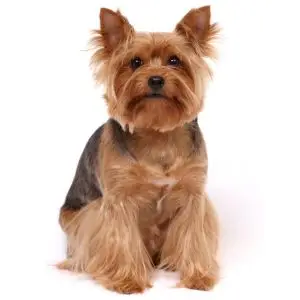
Yorkshire Terriers are small, affectionate and spirited companion dogs known for their long, silky coats and alert nature. Despite their toy size, they enjoy daily walks, play and training.
| Recommended for | Singles, couples and families with gentle older children |
| Breed Classification | Toys |
| Other names | Yorkie |
| Lifespan | 12-15 years |
| Size | Small |
| Temperament | Affectionate, alert, spirited and confident |
| Intelligence | High: responsive to reward-based training, although toilet training can require patience |
| Tendency to bark | High: alert and often vocal, particularly around unfamiliar activity |
| Maintenance Level | Moderate to high: daily care for a long coat, regular trimming and ongoing dental care |
| Health Risk | Yorkshire Terriers can be prone to dental disease, patellar luxation, tracheal collapse, liver shunts, eye disorders and protein-losing enteropathy. |
Thinking of insuring a Yorkshire Terrier?
Explore the Top 5 health issues claimed for Yorkshire Terriers, including highest claims paid and how much pet insurance could help you save on eligible vet bills.
See Yorkshire Terrier pet insurance Ready to get cover? Get a quick quote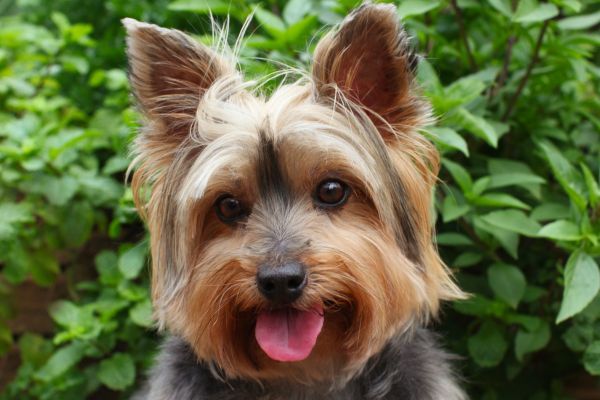
Yorkshire Terrier personality and temperament
Yorkshire Terriers are typically affectionate, alert and lively dogs that form close bonds with their families. Many enjoy exploring, playing and joining everyday activities, although confidence and sociability vary between individuals.
Their small size does not reduce their need for positive socialisation, consistent routines and reward-based training. Barking, growling or defensive behaviour may reflect fear, frustration or learned responses, so owners should address the underlying cause and seek professional help when needed.
Yorkshire Terriers with kids and other pets
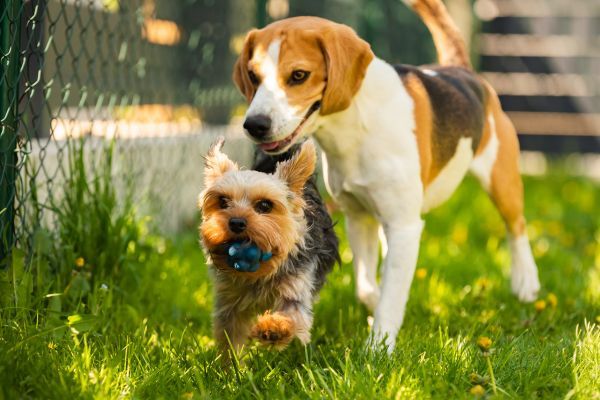
Yorkshire Terriers often suit families with older children who understand gentle handling. Their small bodies can be injured by rough play, accidental falls or being stepped on, so supervise interactions with young children and provide a quiet place where the dog can rest undisturbed.
Many Yorkies live successfully with other dogs and cats following careful introductions. Supervise play with larger dogs, and keep rabbits, guinea pigs and other small pets securely housed and separate where necessary. Individual compatibility varies.
Yorkshire Terrier training and exercise
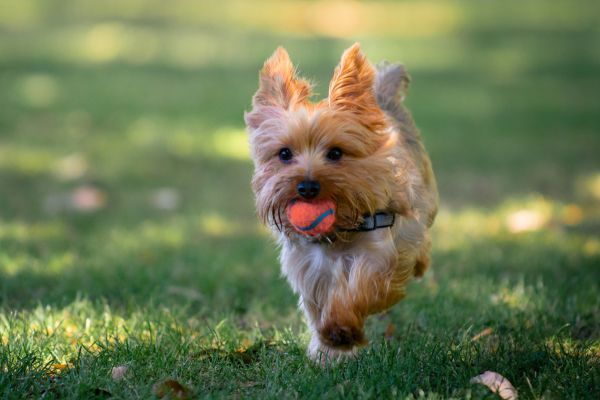
Yorkshire Terriers benefit from daily walks, play and short training sessions. Around 30 minutes of walking can be a useful starting point for a healthy adult, alongside games and mental enrichment. Adjust the routine to your dog’s age, health, fitness and individual energy level.
Use short, engaging sessions and reward desired behaviour. Toilet training may require patience, frequent opportunities to go outside and consistent rewards. Introduce grooming, tooth brushing and handling gradually so these become comfortable parts of everyday care.
| Energy level | Medium-high: lively, playful and active despite their tiny size |
| Exercise requirements | Low-moderate: around 20–30 minutes daily plus indoor play and mental enrichment |
Common health issues for Yorkshire Terriers
What do Yorkshire Terrier owners claim for the most?
Yorkshire Terriers are generally long-lived dogs, but their very small size and genetics can predispose them to several breed-related conditions affecting the teeth, knees, liver, airway and hips.
- Dental disease: Yorkies are particularly susceptible to overcrowded teeth, plaque and periodontal disease because of their small jaws. Daily tooth brushing and regular veterinary dental checks are especially important.
- Patellar luxation: The kneecap can slip out of its normal position, causing intermittent skipping, lameness or discomfort. Mild cases may require monitoring, while more severe cases can need surgery.
- Portosystemic shunt: Yorkshire Terriers have an increased predisposition to congenital abnormal blood vessels that allow blood to bypass the liver. Signs may include poor growth, gastrointestinal problems, unusual behaviour or seizures. Treatment can involve medication and dietary management or surgery.
- Tracheal collapse: Weakening of the windpipe can cause a characteristic dry or “goose-honk” cough, particularly with excitement or pressure around the neck. Management varies with severity and may include medication, weight control and, in serious cases, specialist procedures.
- Protein-losing enteropathy (PLE): Yorkshire Terriers are predisposed to intestinal disease that causes excessive protein loss through the gut. Signs may include persistent diarrhoea, vomiting, weight loss or fluid accumulation. Veterinary investigation and ongoing treatment are required.
- Very small Yorkshire Terrier puppies can also be susceptible to hypoglycaemia, particularly when young, stressed or not eating adequately.
Not all conditions are covered by Pet Insurance. For details of Bow Wow Meow Pet Insurance cover, refer to the Product Disclosure Statement.
How to choose the right insurance for your Yorkshire Terrier
When comparing cover for your Yorkshire Terrier, look for:

Cover for common Yorkshire Terrier conditions:
Check that the policy covers conditions Yorkshire Terriers can be prone to, including common health issues.

Cover for hereditary conditions:
No exclusions for hereditary or congenital conditions⑅.

Flexible cover options:
Options to adjust your annual benefit limit, reimbursement rate and excess.
Bow Wow Meow's Nose-to-Tail Cover offers flexible options for your Yorkshire Terrier, with cover for accidental injuries, illnesses and hereditary conditions⑅. Get a quick quote for cover that suits your Yorkshire Terrier and your budget.
Yorkshire Terrier feeding and nutrition
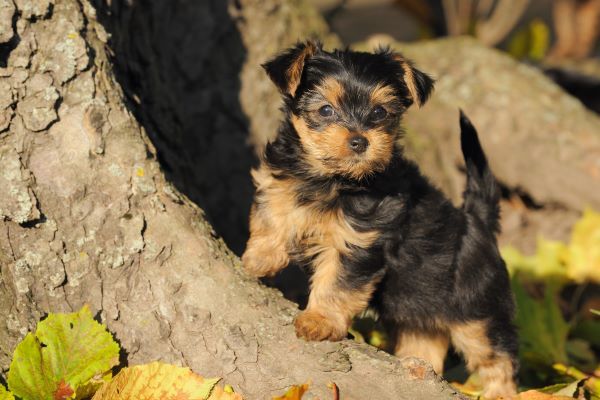
Yorkshire Terriers should be fed a complete and balanced diet appropriate for their age, body condition, activity level and health. Because they are very small, portions should be measured carefully and adjusted according to the calorie content of the food rather than using a fixed volume.
Young Yorkie puppies may need smaller, more frequent meals because toy-breed puppies can be susceptible to low blood sugar. Adult dogs should be kept at a lean, healthy weight, with treats included when calculating overall daily food intake. Speak to your vet about your dog’s individual nutritional requirements.
Yorkshire Terrier care and grooming
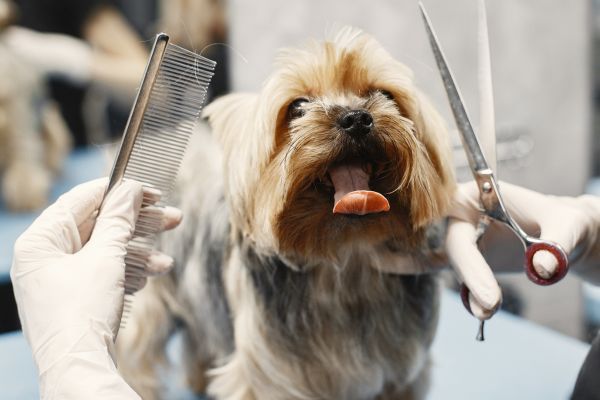
Yorkshire Terriers have long, fine, silky coats that shed relatively little but require regular care. A full-length coat generally needs daily brushing and combing to prevent tangles and mats, particularly around the face, legs and underside. Hair around the face may be trimmed or tied back to keep it clear of the eyes and mouth.
Many pet Yorkies are kept in a shorter clip, which reduces, but does not eliminate, the grooming commitment. Regular professional trimming may be helpful, along with routine nail, ear and particularly dental care. Yorkies are low shedding, but no dog is completely hypoallergenic.
Size, appearance and coat of Yorkshire Terriers
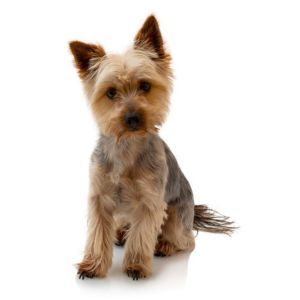
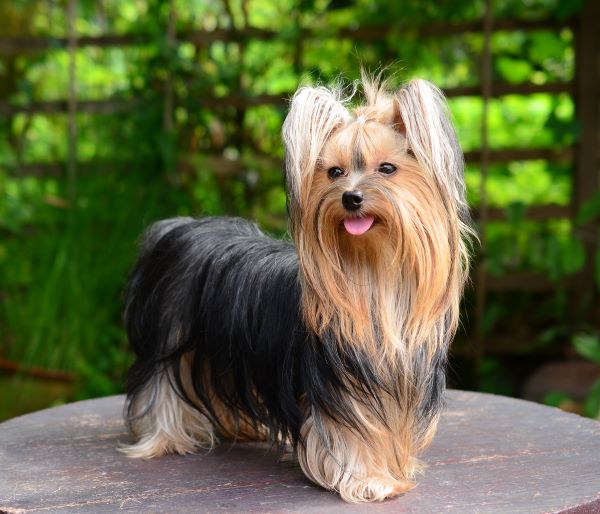
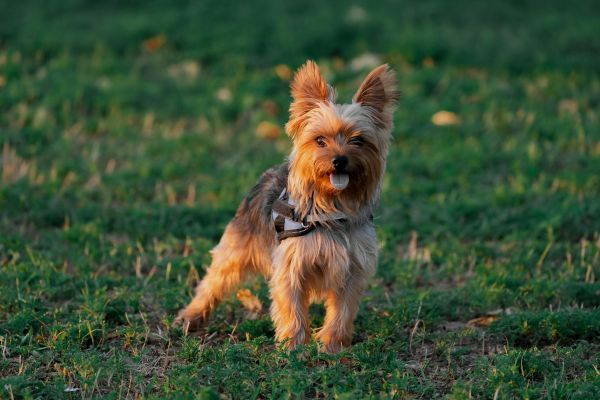
The Yorkshire Terrier is a tiny, compact dog with an upright carriage and a confident expression. Its most distinctive feature is the long, perfectly straight, fine and silky coat, traditionally parted from the nose along the back to the end of the tail. The ears are small, V-shaped and carried erect.
Adult Yorkies have a dark steel-blue body coat with rich golden tan colouring on the head, chest and legs. Puppies are born much darker, and their characteristic blue-and-tan colouring develops as they mature.
| Weight range | Up to 3.2 kg |
| Height range | Around 18–20 cm |
| Colours | Dark steel blue and rich golden tan |
| Coat length | Long |
Breed history of Yorkshire Terriers
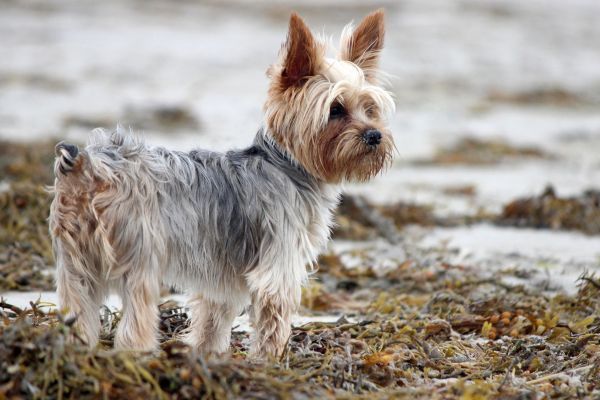
The Yorkshire Terrier developed in northern England during the 19th century. Scottish workers who moved to Yorkshire and neighbouring industrial areas for work brought small terriers with them, and these dogs contributed to the breed that eventually became the modern Yorkie. Their early role included controlling rats and other vermin around mills, mines and homes.
Several now-extinct or historic terrier types are believed to have contributed to its ancestry, including the Clydesdale or Paisley-type terriers, alongside other small British terriers. By the 1870s, the dogs had become closely associated with Yorkshire and were known as Yorkshire Terriers.
One dog, Huddersfield Ben, born in 1865, became enormously influential in establishing the breed’s appearance and breeding lines and is often described as the father of the modern Yorkshire Terrier. As the breed became smaller and its long silky coat was emphasised, the Yorkie moved from its working roots into the Victorian drawing room as a fashionable companion dog.
Explore related breeds
Yorkshire Terrier facts!
- A Yorkie named Smoky became a genuine World War II hero. She accompanied US troops in the Pacific, survived around 150 air raids and famously helped run communications wire through a narrow pipe beneath an airstrip.
- Smoky also became an early therapy dog, entertaining wounded soldiers in military hospitals with a repertoire of tricks.
- Huddersfield Ben, born in 1865, is often called the father of the modern Yorkshire Terrier. Despite weighing considerably more than today’s standard Yorkie, he regularly produced much smaller offspring and became enormously influential in the breed.
- Yorkie puppies aren’t born with the famous steel-blue adult coat. They are born much darker, and their characteristic blue-and-tan colouring develops as they mature.
- The elegant lapdog began life as a working ratter. Early Yorkies and their ancestors helped control rodents around northern England’s mills and industrial communities.
- Despite the word “Terrier” in its name, the Yorkshire Terrier is classified in Group 1 (Toys) in Australia, rather than in the Terrier group.
Summary
Yorkshire Terriers are lively, affectionate and intelligent little dogs with bold personalities that belie their tiny size. They adapt well to apartments and smaller homes, but still need daily activity, mental stimulation and consistent reward-based training.
Their low-shedding coat requires considerable grooming, and owners should be aware of breed-related issues such as dental disease, patellar luxation, liver shunts and tracheal collapse. With appropriate care and socialisation, Yorkies can make engaging and devoted companions.
FAQs about the Yorkshire Terrier
They can be lively, affectionate family companions, particularly for owners who enjoy an energetic, confident terrier personality.
Low to moderate. Yorkshire Terriers are energetic for their size but do not need large amounts of strenuous exercise. Daily walks, play and mental enrichment are important, with regular opportunities for more active exercise.
They are intelligent but can be independent or strong-willed, so patient, consistent reward-based training and early socialisation are important.
They can be quite vocal, particularly when alerting, excited, bored or under-stimulated, so early training can help manage unnecessary barking.
They are relatively low shedding, but their coat or skin still requires regular grooming and maintenance to stay healthy and free of mats.
Yes, they can adapt well to apartment living provided they receive sufficient daily exercise, mental stimulation and companionship.
They can live happily with respectful children and other pets when well socialised, but their small or delicate size means interactions with young children should be closely supervised.
Potential health concerns include dental disease, patellar luxation, tracheal collapse and portosystemic shunts.
No dog is completely hypoallergenic. Yorkshire Terriers shed relatively little and have a fine, continuously growing coat, so some people with dog allergies may tolerate them better than heavier-shedding breeds. However, allergens are also present in a dog’s skin particles and saliva, so individual reactions vary.
MORE INFORMATION
Yorkshire Terrier Club of NSW: http://www.yorkshireterrierclubnsw.com
Yorkie Queensland: http://www.yorkieqld.com/about_us

Get 2 months free for your puppy!
Congrats on your new bundle of joy
To ensure your precious fur baby is covered from the start, we'd like to offer your first 2 months of our Nose-to-Tail Cover for free2!
Get a quick quote