Pet dental hygiene: How to care for your dog or cat’s teeth


Summary
Dental disease is common in both dogs and cats, and pets often hide mouth pain until the problem is advanced. Regular toothbrushing, safe dental products, routine vet checks and early treatment can help protect your pet’s teeth, gums and overall wellbeing. In this guide, we explore how to care for your dog or cat’s teeth, recognise signs of dental disease, brush safely and support better pet dental hygiene at home.
Why pet dental hygiene matters
Looking after your pet’s teeth is an important part of caring for their overall health. Dental problems can cause bad breath, sore gums, tooth pain, infection, difficulty eating and, in more advanced cases, tooth loss.
Dogs and cats cannot tell us when their mouth hurts, and many pets continue eating even when they are uncomfortable. This means dental disease can go unnoticed for a long time. By the time obvious symptoms appear, the condition may already be advanced and require veterinary treatment.
Dental hygiene is not just about clean teeth or fresh breath. Unhealthy teeth and gums can affect your pet’s comfort, appetite and quality of life. Regular home care and veterinary dental checks can help detect problems earlier and reduce the risk of more serious dental disease.

How common is dental disease in dogs and cats?
Dental disease is one of the most common health problems affecting pets. According to the Australian and American Veterinary Dental Societies, around 80% of dogs and 70% of cats are likely to develop dental disease by the age of three.
Many cases begin with plaque, a sticky film of bacteria that forms on the teeth. If plaque is not removed, it can harden into tartar and contribute to gum inflammation. Over time, infection and inflammation can damage the tissues that support the teeth.
Because dental disease often develops gradually, regular checks are important even if your pet seems well.
Cost of dental disease treatment for dogs and cats
Dental disease was one of the most common health issues experienced by dogs and cats in 2025, according to PetSure claims data.
Claims data for dental disease* |
Average cost of treatmentØ |
Highest cost of treatmentØ |
| Dogs | $884.92 | $16,311 |
| Cats | $1042.39 | $7,065 |
Because veterinary dental treatment can become expensive, especially where dental X-rays, extractions or more complex procedures are needed, it can help to have measures in place to prepare for unexpected vet bills. Pet insurance may help cover a portion of eligible vet costs if your pet develops a covered dental condition, depending on your policy and level of cover.
For more information, see our article on pet insurance that covers dental in Australia.
Signs of dental disease in pets
Dental problems can be easy to miss, especially in cats and stoic dogs. Watch for changes in breath, eating habits, behaviour and the appearance of the teeth and gums.
Common signs of dental disease include:
- Bad breath
- Yellow or brown tartar around the gumline
- Red, swollen or bleeding gums
- Excessive drooling
- Pawing at the mouth
- Chewing on one side of the mouth
- Dropping food while eating
- Difficulty chewing
- Reluctance to eat hard food
- Tooth discolouration
- Loose, broken or missing teeth
- Soreness around the jaw
- Facial swelling
- Blood on toys, food bowls or bedding
- Behaviour changes, such as hiding, irritability or reduced interest in food

Cats may show more subtle signs, such as eating less, preferring soft food, chewing awkwardly, grooming less or withdrawing from normal interactions.
If your pet has facial swelling, obvious pain, bleeding, loose teeth, a broken tooth, difficulty eating or a sudden change in appetite, contact your vet promptly.
Common dental conditions in dogs and cats
Several dental and oral health problems can affect pets. Some are common in both dogs and cats, while others are more species-specific.
Gingivitis
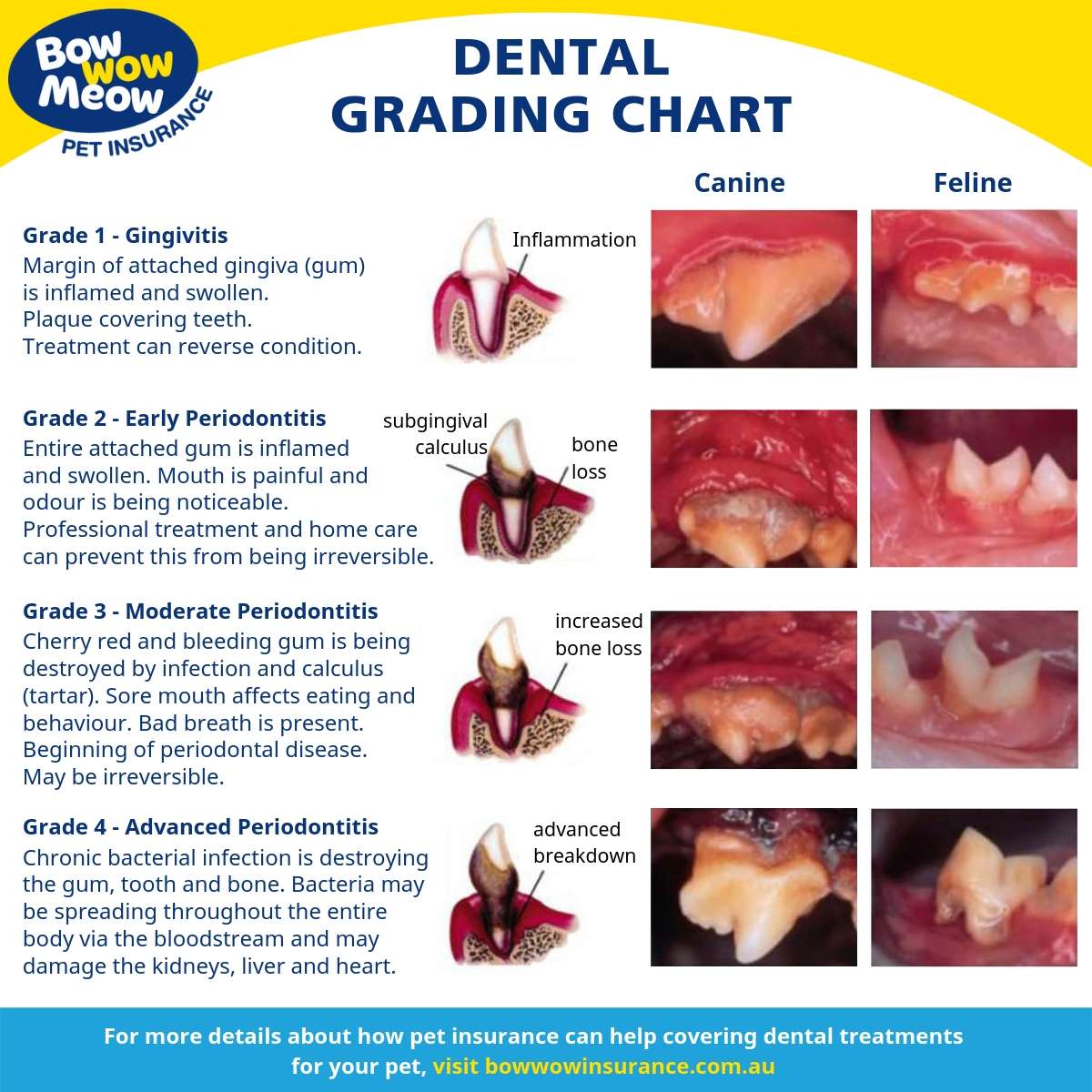
Gingivitis is inflammation of the gums. The gums may look red, swollen or bleed easily. Gingivitis may be reversible if addressed early, but if it progresses it can lead to more serious periodontal disease.
Periodontal disease
Periodontal disease, also known as gum disease, is one of the most common dental problems in pets. It starts when plaque builds up around the teeth and gums. If not removed, plaque can harden into tartar and contribute to gum inflammation.
As the disease progresses, infection can spread below the gumline and damage the tissues and bone that hold the teeth in place. This can lead to pain, loose teeth and tooth loss.
Tooth infection, abscesses and cavities
Dogs and cats can develop painful tooth infections and abscesses. These may occur because of dental disease, trauma, fractured teeth or infection around the tooth root. Signs may include facial swelling, bad breath, pain, drooling or difficulty eating.
Fractured teeth and oral trauma
Fractured teeth can happen when pets chew very hard objects, are involved in accidents, get into fights or suffer mouth trauma. A broken tooth may expose sensitive inner structures and can be very painful, even if your pet continues eating.
Retained baby teeth
Puppies and kittens have baby teeth, also called deciduous teeth. Puppies usually have 28 baby teeth and adult dogs have 42 permanent teeth. Kittens usually have 26 baby teeth and adult cats have 30 permanent teeth.
Sometimes baby teeth do not fall out properly. Retained baby teeth can cause crowding, abnormal tooth positioning and plaque build-up, so they should be checked by a vet.
Oral tumours
Lumps or growths in the mouth should always be checked by a vet. Oral tumours can occur on the lips, gums, tongue, jaw or other tissues in the mouth. Early diagnosis is important.

Feline tooth resorption
Tooth resorption is a common and painful condition in cats. It occurs when part of the tooth begins to break down and is gradually destroyed. Cats with tooth resorption may drool, chew awkwardly, drop food or show reduced appetite, although some cats hide signs of pain very well.
Feline stomatitis
Feline stomatitis is severe inflammation of the mouth and gums. It can be extremely painful and may affect the lips, gums, tongue and back of the throat. Cats with stomatitis may have bad breath, drooling, difficulty eating, weight loss or a reluctance to groom.
How to care for your pet’s teeth at home
The best dental hygiene routine usually combines home care with veterinary care. The right plan will depend on your pet’s species, age, breed, mouth shape, health history and tolerance for toothbrushing.
1. Brush your pet’s teeth regularly
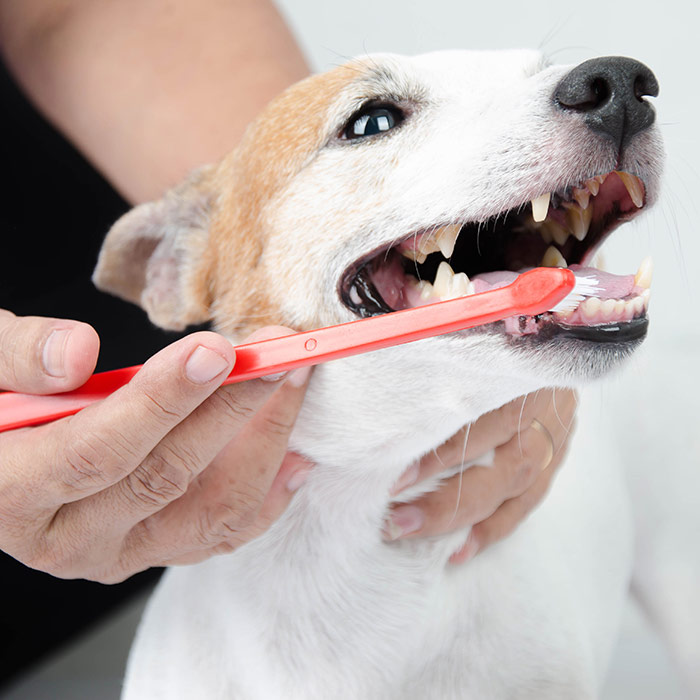
Toothbrushing is one of the most effective ways to reduce plaque before it hardens into tartar. Daily brushing is ideal, but brushing a few times a week may still be helpful if daily brushing is not realistic.
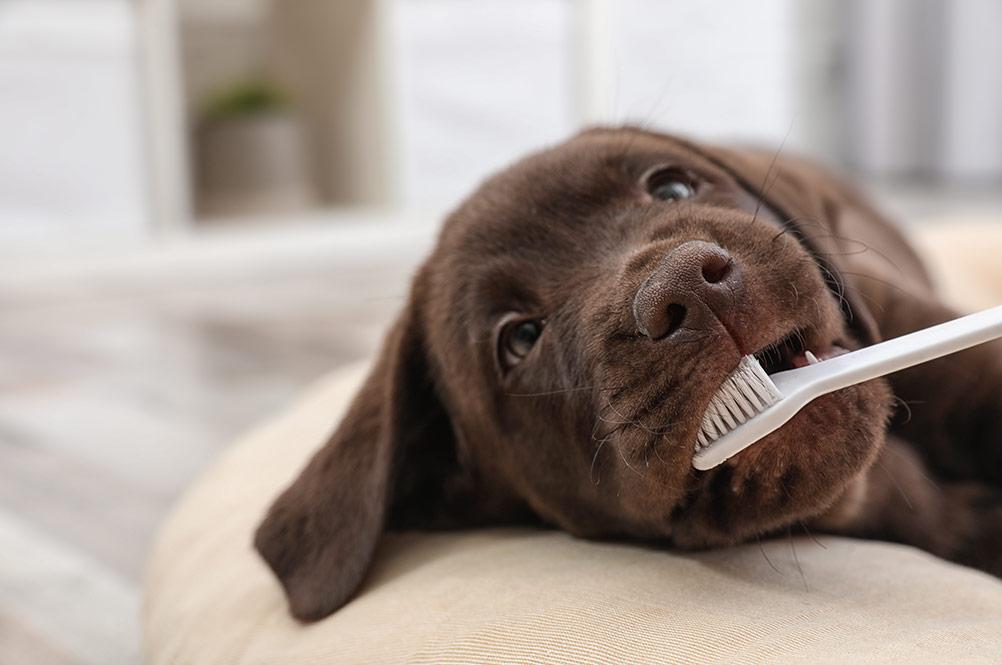
Use a pet-safe toothpaste and a soft toothbrush, pet toothbrush, finger brush or dental wipe. Do not use human toothpaste, as pets swallow toothpaste and some ingredients may be unsafe for them.
Start slowly. Let your pet taste the toothpaste first, then progress to touching the lips, lifting the lip, touching the teeth and finally brushing for a few seconds at a time. Keep sessions short and positive.
Quick tip: If your pet will not tolerate full toothbrushing, start with gentle lip lifting or rubbing the outside of the teeth with gauze. A small, calm step is better than forcing a full clean.
For dog-specific instructions, see our guide to brushing your dog’s teeth.
2. Focus on the outside surfaces of the teeth
If your pet does not tolerate a full-mouth clean, focus on the outside surfaces of the teeth, especially the canine teeth and back teeth. These are common areas for plaque and tartar build-up.
You do not need to force your pet’s mouth open. Many pets tolerate gentle lip lifting better than full mouth handling.
3. Use dental chews and toys carefully
Dental chews, toys and treats can support oral hygiene, especially for dogs that enjoy chewing. However, they should not replace brushing or professional dental care.
Choose products that are suitable for your pet’s size, age and chewing style. Avoid very hard chews that may fracture teeth, and supervise your pet while chewing.
For cats, dental treats or diets may be more practical than chew toys, but cats vary widely in what they will accept.
Chew safety reminder: Very hard bones, antlers and hooves can crack teeth. Choose dental chews carefully and ask your vet what is safest for your pet.
4. Be cautious with bones and hard chews
Bones, antlers, hooves and very hard chews can be risky. They may fracture teeth, splinter, cause choking, contribute to constipation or create a risk of gastrointestinal injury.
Cooked bones should be avoided because they are more likely to splinter. If you are considering raw bones or hard chews, speak to your vet first.
5. Consider dental diets and oral care products
Some veterinary dental diets are designed to help reduce plaque or tartar. Other oral care products may include:
- Dental wipes
- Dental treats
- Oral gels
- Water additives
- Dental rinses or sprays
- Breath fresheners
These products may help support dental hygiene, but they should be used as part of a broader plan. Ask your vet which products are appropriate, especially if your pet has allergies, food sensitivities, kidney disease, pancreatitis, weight concerns or another health condition.
6. Book regular dental checks with your vet
Regular veterinary dental checks are important because many dental problems occur below the gumline or at the back of the mouth where owners cannot easily see them.
Your vet can check for tartar, gum disease, broken teeth, retained baby teeth, oral lumps, tooth resorption, infection and other issues. Some pets may need professional dental cleaning under general anaesthetic, which allows the vet to clean above and below the gumline, assess each tooth properly and take dental X-rays if needed.
Ask your vet how often your pet needs a dental check. Some pets may need more frequent checks, particularly senior pets, small dogs, brachycephalic breeds, cats with a history of dental disease and pets that do not tolerate home dental care.
Because it is difficult to predict the costs of veterinary care, it can help to have measures in place to help prepare for the unexpected. Pet insurance can help by covering a portion of the eligible vet bill if the unexpected does happen.
Get a quick quote
Dog dental hygiene tips
Dogs are often more tolerant of brushing than cats, but they can still need a gradual approach.
Helpful dog dental hygiene habits include:
- Introduce toothbrushing slowly and positively.
- Use dog-safe toothpaste in a flavour your dog likes.
- Focus on the outside surfaces of the canine and back teeth.
- Choose flexible dental chews rather than very hard chews.
- Avoid chews that are hard enough to risk cracking teeth.
- Ask your vet about dental diets or VOHC-accepted products.
- Have your dog’s mouth checked regularly, especially as they age.
Small and toy breed dogs often need extra dental attention because crowded teeth can make plaque and tartar build-up more likely.
Cat dental hygiene tips
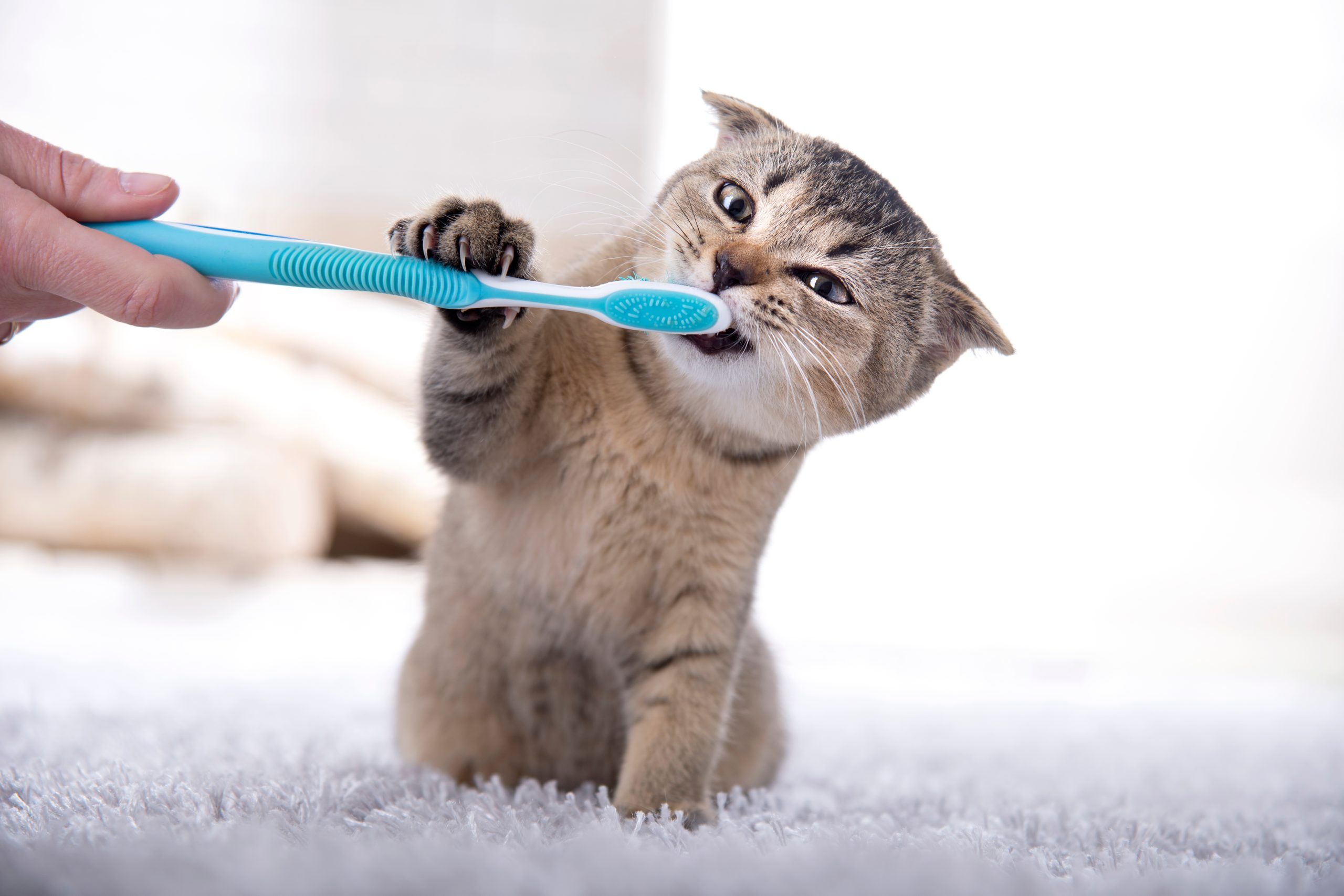
Cats can be more challenging when it comes to dental care, but gentle home care can still help. The key is to go slowly and avoid forcing mouth handling.
Helpful cat dental hygiene habits include:
- Start with gentle face and lip handling.
- Let your cat taste pet-safe toothpaste before trying to brush.
- Use a small cat toothbrush, finger brush, dental wipe or gauze if tolerated.
- Keep sessions very short.
- Watch for subtle signs such as reduced appetite, drooling, dropping food or grooming less.
- Ask your vet about feline dental diets or dental treats.
- Have your cat’s mouth checked regularly, especially if they are older or have a history of dental disease.
Cats are particularly prone to painful dental conditions such as tooth resorption and stomatitis, so changes in eating or behaviour should not be ignored.
Cat dental fact: Cats can develop a painful condition called tooth resorption, where part of the tooth breaks down and is gradually destroyed. It is one of the reasons regular feline dental checks are so important.
When should you see a vet?
Book a vet appointment if you notice:
- Bad breath that does not improve
- Red, swollen or bleeding gums
- Loose, broken or missing teeth
- Drooling more than usual
- Pawing at the mouth
- Difficulty eating or chewing
- Dropping food from the mouth
- Facial swelling
- Blood from the mouth
- A lump or growth in the mouth
- Sudden changes in appetite or behaviour
- Your pet reacting painfully when touched around the face
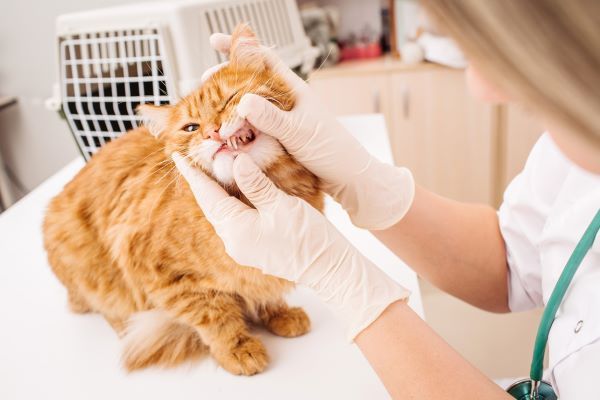
Dental disease can be painful even when a pet appears otherwise well. Early veterinary attention may help reduce pain and prevent more complex problems.
Pet dental hygiene checklist
A practical dental hygiene routine may include:
- Check your pet’s breath, teeth and gums regularly.
- Brush your pet’s teeth daily if possible.
- Use pet-safe toothpaste only.
- Introduce brushing gradually and positively.
- Focus on the outside surfaces of the teeth.
- Use dental chews, diets or oral care products only as part of a broader plan.
- Avoid very hard chews that may crack teeth.
- Book regular dental checks with your vet.
- Seek veterinary advice if your pet shows signs of pain, infection or difficulty eating.
In summary
Good dental hygiene can make a big difference to your pet’s comfort, health and quality of life. Because dogs and cats often hide dental pain, it is important to be proactive with toothbrushing, safe dental products, routine checks and early veterinary care.
Bow Wow Meow Pet Insurance gives you the option to add on Booster Care, which includes up to $2,000 per year⌔ of cover for specified dental conditions, including gingivitis, abscesses, cavities and dental disease arising from infection. Scaling, polishing, dental x-rays and tooth removal for specified dental conditions may be eligible for cover under Booster Care if you have this. Please refer to the PDS for terms and conditions and exclusions.
ØBased on PetSure claims data, 2025 calendar year. Reimbursement for these claims under a pet insurance policy would be subject to limits, such as annual benefit limits or sub-limits, benefit percentage, applicable waiting periods and any applicable excess. Cover is subject to the policy terms and conditions. You should consider the relevant Product Disclosure Statement or policy wording available from the relevant provider. Please note that values calculated are based on all claims for that condition and medically related conditions in each calendar year.
Bow Wow Meow Pet Insurance can help protect you and your pet should an unexpected trip to your vet occur.
- Find out more about our dog insurance options
- Find out more about our cat insurance options
- Get an instant online pet insurance quote
Bow Wow Meow is proud to have been awarded winner of Canstar’s ‘Most Satisfied Customers’ Award in the Pet Insurance category for both 2024 and 2025!
Bow Wow Meow is proud to be the only Pet Insurer that has been awarded Product Review’s Top Rated Pet Insurance every year from 2018 to 2026! This is based on 3,193 independent customer reviews (as at 09/04/2026), with an overall rating of 4.5 stars.

We also have the following ratings on other review platforms:
Google Review rating of 4.5 stars (based on 1,358 reviews)
Trust Pilot rating of 4.6 stars (based on 555 reviews)
Bow Wow Meow has been chosen as Winner of 4 categories in the 2026 Finder Pet Insurance Customer Satisfaction Awards!




– Most Trusted Pet Insurance
– Easiest to Claim Pet Insurance
– Most Recommended Pet Insurance
– Legendary Service Pet Insurance
We also received Highly Commended Awards for Loved Brand Pet Insurance and Best Value Pet Insurance.
Bow Wow Meow is an Australian-owned and operated pet insurance provider. Our focus is purely on pets, and we are proud to have helped provide peace of mind to over 200,000 Aussie pet owners since 2008.