Is the Cairn Terrier a good family dog?


Cairn Terrier
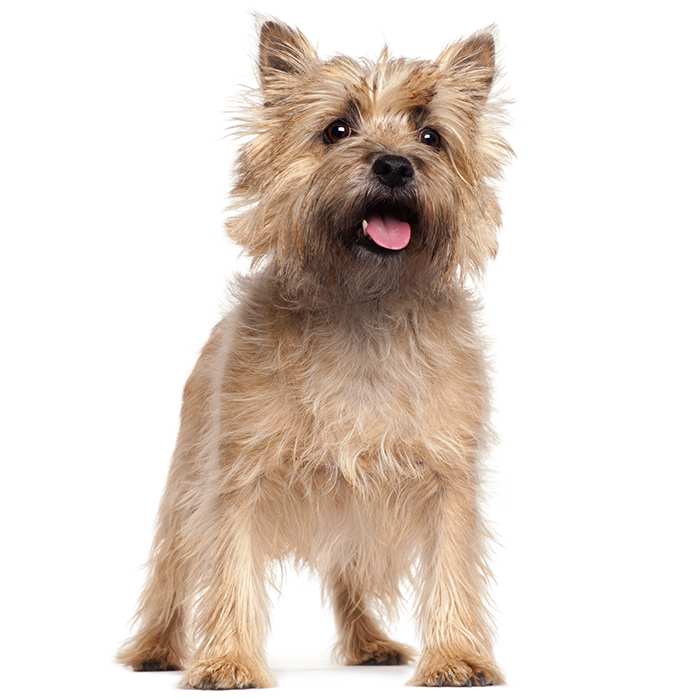
Cairn Terriers are small, energetic Scottish terriers known for their shaggy coats, curious nature and big personalities. Originally bred to hunt vermin among the rocky cairns of the Scottish Highlands and islands, they remain active, intelligent and independent dogs with strong instincts to explore, dig and chase.
| Recommended for | Active families, singles and owners who enjoy a lively terrier personality |
| Breed Classification | Terriers |
| Other names | The Cairn |
| Lifespan | 12-14 years |
| Size | Small |
| Temperament | Loyal, friendly, independent |
| Intelligence | Above average: quick learners with an independent terrier streak |
| Tendency to bark | Moderate to high: alert and expressive, and may bark at unfamiliar activity, excitement or boredom |
| Maintenance Level | Low to medium: relatively easy coat care with regular brushing and periodic hand-stripping |
| Health Risk | Cairn Terriers are generally a hardy, long-lived breed, although inherited liver, eye, neurological and joint conditions can occur. |
Thinking of insuring a Cairn Terrier?
Explore the Top 5 health issues claimed for Cairn Terriers, including highest claims paid and how much pet insurance could help you save on eligible vet bills.
See Cairn Terrier pet insurance Ready to get cover? Get a quick quote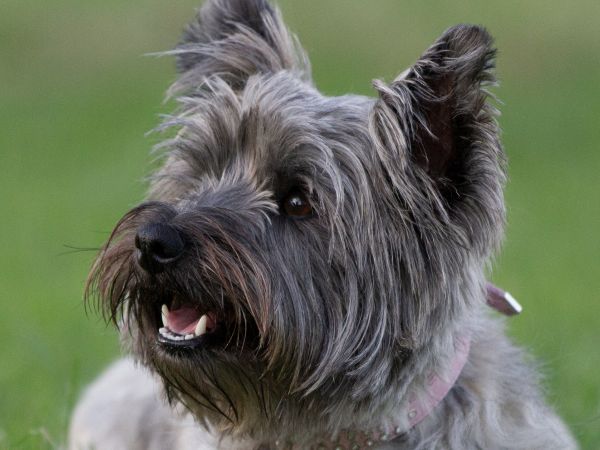
Cairn Terrier personality and temperament
Cairn Terriers are lively, affectionate and confident little dogs that tend to take a keen interest in everything happening around them. They often form close bonds with their families and enjoy being involved in everyday activities, but their working-terrier heritage also gives them an independent and curious streak.
They are intelligent and usually quick to learn, although they may sometimes be more interested in investigating a smell, chasing movement or pursuing their own agenda than following instructions. Regular interaction, exercise and enrichment help keep them occupied, while early socialisation can help them become confident around unfamiliar people, dogs and environments.
Cairn Terriers with kids and other pets
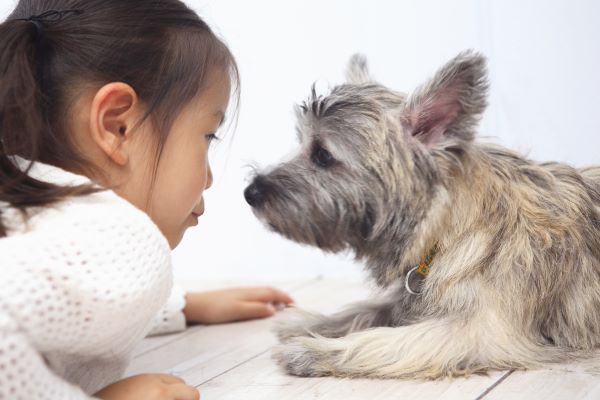
Well-socialised Cairn Terriers can make playful and affectionate family companions and often enjoy interacting with children. Because they are small dogs, children should be taught to handle them gently and respect their space, and interactions with young children should always be supervised.
Many Cairns can live successfully with other dogs when appropriately socialised. Their strong terrier prey drive is more important around cats and smaller pets, however, and animals such as rabbits, rodents or birds may trigger chasing behaviour. Individual compatibility should always be assessed carefully.
Cairn Terrier training and exercise
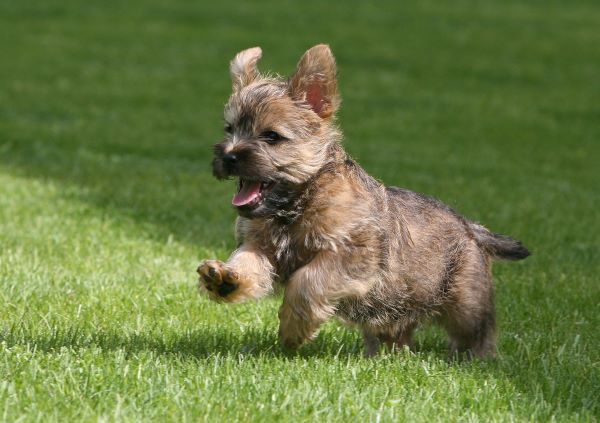
Cairn Terriers are active dogs that generally benefit from around 45–60 minutes of daily exercise, together with play and mental enrichment. Walks, scent games, digging activities in an appropriate area, agility and other terrier sports can all provide useful outlets for their energy and natural working instincts. The Royal Kennel Club gives a general guide of up to one hour of exercise per day.
They are intelligent and quick learners but can also be independent and easily distracted by scents or small animals. Short, varied training sessions using positive reinforcement tend to work best. Recall training should begin early, but off-lead activity is safest in secure areas because a Cairn’s instinct to chase can override its response to a recall cue.
| Energy level | High: lively, inquisitive terriers |
| Exercise requirements | Moderate to high: around 45–60 minutes daily plus play and mental enrichment |
Common health issues for Cairn Terriers
What do Cairn Terrier owners claim for the most?
Cairn Terriers are generally hardy and long-lived dogs, but they can be predisposed to several inherited and breed-related conditions affecting the liver, eyes, joints and nervous system.
- Portosystemic shunt (PSS): An abnormal blood vessel allows blood to bypass the liver instead of being properly filtered. Signs can include poor growth, vomiting, diarrhoea, excessive thirst and neurological changes. Liver-function testing is recommended in Cairn Terrier puppies.
- Ocular melanosis and secondary glaucoma: Pigment can gradually accumulate within the eye and interfere with normal fluid drainage, potentially causing painful glaucoma and vision loss. The condition usually develops in middle-aged or older dogs.
- Patellar luxation: The kneecap slips out of its normal position, which can cause intermittent skipping, lameness, pain and arthritis. More severe cases may require surgery.
- Diabetes mellitus: Diabetes affects the body’s ability to regulate blood glucose. Signs can include increased thirst and urination, weight loss and changes in appetite, and treatment usually involves insulin and dietary management.
- Craniomandibular osteopathy (CMO): This inherited condition causes abnormal bone growth in the jaw and skull of young dogs, leading to pain, swelling and difficulty eating. DNA testing is available.
- Globoid cell leukodystrophy (GCL): A rare inherited neurological disease that causes progressive weakness, poor coordination and other neurological signs in young dogs. DNA testing can identify affected dogs and carriers.
- Other eye conditions, including cataracts and progressive retinal atrophy (PRA), can also occur in Cairn Terriers, making regular veterinary and specialist eye examinations worthwhile.
Not all conditions are covered by Pet Insurance. For details of Bow Wow Meow Pet Insurance cover, refer to the Product Disclosure Statement.
How to choose the right insurance for your Cairn Terrier
When comparing cover for your Cairn Terrier, look for:

Cover for common Cairn Terrier conditions:
Check that the policy covers conditions Cairn Terriers can be prone to, including common health issues.

Cover for hereditary conditions:
No exclusions for hereditary or congenital conditions⑅.

Flexible cover options:
Options to adjust your annual benefit limit, reimbursement rate and excess.
Bow Wow Meow's Nose-to-Tail Cover offers flexible options for your Cairn Terrier, with cover for accidental injuries, illnesses and hereditary conditions⑅. Get a quick quote for cover that suits your Cairn Terrier and your budget.
Cairn Terrier feeding and nutrition
Cairn Terriers should be fed a complete and balanced diet appropriate for their age, body condition, activity level and health. Their food intake should be measured and adjusted as needed to maintain a healthy weight, with treats included when considering total daily calories.
Speak to your vet if you have concerns about your Cairn Terrier’s diet, weight or individual nutritional requirements.
Cairn Terrier care and grooming
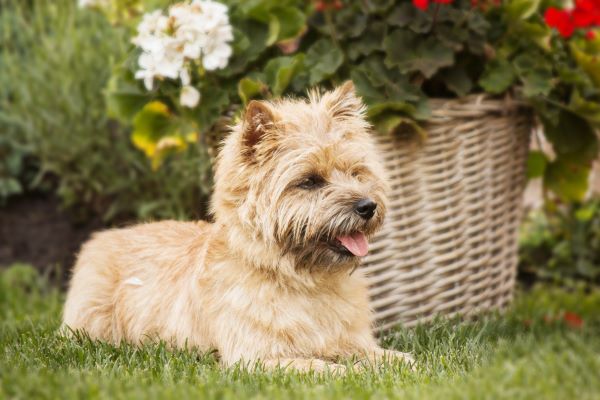
Cairn Terriers have a weather-resistant double coat comprising a harsh outer coat and a short, soft undercoat. Brushing and combing a couple of times each week helps remove loose hair, debris and tangles, while periodic hand-stripping can help maintain the characteristic texture of the outer coat.
They shed relatively lightly compared with many breeds, although they are not non-shedding. Bathing is generally only needed when dirty, along with routine nail, ear and dental care.
Size, appearance and coat of Cairn Terriers
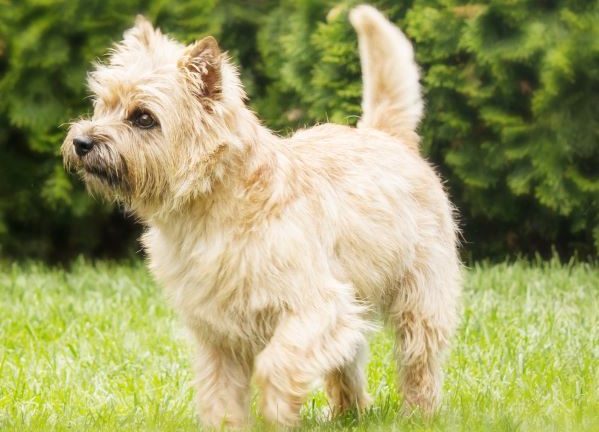
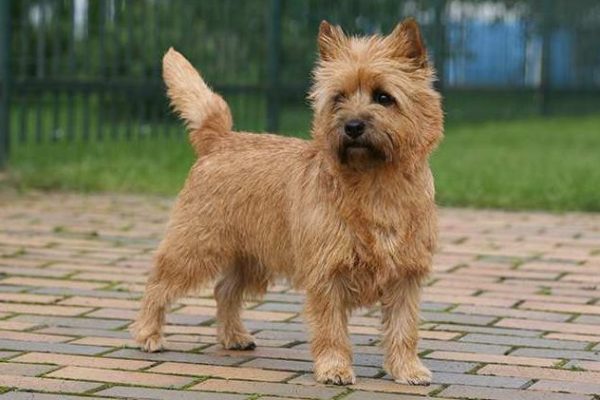
The Cairn Terrier is a small, hardy and naturally shaggy dog with erect pointed ears, dark hazel eyes and an alert, workmanlike appearance. Its compact but athletic build reflects its original role pursuing vermin through rocky terrain, while the short, well-furnished tail is carried upright without curling over the back.
The weather-resistant double coat has a profuse, harsh outer layer over a short, soft undercoat. Recognised colours include cream, wheaten, red, grey and nearly black, with brindling permitted. Darker ears and muzzle are particularly typical.
| Weight range | 6–7.5 kg |
| Height range | Approximately 28–31 cm |
| Colours | Cream, wheaten, red, grey or nearly black |
| Coat length | Medium: harsh, weather-resistant outer coat with a soft undercoat. |
Breed history of Cairn Terriers
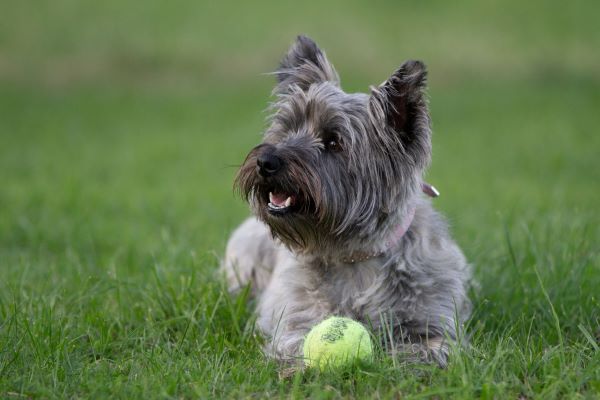
The Cairn Terrier descends from old working terriers of the Scottish Highlands and islands, particularly the Isle of Skye. For centuries, small hardy terriers were used by crofters, shepherds and hunters to pursue foxes, rats and other vermin among rocky terrain and piles of stones known as cairns.
During the late 19th and early 20th centuries, Scotland’s different terrier types were increasingly standardised into separate breeds. Dogs that became the modern Cairn were initially shown as Short-haired or Prick-eared Skye Terriers. In 1910, the Kennel Club agreed that they should be registered under the name Cairn Terrier; a separate breed register followed in 1912.
The Cairn later achieved worldwide fame when a female Cairn named Terry played Toto alongside Judy Garland in the 1939 film The Wizard of Oz.
Explore related breeds
Cairn Terrier facts!
- The Cairn Terrier became famous as the little dog that starred in The Wizard of Oz with Judy Garland.
- Maybe it has something to do with her mother being Judy Garland, but Liza Minelli owned a red coated Cairn Terrier named Lily.
- Cairn Terriers love to dig so it’s best not to leave them in the back yard with freshly planted flowers.
- Cairns take their name from the rocky cairns where they hunted vermin,
- Their coat colour can change considerably as they mature, particularly in brindled dogs.
Summary
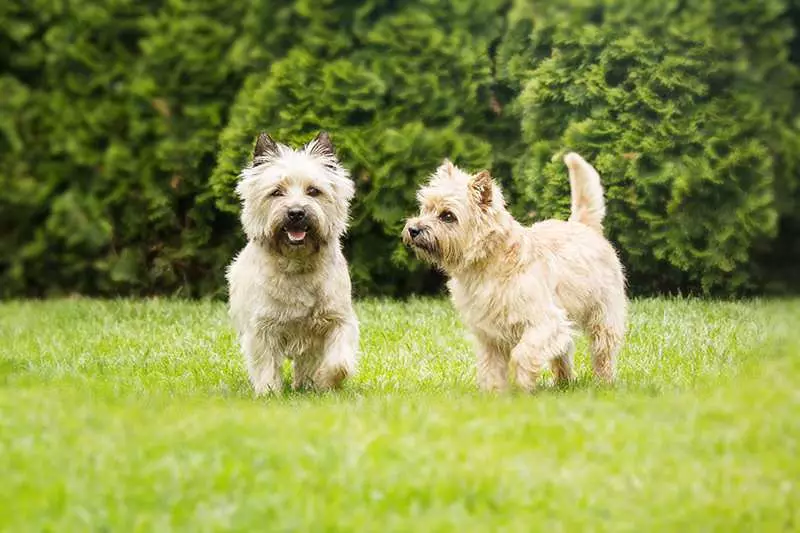
The Cairn Terrier is a small, scruffy and energetic dog with plenty of personality. Lively, affectionate and family-oriented, it enjoys being part of a busy household and tends to be alert to what is happening around it.
Cairn Terriers need regular exercise, attention and opportunities to stay occupied. They can be wary of strangers and may bark to alert their family, making them spirited little watchdogs as well as companion dogs.
FAQs about the Cairn Terrier
They can be lively, affectionate family companions, particularly for owners who enjoy an energetic, confident terrier personality.
Moderate to high. Daily walks, play and mental enrichment are important, with regular opportunities for more active exercise.
They are intelligent but can be independent or strong-willed, so patient, consistent reward-based training and early socialisation are important.
They are generally low to moderate or moderate barkers, although barking can increase with boredom, excitement, anxiety or unfamiliar activity.
Yes. They generally shed a low to moderate or moderate amount and benefit from routine brushing.
They can adapt to apartment living in the right circumstances, but owners need to meet their daily exercise, enrichment and behavioural needs consistently.
They can live well with respectful children and other dogs, but terrier prey drive may make small pets tempting to chase and dog-to-dog compatibility varies.
Potential health concerns include patellar luxation, eye disease, allergies and some inherited liver or neurological conditions.
Digging is deeply rooted in the Cairn Terrier’s working history. The breed was developed to pursue foxes, rats and other quarry among rocky cairns and underground spaces, so scratching, digging and investigating holes remain natural behaviours for many Cairns. Providing an approved digging area or other terrier-style enrichment can give them an appropriate outlet for this instinct.
MORE INFORMATION:
The Cairn Terrier Club of NSW Inc: http://cairnsnsw.com/
The Cairn Terrier Club of Victoria: http://www.cairnterrier.org.au/

Get 2 months free for your puppy!
Congrats on your new bundle of joy
To ensure your precious fur baby is covered from the start, we'd like to offer your first 2 months of our Nose-to-Tail Cover for free2!
Get a quick quote