How to help your dog lose weight safely
Summary
Carrying excess weight can affect your dog’s mobility, comfort and overall health, but even modest weight loss can make a meaningful difference. Research has found that obese dogs that successfully lost weight showed improvements in vitality and reductions in pain.
The safest way to help an overweight dog lose weight is to combine appropriate calorie control, a nutritionally balanced diet, regular activity and ongoing monitoring. The right plan will depend on your dog’s age, breed, current weight, body condition and any existing health problems.
Before making major changes to your dog’s food or exercise, particularly if they are significantly overweight, older or have a medical condition, speak to your veterinarian. They can help establish a healthy target weight and make sure there is no underlying problem contributing to the weight gain.
Is my dog overweight?
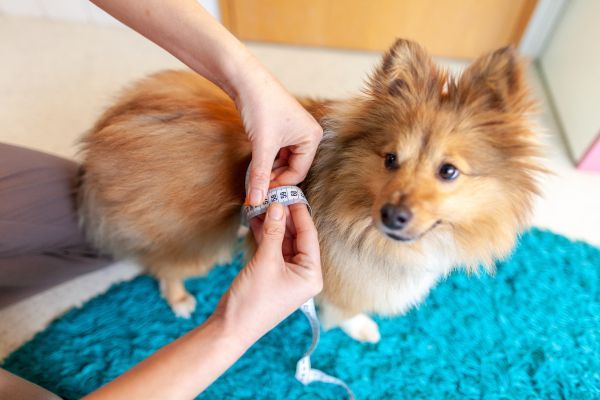
A dog’s weight on the scales does not tell the whole story. Dogs vary enormously in build, even within the same breed, so body condition score (BCS) is a more useful way to assess whether your dog is carrying too much body fat.
Veterinary body-condition systems commonly use a nine-point scale, with around 4–5 out of 9 considered ideal.
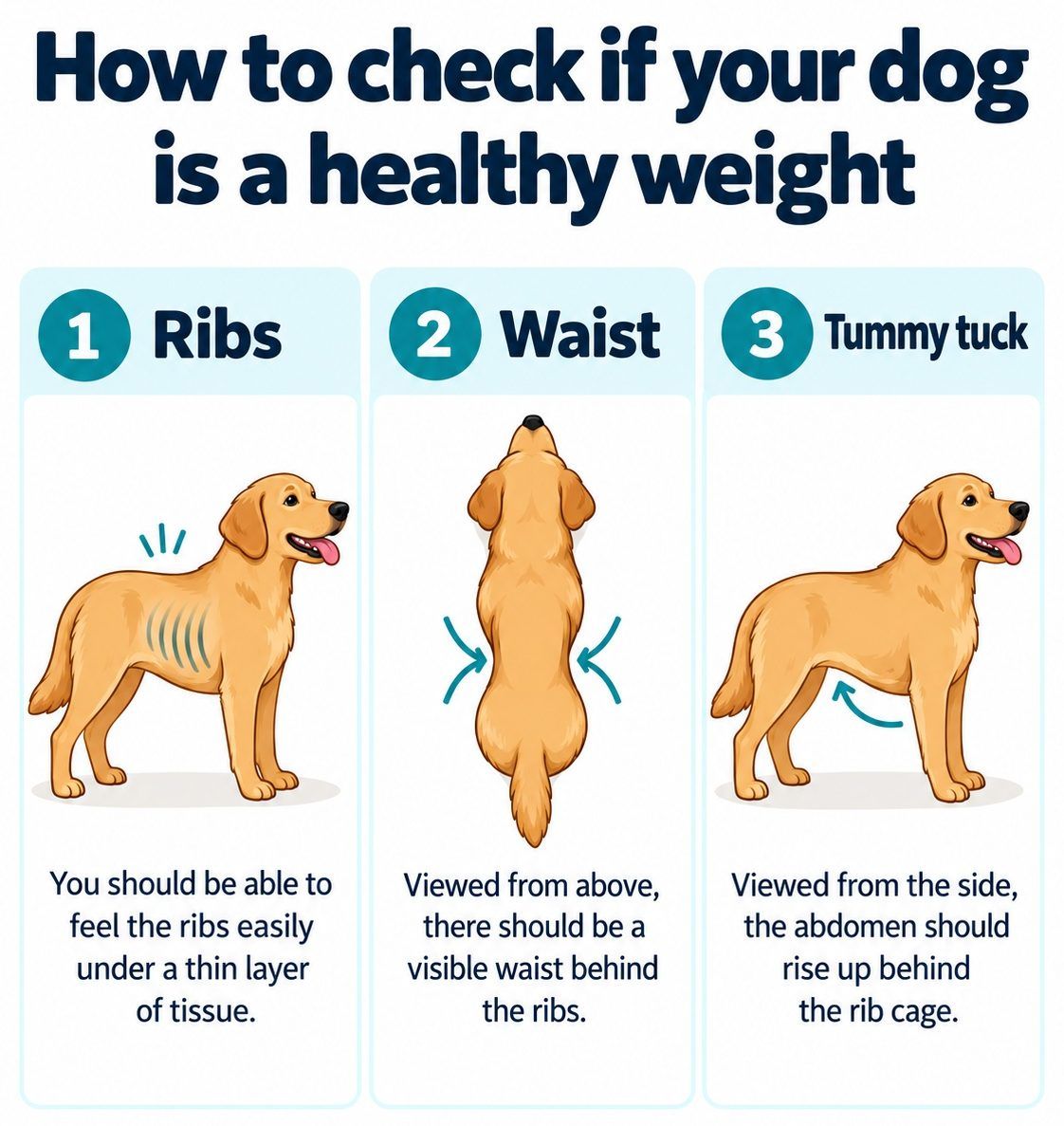
Three simple checks you can do at home
- Feel the ribs
You should be able to feel your dog’s ribs easily beneath a thin covering of tissue without having to press firmly. - Look for a waist
Viewed from above, your dog should have a visible waist behind the ribs rather than appearing rectangular or rounded. - Check the tummy tuck
Viewed from the side, the abdomen should generally rise upwards behind the rib cage rather than hanging level with or below it.
If you are unsure, ask your veterinarian to assess your dog’s body condition score and muscle condition. This is particularly useful in older dogs, where muscle loss can occur even when body weight stays the same.
Why does keeping a healthy weight matter?
Excess body fat is more than a cosmetic issue. Being overweight can place additional strain on joints and can contribute to or worsen conditions including osteoarthritis, cruciate ligament disease, respiratory problems and heat intolerance. It can also make exercise harder, creating a cycle in which reduced activity contributes to further weight gain.
Maintaining a lean body condition may also support a longer, healthier life. In a long-term study of Labrador Retrievers, dogs whose calorie intake was restricted to maintain a leaner body condition had a median lifespan around 1.8 years longer than their paired counterparts and developed some age-related diseases later. This was one specific lifetime study rather than proof that every lean dog will live 1.8 years longer, but it demonstrates the potential importance of lifelong weight management.
The potential cost of weight-related health problems
Carrying excess weight can contribute to or worsen several health problems that may require ongoing veterinary care. PetSure has previously identified conditions including arthritis, cruciate ligament disease and intervertebral disc disease among those associated with increased risk in overweight dogs.
More recent PetSure claims data from 2025 shows that osteoarthritis treatment in dogs averaged around $828, with the highest claimed treatment cost reaching $21,158. Ongoing management can also add up: PetSure’s 2024 pharmaceutical data estimated annual medication costs of around $588 for chronic musculoskeletal pain and up to approximately $1,488 for some arthritis treatmentsØ.
Maintaining a healthy body condition cannot prevent every illness or injury, but it may reduce additional strain on the joints and help lower the risk or severity of some weight-associated conditions.

Why has my dog gained weight?
Weight gain occurs when energy intake consistently exceeds the energy your dog uses, but why that imbalance develops can be complicated.
Common contributing factors include:
- portions that are larger than your dog needs
- treats, chews and table scraps that are not counted as part of daily intake
- reduced activity
- changing calorie requirements with age
- changes following desexing
- breed and genetic factors
- difficulty exercising because of arthritis or another health condition
- medications that affect appetite or metabolism
- medical conditions including hypothyroidism and Cushing’s disease.
When should you speak to your vet first?
Arrange a veterinary check before starting a weight-loss program if your dog:
- has gained weight unexpectedly
- seems unusually hungry or thirsty
- is lethargic
- has difficulty walking or exercising
- is taking long-term medication
- has an existing medical condition
- is significantly obese
- is a puppy or still growing.
How to help your dog lose weight: concrete steps
1. Start with a realistic target weight
Rather than simply deciding that your dog needs to “lose a few kilos”, ask your vet to estimate an appropriate target weight and body condition score.
This gives you something meaningful to work towards and allows food portions to be calculated according to your dog’s intended healthy weight rather than their current overweight weight.
For dogs carrying a substantial amount of excess weight, your vet may set several smaller targets along the way.
2. Measure every meal
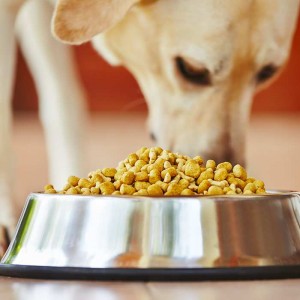
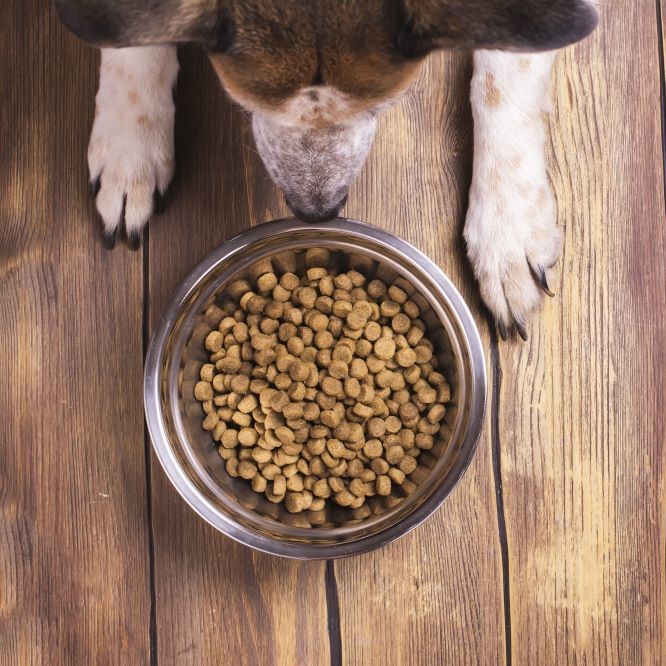
One of the simplest changes is also one of the most effective: know exactly how much food your dog receives each day.
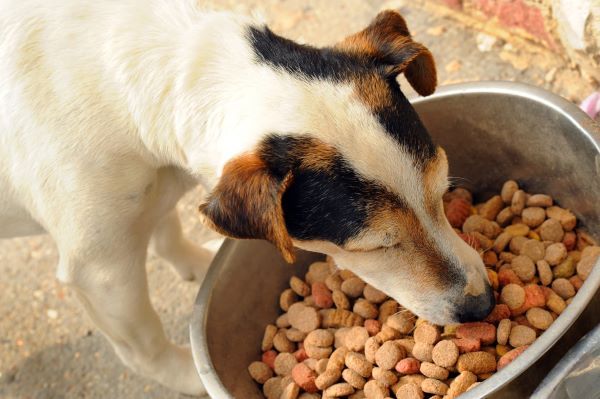
Instead of topping up the bowl or estimating portions by eye:
- establish a daily food allowance
- divide it between your dog’s meals
- measure portions consistently
- ideally weigh dry food in grams using kitchen scales
- include treats and snacks when calculating the total daily intake.
Feeding guides on food packaging are useful starting points, but they are not precise prescriptions for every dog. Individual calorie requirements vary substantially, so portions may need adjusting according to your dog’s progress.
Should you just feed less of your dog’s usual food?
Not always. If only a modest reduction is required, adjusting portions may be sufficient. However, severely restricting an ordinary maintenance diet can also reduce the amount of essential nutrients your dog receives.
For dogs needing significant calorie restriction, your veterinarian may recommend a complete and balanced weight-management diet designed to provide adequate protein, vitamins and minerals while supplying fewer calories. AAHA specifically recommends considering therapeutic weight-loss diets when substantial calorie restriction is necessary.
3. Treat the treats as food
You do not necessarily need to eliminate every treat. A more realistic approach is to budget treats into your dog’s daily calorie allowance. WSAVA recommends that treats generally account for no more than around 10% of daily calories.
Try:
- reserving some of your dog’s normal kibble to use as training rewards
- breaking larger treats into very small pieces
- choosing lower-calorie treats where appropriate
- rewarding your dog with attention, play or a favourite activity instead of food every time.
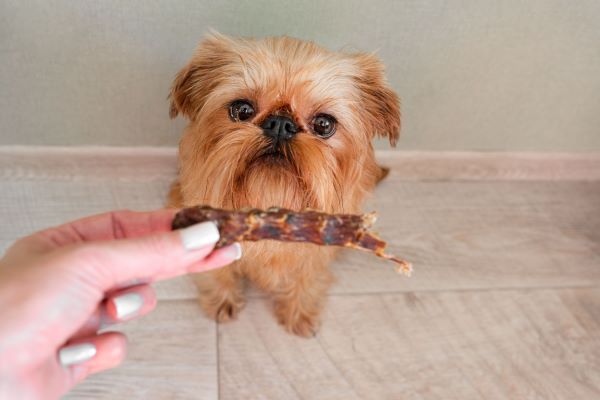
Small pieces of dog-safe vegetables such as carrot can be suitable for some dogs, but even healthy extras still contribute calories.
Make sure everyone in the household follows the same plan. Five people each giving “just one little treat” can quickly undo a carefully measured diet.
4. Don’t mistake begging for hunger
Dogs quickly learn which behaviours result in food. A dog looking hopefully at you, following you into the kitchen or sitting beside the dinner table does not necessarily mean they are genuinely hungry.
Rather than responding to every request with food, try:
- a short play session
- affection or grooming
- a walk
- a favourite toy
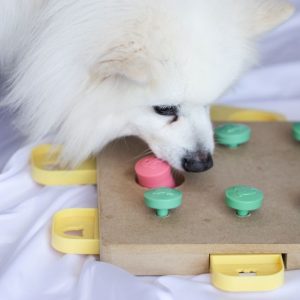
- part of their daily food allocation in a puzzle feeder.
5. Make exercise part of the plan, but tailor it to your dog
Physical activity helps preserve fitness and muscle, provides mental stimulation and can support weight management, but there is no single exercise target suitable for every overweight dog.
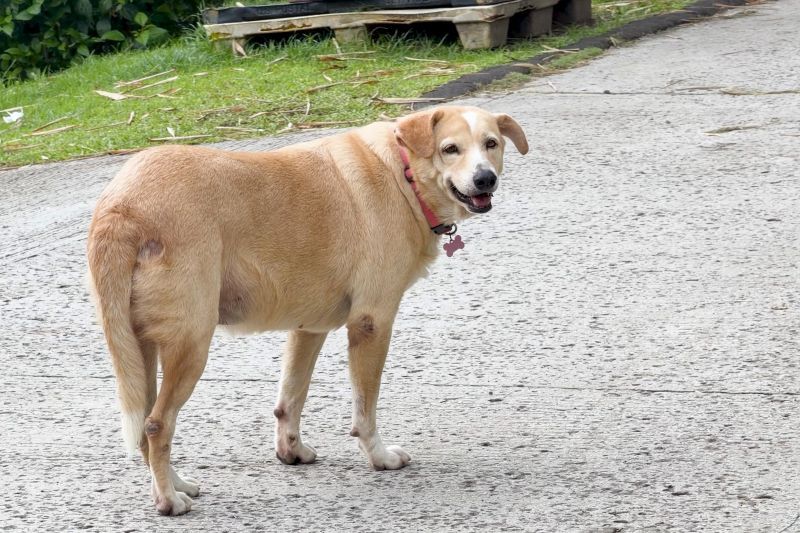
The appropriate type and amount will depend on:
- age
- current fitness
- body condition
- breed
- joint and spinal health
- heart and respiratory health
- weather conditions.
For a sedentary overweight dog, it may be safer to begin with several short walks and gradually increase duration and intensity rather than immediately attempting a long daily walk.
If your dog has arthritis, breathing problems, heart disease or significant obesity, ask your veterinarian what exercise is appropriate before increasing activity.
6. Make mealtimes work harder
Food enrichment can make a reduced-calorie plan feel more satisfying without increasing the amount eaten.
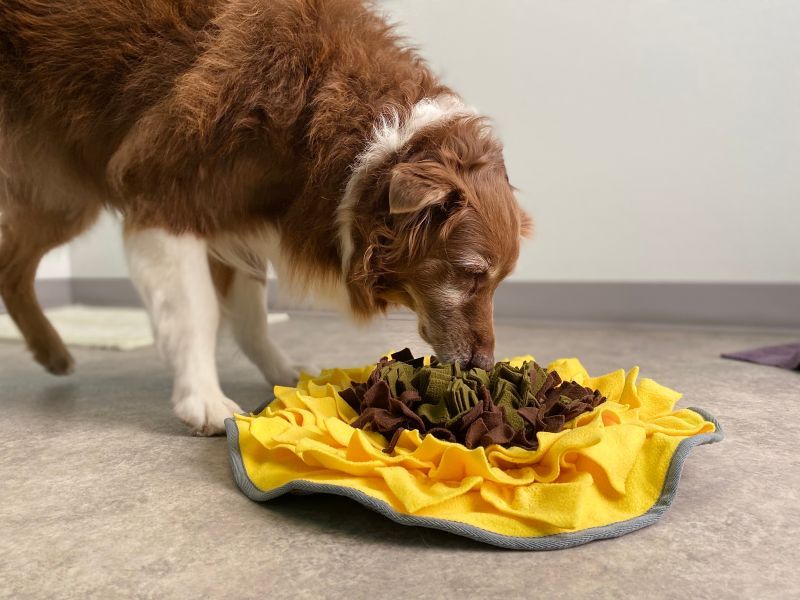
Try using part of your dog’s measured daily allowance in:
- food-dispensing toys
- puzzle feeders
- slow feeders
- supervised scent-search games
- scatter feeding in a safe area.
These approaches slow eating and provide mental stimulation, but the food inside them should come from your dog’s daily allowance, not be added on top.
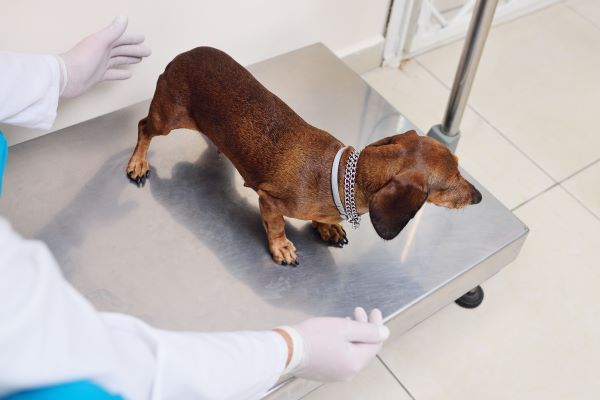
7. Weigh your dog and monitor progress
Weight loss should be gradual rather than dramatic. Rather than relying on the scales alone, monitor:
- body weight
- body condition score
- waist and body shape
- muscle condition
- mobility and exercise tolerance.
Your vet may initially recommend weigh-ins every few weeks rather than waiting several months to see whether the plan is working.
If your dog isn’t losing weight
Do not simply slash their food allowance or dramatically increase exercise.
Instead, review:
- exactly how much food is being fed
- hidden calories from treats, dental chews and table scraps
- whether all family members are following the plan
- whether activity has changed
- whether an underlying medical condition could be interfering with progress.
Then ask your veterinary team whether the calorie target, diet or activity plan needs adjusting.
8. Don’t forget senior dogs
Senior dogs often become less active and their energy requirements can change, but preserving muscle mass becomes increasingly important with age. Arthritis, dental disease and chronic health conditions can also alter both activity and nutritional needs.
If an older dog is gaining weight, ask your vet to assess both their body condition and muscle condition and recommend an appropriate diet and exercise plan.
Gentle regular exercise is often beneficial for senior dogs, but it should be adapted to their mobility and health.
Once your dog reaches their target weight
Reaching the target is only the first step. Dogs that have previously been overweight can regain weight if their previous feeding habits return.
Your vet can help establish a maintenance calorie allowance and recommend how often your dog should be weighed.
Continue to:
- measure meals
- monitor treats
- keep exercise consistent
- check body condition regularly
- adjust portions if activity or health changes.
Long-term monitoring is an important part of successful weight management.
Conclusion
Helping an overweight dog reach a healthier body condition does not require starvation diets or punishing exercise. The most successful approach is usually a series of manageable changes: measure food accurately, account for treats, choose a nutritionally appropriate diet, increase activity safely and monitor progress.
Most importantly, make the plan suit your individual dog. Your veterinarian can help establish a healthy target weight, rule out medical causes of weight gain and adjust the plan if progress is too fast, too slow or affecting muscle mass. Successful weight loss is worth the effort. Research in obese dogs has shown improvements in vitality and reductions in pain following successful weight reduction.
ØBased on PetSure claims data, 2025 calendar year. Reimbursement for these claims under a pet insurance policy would be subject to limits, such as annual benefit limits or sub-limits, benefit percentage, applicable waiting periods and any applicable excess. Cover is subject to the policy terms and conditions. You should consider the relevant Product Disclosure Statement or policy wording available from the relevant provider. Please note that values calculated are based on all claims for that condition and medically related conditions in each calendar year.
Bow Wow Meow Pet Insurance can help protect you and your dog should an unexpected trip to the vet occur.
-
Find out more about our dog insurance options
-
Get an online pet insurance quote
Bow Wow Meow is proud to have been awarded winner of Canstar’s ‘Most Satisfied Customers’ Award in the Pet Insurance category for both 2024 and 2025!
Bow Wow Meow is proud to be the only Pet Insurer that has been awarded Product Review’s Top Rated Pet Insurance every year from 2018 to 2026! This is based on 3,193 independent customer reviews (as at 09/04/2026), with an overall rating of 4.5 stars.

We also have the following ratings on other review platforms:
Google Review rating of 4.5 stars (based on 1,358 reviews)
Trust Pilot rating of 4.6 stars (based on 555 reviews)
Bow Wow Meow has been chosen as Winner of 4 categories in the 2026 Finder Pet Insurance Customer Satisfaction Awards!
– Most Trusted Pet Insurance
– Easiest to Claim Pet Insurance
– Most Recommended Pet Insurance
– Legendary Service Pet Insurance
We also received Highly Commended Awards for Loved Brand Pet Insurance and Best Value Pet Insurance.
Bow Wow Meow is an Australian-owned and operated pet insurance provider. Our focus is purely on pets, and we are proud to have helped provide peace of mind to over 200,000 Aussie pet owners since 2008.
Sources:
“2021 AAHA Nutrition and Weight Management Guidelines for Dogs and Cats”, American Animal Hospital Association, 2021. https://www.aaha.org/resources/2021-aaha-nutrition-and-weight-management-guidelines/. Accessed 8 October 2026.
“2014 AAHA Weight Management Guidelines for Dogs and Cats”, American Animal Hospital Association, 2014. https://www.aaha.org/wp-content/uploads/globalassets/02-guidelines/weight-management/2014-AAHA-Weight-Management-Guidelines-for-Dogs-and-Cats. Accessed 8 October 2026.
“Global Nutrition Guidelines and Body Condition Score Tools”, World Small Animal Veterinary Association. https://wsava.org/global-guidelines/global-nutrition-guidelines/. Accessed 8 October 2026.
German AJ, et al. “Quality of life is reduced in obese dogs but improves after successful weight loss”, The Veterinary Journal, 2012. https://pubmed.ncbi.nlm.nih.gov/22075257/. Accessed 8 October 2026.
Kealy RD, et al. “Effects of diet restriction on life span and age-related changes in dogs”, Journal of the American Veterinary Medical Association, 2002. https://pubmed.ncbi.nlm.nih.gov/11991408/. Accessed 8 October 2026.
Flanagan J, et al. “Success of a weight loss plan for overweight dogs: The results of an international weight loss study”, PLOS ONE, 2017. https://pubmed.ncbi.nlm.nih.gov/28886096/. Accessed 8 October 2026.
“Keeping your pet a healthy weight”, PetSure. https://petsure.com.au/knowledge-hub/keeping-your-pet-a-healthy-weight/. Accessed 8 October 2026.
“Healthy Pets, Happy Vets”, PetSure, 2023. https://petsure.com.au/knowledge-hub/healthy-pets-happy-vets/. Accessed 8 October 2026.
“Common Dog Health Conditions: Top 10 Health Issues in 2025”, PetSure, 2026. https://petsure.com.au/?p=18031. Accessed 8 October 2026.
“Behind the price tag: Why pet med costs are rising and how to manage them”, PetSure, 2025. https://petsure.com.au/knowledge-hub/behind-the-price-tag/. Accessed 8 October 2026.