
Is the Cocker Spaniel a good family dog?


Cocker Spaniel

Cocker Spaniels are affectionate, lively and intelligent medium-sized gundogs known for their long, silky ears and cheerful nature. Originally bred to flush game from dense cover, they remain energetic and enthusiastic dogs that enjoy walks, play and scent-based activities.
| Recommended for | Active families, singles and first-time owners able to provide companionship and regular exercise |
| Breed Classification | Gundogs |
| Other names | Cocker |
| Lifespan | 12-15 years |
| Size | Medium |
| Temperament | Affectionate, gentle, full of life and exuberance |
| Intelligence | High |
| Tendency to bark | Low to moderate: usually not excessive, but may bark when excited, bored or alerting |
| Maintenance Level | High: regular brushing, coat trimming/grooming and ear care required |
| Health Risk | Cocker Spaniels are generally robust, but with notable inherited eye, kidney, neurological and joint disorders, as well as frequent ear and skin problems. |
Thinking of insuring a Cocker Spaniel?
Explore the Top 5 health issues claimed for Cocker Spaniels, including highest claims paid and how much pet insurance could help you save on eligible vet bills.
See Cocker Spaniel pet insurance Ready to get cover? Get a quick quote
Cocker Spaniel personality and temperament
Cocker Spaniels are typically cheerful, affectionate and sociable dogs that form close bonds with their families. They are intelligent, eager to engage and usually enjoy being involved in everyday activities rather than spending long periods alone.
Their gundog background gives them plenty of curiosity and enthusiasm for exploring, particularly through scent. Regular exercise, play and mental enrichment can help keep them content, while early positive socialisation supports confidence around unfamiliar people, dogs and environments.

Cocker Spaniels with kids and other pets
Well-socialised Cocker Spaniels can make affectionate family companions and often live successfully with children and other pets. Their lively nature means younger dogs can be excitable or boisterous, so interactions with small children and less-mobile family members should be supervised. Children should also be taught to handle the dog gently and respect its space.
Many Cockers coexist well with other dogs and cats when introduced appropriately, although individual temperament and prey drive vary. Their hunting background means some may show particular interest in birds and other small animals.
Cocker Spaniel training and exercise
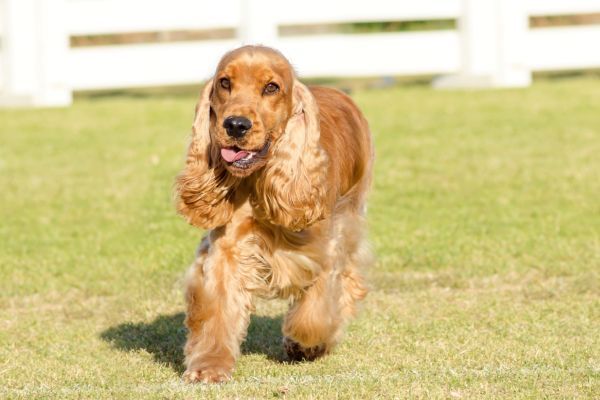
Cocker Spaniels are energetic sporting dogs that benefit from regular daily exercise, generally around 45–60 minutes for a healthy adult, together with play and mental enrichment. Walks, retrieving games, scent work, swimming, agility and other dog sports can all provide useful outlets for their natural enthusiasm. Working-line Cockers may require considerably more activity and structured mental stimulation than some show-bred dogs.
Cockers are intelligent, responsive and usually eager to learn. Short, enjoyable sessions using positive reinforcement work well, with particular attention to recall because their hunting instincts can make scents and wildlife highly distracting. Off-lead exercise should therefore take place only where it is safe and the dog has reliable recall.
| Energy level | High |
| Exercise requirements | Medium to high: around 45–60 minutes daily, plus play and mental enrichment |
Common health issues for Cocker Spaniels
What do Cocker Spaniel owners claim for the most?
Cocker Spaniels can be prone to ear infections, PRA and other eye disorders, hip dysplasia, familial nephropathy, adult-onset neuropathy and allergic skin disease.
- Ear infections (otitis): Cocker Spaniels are particularly prone to ear problems because their long, pendulous ears can trap warmth and moisture around the ear canal. Allergies can also contribute to recurrent infections. Signs may include scratching, head shaking, redness, odour or discharge. Keeping the ears dry after swimming or bathing and following your vet’s advice on ear care can help.
- Progressive retinal atrophy (PRA) and other eye disorders: PRA is an inherited condition that gradually damages the retina and can lead to blindness. Cocker Spaniels can also develop cataracts and glaucoma. DNA testing for prcd-PRA and specialist eye screening are included in current breed-health recommendations.
- Hip dysplasia: Abnormal development of the hip joint can cause pain, reduced mobility and arthritis. Genetics play an important role, although weight, growth and activity can also influence symptoms. Hip screening is recommended for breeding dogs.
- Familial nephropathy (FN): This inherited kidney disease causes progressive damage to the kidneys, often affecting relatively young dogs. Signs can include increased thirst and urination, poor growth, weight loss, reduced appetite and vomiting. DNA testing can identify the genetic variant associated with the condition.
- Adult-onset neuropathy (AON): This inherited neurological condition usually develops later in life and causes progressive weakness and poor coordination, beginning most noticeably in the hind legs. DNA testing is available to help breeders reduce the risk of affected puppies.
- Skin allergies and infections: Cockers can be prone to allergic skin disease, itching and secondary bacterial or yeast infections. Their long coat can also trap moisture and debris if it becomes matted. Regular grooming and veterinary assessment of persistent itching or recurrent ear and skin problems are important.
Not all conditions are covered by Pet Insurance. For details of Bow Wow Meow Pet Insurance cover, refer to the Product Disclosure Statement.
How to choose the right insurance for your Cocker Spaniel
When comparing cover for your Cocker Spaniel, look for:

Cover for common Cocker Spaniel conditions:
Check that the policy covers conditions Cocker Spaniels can be prone to, including common health issues.

Cover for hereditary conditions:
No exclusions for hereditary or congenital conditions⑅.

Flexible cover options:
Options to adjust your annual benefit limit, reimbursement rate and excess.
Bow Wow Meow's Nose-to-Tail Cover offers flexible options for your Cocker Spaniel, with cover for accidental injuries, illnesses and hereditary conditions⑅. Get a quick quote for cover that suits your Cocker Spaniel and your budget.

Cocker Spaniel feeding and nutrition
Cocker Spaniels should be fed a complete and balanced diet appropriate for their age, body condition, activity level and health. Portions should be measured carefully, as some Cockers are highly food-motivated and can gain excess weight if overfed. Treats can be useful for training but should be included when considering overall daily calorie intake.
Maintaining a healthy body condition is particularly important for reducing unnecessary strain on the joints. Speak to your vet if you have concerns about your Cocker Spaniel’s weight, diet or individual nutritional needs.

Cocker Spaniel care and grooming
Cocker Spaniels have silky, feathered coats that need frequent brushing and combing to prevent tangles and mats, particularly around the ears, chest, legs, armpits and belly. Many owners brush several times a week, with more frequent grooming helpful for dogs carrying a fuller coat. Professional trimming may also be required regularly to keep a pet coat manageable and in good condition.
Their long, pendulous ears should be checked frequently for redness, odour, discharge or irritation and kept dry after bathing and swimming. Clean the ears only as recommended by your vet, as recurrent infections may be associated with underlying allergies or other ear disease. Routine nail and dental care are also important.

Size, appearance and coat of Cocker Spaniels
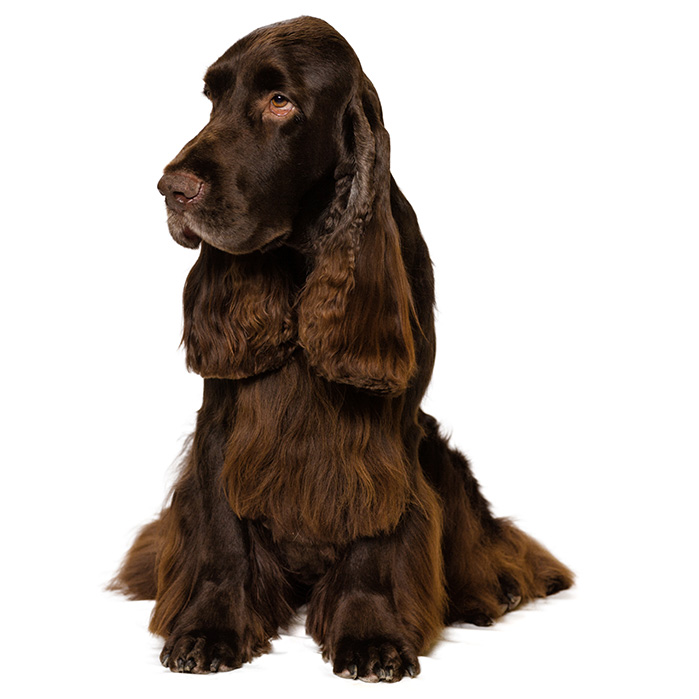
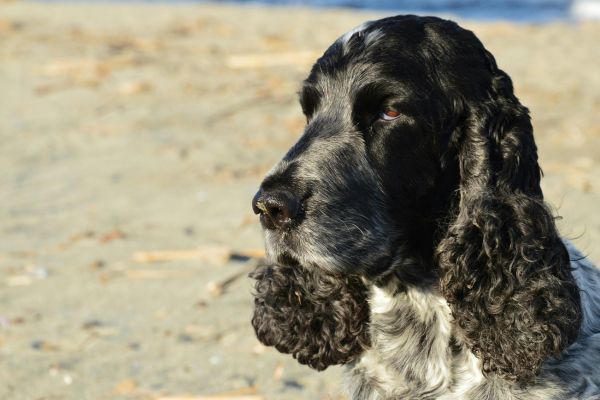
The Cocker Spaniel is a compact, sturdy and well-balanced gundog with expressive eyes, long low-set ears and a characteristic lively, “merry” appearance. The coat is flat and silky rather than curly or wiry, with feathering on the body and legs.
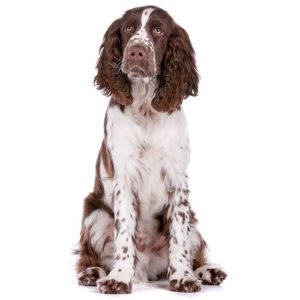
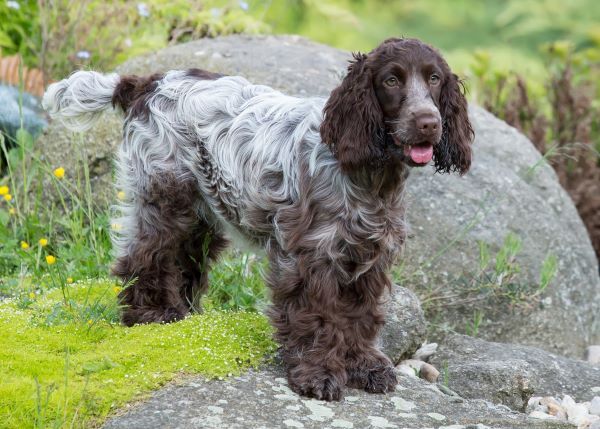
Cocker Spaniels come in a wide range of recognised colours, including solid black, red, golden and liver, black and tan or liver and tan, as well as black-and-white, orange-and-white, liver-and-white and lemon-and-white combinations, tricolours and several roan colours.
The American Cocker Spaniel is a separate breed and is generally smaller, with a shorter muzzle, more rounded head and heavier coat. In Australia and the UK, the name “Cocker Spaniel” refers to the original British breed described on this page.
| Weight range | Approximately 13–14.5 kg |
| Height range | Approximately 38–41 cm overall |
| Colours | A wide range |
| Coat length | Medium: silky with substantial feathering |
Breed history of Cocker Spaniels
Spaniel-type dogs have been known in Europe for centuries, with written references dating back to at least the 14th century. The modern Cocker Spaniel was developed in Britain from smaller land spaniels used to flush game from dense cover. Its name comes from its particular association with hunting woodcock.
During the 19th century, spaniels were increasingly classified according to size and function. Smaller sporting spaniels weighing under about 25 pounds became known as Cockers, and the breed was formally recognised in Britain during the 1890s. The Cocker Spaniel Club was founded in the UK in 1902.
Cockers were also exported to North America, where breeders gradually developed a smaller dog with a different head and coat type. The American and original British types eventually became separate breeds during the 1940s. In Australia and Britain, the original breed continues to be known simply as the Cocker Spaniel.
Explore related breeds
Cocker Spaniel facts!
- The Cocker Spaniel gets its name from the woodcock, a game bird the breed was originally developed to find and flush from dense cover.
- “Merry” is one of the words most closely associated with the breed, and its official standard describes the characteristic bustling movement and constantly wagging tail seen when following scent.
- Cocker Spaniels come in far more colours than just gold or black, including several roan combinations such as blue roan, orange roan, lemon roan and liver roan.
- Working and show-bred Cocker Spaniels can look and behave quite different: working Cockers usually have lighter coats and greater stamina, while show-bred dogs tend to carry more feathering and have a more compact appearance.
- The modern Cocker was once classified largely by weight, with smaller spaniels under around 25 pounds grouped as Cockers before the breed developed a more consistent type.
- Although now widely kept as family companions, many Cocker Spaniels retain strong natural abilities in scent work, retrieving and other gundog activities.
Summary
The Cocker Spaniel is an affectionate, loyal and energetic medium-sized dog recognised by its long ears and expressive appearance. Full of life and eager to please, Cockers are devoted companions that enjoy being involved in family activities.
They are often well suited to singles, families, older people and homes with other pets because of their sociable nature. Regular exercise, companionship and grooming help keep this lively and people-focused breed happy.
FAQs about the Cocker Spaniel
They are generally affectionate, social dogs that can be excellent family companions for households able to meet their exercise and training needs.
Moderate to high. Daily walks, play and mental enrichment are important, with regular opportunities for more active exercise.
Generally yes. They are intelligent and usually respond well to positive, consistent training, particularly when sessions are engaging and rewarding.
They are generally low to moderate or moderate barkers, although barking can increase with boredom, excitement, anxiety or unfamiliar activity.
They shed to some degree and require regular brushing or professional grooming to keep the coat in good condition.
They can adapt to apartment living in the right circumstances, but owners need to meet their daily exercise, enrichment and behavioural needs consistently.
Many can live happily with children and other pets when socialised from a young age, although individual temperament and compatibility always vary.
Potential health concerns include ear disease, eye disorders, skin allergies and some joint conditions.
Working and show Cocker Spaniels are the same breed but have been bred for different purposes. Working Cockers are generally lighter in build, have shorter, less heavily feathered coats and tend to have higher energy levels, stamina and working drive. They were bred primarily for field work and often need plenty of physical exercise and mental stimulation. Show Cockers are typically more compact, with fuller coats, heavier feathering and a more traditional show-ring appearance. They are still active dogs but may be somewhat less intense than working lines. Individual temperament and exercise needs can vary considerably in both types.
The British/English Cocker Spaniel is generally taller and more athletic, with a longer muzzle and lighter coat, while the American Cocker Spaniel is smaller, with a rounder head, shorter muzzle and heavier, more profuse coat. They are recognised as separate breeds.
MORE INFORMATION
Cocker Spaniel Society of NSW: http://cockersocietynsw.asn.au/
Cocker Spaniel Club of QLD: http://www.cockerspanielclub.com/
Cocker Spaniel Club of Victoria: http://www.cockerspanielclubvic.org/

Get 2 months free for your puppy!
Congrats on your new bundle of joy
To ensure your precious fur baby is covered from the start, we'd like to offer your first 2 months of our Nose-to-Tail Cover for free2!
Get a quick quote