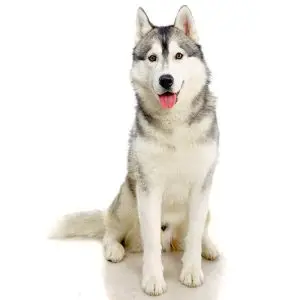
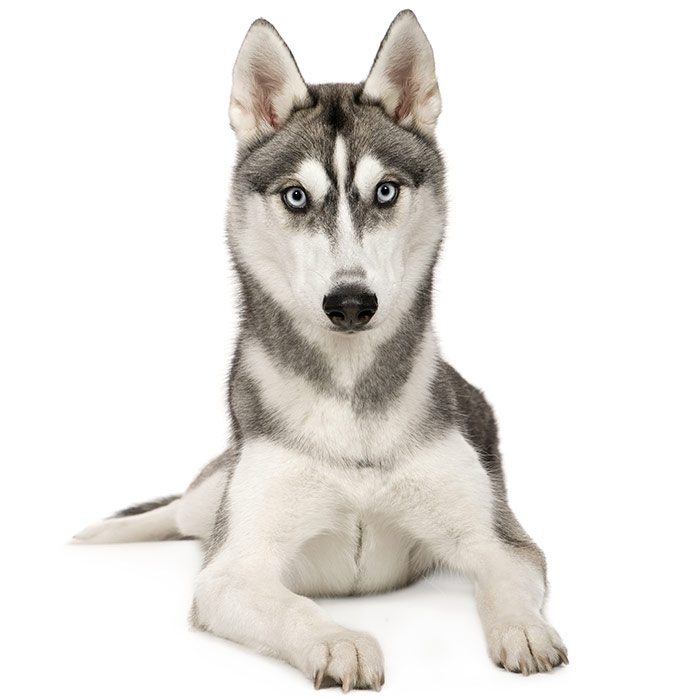
Is the Alaskan Malamute a good family dog?


Alaskan Malamute
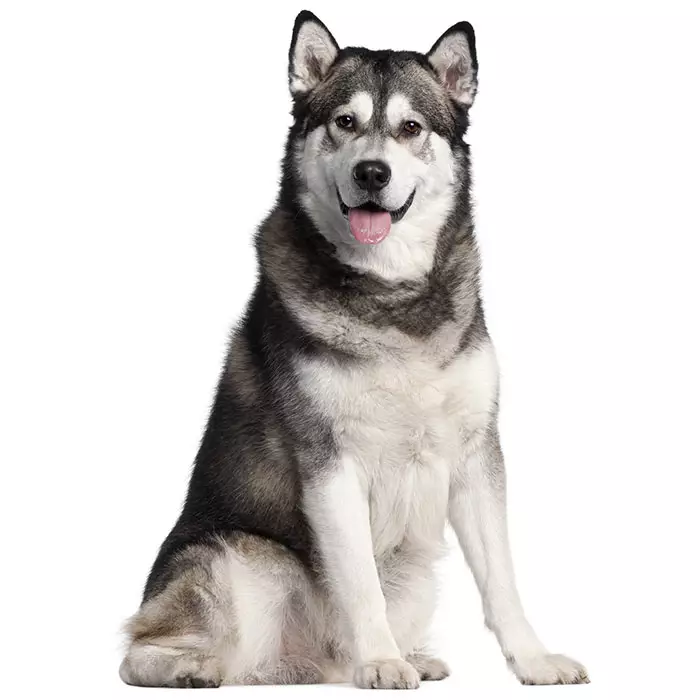
Alaskan Malamutes are affectionate, powerful sled dogs developed to haul heavy loads over long distances in the frigid Arctic. With a muscular build and thick coat, they are energetic companions with substantial exercise and grooming needs.
| Recommended for | Experienced, active owners with secure fencing and time for substantial exercise, training and grooming |
| Breed Classification | Utility |
| Other names | Mally, Mal |
| Lifespan | 10-14 years |
| Size | Large |
| Temperament | Affectionate, friendly, playful,independent |
| Intelligence | Above average: independent, so benefit from patient, consistent training |
| Tendency to bark | Low to moderate: often vocal through howling and “talking” |
| Maintenance Level | High: substantial coat care and heavy seasonal shedding |
| Health Risk | Alaskan Malamutes can develop hip dysplasia, inherited nerve and eye disorders, hypothyroidism and bloat. Appropriate health screening and careful heat management are important. |
Thinking of insuring an Alaskan Malamute?
Explore the Top 5 health issues claimed for Alaskan Malamutes, including highest claims paid and how much pet insurance could help you save on eligible vet bills.
See Alaskan Malamute pet insurance Ready to get cover? Get a quick quote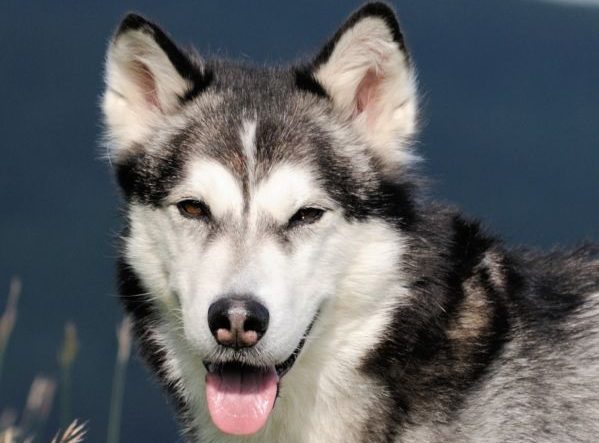
Alaskan Malamute personality and temperament
Alaskan Malamutes are generally friendly, playful dogs that enjoy being involved in family life. Many welcome attention from unfamiliar people, so their imposing appearance does not necessarily make them effective guard dogs.
They also have an independent nature and need patient handling. Malamutes can be expressive companions, communicating through howls and a distinctive “woo-woo” rather than frequent barking. Digging is another familiar behaviour, and a designated digging area can provide an appropriate outlet.
Alaskan Malamutes with kids and other pets
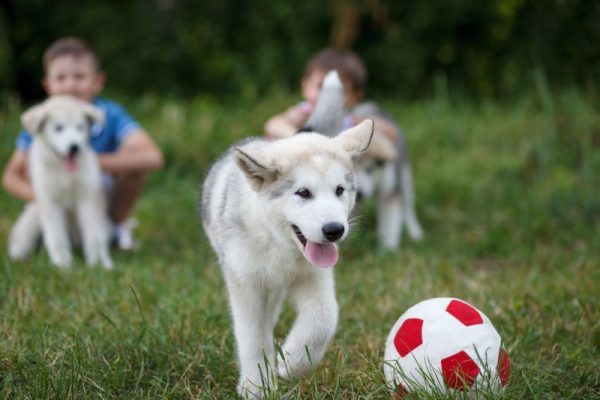
Malamutes can be affectionate family companions, but their size and enthusiastic play can overwhelm small children. Adults should supervise interactions and teach children to give dogs space around food, toys and rest.
Compatibility with other dogs varies, and some Malamutes have difficulty with dogs of the same sex. Their strong prey drive can also put cats and smaller animals at risk. Early introductions may help, but growing up together does not guarantee safety. Use secure separation where needed and assess each dog’s behaviour carefully.
Alaskan Malamute training and exercise
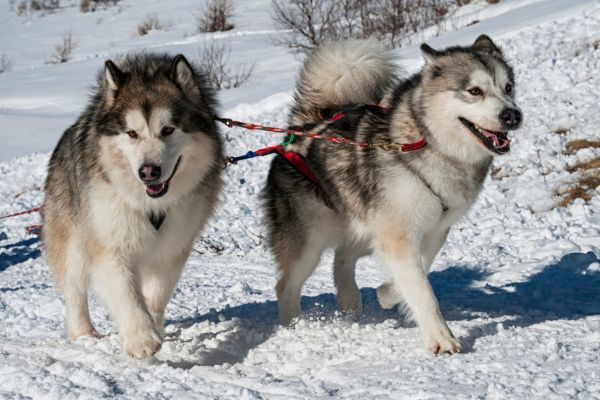
A healthy adult Malamute needs substantial daily activity. Around two hours, divided between walks and other suitable exercise, is a useful planning guide, alongside training and enrichment. Adjust this to the dog’s health, fitness and weather conditions; puppies need shorter, age-appropriate activity while they grow.
Teach loose-lead walking, recall and calm greetings from an early age using rewards and consistent expectations. Their strength and tendency to chase make secure fencing and carefully managed off-lead exercise important. Suitable adults may enjoy hiking or supervised harness sports, with gradual conditioning and appropriate equipment.
Avoid strenuous exercise in warm or humid conditions. Choose cooler times of day and provide access to shade, water and a cool resting place. Their enthusiasm for activity should not be taken as proof that they are coping with the heat.
| Energy level | High |
| Exercise requirements | High: around two hours daily for a fit adult in suitable weather, adjusted individually |
Common health issues for Alaskan Malamutes
What do Alaskan Malamute owners claim for the most?
Alaskan Malamutes can be affected by inherited conditions involving the joints, nerves and eyes, as well as other health problems. Ask breeders about documented health screening and discuss any changes in movement, vision or exercise tolerance with your vet.
- Hip dysplasia: Abnormal hip development can lead to pain, lameness and arthritis. Parental hip screening is an important consideration when choosing a breeder.
- Alaskan Malamute polyneuropathy (AMPN): An inherited nerve disorder that can cause weakness, muscle loss, an abnormal gait and changes to the voice or breathing. A DNA test can identify clear, carrier and affected dogs and guide breeding decisions.
- Eye disorders: Cataracts can interfere with vision. Another recognised inherited condition is cone degeneration, or day blindness, which causes difficulty seeing in bright light while night vision remains relatively normal. Cone degeneration is uncommon, but a DNA test is available.
- Hypothyroidism: Reduced thyroid hormone production can cause lethargy, weight gain and skin or coat changes.
- Gastric dilatation-volvulus (GDV): A medical emergency in which the stomach expands and twists. Unproductive retching, abdominal swelling, marked distress or collapse require immediate emergency veterinary attention.
-
Malamutes’ thick coats make heat management especially important. Heavy panting, drooling, vomiting, weakness or confusion may indicate overheating. If heatstroke is suspected, start cooling with cool water and airflow while arranging immediate emergency veterinary care.
Not all conditions are covered by Pet Insurance. For details of Bow Wow Meow Pet Insurance cover, refer to the Product Disclosure Statement.
How to choose the right insurance for your Alaskan Malamute
When comparing cover for your Alaskan Malamute, look for:

Cover for common Alaskan Malamute conditions:
Check that the policy covers conditions Alaskan Malamutes can be prone to, including common health issues.

Cover for hereditary conditions:
No exclusions for hereditary or congenital conditions⑅.

Flexible cover options:
Options to adjust your annual benefit limit, reimbursement rate and excess.
Bow Wow Meow's Nose-to-Tail Cover offers flexible options for your Alaskan Malamute, with cover for accidental injuries, illnesses and hereditary conditions⑅. Get a quick quote for cover that suits your Alaskan Malamute and your budget.
Alaskan Malamute feeding and nutrition
Feed a complete and balanced diet appropriate for your Malamute’s age, health and actual activity level. Measure portions and monitor body condition, using your hands as well as your eyes because a thick coat can conceal weight gain.
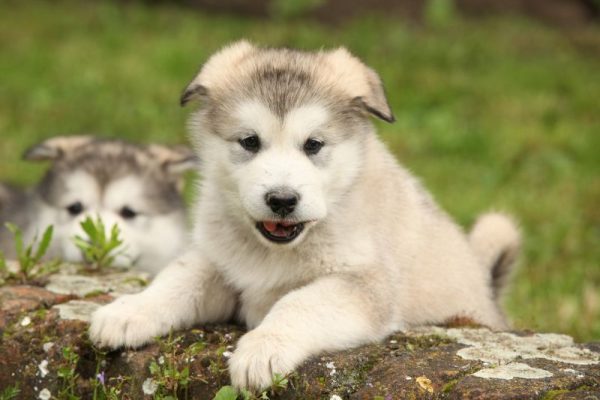
Puppies need food suitable for large-breed growth, with controlled energy and mineral levels. Avoid adding calcium or other supplements unless your vet recommends them. Adjust portions as activity changes, and include treats when calculating daily intake.
Alaskan Malamute care and grooming
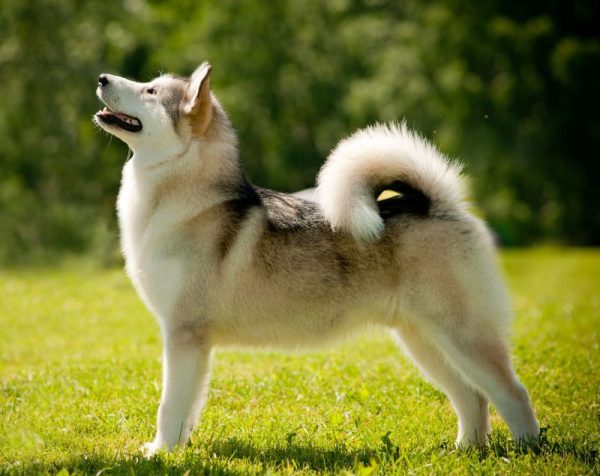
Malamutes have a dense double coat that requires frequent, thorough grooming. Brush several times a week and be prepared for daily attention during heavy shedding. Work carefully through the undercoat to remove loose hair and identify tangles or skin irritation.
Bathe according to coat condition and dry the coat thoroughly afterwards. Introduce brushing, nail trimming and other handling gradually, using rewards. Include routine ear checks and dental care. Professional grooming can help owners manage the volume of coat, particularly during seasonal shedding.
Size, appearance and coat of Alaskan Malamutes
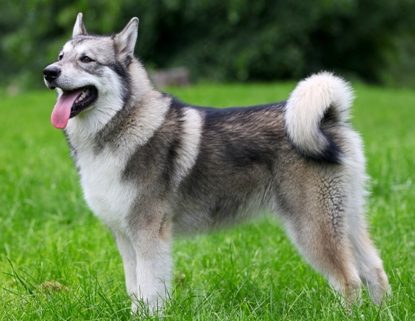
The Alaskan Malamute has a broad head, brown almond-shaped eyes, erect ears and a strong, heavily boned body. Its well-furred tail is carried over the back like a plume rather than curled tightly against it.
A coarse outer coat covers a dense, woolly undercoat. Facial markings vary, often forming a cap or mask, while white commonly appears on the underside, legs and face.
| Weight range | Males approx. 38.5 kg; females approx. 34 kg |
| Height range | Males approx. 63.5 cm; females approx. 58.5 cm |
| Colours | Grey, black, sable or red shades with white; solid white also occurs |
| Coat length | Medium: Varying from short to medium along the body, with longer furnishings |
Breed history of Alaskan Malamutes
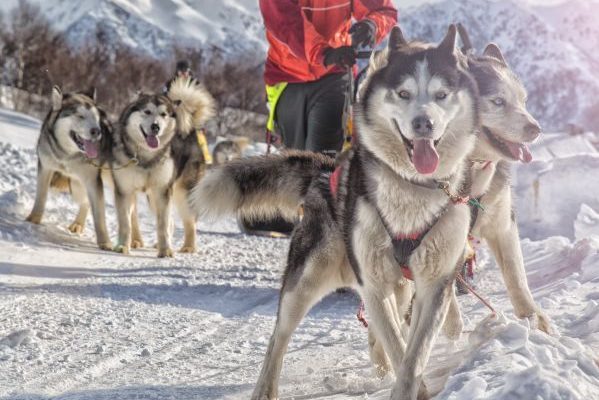
The Alaskan Malamute takes its name from the Mahlemut people of north-western Alaska, whose dogs helped transport heavy loads through demanding Arctic conditions. Strength and endurance were central to their role.
Interest in preserving the breed grew during the twentieth century, and the American Kennel Club recognised it in 1935. Malamutes continue to participate in sledding, backpacking and weight-pulling activities, while many now live as active family companions.
Explore related breeds
Alaskan Malamute facts!
- Chewbacca had a real canine co-pilot behind him. George Lucas’s Malamute, Indiana, rode beside him in the car and helped inspire the idea of Han Solo’s furry companion.
- The breed has an official home-state honour. Alaska designated the Alaskan Malamute its state dog in 2010.
- Malamutes joined an Antarctic adventure. Dogs of the breed were selected for Admiral Richard Byrd’s 1933 Antarctic expedition.
- A Malamute once travelled by postage stamp. The breed featured on a US Postal Service stamp celebrating the American Kennel Club’s centenary in 1984.
Summary
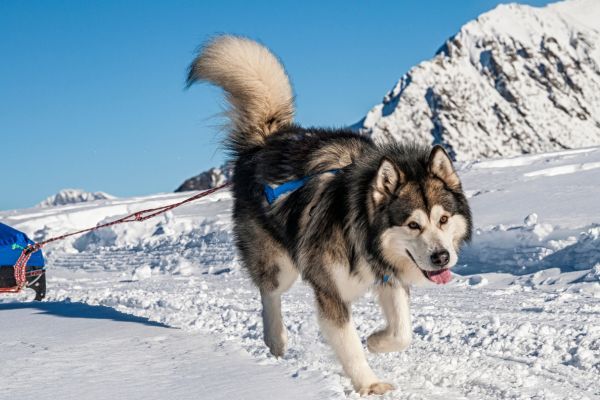
The Alaskan Malamute is a large, strong Arctic working dog with a thick double coat, plumed tail and wolf-like appearance. Friendly and affectionate with people, Malamutes are known for their endurance, independence and strength rather than obedience-focused eagerness.
They need substantial daily exercise, secure fencing, regular grooming during heavy shedding periods and owners who understand the demands of a powerful sledding breed.
FAQs about the Alaskan Malamute
A Malamute can suit an active, experienced family with enough time for exercise, training and grooming. Its strength and exuberance mean interactions with children need adult supervision.
Around two hours of daily activity is a useful guide for a healthy adult in suitable conditions, with additional mental enrichment. Puppies, older dogs and those with health problems need individual plans, and activity should be reduced during hot weather.
Yes, heavily, particularly during seasonal coat changes. Frequent brushing helps manage loose undercoat, but owners should expect substantial hair around the home.
No. Malamutes shed heavily and are unsuitable for anyone specifically seeking a low-shedding dog. No breed is completely allergy-free.
Malamutes are intelligent but independent. They need patient, consistent reward-based training, with particular attention to lead manners and safe behaviour around other animals.
No. They are separate breeds. Malamutes are generally larger and more heavily built, with a history of hauling heavier loads; Siberian Huskies were developed for lighter loads carried more quickly
They need careful management in warm weather, including cool shelter, fresh water and exercise during cooler periods. Owners must be able to reduce activity and provide a suitably cool environment during heatwaves.
MORE INFORMATION
Alaskan Malamute Club of Victoria Inc.: http://www.amcv.org.au/
Alaskan Malamute Club of NSW Inc.: https://www.amcofnsw.com/

Get 2 months free for your puppy!
Congrats on your new bundle of joy
To ensure your precious fur baby is covered from the start, we'd like to offer your first 2 months of our Nose-to-Tail Cover for free2!
Get a quick quote