
Is the Labrador a good family dog?


Labrador

Labradors are friendly, energetic dogs that enjoy being involved in family life. Intelligent and often highly motivated by food and play, Labradors' enthusiam is part of their appeal and they can be rewarding companions for owners who have time for daily exercise, training and company.
| Recommended for | Active individuals and families with time for daily exercise, training and companionship |
| Breed Classification | Gundogs |
| Other names | Labrador Retriever, Lab |
| Lifespan | Approximately 10–13 years |
| Size | Large |
| Temperament | Typically friendly, affectionate, outgoing and enthusiastic |
| Intelligence | Very high: generally responsive to reward-based training |
| Tendency to bark | Varies between individuals; excitement, boredom and anxiety can increase barking |
| Maintenance Level | Medium to high: high exercise and companionship needs; regular brushing and weight management |
| Health Risk | Potential concerns include joint disorders, inherited eye conditions, exercise-induced collapse and obesity. |
Thinking of insuring a Labrador?
Explore the Top 5 health issues claimed for Labradors, including highest claims paid and how much pet insurance could help you save on eligible vet bills.
See Labrador pet insurance Ready to get cover? Get a quick quote
Labrador personality and temperament
Labradors are usually sociable, affectionate dogs that enjoy spending time with their people. Many greet visitors enthusiastically and remain playful well beyond puppyhood. However, temperament varies, and friendliness should never be taken as a guarantee of how an individual dog will behave.
Their enthusiasm can show up as jumping, pulling on the lead or carrying household objects around. Teaching calm greetings, providing suitable chew toys and rewarding settled behaviour helps channel these tendencies.
Labradors need more than physical exercise. Training games, sniffing opportunities, food puzzles and companionship help keep them occupied. Introduce time alone gradually so they can learn to relax independently.
Labradors with kids and other pets
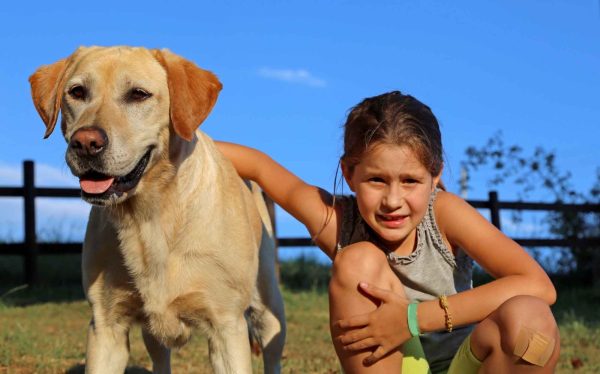
Labradors can be affectionate family companions, but their size and exuberance can overwhelm small children. Even a friendly Labrador may accidentally knock a child over during play.
Always supervise interactions, teach children to handle dogs gently, and give your Labrador a quiet place where they can rest undisturbed. Children should leave dogs alone while they are eating, sleeping or enjoying a chew.
Many Labradors live successfully with other dogs and cats. Introduce animals gradually, reward calm behaviour and provide separate resting and feeding areas. Compatibility depends on the individual animals, their experiences and how introductions are managed.

Labrador training and exercise
Labradors need daily physical activity and opportunities to use their brains. Walks, sniffing games, retrieving, short training sessions and suitable dog sports can provide variety. Match the amount and intensity of exercise to your dog’s age, fitness and health.
Many enjoy swimming, but introduce water gradually and supervise them closely. Choose safe conditions, provide regular breaks and never assume that enthusiasm means your dog can continue without becoming tired.
Use purpose-made retrieving toys that are too large to swallow. Socks and other small household items can cause dangerous intestinal blockages if swallowed.
Start reward-based training early, focusing on loose-lead walking, recall, calm greetings, settling and leaving or dropping objects. Keep sessions short and rewarding. Puppies need age-appropriate activity rather than forced running or repetitive jumping; ask your vet for guidance as they grow.
| Energy level | High |
| Exercise requirements | High: daily exercise, including walks, sniffing games, retrieving and training |
Common health issues for Labradors
What do Labrador owners claim for the most?
Labradors can be affected by several inherited and acquired health conditions. Not every Labrador will develop these problems, but appropriate health screening, maintaining a lean body condition and regular veterinary care are important.
- Hip dysplasia and elbow dysplasia: These developmental joint disorders can cause pain, lameness and arthritis. Hip dysplasia involves an unstable or poorly fitting hip joint; elbow dysplasia includes several abnormalities affecting the elbow. Treatment depends on the condition and its severity.
- Osteochondrosis and osteochondritis dissecans: Abnormal cartilage development can affect joints, particularly the shoulder. A loose cartilage flap may develop, causing pain and lameness. Genetics, growth and nutrition can contribute; no particular diet guarantees prevention.
- Exercise-induced collapse (EIC): This inherited condition can cause weakness, loss of coordination or collapse during intense activity or excitement. DNA testing is available. Any collapse requires veterinary assessment because other serious conditions can cause similar signs.
- Centronuclear myopathy: This inherited muscle disorder can cause weakness, reduced exercise tolerance and an abnormal gait, often beginning in young dogs. It is distinct from EIC, and DNA testing is available.
- Eye conditions: Progressive retinal atrophy causes gradual loss of vision. Cataracts affect the lens and may also impair sight; some are suitable for surgery following specialist assessment.
- Obesity: Excess body fat can reduce mobility and add strain to joints. Measured meals, appropriate exercise and regular body-condition checks help manage weight.
- Ear and skin problems: Ear infections and painful, inflamed skin lesions known as hot spots need veterinary assessment. Head shaking, odour, discharge, persistent scratching or sore skin should not be ignored.
- Tricuspid valve dysplasia: This congenital heart condition affects a valve on the right side of the heart. Its effects range from mild to serious; a heart murmur may prompt further investigation.
- Seizures: Labradors can develop epilepsy, but seizures have several possible causes. Veterinary investigation is needed to establish the cause and an appropriate treatment plan.
- Gastric dilatation-volvulus (GDV): This life-threatening emergency involves stomach distension and twisting. Repeated unsuccessful retching, a swollen abdomen, restlessness, weakness or collapse require immediate emergency veterinary attention.
- Limber tail: Sometimes called cold tail, this painful condition can cause a suddenly limp tail, often following strenuous activity or swimming. Seek veterinary advice to confirm the cause and provide suitable pain relief.
Not all conditions are covered by Pet Insurance. For details of Bow Wow Meow Pet Insurance cover, refer to the Product Disclosure Statement.
How to choose the right insurance for your Labrador
When comparing cover for your Labrador, look for:

Cover for common Labrador conditions:
Check that the policy covers conditions Labradors can be prone to, including common health issues.

Cover for hereditary conditions:
No exclusions for hereditary or congenital conditions⑅.

Flexible cover options:
Options to adjust your annual benefit limit, reimbursement rate and excess.
Bow Wow Meow's Nose-to-Tail Cover offers flexible options for your Labrador, with cover for accidental injuries, illnesses and hereditary conditions⑅. Get a quick quote for cover that suits your Labrador and your budget.

Labrador feeding and nutrition
Feed your Labrador a complete and balanced diet suited to their life stage and individual needs. Puppies should receive food formulated for the growth of large-breed dogs. Avoid adding calcium or other supplements unless your vet recommends them.
Many Labradors are enthusiastic eaters, so measure meals and include treats and training rewards in the daily food allowance. Part of their usual ration can be used for training or food puzzles.
Check body condition regularly rather than relying on appetite to judge portion size. You should be able to feel the ribs beneath a light covering of fat and see a waist when viewed from above. Your vet can help set an appropriate feeding amount and weight target.
Keep rubbish, unsafe foods and swallowable household objects out of reach, and provide fresh drinking water at all times.
Labrador care and grooming
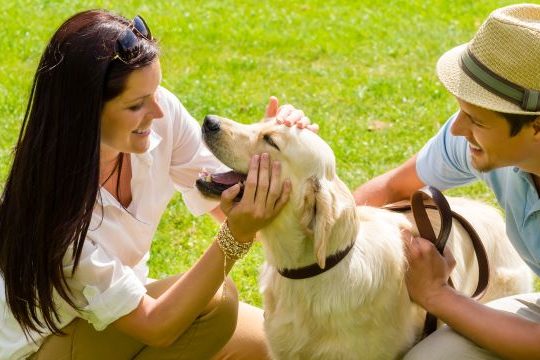
Labradors have a short double coat that is relatively straightforward to care for, but they can shed considerably. Brush regularly to remove loose hair, increasing the frequency during heavier shedding periods. Bathe when needed using a dog-appropriate shampoo.
Check the ears regularly, particularly after swimming. Gently dry the outer ears and ask your vet whether an ear-cleaning routine is appropriate for your dog. Redness, odour, discharge or repeated head shaking needs veterinary attention.
Keep nails comfortably short and introduce regular tooth brushing with dog toothpaste. Starting gentle handling and grooming practice early can make routine care easier throughout your Labrador’s life.

Size, appearance and coat of Labradors
Labradors are strongly built dogs with a broad head, hanging ears and a short, dense coat over a weather-resistant undercoat. Their distinctive “otter” tail is thick at the base and tapers towards the tip.
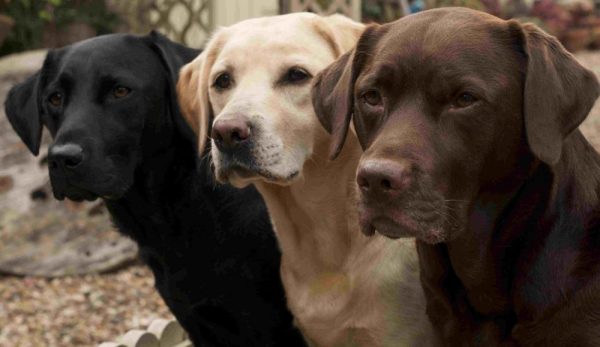
The recognised coat colours are black, yellow and chocolate. Build and adult size vary between individuals and breeding lines. A sturdy appearance should come from healthy muscle and structure, rather than excess body fat.
| Weight range | Approximately 25–36 kg |
| Height range | Males 56–57 cm; females 55–56 cm |
| Colours | Black, yellow and chocolate |
| Coat length | Short, dense double coat |
Breed history of Labradors
Despite its name, the Labrador Retriever traces its origins to Newfoundland, Canada. Its ancestors included the St John’s water dogs that worked alongside fishermen, retrieving from the water and helping with everyday tasks.
Dogs brought to Britain during the 19th century attracted attention for their swimming and retrieving abilities. British breeders developed these working dogs into the Labrador Retriever, selecting for the qualities needed to retrieve game on land and in water.
The breed’s adaptability and willingness to work with people later helped it find roles beyond the shooting field. Labradors are now widely used as guide and assistance dogs, detection dogs and search-and-rescue dogs, as well as being much-loved companions.
Today’s Labrador is famous for its roles as an assistance dog for people with visually impairments and autism, and as a detection and screening dog, therapy dog and law enforcement dog. The Lab has long held the title of the most popular breed of dog in Australia, as well as in New Zealand, the UK, the USA and Canada.
Explore related breeds
Labrador facts!
- A Labrador received a medal for saving his owner’s life. Assistance dog Endal was awarded the PDSA Gold Medal in 2002 for his actions in helping his owner, Allen Parton.
- “Fox red” is a shade of yellow. Yellow Labradors can range from pale cream to a rich reddish colour; fox red does not identify a separate breed.
- One litter can contain all three recognised colours. Depending on the genes carried by both parents, Labrador puppies in the same litter can be black, yellow and chocolate.
Summary
A Labrador can be a rewarding companion for an active household that has time for exercise, training and everyday involvement. Their friendliness and enthusiasm are appealing, but young dogs can be boisterous and need patient guidance.
Regular grooming, sensible feeding and attention to joint and inherited health concerns are important throughout their lives. Before choosing a Labrador, consider whether you can meet the needs of a strong, sociable dog that enjoys being part of the family.
FAQs about the Labrador
They are generally affectionate, social dogs that can be excellent family companions for households able to meet their exercise and training needs.
High. They need plenty of daily exercise, including walks, active play and mental stimulation, with opportunities for more vigorous activity where appropriate.
Yes. They are highly intelligent and capable learners that usually respond very well to consistent, reward-based training and regular mental challenges.
Labradors are not usually known for persistent barking, but individuals vary. They may bark when excited, bored, worried or responding to activity nearby. Meeting their exercise and enrichment needs, rewarding calm behaviour and addressing the reason for barking can help.
Yes. They can shed heavily, particularly at certain times of year, and regular brushing is important during seasonal coat changes.
They can adapt to apartment living in the right circumstances, but owners need to meet their daily exercise, enrichment and behavioural needs consistently.
Many can live happily with children and other pets when socialised from a young age, although individual temperament and compatibility always vary.
Potential health concerns include hip and elbow dysplasia, obesity, eye disease and exercise-induced collapse.
These informal terms often refer to show and working lines, rather than separate breeds. Show-line Labradors tend to have a stockier build, while working-line dogs are often leaner and selected for demanding retrieving work. Energy and temperament vary within both groups, so discuss the individual dog and its family background with the breeder or rescue organisation.
Ask to see the parents’ hip and elbow scoring results, eye examination records and relevant DNA test results, including those for exercise-induced collapse, progressive retinal atrophy and centronuclear myopathy. Ask the breeder to explain what the results mean for the planned litter. DNA tests do not replace clinical screening, and health-tested parents cannot guarantee a puppy will remain free of health problems.
MORE INFORMATION
Labrador Retriever Club of NSW: https://www.labradorclubnsw.com/
Labrador Retriever Club of Queensland: https://www.labradorclubqld.com/
Labrador Rescue Australia: https://www.labrescue.com.au/

Get 2 months free for your puppy!
Congrats on your new bundle of joy
To ensure your precious fur baby is covered from the start, we'd like to offer your first 2 months of our Nose-to-Tail Cover for free2!
Get a quick quote