Stop the itching: What you need to know about allergies in dogs



Summary
Allergic skin disease causes persistent itch, redness, ear problems and hot spots. Common triggers include fleas, food proteins and environmental allergens. Vets rule out parasites, treat infections and may run diet trials or allergy testing. Management combines year round flea control, medicated shampoos, anti itch therapies and skin barrier support. Early, consistent care reduces flare ups.
Does your dog seem overly itchy and scratchy? Chances are your dog is suffering from an allergy.
It has been estimated that nearly 20% of dogs suffer from allergies, and the numbers are increasing. In fact, allergies in dogs are almost as common as they are in people.
Expert advice from Dr Felicia:
Skin allergies are one of the most common reasons for repeat visits to the vet, and are often a source of great frustration for pets and their owners. Owners can feel powerless when it comes to watching their dog constantly scratching or licking.
As they are for humans, allergies can make dogs feel itchy, irritated, uncomfortable and sometimes even very painful. On top of this, all the dog’s scratching and licking of the itchy skin can cause secondary infections which result in increased itching, irritation, pain and discomfort.
What is an allergic reaction?
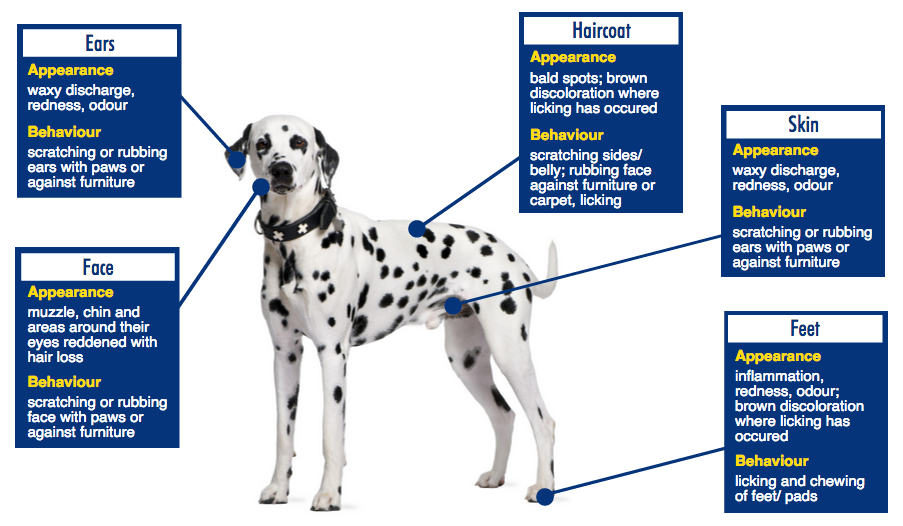
An allergic reaction is the result of ongoing exposure to an allergenic substance. The immune cells in the body build up a memory of the allergen. The more contact the animal makes with the allergen, the more the body reacts by releasing histamine and other inflammatory mediators. This looks like an dog that is scratching constantly for no apparent reason because the itchy feeling precedes lesions on the skin which come from self-trauma from scratching or infection from relentless scratching.

Allergies in dogs generally can’t be cured but can be managed.
This article explains the different types of allergies in dogs, their symptoms and how they can be treated. We also discuss how allergies are diagnosed and which dog breeds are more prone to skin conditions.
Expert advice from Dr Felicia:
Managing allergies will look different depending on the severity of the allergies for the dog, the dog’s temperament, ability to commit to frequent bathing, oral medications or application of topical medications and financial constraints. Your vet will be able to explore what’s possible and work out the most appropriate plan for you and your dog.
Cost of skin allergy treatment for dogs
Skin infections and allergies were the most common health issue experienced by dogs 2024, according to PetSure claims data.
| Claims data for skin infections/allergies | Average cost of treatment Ø |
Highest cost of treatment Ø |
| Dogs of all ages | $667 | $21,209 |
| Under 1 year | $324 | $10,670 |
| 1 – 8 years | $657 | $21,209 |
| Over 8 years | $699 | $15,465 |
ØBased on PetSure claims data, 2024 calendar year. Reimbursement for these claims under a pet insurance policy would be subject to limits, such as annual benefit limits or sub-limits, benefit percentage, applicable waiting periods and any applicable excess. Cover is subject to the policy terms and conditions. You should consider the relevant Product Disclosure Statement or policy wording available from the relevant provider. Please note that values calculated are based on all claims for that condition and medically related conditions in each calendar year.
Because it is difficult to predict the costs of veterinary care, it can help to have measures in place to help prepare for the unexpected. Pet insurance can help by covering a portion of the eligible vet bill if the unexpected does happen.
Get a quick quote
There are three main types of allergies in dogs:
Atopic allergies / atopic dermatitis
What is it?
Atopic dermatitis is an allergic reaction to certain substances in the environment, including pollen, moulds, dust mites and even animal dander (skin or hair fragments). The immune process is similar to hay fever or eczema in humans.

Dogs are exposed to the allergen either through inhalation (via the mouth or nose) or direct contact (via the skin). In most cases of atopic dermatitis, the microscopic allergens penetrate directly through the skin, which is often compromised through impaired skin barrier function.
Atopic allergies can occur seasonally or all year around depending on the presence of the allergen. Whenever there is a higher concentration of the substance in the animal’s environment, e.g. pollen in the air, the body releases excess histamine which then prompts symptoms such as itchiness.
Some atopic allergies may start out as seasonal, but because they are progressive (meaning that they get worse), your dog can become itchy year-round. Dust mite allergies are very common, in which case the symptoms persist even through the winter months.
What are the symptoms?
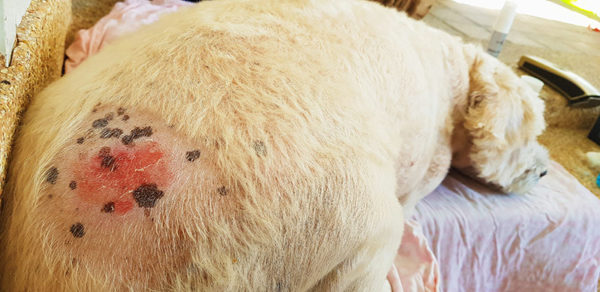
Atopic dermatitis usually looks like itchy skin, so the most common signs are scratching and chewing of the armpits, between the hind legs and abdomen, the face and the ears. Affected dogs will often lick, or even chew, their feet.
You will observe redness in the affected areas, and the dog’s continual licking and scratching at the site only makes it further inflamed. This can lead to secondary fungal or bacterial infections on the skin and the ears. Check your dog’s ears by pulling back the ear flap and looking for redness and discharge.
Typically these symptoms start between 1 and 3 years of age, however onset can occur from as early as 4 months to as late as 7 years of age.
Some of the common allergenic plants are Wandering Jew, Ragweed, Sorrel, Dock, Clover, Kikuyu, Papsalum, Fescue, Privet, Pine Oak, Birch and Couch grass. The only way to tell which of these your dog is allergic to is to perform allergy testing at the vet.
Expert advice from Dr Felicia:
A common giveaway on physical examination for potential ongoing allergic itch especially for lighter coloured dogs is the presence of saliva staining on the feet. Over time the feet will be stained a brown colour from ongoing licking.
How can atopic dermatitis be treated?
Like many allergies, Atopic Dermatitis is a life-long condition that can’t be cured, however it can be managed in a few different ways:
- Anti-itch medications include corticosteroids or other more targeted skin anti-inflammatory medications which can be given as a daily tablet or as a monthly injection. For milder cases some patients can be managed on anti-histamines. These medications help to dampen the immune response to the allergen, resulting in less itch.
- Medications to treat/manage secondary infections, usually oral antibiotics or antifungals (to treat more generalised secondary infections) though some patients can be managed with medicated shampoos, conditioners and skin lotions or creams. Before using medication, always consult your vet for advice on what to use and how to use it, and be mindful of any potential side effects.
- While this isn’t often possible when it comes to environmental allergens, try to remove the source of the allergy as much as you can. Unfortunately, pollens can be carried up to 80km in the air, and dust mites are everywhere.
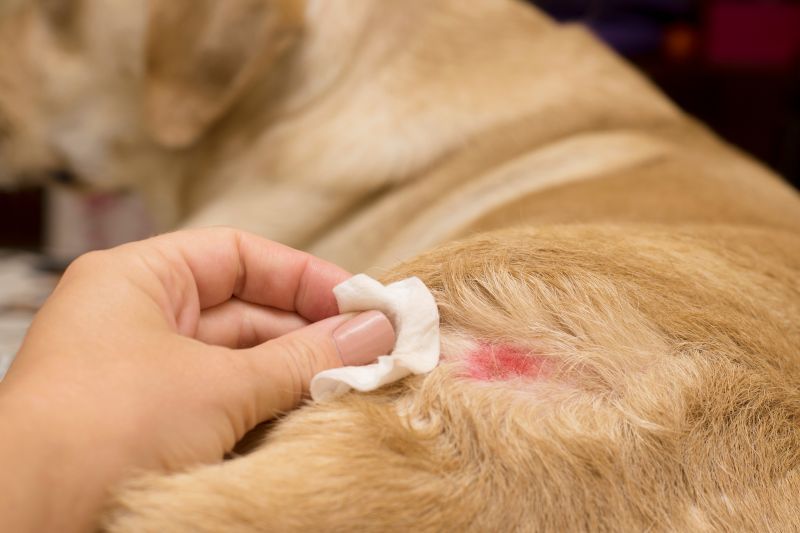
- If you can’t avoid the allergen, wipe or wash your dog’s paws to remove allergens after walks and hikes. In addition to this, you can remove the allergenic weeds from your backyard. Regular washing with a gentle shampoo can reduce the allergenic load on your pet’s skin.
- Hyposensitisation therapy (allergy “vaccine” shots) is the administration of a series of injections by which your dog will gradually become desensitised to the targeted allergens. The effectiveness of this treatment can vary; however, in 75% of pets some relief has been recognised.
- Supplements such as biotin and omega-3 oils have a natural anti-inflammatory effect and support coat health, improving barrier function. These can be given as supplements or are part of specially formulated diets that support dogs with itchy skin.
Expert advice from Dr Felicia:
Diagnosis of atopic dermatitis in dogs is a diagnosis of exclusion which means that other diseases causing itchy skin should be eliminated first. This usually involves parasite prevention and dietary trial, and from there testing for allergies can be considered if immunotherapy is desired. Many patients may not proceed with allergy testing particularly if symptoms can be managed medically or with supportive care.
Flea allergy dermatitis
What is it?
Flea allergy dermatitis (FAD) is also called “flea bite hypersensitivity” and is an allergic reaction to flea saliva. Not many fleas are needed to cause a dog to experience intense itching. It is one of the most common causes of itchiness in dogs.
In rare cases, dogs have been found to be allergic to other insects such as mosquitos and midges.
What are the symptoms?
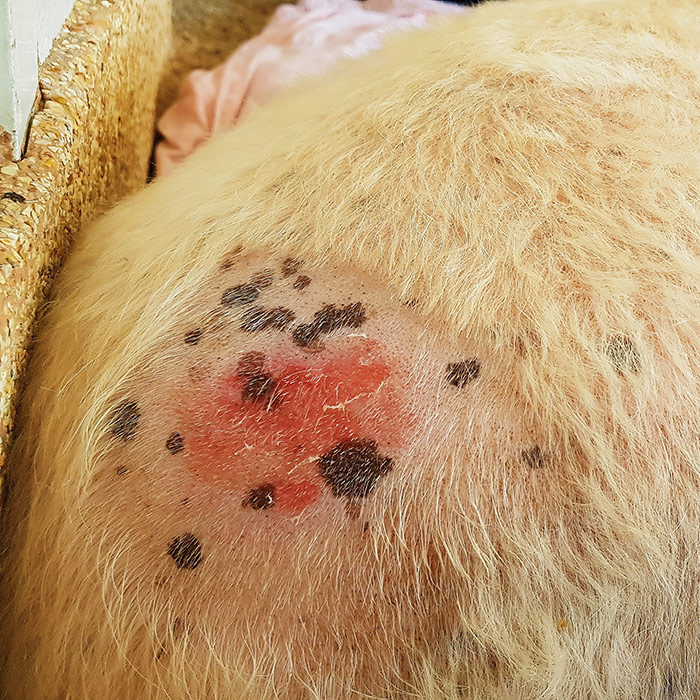
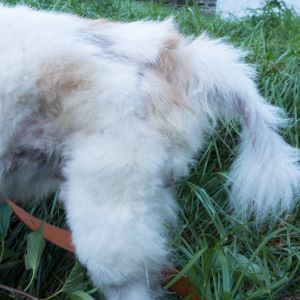
Dogs that are allergic to fleas will chew and bite their backs, back legs, bellies or tails – sometimes even until it bleeds! The skin often becomes red, raw and painful and you may even see little flecks of flea dirt (which is flea poo) or fleas themselves walking through the haircoat near the skin.
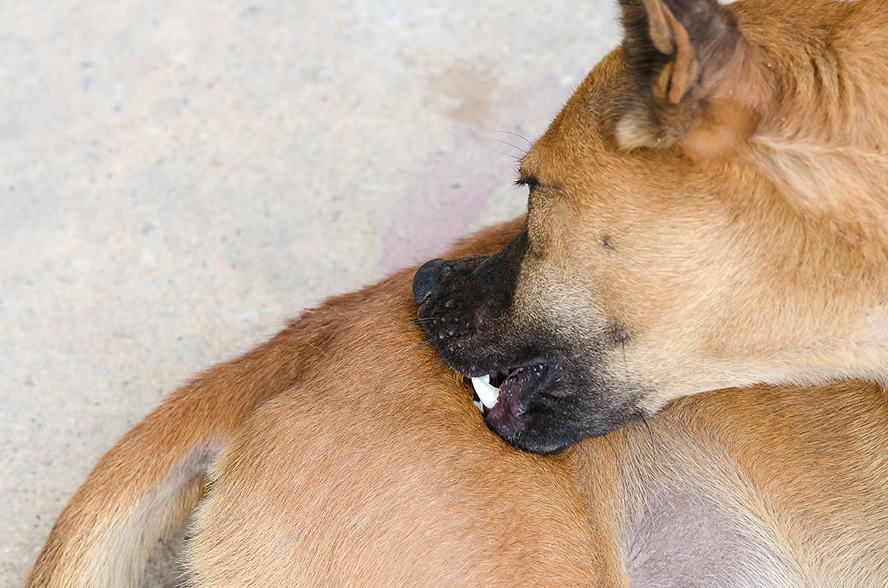
Flea bites often lead to hot spots – red, inflamed and/or infected lesions on the skin – due to the trauma from dogs chewing themselves in trying relieve their intense itching.
Expert advice from Dr Felicia:
The most common location for intense itch due to flea allergy is around the neck and shoulders, and around the tail base. This distribution as well as the presence of ‘flea dirt’ on the coat provide helpful clues that flea allergy is responsible for the itch. It is now seen more rarely than before due to the widespread use of effective parasite prevention.
How can it be treated?
The most effective method is to be very diligent and use products to kill and prevent fleas from infesting your dog. As fleas are pretty much everywhere, it is almost impossible for your dog not to have fleas unless you are using a good-quality flea control product all year around.
There are many efficient and convenient products available, but it’s always advisable to ask your vet for advice. Your vet may prescribe steroids and antihistamines to break the cycle of itching and scratching. Regular warm baths with medicated anti-itch shampoo and conditioner can also help.
You should also vacuum regularly and wash your pet’s bedding frequently in hot water (>60 degrees Celsius).
Be aware of possible flea exposures if you have other dogs visiting (especially if you don’t know whether they are on flea control or not) or if your dog visits places where there are other dogs, such as dog boarding, doggy daycare and dog parks.
Flea prevention all year round is really important, and even more so if your dog has FAD. Once you have a flea infestation on your dog and in your home, it becomes a nightmare and is very difficult to resolve. Make sure all other pets in the household are also treated.
Using a flea comb may help to find out if your dog has fleas, however, fleas are tricky to find as they are good at hiding and running away to escaping the comb. Also, only 5% of fleas actually live on the dog; the remaining 95% ( including the eggs, larvae and pupae) live in the environment (e.g. bedding, parks, carpets, gaps in floorboards and garden). Learn more about how to control fleas.
Food allergies
What is it?
Food allergy occurs when your dog is allergic to one or more foods. The most common allergen foods for dogs are:
- Beef
- Milk
- Chicken
- Eggs
- Fish
- Cereals (wheat, soya, corn)
It is not clear what causes a food allergy. It is surmised that changes in the animal’s immune system cause the body to see certain ingredients as ‘foreign’, which leads to an immune response that causes the allergic reaction. Fortunately, food allergy in dogs is relatively uncommon.
What are the symptoms?
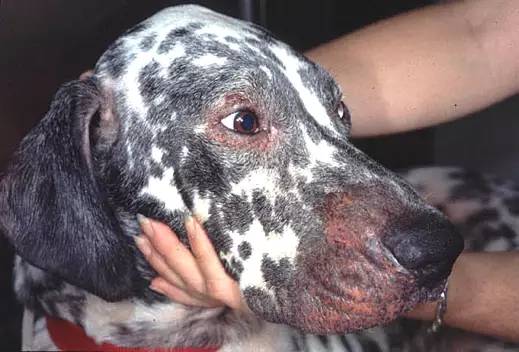
The main symptom is itching of the skin that results in licking and chewing, especially around the face, paws and ears.
This can be accompanied by an unpleasant skin odour, excessive scaling, red bumps, pimples and ear and skin infections. In some cases, gastrointestinal symptoms occur, such as indigestion, noisy gut sounds, intermittent mild diarrhoea and vomiting.
Diagnosis of a food allergy is a lengthy process which involves working very closely with your vet for months using a system of diet trials. Once you know exactly what your dog is allergic to, then it can be managed more easily.
Expert advice from Dr Felicia:
Diagnosing food allergy is performed by a series of ‘treatment trials’ where a novel protein and carbohydrate source (or a hydrolysed protein diet) are exclusively fed for a number of weeks. If the itchiness seems to resolve with this then a ‘challenge’ is performed with the suspected trigger to see if the itch returns, which confirms the diagnosis.
How can it be treated?
Once you know what your dog is allergic to, you can manage your dog’s diet to prevent flare-ups (a flare-up is when the skin becomes worse and intense treatment is required). In some cases, the vet may prescribe medication such as antihistamines and steroids.
Expert advice from Dr Felicia:
The treatment goal for allergic patients is to keep the itch to a minimum, attempt to restrict access to triggers where possible and to boost/support the skin barrier and microbiome to reduce the frequency of ‘flare’ episodes where the itch relapses.
How are allergies diagnosed?
If you are visiting your vet more than 3 times per year for itching, ear or skin infection, ask your vet about possible dog allergies. Allergies cannot be cured, but with patience and diligence, they can be managed successfully .
Keeping a detailed history of your dog’s itching will be helpful for the diagnosis. This means monitoring and recording the symptoms in detail: what you observed, when it occurred, what happened before, any treatment given and the outcome.
The symptoms of different dog allergies are usually very similar, which can make it hard to tell which is the underlying cause. It is best is to consult your vet before jumping to any conclusions.
Your vet will suspect an allergy based on the dog’s symptoms but will first rule out common and curable causes of itching such as fleas, mites, bacteria and yeast infections. Find out more about other skin conditions in dogs.
Atopic allergies
Testing for atopic allergies is done through skin or serum (blood) testing in a similar way it is done for people.
Flea allergies
For flea allergies, vets will look for a typical pattern of skin inflammation as well as the presence of fleas and/or flea dirt, scratching and skin sores. Often they will prescribe a specific flea treatment trial to determine whether fleas are the problem.
Food allergies
To identify a food allergy, the dog will need to be put on an exclusion diet for eight weeks. This means they are fed only ingredients that they have never eaten before; they cannot eat anything else at all for that time. As food allergies are uncommon in dogs, we advise work with your vet to make sure there is not another underlying cause that can more easily be managed.
Unsure how serious it is?
Bow Wow Meow policyholders can get access to trusted vet care anytime, anywhere, at no additional cost. Connect to an experienced Australian registered vet via video call, 24/7. Whether it’s providing vet advice, setting up at-home treatment plans, or confirming if you need to visit a vet in person, you can get help when you need it.
Find out more about our pet insurance cover options.
Products that can help
Regardless of the type of allergy your dog is suffering from, it is very important to reduce the symptoms as much as possible. Anti-itch medication may be prescribed by your vet but if not, there are other helpful products available over-the-counter at pet retail stores and veterinary clinics. Products such as gentle medicated shampoos, conditioners, skin lotions or creams and essential fatty acids (e.g. fish oil) can help to reduce skin irritations, prevent secondary infections and assist with healing your dog’s skin.
Are all dogs prone to allergies?
Generally, every dog is at risk of an allergic reaction to a substance. Some breeds however are more susceptible than others, making their skin more fragile and sensitive to allergens.
Here are a list of breeds identified in Australia as more prone to atopic dermatitis:
- Beagle
- Bichon Frise
- Boxer
- Bulldog
- Bull Mastiff
- Great Dane
- Labrador
- Pug
- Shar-Pei
- Staffordshire Terrier
- West Highland White Terrier
If your dog suffers from an allergy, we recommend against breeding as a genetic predisposition to allergies is likely to be heritable.
In conclusion
Allergies in dogs are more common than most of us think, and the number of allergic dogs is increasing. There are many different substances that can cause an allergic reaction in our dogs. Whilst you can’t cure your dog’s allergies, you can manage them so your dog can live a comfortable, almost itch-free life again.
You will need to consult your vet to identify the type of allergy your pet is suffering from to find the best treatment suited to your dog.
Bow Wow Meow Pet Insurance can help protect you and your dog should an unexpected trip to the vet occur.
-
Find out more about our dog insurance options
-
Get an online pet insurance quote
Bow Wow Meow is proud to have been awarded winner of Canstar’s ‘Most Satisfied Customers’ Award in the Pet Insurance category for both 2024 and 2025!
Bow Wow Meow is proud to have been chosen as Product Review’s Pet Insurance Award Winner every year from 2018 to 2025! This is based on 2,995 independent customer reviews (as at 21/01/2025), with an overall rating of 4.3*
Google Review rating = 4.5* (based on 968 reviews)
Trust Pilot rating = 4.6* (based on 531 reviews)
Bow Wow Meow has been chosen as a winner in the Finder Pet Insurance Awards 2024. Finder’s panel of experts analysed over 140 quotes to award our Ultimate Care Plan the winner of the “Pet Insurance – Value” category.
Bow Wow Meow is an Australian-owned and operated pet insurance provider. Our focus is purely on pets, and we are proud to have helped provide peace of mind to over 200,000 Aussie pet owners since 2008.