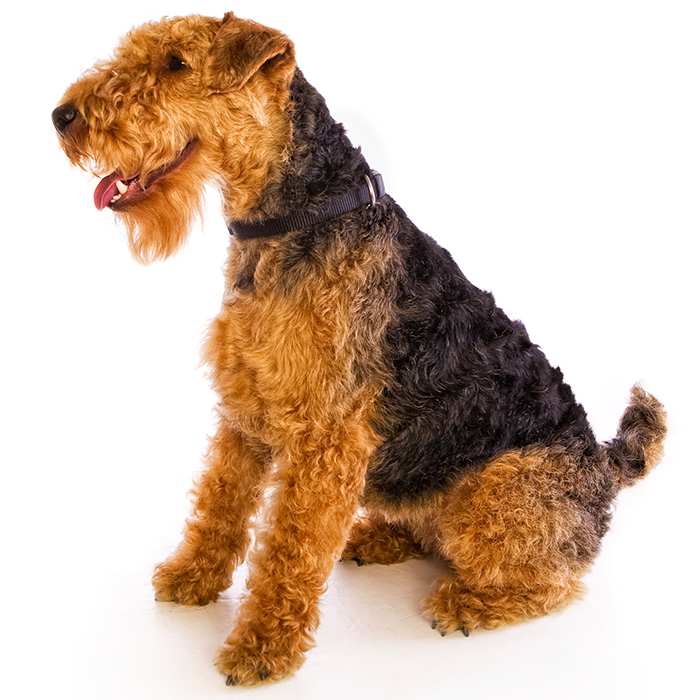
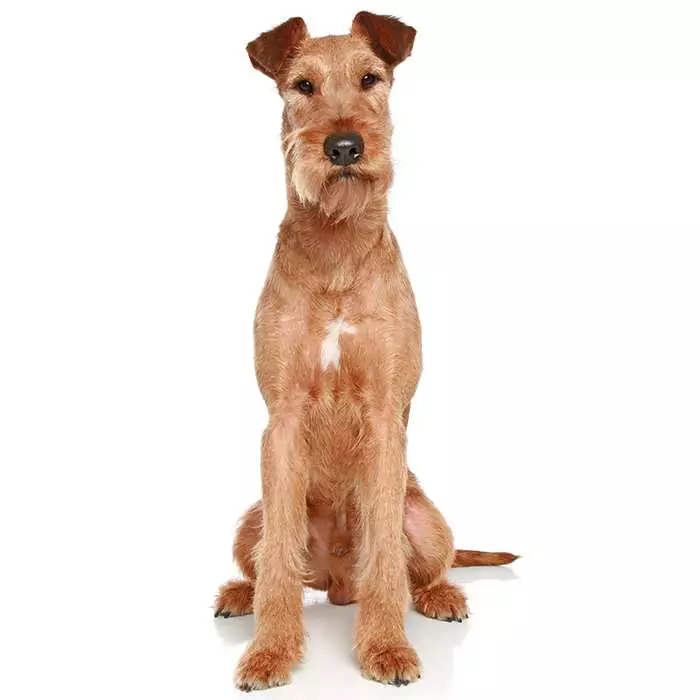
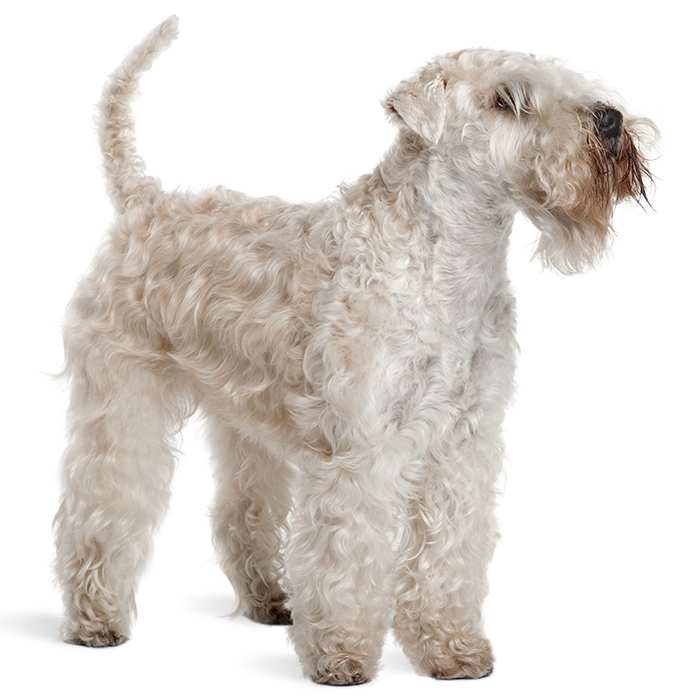
Is the Airedale Terrier a good family dog?


Airedale Terrier
Airedale Terriers are intelligent, energetic medium-to-large dogs with a distinctive wiry coat and confident, spirited personality. The largest of the terrier breeds, they were developed as versatile working dogs and remain active, curious and alert companions.
| Recommended for | Active, confident owners able to provide regular exercise, training and mental stimulation |
| Breed Classification | Terriers |
| Other names | King of Terriers |
| Lifespan | 10–13 years |
| Size | Medium to large |
| Temperament | Confident, clever, loyal, spirited |
| Intelligence | High: quick to learn and independent-minded |
| Tendency to bark | Moderate: naturally alert, but not typically a constant barker |
| Maintenance Level | Medium-high: low shedding but regular brushing and coat trimming/stripping required |
| Health Risk | Airedale Terriers are generally robust,, but they can be predisposed to hip and elbow dysplasia, skin allergies, hypothyroidism, GDV and eye disorders. |
Thinking of insuring an Airedale Terrier?
Explore the Top 5 health issues claimed for Airedale Terriers, including highest claims paid and how much pet insurance could help you save on eligible vet bills.
See Airedale Terrier pet insurance Ready to get cover? Get a quick quote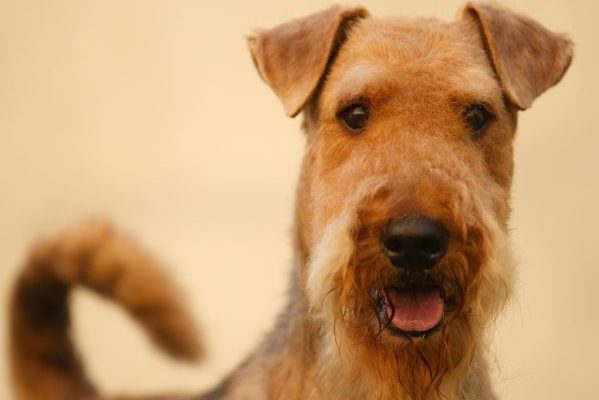
Airedale Terrier personality and temperament
Airedale Terriers are confident, intelligent and energetic dogs with the bold, curious nature typical of a terrier. Originally developed as versatile working dogs, they tend to be alert, playful and keen to be involved in family life.
They are generally affectionate with their families but can also be independent and strong-willed. Patient, consistent reward-based training, together with plenty of physical activity and mental stimulation, helps channel their intelligence and enthusiasm.
Airedale Terriers with kids and other pets
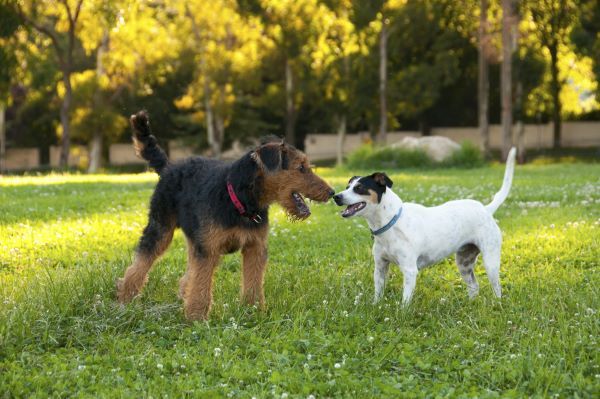
Well-socialised Airedale Terriers can make playful and affectionate family companions, particularly in active households. Their size, strength and enthusiasm mean interactions with young children should always be supervised, with children taught how to interact calmly and respectfully with dogs.
Airedales can live successfully with other dogs and cats when appropriately introduced and socialised. However, their terrier ancestry can give them a strong chase instinct, so care is needed around rabbits, rodents and other small pets.
Airedale Terrier training and exercise
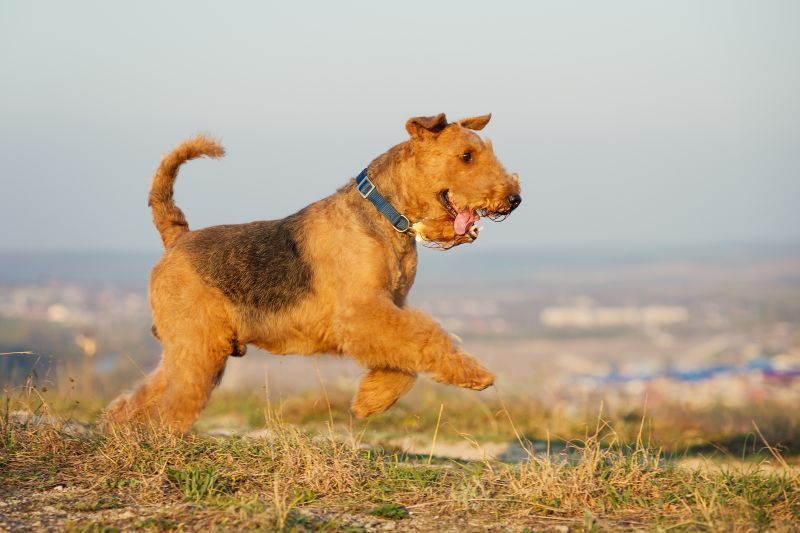
Airedale Terriers are energetic working dogs that need regular daily exercise and mental stimulation. Most healthy adults benefit from around an hour or more of activity each day, including walks, active play and opportunities to run safely in a secure area. Fetch, scent work, tracking, agility and training games can provide useful outlets for both physical and mental energy.
Airedales are intelligent and learn quickly, but repetitive training can lose their interest. Short, varied sessions using positive reinforcement generally work best, with early socialisation and training helping develop good manners around people, dogs and unfamiliar environments.
| Energy level | High: energetic, active and mentally busy |
| Exercise requirements | High: around 60 minutes or more daily, plus play and mental enrichment |
Common health issues for Airedale Terriers
What do Airedale Terrier owners claim for the most?
Airedale Terriers are generally robust dogs, but they can be predisposed to several inherited and breed-related conditions affecting the joints, skin, thyroid, digestive system and eyes. Hip and elbow screening are particularly important in responsible breeding programs.
- Hip dysplasia: Abnormal development of the hip joint can cause pain, reduced mobility and arthritis. Hip screening is recommended for breeding Airedales.
- Elbow dysplasia: Developmental abnormalities of the elbow can cause front-leg lameness, pain and progressive arthritis. Elbow testing is also recommended for breeding dogs.
- Skin allergies and dermatitis: Allergies commonly cause itchy, inflamed skin, leading to scratching, licking, redness, hair loss, hot spots and recurring ear or skin infections.
- Hypothyroidism: Reduced thyroid hormone production can cause lethargy, weight gain, coat changes and recurrent skin problems.
- Gastric Dilatation-Volvulus: A life-threatening emergency in which the stomach becomes distended and may twist. Repeated unsuccessful retching, abdominal swelling, restlessness or collapse require immediate veterinary treatment.
- Eye disorders: Cataracts and other inherited or acquired eye problems can occur, so persistent redness, cloudiness, discomfort or changes in vision warrant veterinary assessment.
Not all conditions are covered by Pet Insurance. For details of Bow Wow Meow Pet Insurance cover, refer to the Product Disclosure Statement.
How to choose the right insurance for your Airedale Terrier
When comparing cover for your Airedale Terrier, look for:

Cover for common Airedale Terrier conditions:
Check that the policy covers conditions Airedale Terriers can be prone to, including common health issues.

Cover for hereditary conditions:
No exclusions for hereditary or congenital conditions⑅.

Flexible cover options:
Options to adjust your annual benefit limit, reimbursement rate and excess.
Bow Wow Meow's Nose-to-Tail Cover offers flexible options for your Airedale Terrier, with cover for accidental injuries, illnesses and hereditary conditions⑅. Get a quick quote for cover that suits your Airedale Terrier and your budget.
Airedale Terrier feeding and nutrition
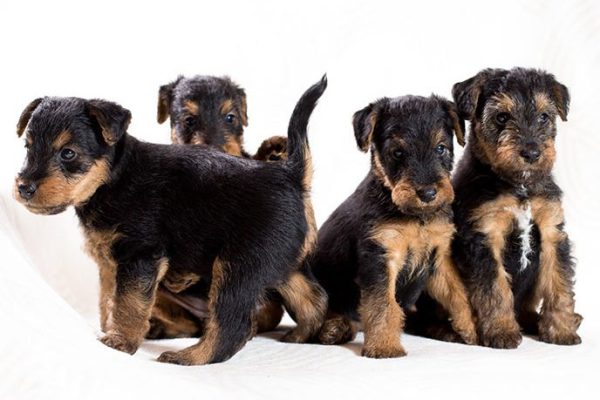
Airedale Terriers should be fed a complete and balanced diet appropriate for their age, body condition, activity level and health. Portions should be adjusted to maintain a lean, healthy weight, as excess weight can place additional strain on the joints. Highly active dogs may require more calories than less active pets, while treats should be included when calculating overall daily food intake.
Because Airedales can be susceptible to GDV, dividing the daily food allowance into two or more meals rather than feeding one very large meal may be appropriate. Speak to your vet about your dog’s individual nutritional needs.
Airedale Terrier care and grooming
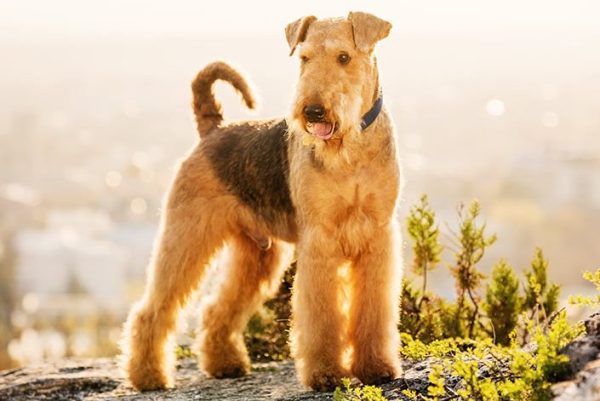
Airedale Terriers have dense double coats with a harsh, wiry outer layer and softer undercoat. They shed relatively little, but regular brushing and combing are needed to remove loose hair and prevent tangles, particularly through the beard and leg furnishings.
Pet coats are often professionally clipped every several weeks, while show coats are traditionally hand-stripped to preserve the harsh texture and colour. The beard should be cleaned regularly because it can collect food and moisture, along with routine nail, ear and dental care.
Size, appearance and coat of Airedale Terriers
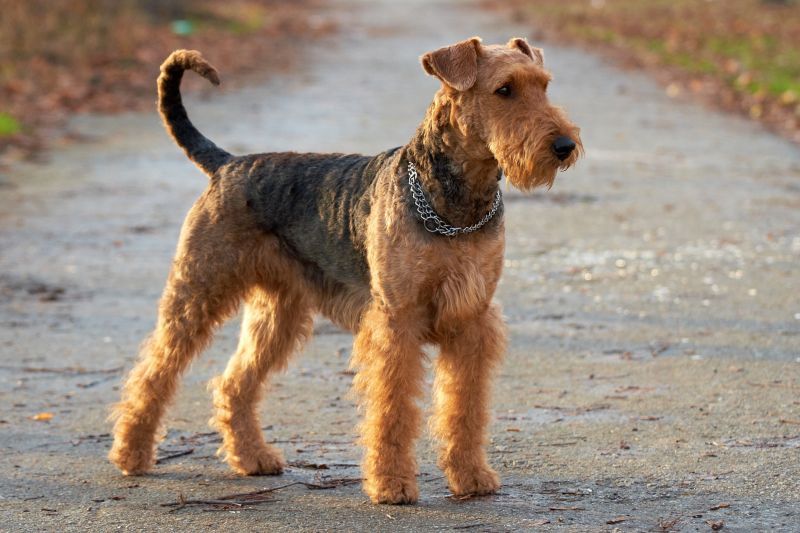
The Airedale Terrier is a medium-to-large terrier with a strong, square build and an alert, confident appearance. Often described as the largest of the terrier breeds, it has a long, flat head, dark expressive eyes, small V-shaped ears that fold forward, and a neat, powerful muzzle that gives it a keen and intelligent expression.
Its coat is dense, harsh and wiry, with a softer undercoat beneath. The Airedale’s classic colouring is tan with a black or dark grizzle saddle across the back, and the furnishings on the muzzle and legs give the breed its distinctive terrier outline.
| Weight range | Approx. 18–29 kg |
| Height range | Males approx. 58–61 cm; females 56–59 cm |
| Colours | Tan with a black or grizzle saddle |
| Coat length | Medium: dense, harsh, wiry double coat |
Breed history of Airedale Terriers
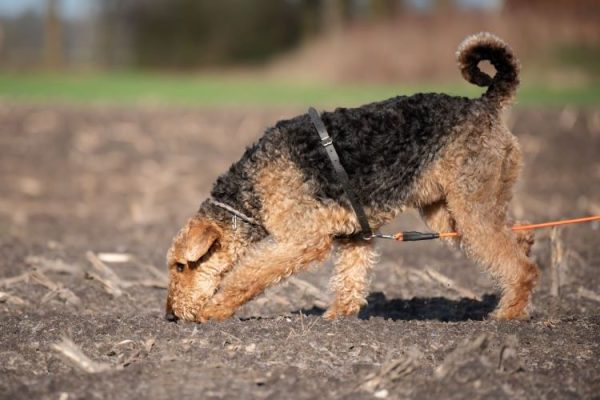
The Airedale Terrier was developed during the 19th century in the Aire Valley of Yorkshire, England. Local working people wanted a versatile dog capable of hunting vermin on land and along waterways, retrieving, tracking and performing other farm and hunting tasks. The breed is believed to have developed from rough-coated black-and-tan terriers crossed with the Otterhound and other terrier types. American Kennel Club
Early dogs were known as Waterside Terriers and sometimes Bingley Terriers before the name Airedale Terrier became established. Their versatility later led to work as police dogs, sentries, messengers and search dogs, including extensive military service during the First World War. Their size and adaptability helped earn them the nickname “King of Terriers”.
Explore related breeds
Airedale Terrier facts!
- The Airedale is known as the “King of Terriers” because it is the largest of the terrier breeds.
- Before the name Airedale caught on, the breed was known as the Waterside Terrier and sometimes the Bingley Terrier, reflecting its origins around Yorkshire’s rivers and towns.
- Airedales were developed as genuine canine all-rounders: they hunted vermin, retrieved game, guarded farms and could even help drive livestock.
- During the First World War, Airedales worked as military messengers, sentries and search dogs, carrying communications through dangerous battlefield conditions.
- The breed became an early police dog: Airedales were being used in European police work around the turn of the 20th century, well before many modern working breeds became established in those roles.
- Airedales have an unusual combination of terrier and water-dog ancestry, which helps explain why many are more comfortable retrieving and working around water than people might expect from a terrier.
Summary
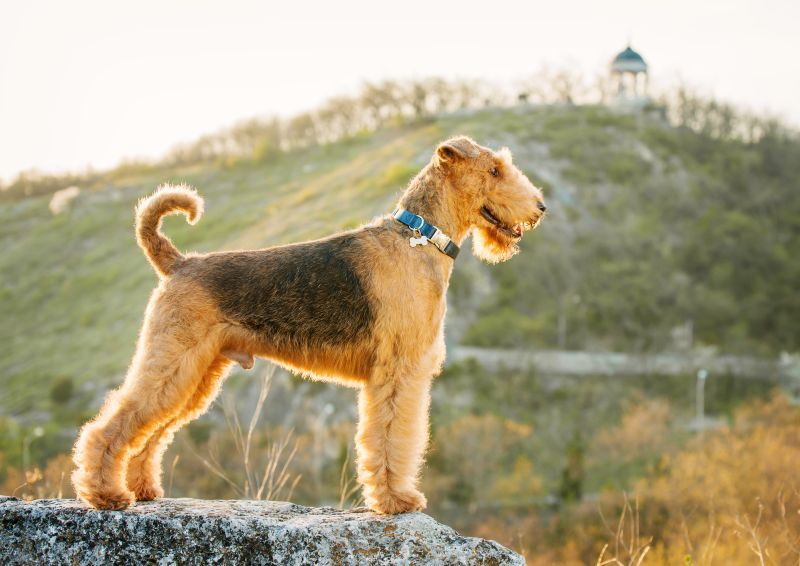
Airedale Terriers are intelligent, confident and energetic dogs with the bold personality and strong working instincts expected of the largest terrier breed. They are affectionate with their families but can be independent, so they suit active owners who can provide consistent reward-based training, daily exercise and plenty of mental stimulation.
Their wiry, relatively low-shedding coat still requires regular grooming, and prospective owners should be aware of health concerns including hip and elbow dysplasia, skin disease, hypothyroidism and GDV. With appropriate training, socialisation and care, Airedales can make lively and engaging companions.
FAQs about the Airedale Terrier
It can be, provided the household matches the breed’s exercise, training, grooming and supervision needs.
Airedale Terriers have high exercise needs. Most healthy adults benefit from around an hour or more of daily activity, including walks, active play and training or mental enrichment.
Shedding depends on coat type, season and grooming routine. The breed has a short to medium, dense, wiry double coat.
No. While some individuals may shed less than others, no dog breed is truly allergy-free.
Most respond well to positive, consistent training, but owners should work with the breed’s instincts rather than against them.
MORE INFORMATION
The Airedale Terrier Club of Victoria Inc.: http://www.airedaleclub.com/
The Airedale Terrier Club of America, Inc.: https://airedale.org/your-airedale/the-airedale/
Airedale Terrier Club of Scotland: https://www.airedale-terrier-club-of-scotland.co.uk/
The Airedale Terrier Rescue & Adoption Network of Australia Inc.: https://www.airedalerescue.org/

Get 2 months free for your puppy!
Congrats on your new bundle of joy
To ensure your precious fur baby is covered from the start, we'd like to offer your first 2 months of our Nose-to-Tail Cover for free2!
Get a quick quote