
Is the Cavalier King Charles Spaniel a good family dog?


Cavalier King Charles Spaniel

Cavalier King Charles Spaniels are small, affectionate companion dogs known for their gentle nature, expressive eyes and silky, feathered coats. Friendly, adaptable and eager to be involved in family life, they can suit families, singles and older owners and often adapt well to apartment living.
| Recommended for | Families, singles, seniors and first-time owners who can provide plenty of companionship |
| Breed Classification | Toys |
| Other names | Cavalier, Charlie, Cavie |
| Lifespan | 12-15 years |
| Size | Small |
| Temperament | Affectionate, gentle, lovable |
| Intelligence | Above average: bright, eager learners that generally respond well to positive training |
| Tendency to bark | Low: generally quiet, although may bark when alert, excited or left without enough stimulation |
| Maintenance Level | Medium: coat needs regular brushing, ear care and routine grooming but no clipping |
| Health Risk | Cavaliers have significant inherited risks, particularly heart and neurological disease, along with eye and joint conditions. |
Thinking of insuring a Cavalier King Charles Spaniel?
Explore the Top 5 health issues claimed for Cavalier King Charles Spaniels, including highest claims paid and how much pet insurance could help you save on eligible vet bills.
See Cavalier King Charles Spaniel pet insurance Ready to get cover? Get a quick quote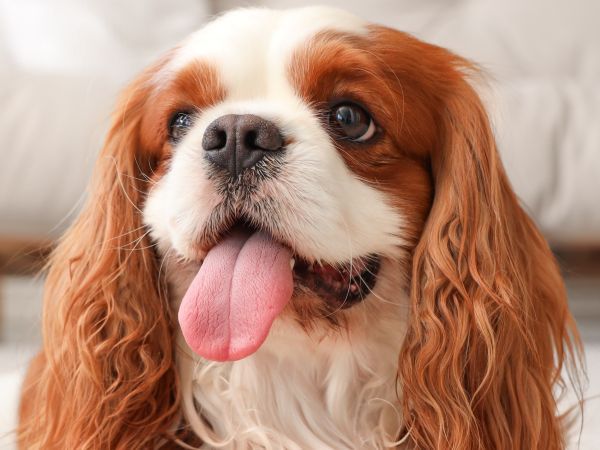
Cavalier King Charles Spaniel personality and temperament
Cavaliers are typically affectionate, gentle and people-oriented dogs that enjoy being closely involved with their families. They are generally friendly and responsive and tend to adapt well to different lifestyles, from active households to quieter homes.
Companionship is particularly important to this breed. Cavaliers are happiest living indoors as part of the family and may struggle if routinely left alone for long periods. Although often content to relax at home, they also retain some sporting-spaniel instincts and enjoy regular walks, play and opportunities to explore.
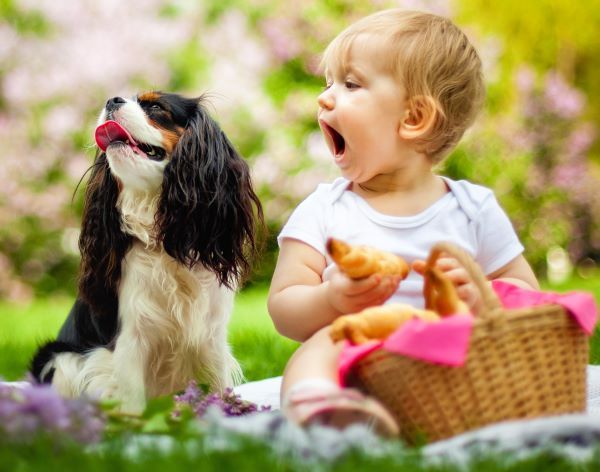
Cavalier King Charles Spaniels with kids and other pets
Well-socialised Cavaliers can make affectionate family companions and often enjoy interacting with children. Because they are small dogs, young children should be taught to handle them gently, and interactions should always be supervised to prevent accidental injury.
Cavaliers generally live well with other dogs and can often share a home with cats when introduced appropriately. Their spaniel ancestry means some retain an instinct to chase birds and other small animals, so individual prey drive should be taken into account.
Cavalier King Charles Spaniel training and exercise
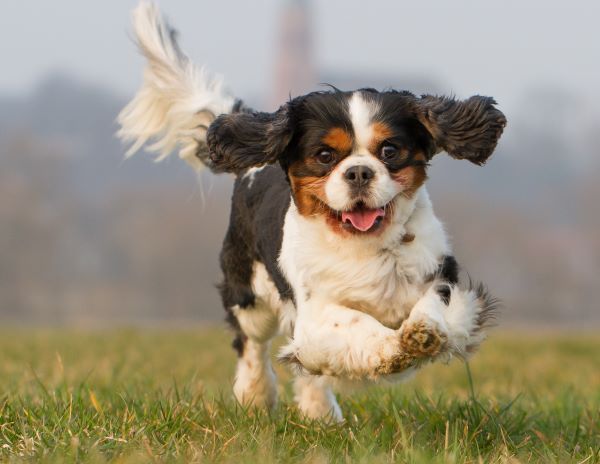
Cavaliers are companion dogs with a sporting background and generally benefit from around 30–60 minutes of daily activity, depending on age, health and fitness. Walks, play, scent games and activities such as obedience, rally and agility can all provide useful exercise and enrichment. The Royal Kennel Club recommends up to around one hour per day.
They are intelligent, eager learners and usually respond well to positive reinforcement and short, enjoyable training sessions. Because some Cavaliers retain a strong instinct to chase birds or other moving animals, recall training should begin early and off-lead exercise is safest in secure areas. As with all dogs, exercise should be moderated during very hot weather.
| Energy level | Moderate: playful and active when given the opportunity |
| Exercise requirements | Medium: around 30–60 minutes daily plus regular play and mental enrichment |
Common health issues for Cavalier King Charles Spaniels
What do Cavalier King Charles Spaniel owners claim for the most?
Cavaliers can have significant inheritied risks, particularly heart and neurological disease, along with eye and joint conditions.
- Mitral valve disease (MVD): Myxomatous mitral valve disease is particularly common in Cavaliers and can develop at a younger age than in many other breeds. The mitral valve gradually deteriorates, allowing blood to leak backwards through the heart. Some affected dogs remain stable for years, while others may eventually develop congestive heart failure.
- Chiari-like malformation and syringomyelia (CM/SM): Syringomyelia occurs when fluid-filled cavities called syrinxes develop within the spinal cord, commonly in association with abnormal skull and brain anatomy. Signs can include neck or shoulder pain, sensitivity to touch and characteristic “phantom scratching” near the neck or shoulder. MRI is used for diagnosis.
- Patellar luxation: The kneecap slips out of its normal position and can cause skipping, lameness, pain and, in more severe cases, arthritis or the need for surgery.
- Eye conditions: Cavaliers can develop dry eye, cataracts and other inherited or acquired eye disorders. Dry eye results from inadequate tear production and often requires ongoing treatment rather than being “easily corrected”.
- Hip dysplasia: Abnormal development of the hip joint can cause instability, pain and arthritis. Screening breeding dogs can help reduce inherited risk.
- DNA testing is also available for inherited Cavalier conditions including episodic falling syndrome and dry eye/curly coat syndrome.
Not all conditions are covered by Pet Insurance. For details of Bow Wow Meow Pet Insurance cover, refer to the Product Disclosure Statement.
How to choose the right insurance for your Cavalier King Charles Spaniel
When comparing cover for your Cavalier King Charles Spaniel, look for:

Cover for common Cavalier King Charles Spaniel conditions:
Check that the policy covers conditions Cavalier King Charles Spaniels can be prone to, including common health issues.

Cover for hereditary conditions:
No exclusions for hereditary or congenital conditions⑅.

Flexible cover options:
Options to adjust your annual benefit limit, reimbursement rate and excess.
Bow Wow Meow's Nose-to-Tail Cover offers flexible options for your Cavalier King Charles Spaniel, with cover for accidental injuries, illnesses and hereditary conditions⑅. Get a quick quote for cover that suits your Cavalier King Charles Spaniel and your budget.
Cavalier King Charles Spaniel feeding and nutrition
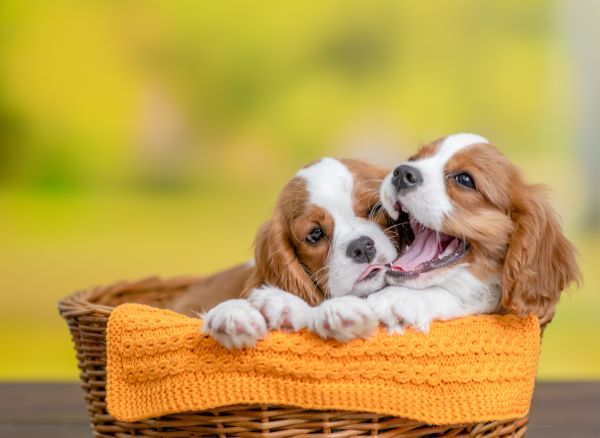
Cavalier King Charles Spaniels should be fed a complete and balanced diet appropriate for their age, body condition, activity level and health. Because they can be prone to weight gain, portions should be measured and treats included when calculating daily food intake. Maintaining a healthy weight is particularly important for reducing unnecessary strain on the joints and heart. Speak to your vet if you have concerns about your Cavalier’s weight, diet or individual nutritional needs.
Cavalier King Charles Spaniel care and grooming
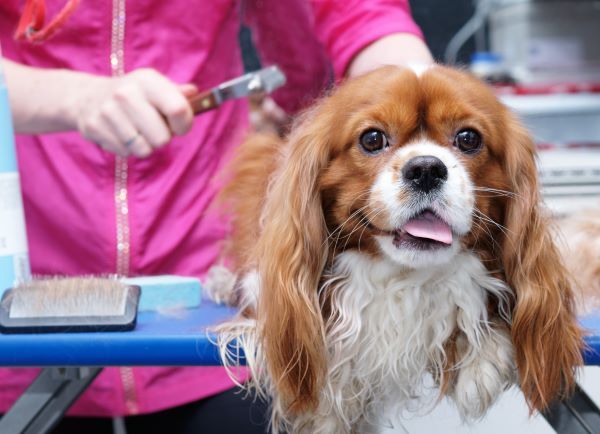
Cavaliers have silky, feathered coats that need regular brushing, generally several times a week, to prevent tangles and remove loose hair. Particular attention should be paid to the long hair around the ears, chest, legs and tail. They shed throughout the year, with shedding sometimes increasing seasonally.
Their long, hanging ears should also be checked regularly for irritation or infection, alongside routine dental and nail care. The natural Cavalier coat does not require routine clipping or trimming.
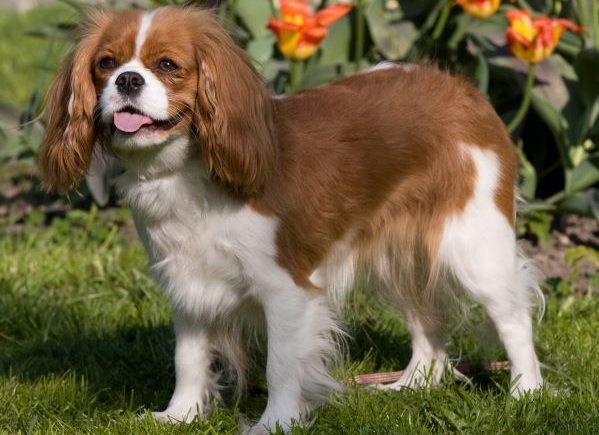
Size, appearance and coat of Cavalier King Charles Spaniels
The Cavalier King Charles Spaniel is a small, graceful and well-balanced toy spaniel with large dark eyes, long feathered ears and a gentle expression. The skull is almost flat between the ears, while the muzzle is relatively short but should remain well tapered rather than extremely flat-faced.
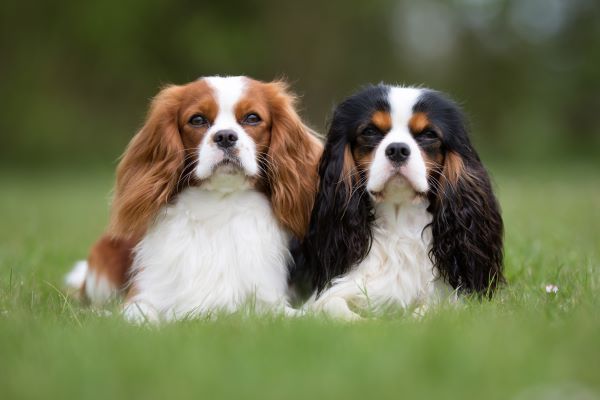
Its silky coat is straight or may have a slight wave, with abundant feathering on the ears, chest, legs, feet and tail. Cavaliers occur in four recognised colours: Blenheim (chestnut and white), Tricolour (black, white and tan), Black and Tan, and Ruby.
| Weight range | 5.4–8.2 kg |
| Height range | Approximately 30-33 cm |
| Colours | Blenheim, Tricolour, Black and Tan, and Ruby |
| Coat length | Medium to long, silky with substantial feathering |
Breed history of Cavalier King Charles Spaniels
The Cavalier King Charles Spaniel traces its ancestry to the small toy spaniels seen in European paintings from the 16th and 17th centuries. These dogs became particularly associated with King Charles I and his son Charles II, who was famously devoted to his spaniels. Red-and-white toy spaniels were also bred for generations at Blenheim Palace by the Dukes of Marlborough, giving rise to the modern “Blenheim” colour name.
During the 18th and 19th centuries, changing fashions favoured toy spaniels with shorter muzzles and more domed skulls, eventually producing the modern King Charles Spaniel. In 1926, American enthusiast Roswell Eldridge offered prizes at Crufts for dogs resembling the longer-muzzled spaniels shown in paintings from Charles II’s era. His challenge inspired British breeders to revive this older type.
The Cavalier King Charles Spaniel Club was founded in 1928 and a breed standard was developed using a dog named Ann’s Son as an important model. The Cavalier was formally recognised as a separate breed by the British Kennel Club in 1945 and has since become one of the best-known companion spaniels worldwide.
Explore related breeds
Cavalier King Charles Spaniel facts!
- Cavalier King Charles Spaniels were a fond favourite of King Charles II of England. He took his dogs out hunting, claiming the little dogs could keep up with a trotting horse.
- The “Blenheim” colour is named after Blenheim Palace, where the Dukes of Marlborough bred red-and-white toy spaniels for generations.
- Some Blenheim Cavaliers have a small chestnut marking in the centre of the forehead known as the “Blenheim spot” or “Duchess thumbprint”.
- The modern Cavalier was deliberately revived in the 1920s to resemble the longer-muzzled toy spaniels seen in paintings from the time of King Charles II. American Roswell Eldridge offered prize money at Crufts to encourage British breeders to recreate this older type.
- Cavalier King Charles Spaniels and King Charles Spaniels are separate breeds. Cavaliers are generally larger, with a flatter skull and longer muzzle, while King Charles Spaniels are smaller and more flat-faced.
Summary
The Cavalier King Charles Spaniel is a gentle, kind and good-natured toy dog with a strong desire for human companionship. Affectionate and eager to please, Cavaliers are friendly with people and tend to thrive on close contact with their family.
Their adaptable nature makes them popular with families, older people and smaller households. They enjoy play and regular walks but are primarily companion dogs, so they are happiest in homes where they receive plenty of attention and are not left alone for long periods.
FAQs about the Cavalier King Charles Spaniel
They are generally affectionate companions and can suit families, couples or singles when their individual exercise, training and grooming needs are met.
Moderate. Daily walks and play are generally appropriate, adjusted for the dog’s age, health and individual energy level.
Generally yes. They are intelligent and usually respond well to positive, consistent training, particularly when sessions are engaging and rewarding.
They are generally light barkers, although barking can increase with boredom, excitement, anxiety or unfamiliar activity.
They shed to some degree and require regular brushing or professional grooming to keep the coat in good condition.
Yes, they can adapt well to apartment living provided they receive sufficient daily exercise, mental stimulation and companionship.
Many can live happily with children and other pets when socialised from a young age, although individual temperament and compatibility always vary.
Potential health concerns include mitral valve disease, syringomyelia, eye disorders and patellar luxation.
They are separate breeds. Cavaliers are generally larger, with a flatter skull and longer muzzle, while King Charles Spaniels are smaller and have a more domed skull and much shorter, upturned muzzle. The modern Cavalier was deliberately revived in the 1920s to resemble the longer-faced toy spaniels seen in paintings from the time of Charles II.
MORE INFORMATION
Cavalier King Charles Spaniel Club of NSW: http://www.cavaliersnsw.com/
Cavalier King Charles Spaniel Club of Victoria Inc: http://www.cavalierclubvictoria.com/

Get 2 months free for your puppy!
Congrats on your new bundle of joy
To ensure your precious fur baby is covered from the start, we'd like to offer your first 2 months of our Nose-to-Tail Cover for free2!
Get a quick quote