Is the Border Collie a good family dog?


Border Collie
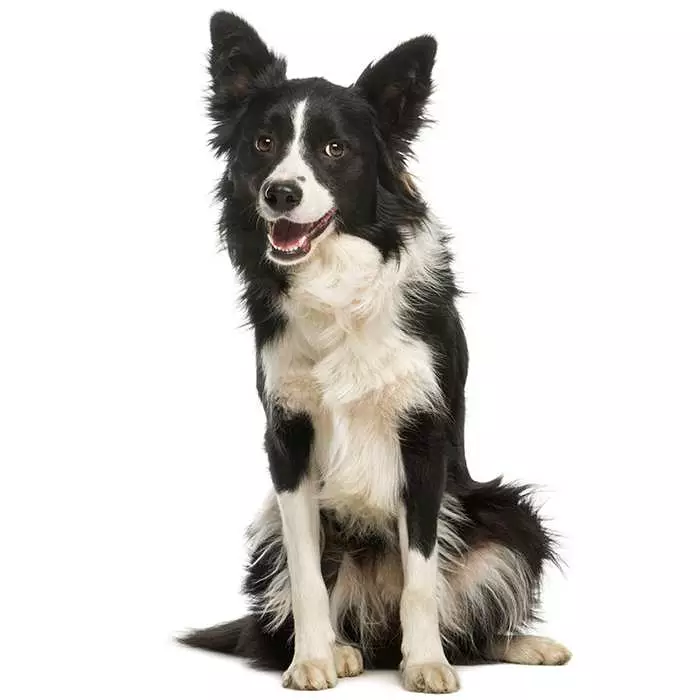
Border Collies are exceptionally intelligent, energetic medium-sized working dogs renowned for their herding ability, trainability and stamina. Originally developed to work livestock over challenging terrain, they thrive when given plenty of physical exercise, mental stimulation and purposeful activity.
| Recommended for | Active, experienced owners and families with the time and commitment to keep their bodies and minds busy |
| Breed Classification | Working dogs |
| Other names | Scotch Sheep Dog |
| Lifespan | 12–15 years |
| Size | Medium |
| Temperament | Obedient, affectionate, friendly |
| Intelligence | Very high: exceptionally quick learners and independent problem-solvers |
| Tendency to bark | Moderate: alert and expressive, may bark when excited, working, bored or responding to unfamiliar activity |
| Maintenance Level | High: coat care is moderate, but their exceptional exercise, training and mental-stimulation needs make them demanding dogs to own |
| Health Risk | Border Collies are generally healthy, but predisposed to several inherited joint, eye, neurological and immune-system disorders. |
Thinking of insuring a Border Collie?
Explore the Top 5 health issues claimed for Border Collies, including highest claims paid and how much pet insurance could help you save on eligible vet bills.
See Border Collie pet insurance Ready to get cover? Get a quick quote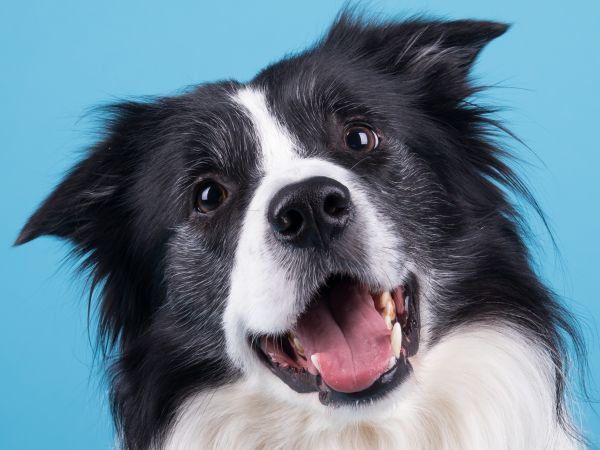
Border Collie personality and temperament
Border Collies are alert, intelligent and highly responsive dogs with a powerful instinct to work. They tend to form close bonds with their owners and often thrive on learning, problem-solving and having a task to perform. Some can be reserved when first meeting unfamiliar people, making early positive socialisation important.
Their exceptional intelligence and sensitivity make them highly trainable, but also mean they need considerable mental stimulation. Without suitable outlets for their energy and working instincts, some Border Collies may become restless or develop unwanted behaviours such as excessive barking, digging, chasing or repetitive behaviours. Their instinctive sensitivity to movement can also lead some individuals to chase bicycles, cars or other moving objects, so training and appropriate management are important.
Border Collies with kids and other pets
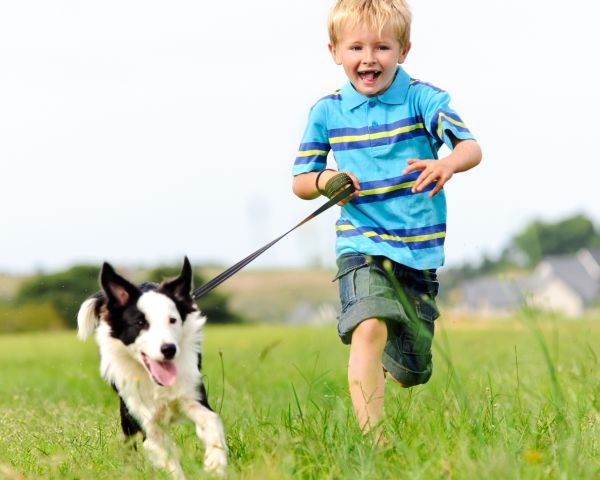
Well-socialised Border Collies can make affectionate family dogs and can live successfully with children and other pets. However, their strong herding instincts may lead some individuals to chase, circle or nip at moving children or animals, particularly when excited.
Early training can help redirect these behaviours, and interactions with young children should always be supervised. Border Collies often do particularly well in active households where older children can participate safely in training, play and outdoor activities.
Border Collie training and exercise
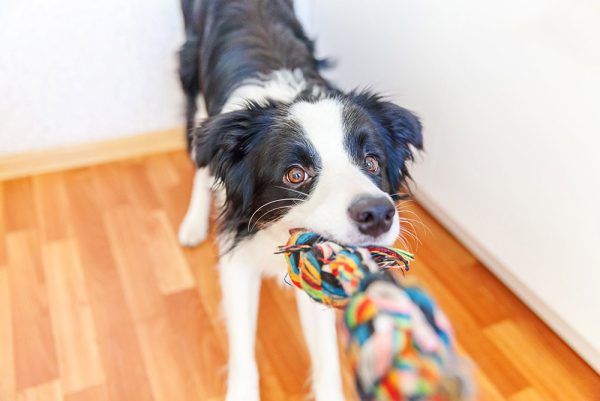
Border Collies have very high exercise requirements and exceptional stamina. Most healthy adults need substantial daily activity—often around two hours or more—along with training and mental enrichment. Long walks, running, hiking and active play can be combined with activities such as agility, flyball, obedience, herding, tracking and scent work.
Mental exercise is just as important as physical activity. Border Collies are fast learners and benefit from puzzle toys, problem-solving games, learning new skills and varied training sessions. Positive reinforcement-based training generally works extremely well with this responsive and sensitive breed.
Early socialisation, reliable recall and calm behaviour around moving objects should be priorities from puppyhood. Young dogs should not be subjected to excessive repetitive jumping, running or sharp-turning exercise while their joints are still developing.
| Energy level | Very high: exceptionally energetic working dogs with outstanding stamina |
| Exercise requirements | Very high: two hours or more of daily activity, together with substantial training and mental enrichment |
Common health issues for Border Collies
What do Border Collie owners claim for the most?
Border Collies are generally considered a healthy breed, but a number of inherited disorders occur within the population. Responsible breeders can screen for many of these conditions using DNA tests, joint scoring and specialist eye examinations.
- Hip dysplasia and elbow dysplasia are developmental joint disorders that can result in pain, lameness and arthritis. Responsible breeders commonly have breeding dogs assessed for both conditions.
- Collie eye anomaly (CEA) is an inherited eye disease affecting development of structures at the back of the eye. It is present from birth and varies considerably in severity; some affected dogs retain normal or near-normal vision while severe cases may experience significant visual impairment. DNA testing is available.
- Epilepsy causes recurrent seizures and has an inherited component in some Border Collies. There is currently no DNA test that identifies all dogs at risk, and affected dogs may require ongoing medication depending on the frequency and severity of seizures.
- Trapped Neutrophil Syndrome (TNS) is an inherited immune-system disorder in which neutrophils are produced in the bone marrow but are not released effectively into the bloodstream. This leaves affected puppies vulnerable to repeated and potentially severe infections. DNA testing can identify affected dogs and carriers.
- Neuronal ceroid lipofuscinosis 5 (NCL5) is an inherited neurological disorder that causes progressive problems such as changes in behaviour, coordination, vision and seizures. It is a severe condition with no cure, but DNA testing is available to prevent affected puppies being produced.
- Early Adult Onset Deafness (EAOD) causes progressive hearing loss, often becoming apparent during adulthood after a dog has had normal hearing as a puppy. Genetic screening is available, while BAER testing can assess hearing ability.
- Border Collie Collapse (BCC) is an episodic exercise-associated disorder in which affected dogs can become disoriented, weak or uncoordinated following intense activity. There is currently no routine genetic test for the condition, so prospective owners should ask breeders about any history in their lines.
Not all conditions are covered by Pet Insurance. For details of Bow Wow Meow Pet Insurance cover, refer to the Product Disclosure Statement.
How to choose the right insurance for your Border Collie
When comparing cover for your Border Collie, look for:

Cover for common Border Collie conditions:
Check that the policy covers conditions Border Collies can be prone to, including common health issues.

Cover for hereditary conditions:
No exclusions for hereditary or congenital conditions⑅.

Flexible cover options:
Options to adjust your annual benefit limit, reimbursement rate and excess.
Bow Wow Meow's Nose-to-Tail Cover offers flexible options for your Border Collie, with cover for accidental injuries, illnesses and hereditary conditions⑅. Get a quick quote for cover that suits your Border Collie and your budget.

Border Collie feeding and nutrition
Border Collies should be fed a complete and balanced diet appropriate for their age, body condition, health and activity level. Highly active working or sporting Border Collies may require considerably more energy than less active companion dogs.
Monitor your dog’s weight and body condition and account for treats used during training when calculating daily food intake. Speak to your vet if you have concerns about your Border Collie’s diet, weight or changing nutritional needs.
Border Collie care and grooming
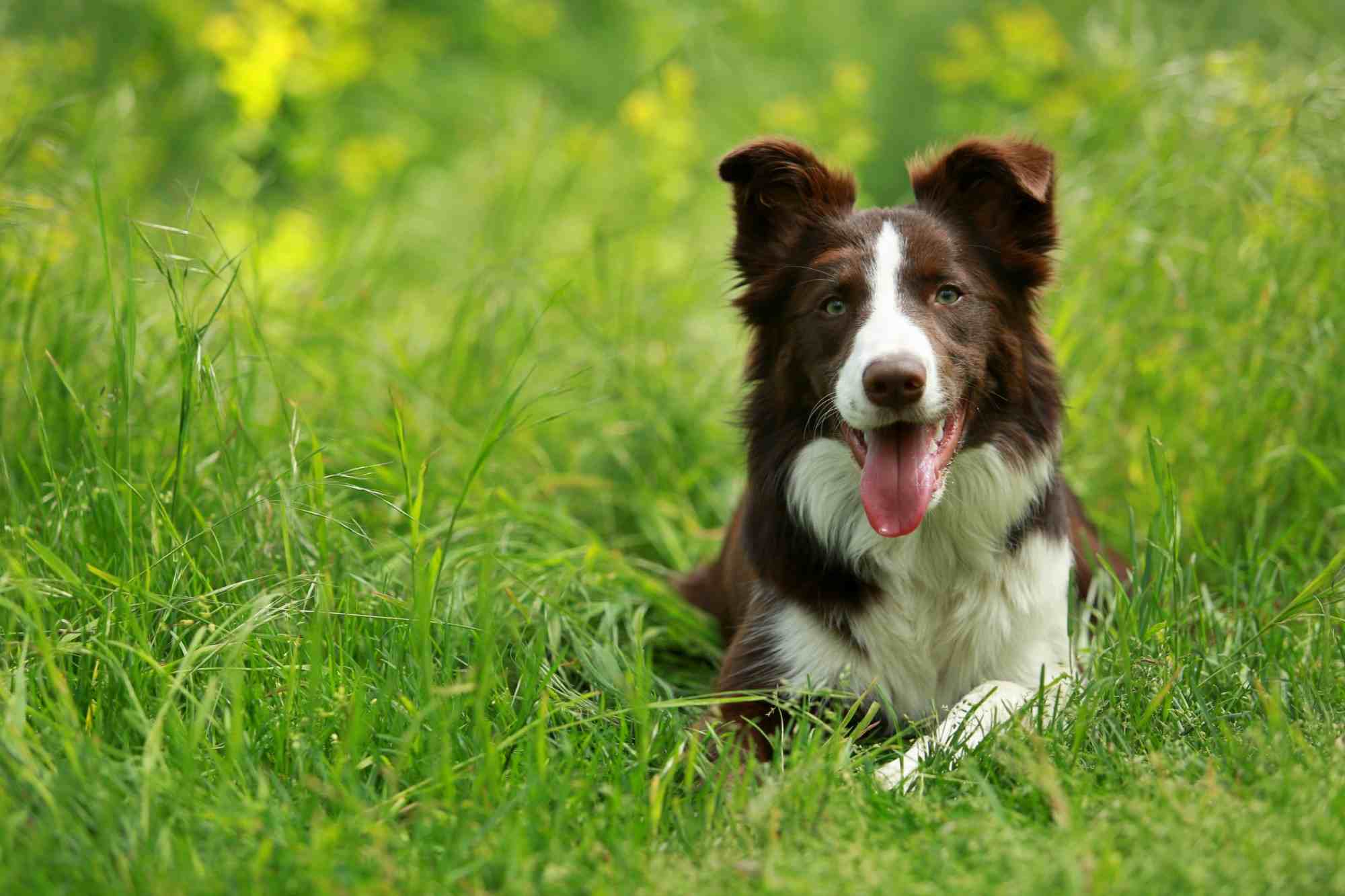
Border Collies have moderate grooming requirements. Their weather-resistant double coat generally needs brushing once or twice a week to remove loose hair, dirt and tangles, with more frequent brushing—sometimes daily—helpful during periods of heavier seasonal shedding.
Both smooth- and longer-coated Border Collies shed, although the amount varies between individuals. They generally only need bathing when dirty, along with routine nail, ear and dental care.
Size, appearance and coat of Border Collies
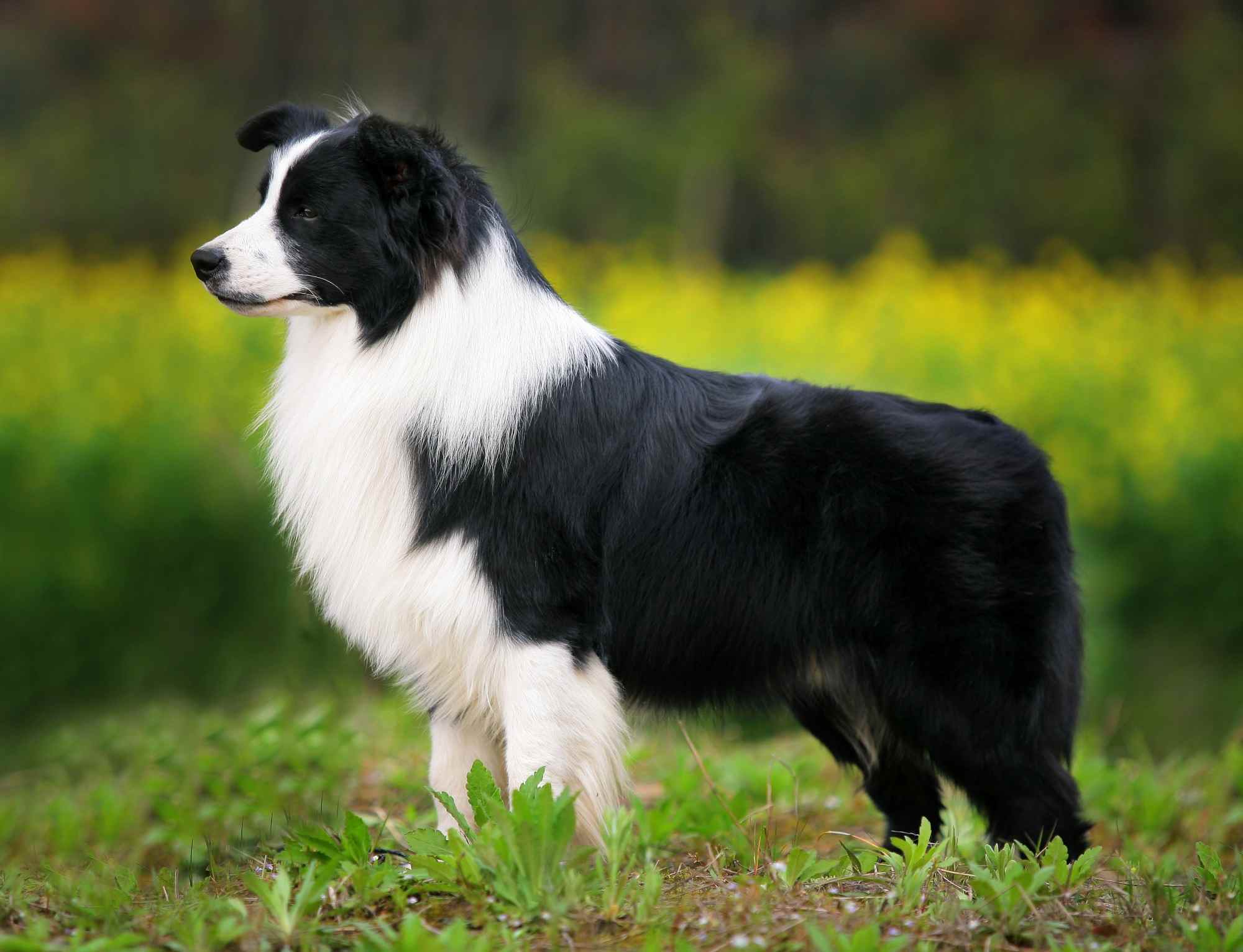
The Border Collie is a medium-sized, athletic and well-balanced working dog built for speed, stamina and agile movement. Its body should be strong without appearing heavy, reflecting the breed’s ability to work livestock for long periods over difficult terrain. The ears are medium-sized and may be erect or semi-erect, while the oval eyes have the breed’s characteristic keen and alert expression. Eye colour generally harmonises with the coat, with darker eyes preferred; blue eyes are permitted in merle dogs.
Border Collies have a dense, weather-resistant double coat that occurs in two varieties: smooth and moderately long. The longer coat forms a mane, feathering and a well-furnished tail, while the smooth variety has shorter hair over the body. A wide variety of colours and patterns is permitted, although white should never predominate.
| Weight range | Males around 17-20 kg, females around 12-19 kg |
| Height range | Males 48–56 cm, females 46–51 cm |
| Colours | Variety of colours; white should not predominate |
| Coat length | Two coat varieties: moderately long or smooth |
Breed history of Border Collies
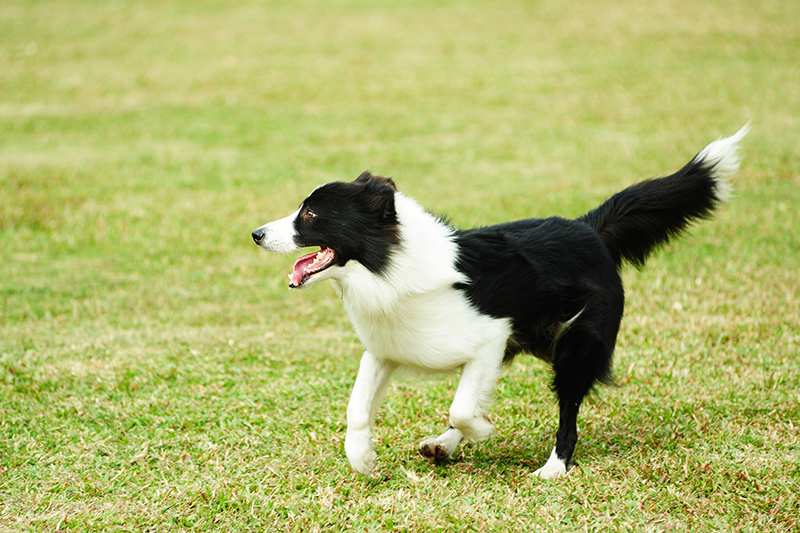
The Border Collie developed from working sheepdogs used for centuries in the rugged border country between England and Scotland. Shepherds selected dogs primarily for intelligence, stamina, responsiveness and livestock-working ability rather than appearance, creating highly capable dogs able to work independently across difficult terrain.
One of the most influential dogs in the development of the modern Border Collie was Old Hemp, born in Northumberland, England, in 1893. His quiet, controlled herding style was highly successful and he became an extremely influential sire whose descendants helped shape the modern breed.
Formal sheepdog trials helped further develop and promote these working dogs, and the Border Collie became sought after internationally. The first recorded Border Collie imported into Australia was Hindhope Jed in 1901, and the breed soon became an important part of Australia’s sheep and wool industry. Australia adopted a national Border Collie breed standard in 1963.
Explore related breeds
Border Collie facts!
- A Border Collie named Chaser learned the names of 1,022 objects during scientific research and could also distinguish between object names and commands.
- Border Collies use an intense stare—known as “the eye”—along with their movement and body position to influence livestock.
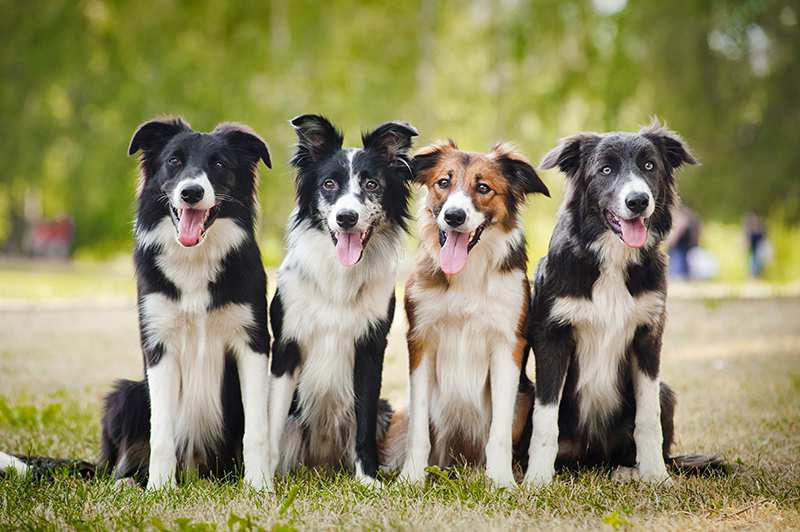
- Border Collies don’t have to be black and white—the breed comes in numerous colours and patterns, including chocolate, blue, lilac, red, sable and merle.
- Queen Victoria was a fan of Border Collies and promoted the breed in the mid-late 19th century.
- Border Collies are known for their intense, almost hypnotic stare, which they use to their full advantage when herding livestock.
Summary
The Border Collie is an extremely intelligent and energetic medium-sized working dog renowned for its herding ability and eagerness to learn. It thrives on having a job and enjoys activities that challenge both body and mind.
Border Collies are best suited to active families that can provide considerable exercise, training and mental stimulation. They excel in pursuits such as agility, herding and obedience and are happiest when regularly involved in purposeful activities.
FAQs about the Border Collie
They can be excellent family dogs for active households, but they need plenty of exercise and mental stimulation and may display herding behaviour around children or other pets.
Very high. They need substantial daily physical exercise plus training, problem-solving and other forms of mental stimulation.
Yes. They are highly intelligent and capable learners that usually respond very well to consistent, reward-based training and regular mental challenges.
They are generally low to moderate or moderate barkers, although barking can increase with boredom, excitement, anxiety or unfamiliar activity.
Border Collies are moderate shedders, with heavier shedding commonly occurring during seasonal coat changes.
They are generally better suited to homes with more space because of their size, energy level or working and guarding instincts, although individual circumstances vary.
They often live well with children and other pets, but some may try to herd, chase or nip at moving family members, particularly when young.
Potential health concerns include hip dysplasia, epilepsy, inherited eye disease and some neurological disorders.
Border Collies are famous for an intense stare known as “the eye”, which is part of their natural herding behaviour. They use eye contact, body position and controlled movement to influence the direction and movement of livestock, often while crouching low to the ground.
They can be challenging for first-time owners because of their exceptional energy, intelligence and need for ongoing training and mental stimulation. Border Collies generally suit active owners who have plenty of time to provide exercise, enrichment and purposeful activities.
MORE INFORMATION:
The Border Collie Club of NSW: http://www.bccnsw.com/
Australian Working Dog Rescue: http://www.workingdogrescue.com.au/

Get 2 months free for your puppy!
Congrats on your new bundle of joy
To ensure your precious fur baby is covered from the start, we'd like to offer your first 2 months of our Nose-to-Tail Cover for free2!
Get a quick quote